How Gang Violence Transformed Haiti into the Western Hemisphere’s Largest Displacement Crisis
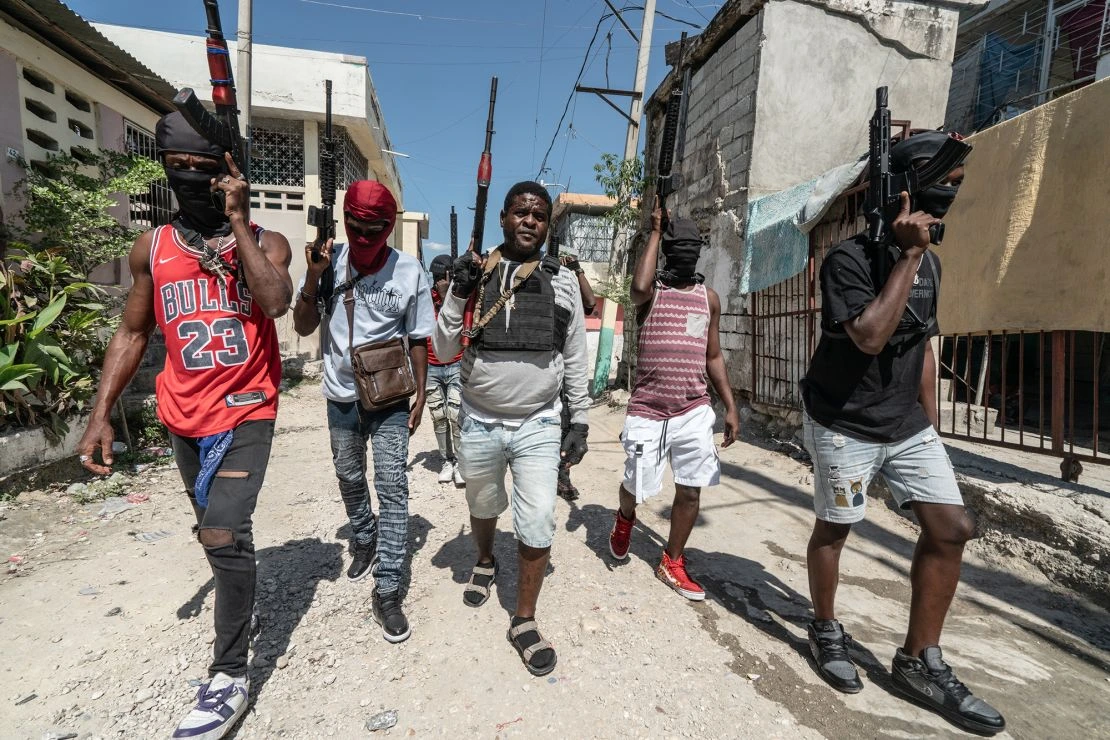
(Analysis) The humanitarian crisis in Haiti has reached catastrophic levels, with violence forcing nearly 60,000 people to flee their homes in Port-au-Prince in just one month, according to the International Organization for Migration (IOM).
This recent surge represents just one chapter in a prolonged crisis that has seen displacement figures triple over the past year, with more than one million people now displaced throughout the country.
The first quarter of 2024 marked the deadliest period for Haitians since the United Nations began keeping records in January 2022, with approximately 2,500 people killed or injured due to gang violence—a 53% increase compared to the previous reporting period.
On average, more than one person is killed or injured every hour in Haiti due to gang violence. Gang warfare has overwhelmed Port-au-Prince, with armed groups now controlling approximately 80% of the capital.
These gangs have systematically attacked key infrastructure including police stations, prisons, schools, hospitals, and religious sites. The violence that was once concentrated in the capital has begun expanding into the provinces, creating new waves of displacement.
IOM Director in Haiti, Grégoire Goodstein, has highlighted the unprecedented scale of this displacement: “We have never observed such a large displacement of people in such a short time.” Many of these displaced families were already living in precarious conditions following previous displacements, compounding their vulnerability.
Background and Historical Context
Haiti’s current crisis intensified following the assassination of President Jovenel Moïse in July 2021, which created a power vacuum that armed groups quickly exploited. The political instability has deep roots—Haiti has not held elections since 2016, leaving governance structures weak and contested.
In early 2024, the violence escalated dramatically, forcing Prime Minister Ariel Henry to resign after being unable to return to the country when gangs took control of the international airport. This latest phase of instability has further weakened state institutions in a country already facing multiple challenges.
Haiti’s crisis is multidimensional, combining political instability, economic collapse, and vulnerability to natural disasters such as earthquakes, floods, and storms. The country’s police force, comprising only 9,000 officers, is severely outmatched against armed gangs estimated to include up to 8,000 members with comparable or superior firepower.
The Kenyan-Led Multinational Security Support Mission
In October 2023, the UN Security Council authorized the Multinational Security Support (MSS) mission to assist Haiti in combating gang violence. Kenya stepped forward to lead this mission, pledging to deploy 1,000 police officers to support Haitian law enforcement.
The first contingent of approximately 400 Kenyan police officers arrived in Haiti in June 2024, marking the beginning of what is planned to be a 2,500-person force including personnel from Bangladesh, Benin, Chad, the Bahamas, and Barbados.
The mission is set for an initial duration of one year and is tasked with assisting Haitian police in securing key infrastructure and fighting criminal groups.
Kenyan authorities have reported “significant progress” in tackling gang violence since their deployment began, claiming they have helped Haitian police reclaim control of critical infrastructure including the airport and opened essential roads that have allowed thousands of displaced Haitians to return home.
Why the International Police Force Faces Significant Challenges
Despite these claims of progress, the Kenyan-led mission has encountered numerous obstacles that have limited its effectiveness:
Insufficient Resources and Equipment: The mission is severely underfunded, with its trust fund having received only $21 million of the estimated $600 million needed for initial operations. UN human rights experts have highlighted that the force lacks essential equipment such as helicopters, night vision devices, and drones.
Limited Deployment: Less than 25% of the intended force has been deployed, with only 400 of Kenya’s promised 1,000 officers currently on the ground. This limited presence makes it difficult to effectively challenge gangs that control most of the capital.
Legal and Political Challenges: The mission has faced significant legal hurdles in Kenya, where the High Court ruled the deployment unconstitutional, citing the lack of a reciprocal agreement between Kenya and Haiti. While the Kenyan government proceeded with the deployment despite this ruling, ongoing legal challenges continue to create uncertainty.
Human Rights Concerns: Kenya’s police force has faced criticism for human rights abuses in their own country, raising concerns about their conduct in Haiti. Recent incidents, including the fatal shooting of protesters in Nairobi, have heightened scrutiny of the Kenyan police’s approach to maintaining order.
Continuing Arms Flow: Despite an international arms embargo, weapons and ammunition continue to be smuggled into Haiti, enabling gangs to expand their territorial influence. This ongoing flow of weapons undermines efforts to reduce gang capabilities.
Logistical and Administrative Issues: Reports indicate delays in salary payments to deployed Kenyan officers, potentially affecting morale and operational effectiveness. The mission also faces challenges in coordinating between forces from different countries and establishing clear chains of command.
Historical Precedent: Past interventions by foreign forces in Haiti have failed to yield lasting stability, creating skepticism about the potential success of this mission. The complex nature of Haiti’s crisis requires more than just security interventions.
The Human Cost and Humanitarian Response
The violence has had a devastating impact on Haiti’s civilian population. As of recent reports, nearly 600,000 people have been displaced due to violence, with children comprising a disproportionate share of the displaced population—more than 172,300 according to IOM assessments.
Humanitarian organizations face significant challenges in delivering aid. As the IOM has stated, “Resources are stretched to the limit and humanitarian access is increasingly restricted due to insecurity, leaving thousands without adequate protection or essential services.”
The displacement crisis has overwhelmed host communities, particularly in Port-au-Prince, where only 45% of internally displaced persons are now being taken in by host families—a worrying downward trend that demonstrates the deteriorating situation.
Looking Forward
The international community faces a critical juncture in its response to Haiti’s crisis. While the Kenyan-led mission represents an important step toward addressing the security situation, significant challenges remain in terms of funding, equipment, personnel, and the establishment of effective accountability mechanisms.
Experts emphasize that Haiti requires a comprehensive approach that addresses not only security concerns but also political stability, economic development, and humanitarian needs.
As Philippe Branchat, IOM’s chief in Haiti, has noted: “Humanitarian aid is not the sole solution. More investments are needed in long-term solutions to strengthen State services across the country”.
For the mission to succeed where previous interventions have failed, it will need to overcome its current limitations, secure adequate resources, and operate with strong human rights safeguards and accountability mechanisms.
Most importantly, it must work in partnership with Haitian civil society to build sustainable security institutions that can eventually function without international support.
More: Latin America news in English, every day from The Rio Times.
This article was produced by The Rio Times’ automated newsroom system. How we use AI · Report an error · Editorial responsibility: Matthias Camenzind, Editor-in-Chief