
GUIDES · GUATEMALA
Key Facts
- —Country Guatemala, south of Mexico, cooks on maize, beans, chiles and recados. The culture ministry describes recados as thick sauces rooted in Maya communities (2026).
- —Heritage list Pepián, kak’ik, jocón and plátanos en mole became Intangible Cultural Heritage of the Nation on 7 November 2007. Fiambre preparation followed on 8 October 2019.
- —UNESCO bid The culture ministry nominated Guatemala’s recados for UNESCO’s list of intangible heritage, announced in August 2026. No decision date has been published.
- —Currency The quetzal. The Banco de Guatemala reference rate was Q7.63715 per US dollar on Tuesday 6 October 2026.
- —Plate prices In Antigua, Restaurante del Arco lists chicken pepián at Q75 (about US$9.80) on its online menu as of October 2026.
- —Safety The US State Department has rated Guatemala Level 3, Reconsider Travel, since 12 March 2026. Huehuetenango and San Marcos are Do Not Travel areas.
Guatemala food is a cuisine of recados, tamales and slow stews, built on Maya maize cooking with Spanish colonial additions. For a US traveller, these 15 dishes are the quickest way into the country’s regions. Each one comes with where to order it.
INGUAT, the national tourism board, describes the cuisine as a fusion of Maya and Spanish cooking, with Caribbean food added more recently. The culture ministry has now asked UNESCO to recognise the recados, the sauces at the heart of it.
What Guatemala Food Is Built On
Maize comes first. INGUAT’s national gastronomic tourism strategy calls maize central to the Maya worldview. It calls the tamal the oldest and most common food of pre-Hispanic times.
The second pillar is the recado. The Ministry of Culture and Sports (MCD) defines it as a thick sauce based on age-old recipes and local ingredients. Cooks toast tomatoes, chiles and seeds, grind them on stone and simmer them slowly in clay pots.
Two seeds recur: pepitoria, the toasted pumpkin seed, and ajonjolí, or sesame. Two wrappers recur as well: maxán, a broad leaf, and banana leaf. INGUAT drew up its strategy with 300 industry players across seven tourist regions, and this guide follows that regional map.
The Four Dishes on the National Heritage List
The MCD declared four dishes Intangible Cultural Heritage of the Nation in Acuerdo Ministerial 801-2007, signed on 7 November 2007. The order names hen jocón, kak’ik, pepián and plantains in mole, citing their ingredients and their festive culinary tradition.
1. Pepián
Pepián is a thick stew of chicken, beef or pork in a recado of toasted pumpkin seed, sesame, tomato and chiles. Its name comes from pepitoria, chef Carlos Morales of the Intecap training institute told Prensa Libre. It arrives with rice and vegetables such as güisquil (chayote), green beans, potato and carrot.
The MCD’s cultural information system gives it a Kaqchikel Maya origin in Chimaltenango department, in the central highlands. In Antigua, Restaurante del Arco lists chicken pepián at Q75 (about US$9.80).
2. Kak’ik
Kak’ik is turkey soup coloured red with achiote and chiles, from the Q’eqchi’ Maya country of Alta Verapaz and its capital, Cobán. Guatemala.com says the name joins the Maya words for red and chile.
It is served with rice and tamalitos blancos, small tamales of maize dough and salt. In Cobán, ask for it first in the comedores, the simple family eateries around the market.
3. Jocón
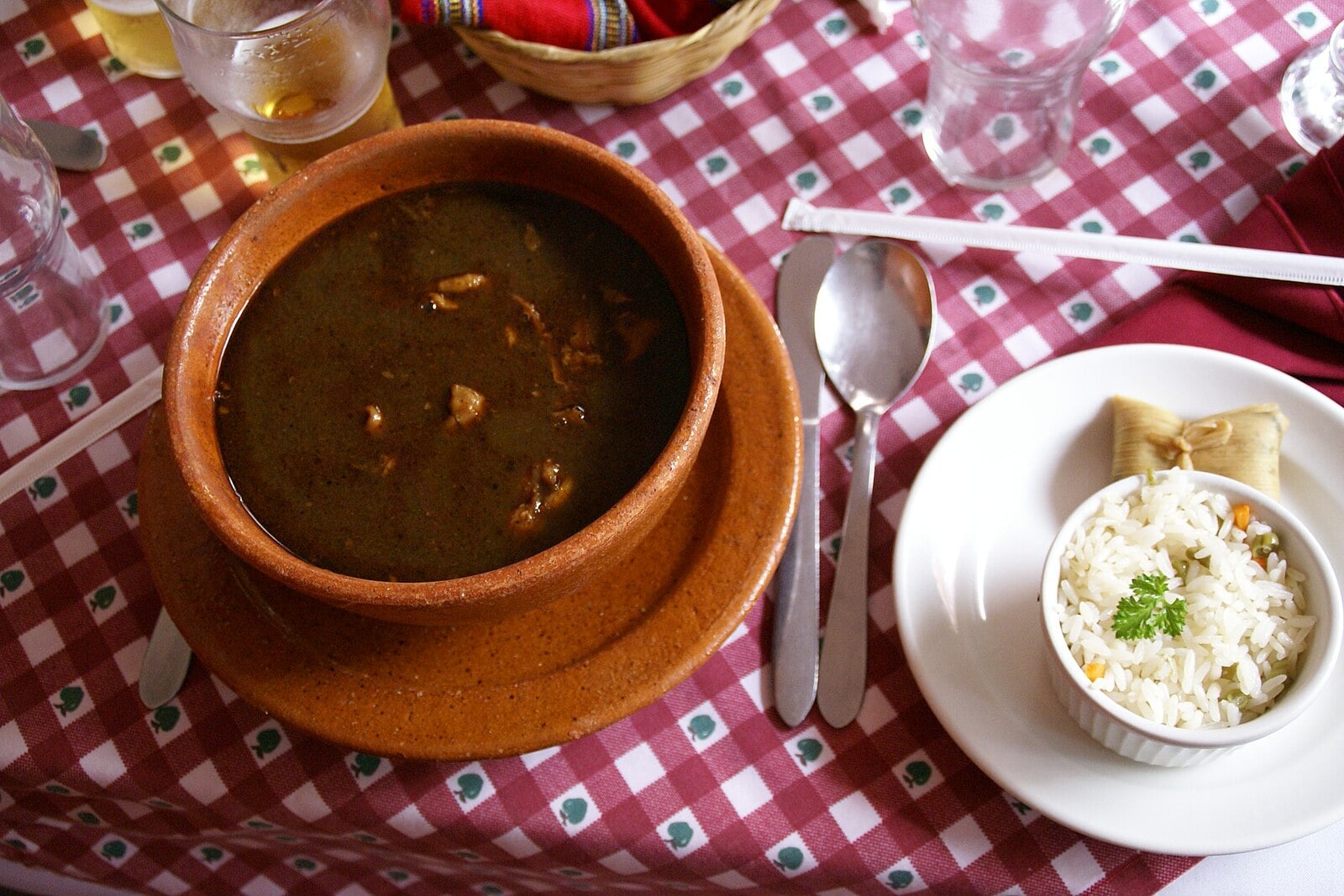
Jocón is chicken, or hen in the ministry’s wording, in a green recado of miltomate (tomatillo), cilantro and onion. Ground sesame and pumpkin seed thicken it. Guatemala.com lists it first among the dishes of Huehuetenango, and Restaurante del Arco serves it at Q75 (about US$9.80).
4. Plátanos en Mole
This is a dessert: fried ripe plantain in a sauce of tomato, chile pasa, cinnamon, sesame, pumpkin seed, champurrada biscuits and chocolate. Guatemala.com dates mole in Guatemala to the mid-16th century and links the plantain version to San Marcos. Restaurante del Arco sells it at Q39 (about US$5.10).
Highland Recados and the Tamal Family
5. Subanik
The MCD says subanik takes its name from the Kaqchikel word for wrapped in leaves. The ministry’s recipe uses pork ribs, beef ribs and hen in a recado of several dried chiles. Everything is enclosed in maxán leaves, tied with cibaque fibre and steamed.
Prensa Libre ties the dish to San Martín Jilotepeque in Chimaltenango. The ministry’s recipe takes about three hours and serves 12.
6. Hilachas
Hilachas means threads, and the dish is shredded beef in a recado of tomato, achiote and chile guaque. Restaurante del Arco lists it at Q75 (about US$9.80) with rice and avocado. Guatemala.com includes it among the dishes of Sacatepéquez, the department around Antigua.
7. Tamales Colorados
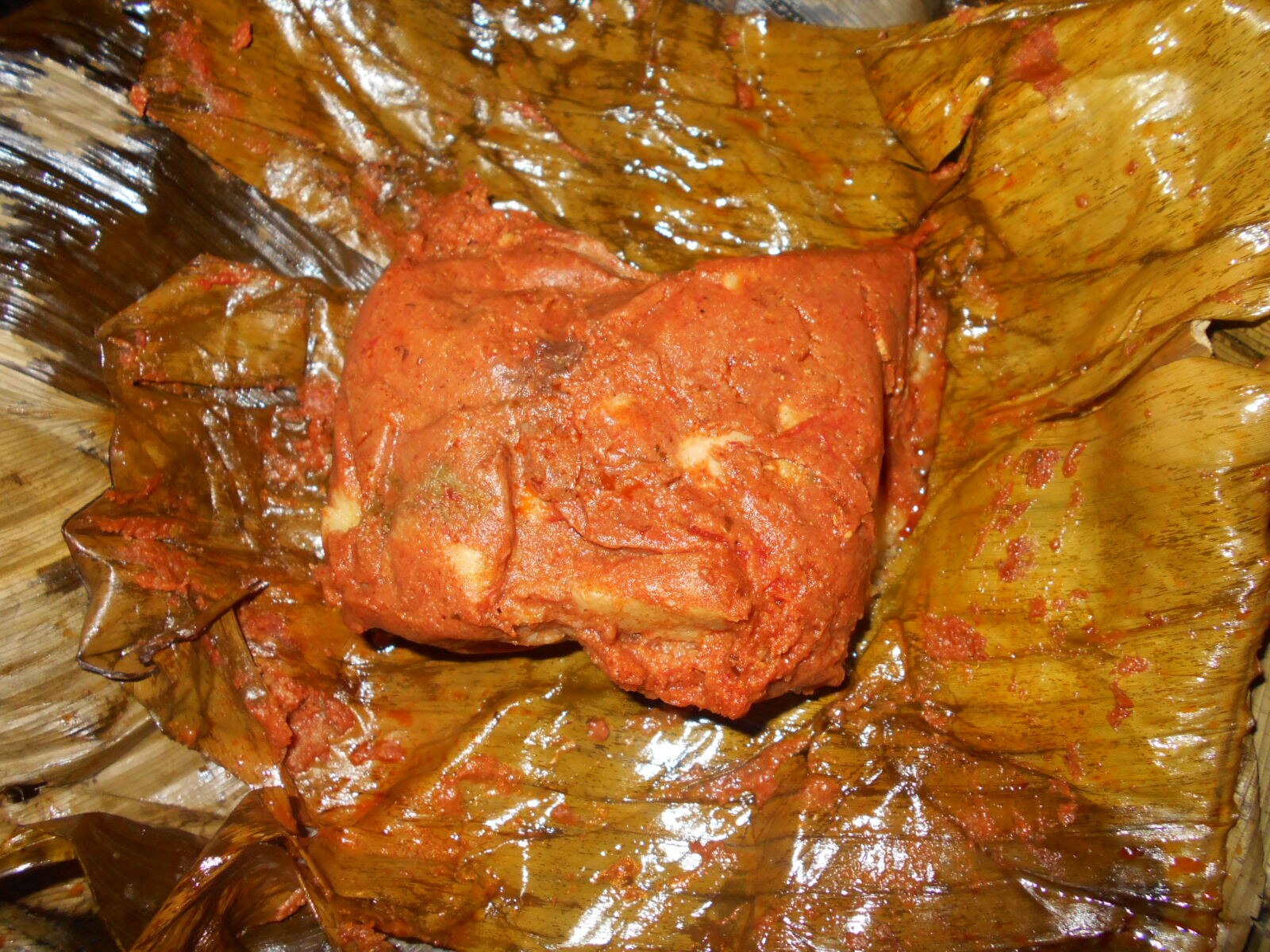
CulturaGuate, the culture ministry’s news site, calls the red tamal the national dish par excellence of the Christmas Eve dinner. The dough is maize, the recado is tomato with pepitoria and sesame, and the filling is pork or chicken. Each one is wrapped in maxán and banana leaves.
La Hora notes that families also eat tamales at Saturday dinner, with hot chocolate or coffee and French bread. A strip of red pepper and an olive usually sit on top.
8. Tamales Negros
The black tamal uses the same base with a sweet recado darkened by chocolate. Prunes, raisins and almonds go inside, according to La Hora and Guatemala.com. It belongs to the end-of-year holidays.
9. Chuchitos
Chuchitos are smaller, firmer tamales tied in corn husks rather than leaves. They hold a thick red recado, usually with chicken, and are often topped with grated cheese and tomato sauce. INGUAT lists them among the maize foods of the western highlands.
10. Paches
Paches are tamales made with potato instead of maize, credited to Quetzaltenango, where potatoes grow. The MCD notes that eating paches on Thursday evenings has become a custom across the country.
La Prensa de Occidente, the Quetzaltenango paper, says the capital eats them on Thursdays and Quetzaltenango, known as Xela, on Saturdays. Anthropologist José Ignacio Camey traces the name to a K’iche’ word meaning to flatten.
Fiambre and the Food Calendar
11. Fiambre
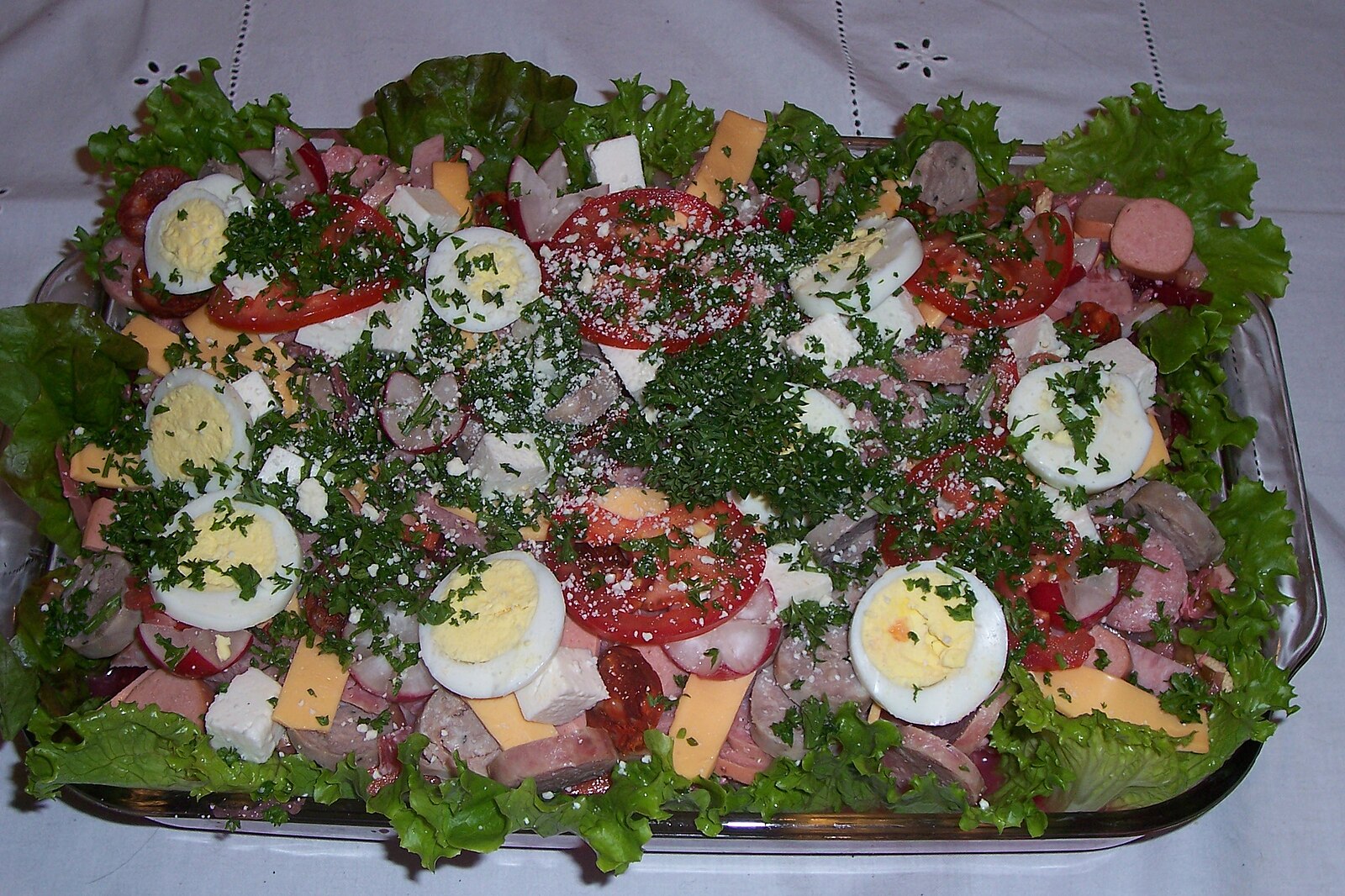
Fiambre is a cold salad of meats, sausages, cheeses and pickled vegetables in a sweet and sour dressing called caldillo. Guatemalans eat it on 1 November, All Saints’ Day, and on 2 November, All Souls’ Day. Chef Erick Pacheco told Prensa Libre that the ingredients sometimes pass 50.
The red version takes its colour from beetroot, while the white version leaves it out. The MCD declared the traditional knowledge for preparing fiambre national heritage in Acuerdo Ministerial 880-2019, dated 8 October 2019.
Nutritionist Ericka Sagastume of the culture studies centre at the University of San Carlos places its origin in the colonial era. It is mostly made at home, and each family keeps its own recipe.
The calendar matters for visitors: paches on Thursday, tamales on Saturday night, fiambre on 1 November and red tamales on 24 December.
Street Food, Breakfast and Sweets
12. Shucos
A shuco is the Guatemala City street hot dog. Ordering one “con todo” brings a sausage with guacamole, cabbage, ketchup, mayonnaise and mustard, Prensa Libre reported. Guatemala.com says the name comes from shuco, local slang for dirty.
The best-known stand, Hot Dogs Ejecutivos El Chino, grew up beside the Liceo Guatemala school in zone 4 of the capital. Many still call the area and its carts the Shucos del Liceo.
13. Desayuno Chapín
Chapín is the everyday word for Guatemalan, and this is the national breakfast. Restaurante del Arco serves eggs, chorizo or longaniza, frijoles volteados (refried black beans), fried plantains and fresh cheese. It costs Q65 (about US$8.50).
14. Rellenitos de Plátano
The MCD describes rellenitos as ripe-plantain dough stuffed with black beans cooked with sugar, chocolate and cinnamon. They are fried and finished with sugar. The ministry records them as a tradition of Melchor de Mencos in Petén and of the whole country.
The Caribbean Coast and Tapado
15. Tapado
Tapado is the Garífuna soup of Livingston, on the Caribbean coast of Izabal. INGUAT describes it as coconut milk, green plantain and seafood. The Garífuna are an Afro-Indigenous people of the Central American Caribbean coast.
At the FIBEGA gastronomy and tourism fair in Miami in 2019, Guatemala’s tapado won Best Promotional Local Dish, INGUAT’s strategy records. Chef Luis Carrillo, president of the Izabal Gastronómica association, cooked it.
For drinks, INGUAT lists atol de elote, a warm sweet-corn drink, around the capital and Antigua. It lists cardamom coffee and cacao batido, whipped cocoa, in the Verapaces.
Where to Try Each Dish
Antigua and Guatemala City both serve the heritage dishes. The regional specialities reward a trip.
- Antigua Guatemala: Restaurante del Arco on 5a Avenida Norte lists pepián, jocón and hilachas. Its tasting plate of all three, with rice and plantains in mole, costs Q105 (about US$13.75). El Comalote, at 4a Calle Oriente 47, opened in 2019 to make tortillas from native maize.
- Guatemala City: El Pepián, at 13 Calle 4-07 in zone 9, serves beef pepián and kak’ik, with marimba at weekends. Arrin Cuan, at 5a Avenida 10-22 in zone 9 and in Antigua, lists kak’ik, subanik and pepián. Its zone 9 menu prices kak’ik at Q140 (about US$18.35), pepián at Q100 (about US$13.10) and tapado at Q235 (about US$30.75). Shucos are in zone 4.
- Cobán, Alta Verapaz: Kak’ik with tamalitos blancos in the comedores near the market.
- Chimaltenango: The home of pepián, and of subanik in San Martín Jilotepeque.
- Quetzaltenango (Xela): Paches, especially on Saturdays, and quichom, a chicken recado the ministry documents.
- Livingston, Izabal: Tapado, the Garífuna coconut and seafood soup.
Huehuetenango and San Marcos, the homes of jocón and plátanos en mole, are on the US Do Not Travel list. Both dishes are easy to order in Antigua and the capital.
What It Means for US Readers
For travellers, the main constraint is security, not food. The State Department has rated Guatemala Level 3, Reconsider Travel, since 12 March 2026. Its Do Not Travel list names San Marcos, Huehuetenango, zone 18 of Guatemala City and the city of Villa Nueva.
A recado plate at a sit-down Antigua restaurant costs about Q75 (about US$9.80). That uses the Banco de Guatemala rate of Q7.63715 per US dollar on 6 October 2026.
For expats, the food calendar is the social calendar: tamales on Saturdays and Christmas Eve, paches on Thursdays. For hospitality investors, INGUAT set out in 2019 to make Guatemala an international gastronomic destination. It backed the UNESCO bid with a recados cooking event in the capital in August 2026.
Connected Coverage
Guatemala Explained 2026: The Country, Its Politics, Its Economy and What to Watch
IMF Confirms Guatemala Economy Grew 4.3 Percent as Remittances Hit 21 Percent of GDP
Manuel Medrano Plays Guatemala City on 15 October
Guatemala Beats Suriname 1-0, Reaches Quarter-Finals
What Is Not Known
UNESCO has not published when it will rule on Guatemala’s recados nomination. The ministry has not given a date in the material it has released.
INGUAT’s gastronomic tourism strategy covered 2019 to 2025, and it is not clear whether a successor plan has been adopted. The origin stories of fiambre and of the word shuco remain competing accounts rather than documented history.
Menu prices here come from restaurants’ own online menus as of October 2026 and can change without notice.
Frequently Asked Questions
Which Guatemalan dishes are national heritage?
The culture ministry declared pepián, kak’ik, jocón and plátanos en mole Intangible Cultural Heritage of the Nation on 7 November 2007. The traditional preparation of fiambre was added on 8 October 2019.
What is kak’ik made of?
Kak’ik is a turkey soup coloured red with achiote and chiles, from Alta Verapaz and its capital, Cobán. It is served with rice and tamalitos blancos, small tamales of maize dough and salt.
When do Guatemalans eat fiambre?
Fiambre is eaten on 1 November, All Saints’ Day, and on 2 November. It is a cold salad of meats, sausages, cheeses and pickled vegetables, and a red version gets its colour from beetroot.
What are shucos?
Shucos are Guatemala City street hot dogs. Ordered “con todo”, they come with a sausage, guacamole, cabbage, ketchup, mayonnaise and mustard.
How much does a typical dish cost in Antigua?
Restaurante del Arco lists chicken pepián, jocón and hilachas at Q75 each (about US$9.80) as of October 2026. A Guatemalan breakfast costs Q65 (about US$8.50).
Is Guatemalan food on the UNESCO list?
Not yet. The culture ministry has nominated Guatemala’s recados for UNESCO’s list of intangible heritage, announced in August 2026, and no decision date has been published.
Sources: Ministry of Culture and Sports, Acuerdo Ministerial 801-2007, https://leyes.infile.com/index.php?id=182&id_publicacion=58098; MCD, Acuerdo Ministerial 880-2019 (fiambre), https://www.sicultura.gob.gt/directory-directorio_c/listing/acuerdo-ministerial-numero-880-2019-declarar-patrimonio-cultural-intangible-de-la-nacion-los-conocimientos-y-procesos-tradicionales-para-la-preparacion-del-fiambre-guatemalteco/; MCD, UNESCO nominations: recados, https://nominaciones.mcd.gob.gt/recados/; MCD, suban’ik recipe, https://nominaciones.mcd.gob.gt/recetas/subanik/; MCD SIC, pepián, https://www.sicultura.gob.gt/directory-directorio_c/listing/pepian-el-tejar-chimaltenango/; MCD SIC, paches, https://www.sicultura.gob.gt/directory-directorio_c/listing/paches-de-xela/; MCD SIC, rellenitos, https://www.sicultura.gob.gt/directory-directorio_c/listing/rellenitos/; MCD SIC, rellenitos with beans, https://www.sicultura.gob.gt/directory-directorio_c/listing/rellenitos-de-platano-con-frijol/; Visit Guatemala, Cobán food, https://visitguatemala.gt/blog/comida-tipica-coban/; Guate365, tamales, https://guate365.org/noticias/gastronomicas/tamales-de-guatemala-la-mejor-receta-variedades-y-comparacion/; Infobae, INGUAT recados event, https://www.infobae.com/guatemala/2026/08/10/los-recados-mayas-de-guatemala-buscan-el-reconocimiento-mundial-de-la-unesco/; CulturaGuate, red tamales, https://culturaguate.gob.gt/2021/12/24/los-tamales-rojos-el-manjar-en-la-cena-de-nochebuena/; INGUAT, Estrategia Nacional de Turismo Gastronómico 2019-2025, https://faolex.fao.org/docs/pdf/gua206972.pdf; AGN, recados nomination, https://agn.gt/encuentro-gastronomico-de-recados-de-guatemala-reune-cada-uno-de-los-platillos-en-recado-de-todo-el-pais/; Banco de Guatemala, reference exchange rate, https://www.banguat.gob.gt/tipo_cambio/; US State Department, Guatemala travel advisory, https://travel.state.gov/content/travel/en/traveladvisories/traveladvisories/guatemala-travel-advisory.html; Restaurante del Arco menu, https://www.restaurantedelarcoantigua.com/ordenaenlinea; Arrin Cuan, https://arrincuan.com/; El Comalote, https://elcomalote.com/; Prensa Libre, pepián, https://www.prensalibre.com/vida/salud-y-familia/receta-del-siglo-xix-incomparable-sopa-de-pepian/; Prensa Libre, fiambre, https://www.prensalibre.com/vida/salud-y-familia/fiambre-rojo-en-guatemala-como-hacerlo-ingredientes-y-receta/; Prensa Libre, shucos, https://www.prensalibre.com/revista-d/shucos-hot-dogs-panes-el-chino-liceo-guatemala-0-1078692346/; Prensa Libre, subanik, https://www.prensalibre.com/vida/escenario/que-bueno-es-mi-pais-por-su-sabor-recetas-chapinas-gastronomia-guatemalteca-suban-ik-0-1002499963/; La Hora, tamales, https://lahora.gt/lh-bienestar/monica/2022/12/23/tamales-la-comida-de-los-ancestros/; La Hora, recados and UNESCO, https://lahora.gt/nacionales/ralvarado/2026/08/15/recados-guatemaltecos-una-tradicion-culinaria-ancestral-busca-reconocimiento-global-ante-la-unesco/; La Prensa de Occidente, paches, https://laprensadeoccidente.com.gt/el-pache-de-papa-pertinencia-cultural-simbolica-y-espiritual-de-los-pueblos-indigenas/; Guatemala.com, dishes of the 22 departments, https://www.guatemala.com/aprende/cultura-guatemalteca/tradiciones/las-comidas-tipicas-de-los-22-departamentos-de-guatemala; Guatemala.com, kak’ik, https://www.guatemala.com/comida/hecho-en-guatemala/kakik-el-famoso-recado-que-forman-parte-de-la-gastronomia-guatemalteca/; Guatemala.com, plátanos en mole, https://www.guatemala.com/aprende/cultura-guatemalteca/cocina/receta-para-hacer-platanos-en-mole-guatemalteco; Guatemala.com, El Pepián restaurant, https://www.guatemala.com/comida/restaurantes/restaurante-de-comida-tipica-el-pepian-en-la-ciudad-de-guatemala/; Guatemala.com, Shucos del Liceo, https://www.guatemala.com/aprende/cultura-guatemalteca/general/historia-shucos-del-liceo-guatemala. All accessed 6 October 2026.
This article was produced by The Rio Times’ automated newsroom system. How we use AI · Report an error · Editorial responsibility: Matthias Camenzind, Editor-in-Chief