GHANA · FOREIGN POWERS
Key Facts
- —The country Ghana is a coastal West African democracy led by President John Dramani Mahama, and gold made up more than half its export earnings in 2025.
- —The lenders The IMF closed Ghana’s US$3 billion rescue loan on 27 July 2026, and Ghana is moving to a 36-month IMF monitoring programme that brings no new money.
- —China China is Ghana’s largest trading partner, with record two-way trade of US$14.1 billion in 2025, according to its ambassador in Accra.
- —Investors Provisional figures from Ghana’s investment agency show about US$2.61 billion of foreign direct investment in 2025, up from US$652 million in 2024.
- —The diaspora Ghanaians abroad sent home about US$7.8 billion in 2025, roughly 6% of GDP, according to the central bank governor.
- —The United States US health aid fell from US$82 million in 2025 to US$53 million in 2026, while a 2018 defence pact gives US forces access to agreed facilities.
- —Still open Gold Fields’ leases at its Tarkwa gold mine expire in April 2027, and the renewal terms were still unsettled in August 2026.
Ghana’s foreign partners, from the IMF and China to gold and oil companies, shape how this West African democracy pays its debts. As of October 2026, Ghana has finished a US$3 billion IMF rescue and restructured almost all of its debt.
Each foreign player brings money or power, and each expects something back.

The Lenders Who Rescued Ghana
The International Monetary Fund (IMF), the Washington-based lender of last resort for governments, led Ghana’s rescue after its debt crisis. It approved a 39-month, US$3 billion Extended Credit Facility, a low-cost loan for poorer countries, in May 2023.
On 27 July 2026, the IMF board completed the final review and released about US$371 million, according to the IMF’s staff report. The Fund called Ghana’s performance under the programme “broadly satisfactory”.
Inflation fell to 5.4% at the end of 2025 and 5.3% in June 2026. Gross reserves nearly doubled to US$11.9 billion by end-2025, about four months of imports.
Ghana is now moving to a 36-month Policy Coordination Instrument, the Ghana News Agency reported. The IMF board reviewed Ghana’s request for it on the same day; it lends no money but signals discipline to investors.
Ghana has set itself a target of cutting public debt to 45% of GDP by 2034. The IMF says the new instrument will help anchor Ghana’s reforms after the loan.
The rescue came with a long debt restructuring, described in our account of the IMF exit. By mid-2026, US$40.2 billion of the US$41.2 billion in debt under treatment, or 98%, had been restructured, the IMF says.
Bondholders, China and France
Eurobonds, dollar bonds sold to foreign investors, made up US$13.1 billion of that debt and were swapped for new bonds in 2024. Government-to-government loans worth US$5.1 billion were handled through the Official Creditor Committee, the group of lending countries.
Ghana announced a memorandum with that committee on 29 January 2025, the Ministry of Finance said, naming “the committee’s co-chairs, China and France”. By June 2026, Ghana had signed bilateral deals with more than half of those creditor countries, the IMF says.
The World Bank
The World Bank is the other big multilateral lender. Its Ghana portfolio held US$4.17 billion of commitments across 16 national projects, its country page said in September 2026.
Recent approvals include US$500 million for market access and connectivity and US$300 million for secondary education. Both belong to the bank’s 2026 financial-year programme for Ghana.
China, Ghana’s Biggest Trading Partner
China is one of the most visible foreign powers in Ghana’s economy, through trade, loans, builders and miners.
Ambassador Cong Song said in Accra on 23 September 2026 that two-way trade hit a record US$14.1 billion in 2025. That was up 19.3%, the Ghana News Agency reported.
He called China Ghana’s largest trading partner and said hundreds of Chinese firms work in infrastructure, energy, mining, manufacturing and farming. Beijing also offers zero tariffs on goods from African countries that recognise it diplomatically.
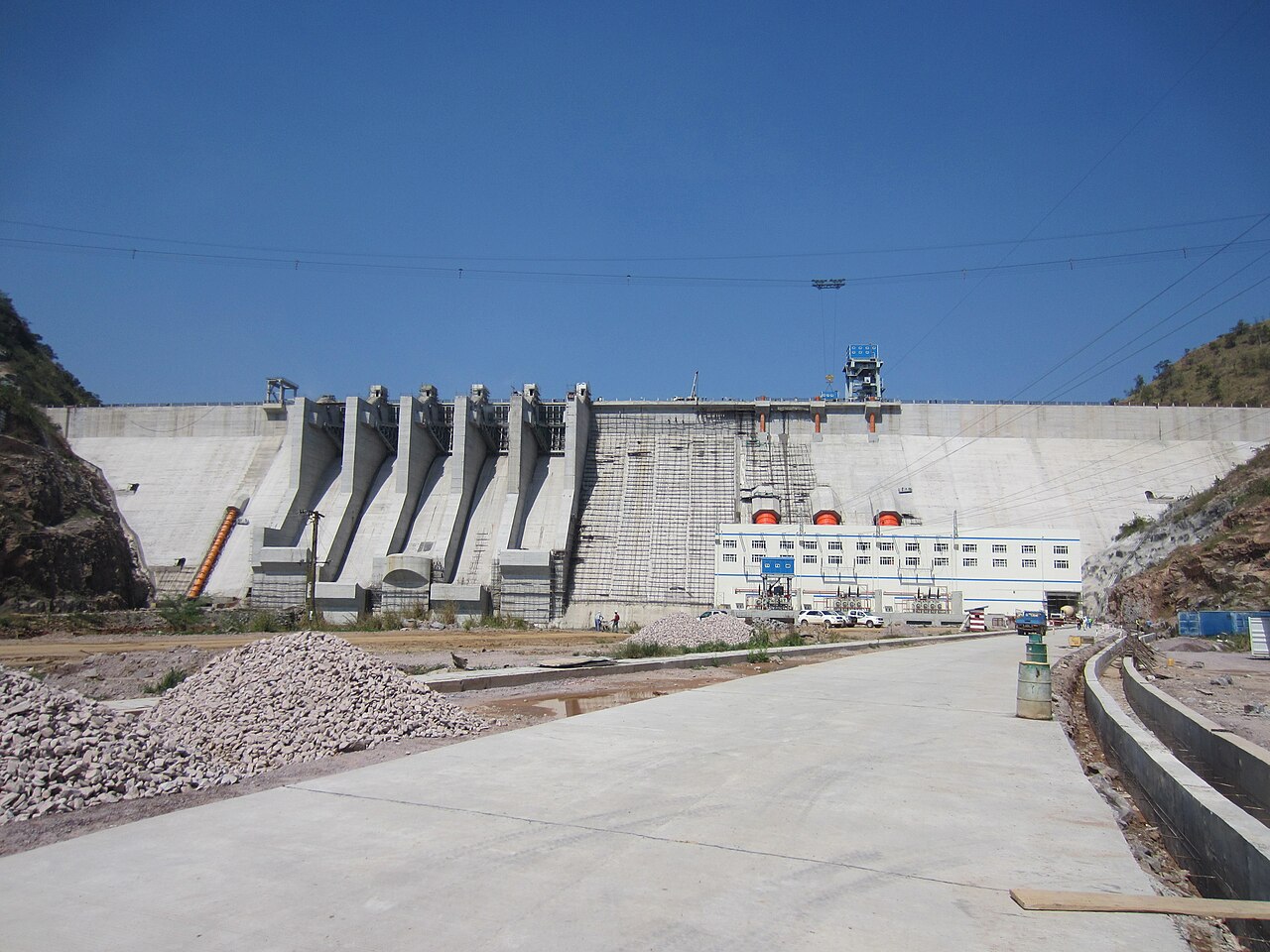
Chinese contractor Sinohydro built the 400-megawatt Bui hydropower dam under a 2007 contract. China’s Exim Bank lent much of the money, Modern Ghana reported in 2011.
A US$2 billion road deal with Sinohydro, brokered in 2017, is repaid “in exchange for Ghana’s refined bauxite”, Graphic Online reported. Bauxite is the ore used to make aluminium.
Zijin Mining of China bought Newmont’s Akyem gold mine for US$1 billion in a sale finalised in 2025, African Mining Market reported. Our piece on Ghana-China mining partnerships looks at Accra’s push for more local processing.
Beijing’s stated aims are deeper trade and closer cooperation. Its deals also show a clear interest in bauxite and gold.
Ghana’s environment minister, Zanetor Agyeman-Rawlings, said at the same reception that all investment “must be undertaken in accordance with Ghana’s laws”.
Gold and Oil, the Foreign Companies That Matter Most
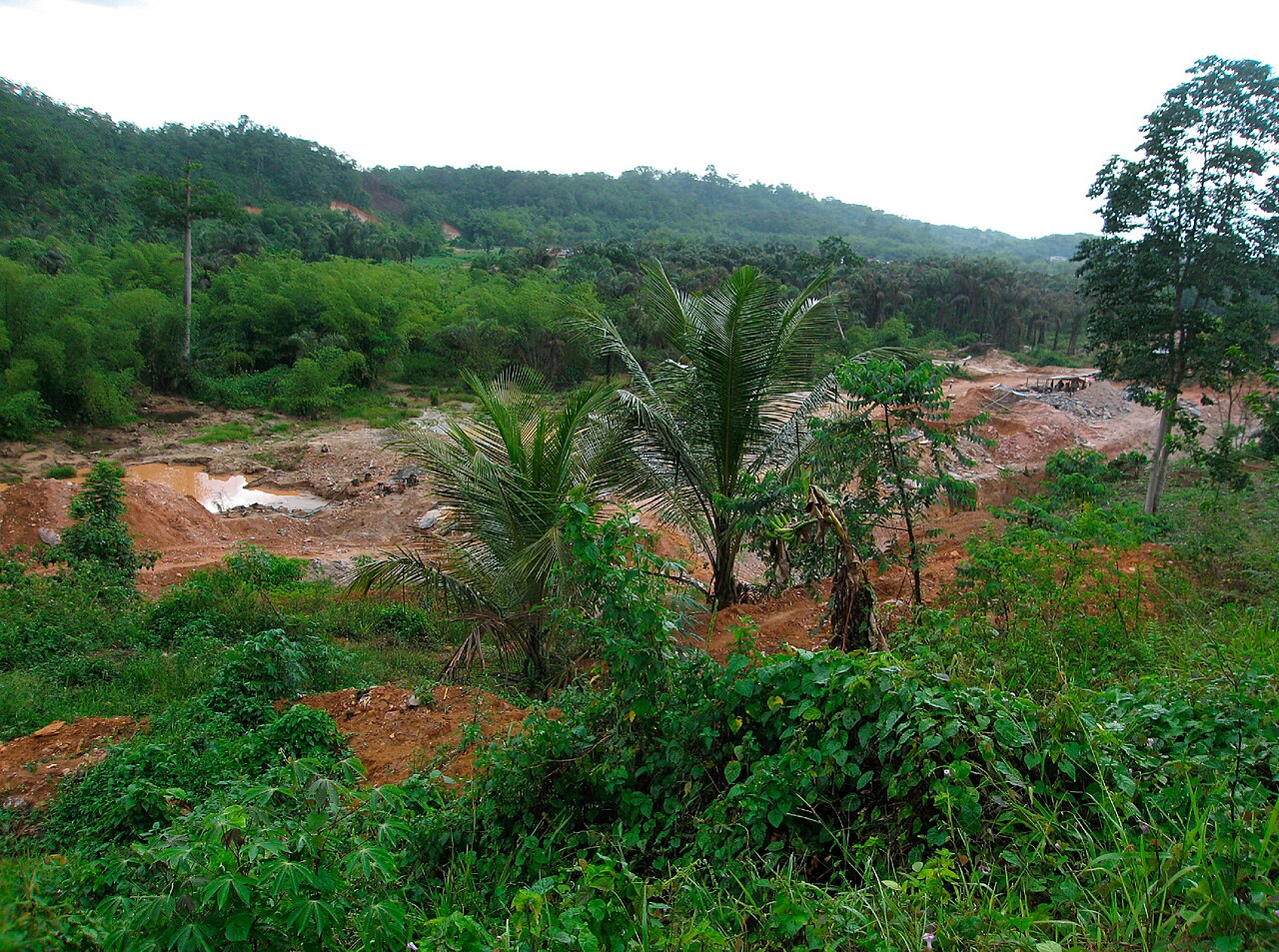
Gold is Ghana’s biggest export, worth more than half of export earnings in 2025, according to the IMF. Most large mines are run by foreign groups that pay royalties and taxes to the state.
What Ghana Wants Back
Lease renewals give Ghana a chance to reset terms with foreign miners. Gold Fields said in August 2026 that it was still awaiting a formal reply to its July proposal on Tarkwa.
The company warned that an adverse outcome would have a material impact on the group.
Oil is calmer. Tullow has signed a rig contract for up to 10 new wells in 2027 and 2028.
- Newmont, a gold giant listed in New York since 1940, runs the Ahafo South and Ahafo North mines, its operations page shows.
- AngloGold Ashanti runs Obuasi, an underground mine 1,500 metres deep about 60 km south of Kumasi, and the Iduapriem open pit, according to the company.
- Gold Fields, a miner with operations from South Africa to Australia, runs Tarkwa, whose leases expire in April 2027; it applied for renewal in November 2025, Mining Weekly reported.
- London-listed Tullow Oil, also quoted in Accra, operates the offshore Jubilee field, which averaged 70,800 barrels a day (gross) in the first half of 2026, Africa Oil+Gas Report said.
- Kosmos Energy, listed in New York and London, discovered Jubilee in 2007 and holds 38.61% of it, next to Tullow’s 38.98% and 19.69% for state oil firm GNPC, Kosmos says.
Cocoa Money Comes Home
Cocoa is Ghana’s other famous export, sold through COCOBOD, the state board that buys beans from farmers and sells them abroad. For more than three decades it financed each harvest with syndicated bank loans, bne IntelliNews reported.
For the 2026/27 season, COCOBOD launched a GH¢16.3 billion (about US$1.38 billion) Domestic Cocoa Notes Programme, borrowing in cedis at home. All conversions here use about 11.8 cedis to the US dollar, the October 2026 rate.
The first tranche raised GH¢3.39 billion (about US$287 million), short of a GH¢4 billion (about US$339 million) target, Asaase Radio reported. Ghana-based banks and brokers such as GCB Bank, CalBank and Absa Bank Ghana ran the sale.
Most beans are still sold abroad, so world prices still shape what farmers earn. Our report on COCOBOD’s domestic financing plan explains the shift in detail.
Who Invests in Ghana, the 2025 Numbers
The Ghana Investment Promotion Centre (GIPC), the state agency that registers foreign projects, counted about US$2.61 billion of foreign direct investment in 2025. That provisional figure compared with US$652 million in 2024, Citi Newsroom reported.
By number of projects, China led with 70, ahead of India with 22 and Nigeria with 10. The United Arab Emirates followed with 9 and the UK with 8.
By value, the Cayman Islands led with US$500 million, just ahead of China with US$486 million.
The United States accounted for only US$51 million. Petroleum again led foreign investment, with 18 oil and gas projects worth US$994 million registered by the Petroleum Commission, the Ghanaian Times reported.
Nigeria added US$105 million, and joint French-Nigerian ventures another US$100 million.
The United States, Aid, Security and Deportations
Washington’s ties are old: Ghana hosted the first Peace Corps volunteers sent overseas in 1961, the State Department notes. In 2026 the relationship turns on security, health money, trade and migration.
In March 2018, Ghana’s parliament ratified a defence cooperation agreement giving US forces access to agreed facilities and runways, Defense News reported.
The US embassy said at the time that Washington had not requested a military base. The deal came with about US$20 million for training and equipment.
Health aid is shrinking. US Chargé d’Affaires Rolf Olson said health funding fell from US$82 million in 2025 to US$53 million for 2026.
Washington had spent US$2.2 billion on Ghana’s health sector since 2012, Modern Ghana reported. Olson said the cuts were meant to be gradual, not a sudden cut-off.
By October 2025, Ghana had received two groups of West African deportees from the US, MyJoyOnline reported. President Mahama said Ghana “will not become a dumping ground for deportees”.
Ministers describe the arrangement as a memorandum of understanding rather than a treaty. In June 2026, rights lawyers sued Ghana at the court of ECOWAS, the West African bloc, for 27 deportees, Pulse Ghana reported.
The deportees’ lawyer, Beatrice Njeri, is a litigator with the Global Strategic Litigation Council. Democracy Hub, a Ghanaian pressure group, took a separate case to Ghana’s Supreme Court, MyJoyOnline reported.
AGOA, the US law that lets eligible African countries export many goods to the US duty-free, lapsed on 30 September 2025. A short extension followed in February 2026, and a law signed on 2 September 2026 extends it to 2028, BusinessDay reported.
The Diaspora Sends More Than Investors Bring
One of Ghana’s biggest sources of foreign money does not come from companies at all. Ghanaians abroad sent home about US$7.8 billion in 2025, up from about US$4.6 billion in 2024, Graphic Online reported.
Bank of Ghana Governor Johnson Asiama put them at about 6% of GDP at a diaspora meeting in Virginia in April 2026. GIPC’s chief executive noted at the same meeting that diaspora money was more than double the year’s foreign direct investment.
What Ghana wants from the diaspora is investment, not only cash for families. The central bank’s “Remit2Invest” campaign urges people abroad to fund investment, a theme in our look at Ghana’s geopolitics.
What It Means for US Readers
For investors, Ghana foreign exposure runs through shares traded in New York. Newmont, Kosmos Energy and AngloGold Ashanti all depend partly on Ghanaian mines and wells.
The Tarkwa lease talks are the main near-term risk to watch. A deal on fair terms would reassure other miners, while a dispute would raise doubts about Ghana’s contracts.
For US policy, Ghana is a test of how Washington mixes smaller aid budgets with deportation deals and security access. Our guide to who holds power in Ghana explains the government making those choices, and the Ghana hub tracks new developments.
Ghana’s recovery also matters for anyone holding its restructured bonds, covered in our report on Ghana’s debt recovery.
What Is Not Known
The full text of the US-Ghana deportation memorandum has not been published. Ghana’s Supreme Court ordered the attorney-general in February 2026 to show it to the challengers’ lawyers, and its legal fate remains open.
Ghana has not yet finished bilateral deals with every official creditor. Nor is it clear whether Tarkwa’s lease will be renewed on terms Gold Fields accepts.
Washington has not decided whether a final health aid instalment will follow for the 2027 fiscal year. That decision will shape clinics and programmes that depended on US money.
Frequently Asked Questions
Is Ghana still in an IMF programme?
Not a lending one. The US$3 billion Extended Credit Facility ended with a final review on 27 July 2026, and Ghana is moving to a 36-month IMF Policy Coordination Instrument that brings monitoring but no money.
Who is Ghana’s biggest foreign trading partner?
China. Its ambassador said two-way trade reached a record US$14.1 billion in 2025, up 19.3%, and called China Ghana’s largest trading partner.
Does the United States have a military base in Ghana?
No declared base. A 2018 defence cooperation agreement gives US forces access to agreed facilities and runways, and the US embassy said at the time that it had not requested a base.
Which foreign companies mine gold in Ghana?
The big operators include Newmont at Ahafo, AngloGold Ashanti at Obuasi and Iduapriem, Gold Fields at Tarkwa and China’s Zijin Mining at Akyem. Gold made up more than half of Ghana’s export earnings in 2025.
How much money do Ghanaians abroad send home?
About US$7.8 billion in 2025, roughly 6% of GDP, according to the Bank of Ghana governor. That is more than double Ghana’s foreign direct investment for the year.
Why does Ghana accept deportees from the United States?
Ghana agreed in 2025 to take West African deportees under what ministers call a memorandum of understanding with Washington. President Mahama has said it does not undermine Ghana’s sovereignty, and the deal has been challenged in Ghana’s Supreme Court and at the ECOWAS court.
Sources: IMF, Ghana 2026 Article IV and Sixth ECF Review staff report (PR26/260), 2026-07-27; Ghana News Agency, IMF final review, 2026-07-28; Ministry of Finance Ghana, MoU with Official Creditor Committee, 2025-01-29; World Bank, Ghana overview, 2026-09-29; Ghana News Agency, Ghana and China reception, 2026-09-23; Citi Newsroom, GIPC 2025 FDI, 2026-05-27; Ghanaian Times, FDI hits US$2.61bn, 2026-05-28; Graphic Online, diaspora remittances, 2026-04-20; Modern Ghana, US embassy on health aid, 2026-10-01; Pulse Ghana, ECOWAS court case on deportees, 2026-06-30; MyJoyOnline, Mahama on deportation deal, 2025-10-01; MyJoyOnline, Supreme Court and deportation agreement, 2026-02-11; Defense News, Ghana-US defence agreement, 2018-03-29; US State Department (2017-2021 archive), US relations with Ghana, 2021; 3News, Bank of Ghana Governor Asiama, 2026-10-07; GBC Ghana Online, COCOBOD 2026/27 price and financing, 2026-09-27; Kosmos Energy, Ghana operations, 2026-10; Africa Oil+Gas Report, Tullow Ghana drilling, 2026-10-04; Mining Weekly, Gold Fields and Tarkwa lease, 2026-08-25; Newmont, global operations, 2026-10; AngloGold Ashanti, Africa portfolio, 2026-10; African Mining Market, Akyem sale to Zijin, 2025-08; Graphic Online, Sinohydro projects, 2021-08-09; Modern Ghana, Bui dam financing, 2011-03-01; Asaase Radio, COCOBOD commercial paper, 2026-10-05; bne IntelliNews, COCOBOD ends syndicated loans, 2026-08-11; Brookings, AGOA extension, 2026-09-17; BusinessDay, Trump signs AGOA extension, 2026-09-04; Tullow Oil, investors, 2026-10; Kosmos Energy, investors, 2026-10; AngloGold Ashanti, investors, 2026-10; Newmont, about us, 2026-10.
Editorial responsibility: Matthias Camenzind, Editor-in-Chief · Editorial standards · Report an error
Rotate for Best Experience
This report is optimized for landscape viewing. Rotate your phone for the full experience.
You've reached your free article limit
Subscribe to The Rio Times for unlimited access to our reporting from across Africa.