Ghana China Mining Partnerships: Accra Pushes Value Addition in Tianjin
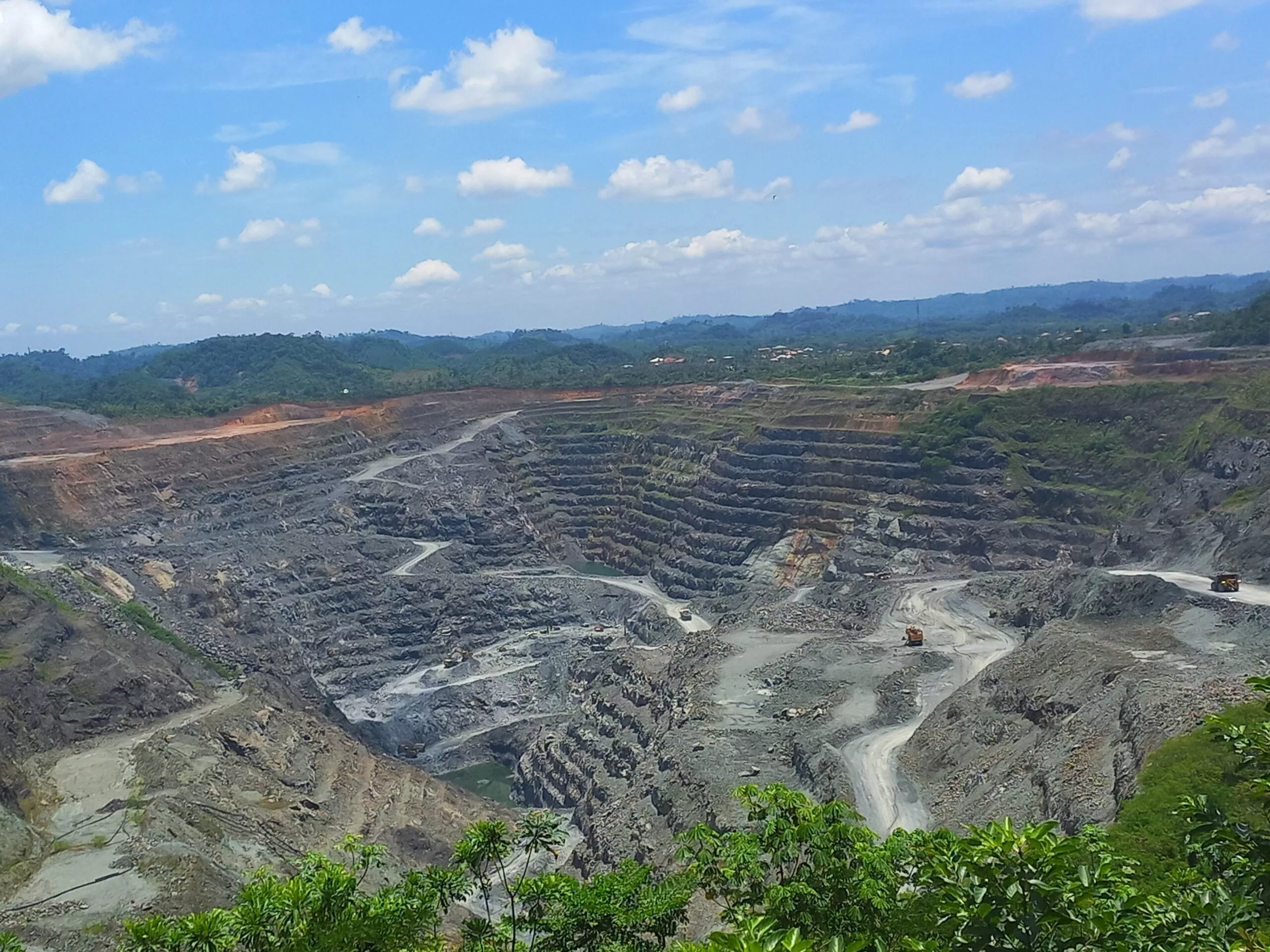
Key Facts
- —What happened Ghana’s Lands Minister Emmanuel Armah-Kofi Buah told Chinese investors at the China Mining Conference in Tianjin (10–12 September 2026) to move beyond raw exports into processing, technology transfer and local supply chains.
- —The pitch A dedicated Ghana Mining Day showcased gold refining, integrated aluminium, critical minerals and iron ore, with the state preparing to de-risk eight iron ore blocks and touting a 1.3-billion-tonne deposit.
- —The flagship Ghana Manganese Company, 90 percent owned by China’s Tianyuan Manganese Industry, is developing a US$450 million refinery at Nsuta to lift ore from about 27% to roughly 40% manganese content.
- —The gold angle China’s Zijin Mining completed its purchase of Newmont’s Akyem gold mine for up to US$1 billion in April 2025; talks over a Ghanaian state stake have produced no announced result.
- —Why it matters Ghana’s first lithium mine, Ewoyaa, is on track to pass into Chinese hands as Huayou Cobalt moves to acquire developer Atlantic Lithium for US$210 million.
Ghana China mining partnerships dominated Accra’s pitch at the China Mining Conference in Tianjin this week, as Lands Minister Emmanuel Armah-Kofi Buah pressed investors to build refineries and factories in Ghana instead of shipping out raw ore.
Ghana used the 28th China Mining Conference and Exhibition in Tianjin to make its most direct pitch yet for Chinese capital to anchor a new phase of mineral industrialisation. Speaking at the Ministerial Forum on International Mining Cooperation on 10 September 2026, Lands and Natural Resources Minister Emmanuel Armah-Kofi Buah urged Chinese companies to invest in processing, technology transfer, skills development and local supply chains rather than continuing to buy raw Ghanaian ore.
What Buah asked for in Tianjin
Representing President John Dramani Mahama, Buah told the conference that Ghana wants a new generation of mining partnerships that keep more value inside the country while offering investors a stable, commercially viable environment. “The next chapter of mining must be measured not simply by what we take from the ground, but by what we leave above it: industries, skills, technology, restored land, stronger communities and a more prosperous nation,” he said.
The minister identified gold refining, an integrated aluminium industry, iron ore development and critical minerals as the key areas of Ghana’s next phase of mineral development. He cited the presence of major Chinese mining companies — Chifeng Gold Group, Shandong Gold and Zijin Mining — as evidence of the potential for deeper cooperation, and pointed to China’s experience in linking natural resources to processing, manufacturing and infrastructure.
Buah also pressed the environmental case, highlighting the National Anti-Illegal Mining Operations Secretariat (NAIMOS) and the Responsible Cooperative Mining and Skills Development Programme (rCOMSDEP) as vehicles for formalising small-scale mining. He called for cooperation on mine reclamation, tailings management and land restoration, and said Ghana is modernising its national geological database to reduce exploration risk for investors.
Iron ore takes center stage on Ghana Mining Day
Ghana’s participation continued on 11 September with a dedicated Ghana Mining Day, themed “Building Ghana’s Next Frontier: Geology, Value Addition and Investment Partnership.” Officials used the session to present concrete projects to Chinese and international investors.
William Okofo-Darteh, chief executive of the Ghana Integrated Iron and Steel Development Corporation (GIISDEC), said the government is determined to de-risk eight iron ore blocks lined up for exploration, so that private investors can enter without bearing the initial survey costs. He highlighted a deposit of about 1.3 billion tonnes of iron ore — the largest identified in Ghana and, he argued, possibly in West Africa, consistent with earlier assessments of the Shieni deposit in the north.
The push fits a broader strategy of building domestic capacity in iron, steel, aluminium and battery materials through state vehicles such as GIISDEC, the Ghana Integrated Aluminium Development Corporation (GIADEC) and the Minerals Income Investment Fund (MIIF). Ambassador Kojo Bonsu told investors in Tianjin that Ghana will not back down on value addition and is ready to work only with partners committed to it.
The US$450 million manganese refinery at Nsuta
The clearest existing example of the value-addition strategy is the US$450 million manganese refinery being developed at Nsuta in the Tarkwa area by Ghana Manganese Company (GMC). GMC is 90 percent owned by Ningxia Tianyuan Manganese Industry through Consolidated Minerals Africa, with the Ghanaian state holding the remaining 10 percent.
The project, first announced in August 2024 under the previous government, is designed to upgrade ore from about 27% to roughly 40% manganese content — a grade suitable for battery-grade output used in electric vehicles and energy storage. Project backers have spoken of more than 1,000 direct jobs at full build-out, with a smaller workforce in the first phase.
Ghana set itself a target of 8 million tonnes of manganese output in 2025, of which 5 million tonnes were earmarked as feedstock for the refinery. Whether those volumes materialised will shape how quickly the Nsuta plant can move from plan to production.
Gold: Zijin closed Akyem, the state stake is still open
In gold, China’s advance is already complete at one major asset. Zijin Mining agreed in October 2024 to buy Newmont’s Akyem gold mine for up to US$1 billion — US$900 million paid at closing and a further US$100 million contingent on lease conditions. The transaction closed on 16 April 2025, and Newmont received the final tranche after Ghana’s parliament ratified the extended Akyem East mining lease.
MIIF has held talks with Zijin and Newmont about acquiring a state stake in Akyem to retain national influence over the asset. No outcome has been announced, and industry trackers describe the status of that investment as unclear since the change of government.
Lithium: Ewoyaa heads toward Chinese control
Ghana’s first lithium project illustrates where the sector is heading. Parliament ratified the 15-year mining lease for the Ewoyaa project in March 2026, making it the country’s first ratified lithium lease. The developer is Atlantic Lithium through its Ghanaian subsidiary, with Ghana holding a free-carried state interest.
Elevra Lithium — the US-linked group formed from Piedmont Lithium and Sayona Mining — has agreed to sell its entire Ewoyaa interest, including offtake rights, to Chinese battery-materials producer Zhejiang Huayou Cobalt. Huayou has separately signed a binding scheme to acquire 100 percent of Atlantic Lithium for US$210 million and to assume the project’s remaining funding obligations. If regulators approve both transactions, Huayou would indirectly control roughly 87% of Ewoyaa, with the Ghanaian state’s free-carried interest making up most of the rest. Neither deal had been confirmed as closed by early September 2026.
Manganese and the great-power contest
Ghana, South Africa and Gabon rank among the world’s leading manganese producers, making the region strategically important for battery supply chains. The United States is fully import-dependent for manganese and views African supply as a national security priority, but Chinese firms have moved faster to lock in Ghanaian and West African assets.
Beijing’s ambassador in Accra, Tong Defa, said in December 2025 that China hopes to help Ghana establish a “complete industrial chain” in mining, framing cooperation around green and value-added production. The Tianjin pitch shows Accra actively steering that interest toward its own industrial goals rather than resisting it. The wider pattern fits the global race for critical minerals covered in Africa: The New Scramble.
What to watch next
The conference in Tianjin runs through 12 September 2026, and any memoranda signed on its margins will signal how quickly the value-addition pitch converts into projects. The de-risking of the eight iron ore blocks and progress at the Nsuta refinery are the hard metrics to follow.
Regulatory decisions on Huayou’s twin lithium transactions — the Elevra purchase and the Atlantic Lithium takeover — will determine whether Ghana’s first lithium mine ships under Chinese control. And MIIF’s next move on Akyem will show whether Accra can still secure equity in a flagship gold asset now in Chinese hands.
More: Ghana news in English, every day from The Rio Times.
Frequently asked questions
What did Ghana ask of Chinese investors in Tianjin?
Lands Minister Emmanuel Armah-Kofi Buah urged Chinese companies at the China Mining Conference on 10 September 2026 to invest in processing, technology transfer, skills and local supply chains, naming gold refining, aluminium, iron ore and critical minerals as priority areas.
What is Ghana’s US$450 million manganese refinery project?
Ghana Manganese Company, 90 percent owned by China’s Tianyuan Manganese Industry, is developing a refinery at Nsuta to upgrade ore from about 27% to roughly 40% manganese content for battery-grade use, announced in August 2024.
Did China’s Zijin Mining complete the purchase of the Akyem gold mine?
Yes. Zijin closed the acquisition of Newmont’s Akyem mine on 16 April 2025 for up to US$1 billion. Ghana’s Minerals Income Investment Fund has discussed taking a state stake, but no result has been announced.
Sources
This article was produced by The Rio Times’ automated newsroom system. How we use AI · Report an error · Editorial responsibility: Matthias Camenzind, Editor-in-Chief
LatAm Markets: Live Signals → — real-time movers, turnover leaders and FX across Latin America.
Living in or visiting Accra? See this month's events and our Accra city guide with rents, safety and upcoming concerts.
Great Powers in Africa
- Who Backs Whom in Africa 2026: China, Russia, US, Gulf
- Africa: The New Scramble
- DP World and AD Ports Drive Gulf States Africa Investment as Saudi Deals Follow
- China Slashes Africa Lending 46% as Kenya and Angola Race to Refinance Old Debts