Gambia Culture and Key Figures, Explained
A plain guide to the peoples, beliefs, music, food and public figures that shape The Gambia, written for readers who are meeting the country for the first time.

GAMBIA · CULTURE
A drummer, a harp player and a masked figure dressed in leaves would all have a place in a portrait of The Gambia, a thin ribbon of a country on the Atlantic coast of West Africa. They stand for a culture that keeps much of its history in songs and rituals.
The country votes for a president on Saturday 5 December 2026, according to the Independent Electoral Commission (IEC), which runs elections, and our election event page follows the race. To read that vote well, it helps to know the peoples, faiths and public figures behind it.
Key Facts
- People Mandinka are the largest group at 34.4%, ahead of Fula at 25.0% and Wollof at 15.4%.
- Faith Nearly all Gambians are Muslim, with a small Christian minority and no state religion.
- Heritage UNESCO, the UN culture body, lists the Kankurang masked initiation rite and two World Heritage sites.
- Sport The national football team, the Scorpions, reached the Africa Cup of Nations quarter-finals on its debut.
- Vote The presidential election is on Saturday 5 December 2026.
For readers in the United States, The Gambia matters as a travel destination, as the home of a diaspora that sends money and music abroad, and as a small democracy that ended 22 years of one-man rule in 2017. This guide covers who lives there, how they pray, sing, eat and play, and who holds the main offices as of 24 November 2026.
A plain guide to the peoples, beliefs, music, food and public figures that shape The Gambia, written for readers who are meeting the country for the first time.

Which Peoples Live in The Gambia?
The Gambia Bureau of Statistics (GBoS), the national data agency, counted 2,422,712 people in its preliminary report on the 2024 census, released in 2024. It found that the Mandinka made up 34.4% of the population, the Fula 25.0% and the Wollof 15.4%.
The Jola, the Sarahule and several smaller groups, among them the Serer, the Manjago and the Aku (also called Krio), make up the rest. In the same preliminary report each of them is smaller than the three largest groups.
English is the official language, and it is the language of schools, courts and parliament. In daily life people use Mandinka, Wolof, Fula and Jola, and many speak more than one.
A visitor in Banjul, the capital, will hear several of these languages on a single street. The 2024 census figures show why no one group can speak for the whole country.
In Plain English
Mandinka is both the largest ethnic group and its language. Jali (plural jalolu), often called a griot, is a hereditary singer and keeper of family history.
Kora is the West African harp-lute that jalolu play. Kankurang is a masked guardian figure in a rite for boys.
Domoda is a stew of ground peanuts, called groundnuts locally. UNESCO is the United Nations agency for education, science and culture. IEC is the Independent Electoral Commission, the body that runs elections.
How Do Islam and Christianity Live Side by Side?
The US State Department’s 2023 report on international religious freedom describes Islam as the faith of more than nine in ten Gambians, with Christians as a small minority. The preliminary 2024 census report carries no table on religion.
The US State Department’s religious freedom report says The Gambia has no state religion and that the Constitution provides for freedom of religious choice. The Gambia is therefore a country where Islam shapes public life and a Christian minority is protected by law.
The two main Muslim holidays are Eid al-Fitr, which ends the fasting month of Ramadan, and Eid al-Adha, the feast of sacrifice. Their dates follow the Islamic lunar calendar, so they fall about ten days earlier each year.
What Is a Griot and Why Does the Kora Matter?
A jali, known abroad by the French word griot, belongs to a hereditary Mandinka line of singers and storytellers. For generations these families have kept genealogies, histories and praise songs in memory, and sung them at weddings, naming ceremonies and political gatherings.
The jali’s best-known instrument is the kora, a harp-lute with a large round body and strings that the player plucks with both hands. Players sing along with it, so the music carries words as well as melody.
Because the tradition passes from parent to child, a performer’s family name tells a Gambian audience which griot house the singer comes from. Songs at weddings and naming ceremonies are one of the ways a family’s history is kept alive.
For an American listener, a kora concert is one of the easiest ways to hear how a story can be sung and remembered without a page. The instrument is played across the Mandinka heartland of West Africa, not only in The Gambia.
What Do Gambians Eat?
Domoda, a stew of ground groundnuts (peanuts) with meat or fish, tomato and vegetables, is widely described as the national dish. It is usually served over rice.
Groundnuts are a major farm crop, a link our economy guide explains in detail. A plate of domoda is therefore both a family meal and a small piece of the farm economy.
Food is also a main reason people visit markets such as Serrekunda, where sellers lay out fish, vegetables and spices every day. The market sits in the Kanifing area near the capital, Banjul, and it is a good place to watch ordinary trade.
Our country explainer gives the wider background on money, politics and daily life. It is a good next read after this guide.
Which Rites and Sites Has UNESCO Recognised?
In 2008 UNESCO inscribed “Kankurang, Manding initiatory rite” on its Representative List of the Intangible Cultural Heritage of Humanity, a list of living traditions. UNESCO lists the rite for Senegal and The Gambia together.
UNESCO says the central character is “an initiate who wears a mask made of the bark and red fibre of the faara tree” and is clothed in leaves. The ritual “generally takes place between August and September”, when young circumcised boys learn the rules of community life, the medicinal value of plants and hunting techniques.
UNESCO also warns that the tradition is “in retreat” because of rapid urbanisation and the shrinking of sacred forests, which are turned into farmland. As a result, it says, the ritual is trivialised and the authority of the Kankurang is undermined.
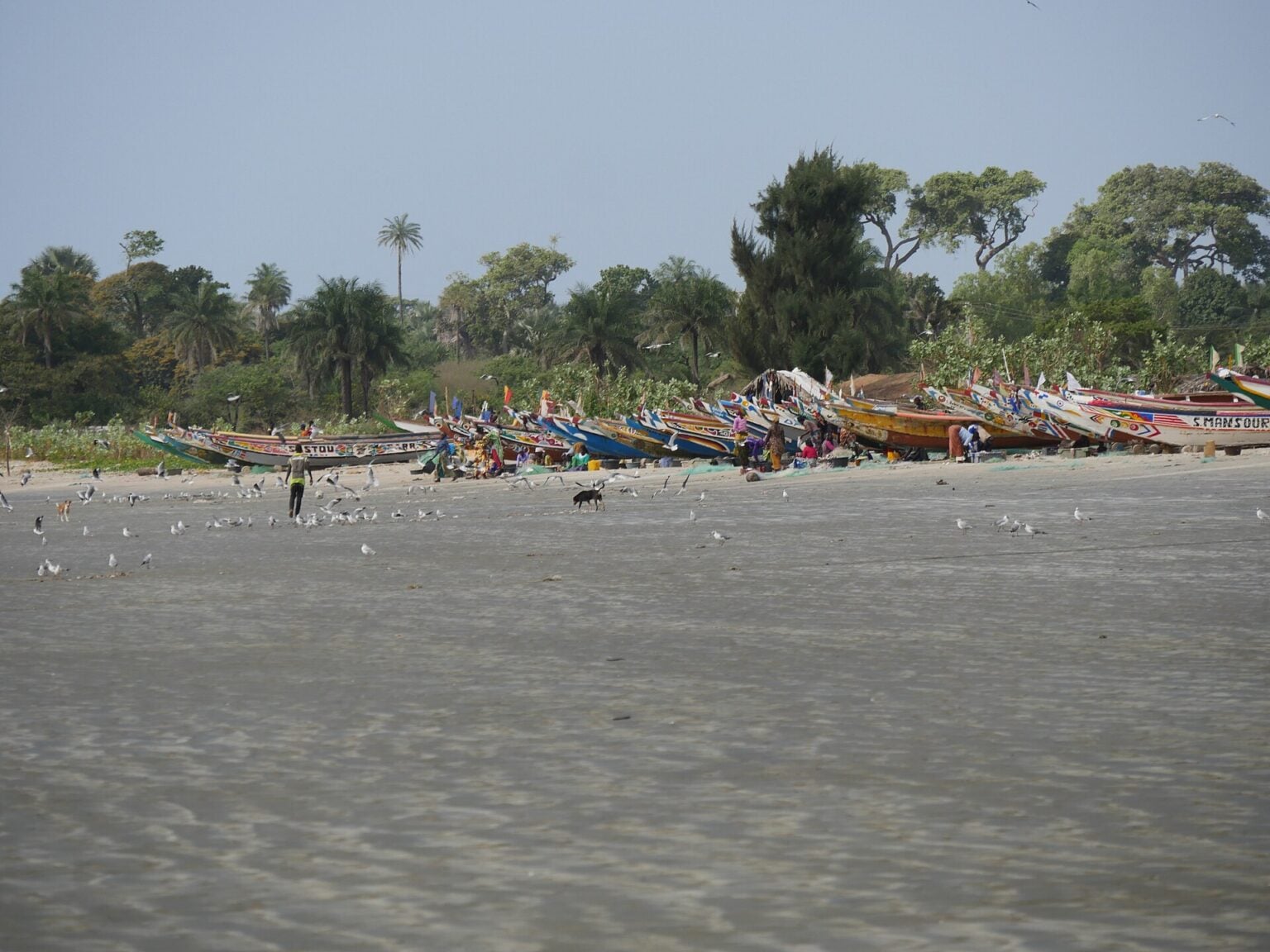
UNESCO’s World Heritage List also holds two properties that include Gambian ground. “Kunta Kinteh Island and Related Sites” was inscribed in 2003 as James Island and Related Sites and renamed in 2011 at the request of the Gambian authorities.
UNESCO calls it testimony to the African-European encounter from the 15th to the 19th centuries. The island lies about 30 kilometres up the Gambia River from the mouth.
The Stone Circles of Senegambia were inscribed in 2006 and are shared with Senegal. They include the Wassu and Kerbatch groups in The Gambia and, in all, more than 1,000 monuments along the River Gambia.
How Did a Small Country Reach the Africa Cup?
Football is the national passion, and its biggest moment is recent. The Gambia played its first Africa Cup of Nations at the 2021 tournament, held in Cameroon in January 2022.
On Monday 24 January 2022 the Scorpions, as the national team is nicknamed, beat Guinea 1-0 in Bafoussam in the round of 16. The win sent The Gambia into the quarter-finals.
The team is now chasing a second finals place in the qualifiers for the 2027 tournament. On Tuesday 17 November 2026 it drew 2-2 with Côte d’Ivoire (Ivory Coast) at home.
Who Shapes Public Life Today?
The head of state is President Adama Barrow, who won the December 2016 election and is seeking a third term, with the Independent Electoral Commission having cleared his candidacy. The Vice President is Muhammad B.S. Jallow, who was still in post in the latest official records of March 2026.
The Speaker of the National Assembly, the parliament, is Fabakary Tombong Jatta, according to the Assembly’s own 2026 records. Joseph Colley chairs the Independent Electoral Commission and is the returning officer, the official who announces the result.
The leading opposition figure is Ousainou Darboe, leader of the United Democratic Party, Barrow’s main challenger in the race. He is one of the candidates whose nomination the commission has approved.
The judiciary is in a dispute. President Barrow swore in Edrissa M.O. Faal as Chief Justice, the country’s top judge, on Friday 31 July 2026, while the Gambia Bar Association, the lawyers’ professional body, says he does not meet the constitutional requirements and has asked the Supreme Court to rule.
For a full list of the political actors and how they relate, see our guide to the key players. The voting rules and polling arrangements are covered on our page for US visitors.
What Comes Next?
The next fixed date is Saturday 5 December 2026, when the Independent Electoral Commission has set the presidential vote. Whoever wins will inherit a country whose strongest assets, its music, its mix of faiths and its coast, do not depend on any one office.
Readers who want to follow what happens after the vote will find it on our Gambia page. The culture described here will be the same on the morning after, and it is the best guide to the people who go to the polls.
Frequently Asked Questions
What languages do people speak in The Gambia?
English is the official language. In everyday life people use Mandinka, Wolof, Fula and Jola, often several in one day.
Is The Gambia a Muslim country?
Most Gambians are Muslim and a small minority are Christian. The State Department says there is no state religion and that the Constitution provides for freedom of religious choice.
What is a griot?
A griot, called a jali locally, is a hereditary Mandinka singer and keeper of family history. Many play the kora, a harp-lute.
What is the Kankurang?
It is a masked guardian figure in a rite for young circumcised boys, shared with Senegal. UNESCO lists it as living cultural heritage.
When is the next presidential election?
The Independent Electoral Commission has set it for Saturday 5 December 2026. Our election event page follows the race.
Sources
Gambia Bureau of Statistics, Preliminary Report of the 2024 Census in The Gambia, September 2024; UNESCO, Kankurang, Manding initiatory rite, read 24 November 2026; UNESCO World Heritage Centre, Kunta Kinteh Island and Related Sites, read 24 November 2026; UNESCO World Heritage Centre, Stone Circles of Senegambia, read 24 November 2026; Independent Electoral Commission of The Gambia, presidential election observer guidelines for 5 December 2026, read 24 November 2026; National Assembly of The Gambia, official records, March 2026; US State Department, 2023 report on international religious freedom, The Gambia.
Part of our ongoing coverage
Africa: The New Scramble — the great-power contest over the continent.
Expat Guide to Gambia
What The Rio Times publishes for foreigners who live in or move to Gambia.
Coming up in Gambia
Understand Gambia
This article was produced by The Rio Times’ automated AI newsroom. Editorial responsibility: Matthias Camenzind, Publisher and Editor-in-Chief. The Rio Times also runs Ask Rio Times, which answers from 100,000+ of our own articles, the daily Latin America Power Map, and prediction-market odds on elections and markets.. How we use AI · Report an error