First Abu Dhabi Bank Misr Posts Strong Profit Growth in Egypt
Egypt · FINANCE
Key Facts
—H1 2024 profit: FABMisr reported net profit of EGP 15.8 billion (about US$330 million) in the first half of 2024, up 139 percent from EGP 6.6 billion in H1 2023.
—H1 2025 profit: The bank posted net profit of EGP 8.6 billion (about US$175 million) in the first half of 2025, with total assets of EGP 461 billion (about US$9.3 billion).
—Q1 2026 profit: FABMisr earned EGP 6.5 billion (about US$130 million) in the quarter ending 31 March 2026, with net interest income of EGP 7.3 billion (about US$145 million).
—Full-year 2024: Net profit reached EGP 26.3 billion (about US$525 million) for the full year, up 153 percent, per FABMisr’s results.
—Market position: FABMisr holds roughly 2 percent of Egypt’s banking market by deposits, loans and assets after the Bank Audi Egypt merger completed on 13 June 2022.
—Parent backing: First Abu Dhabi Bank is the largest bank in the United Arab Emirates by assets, with a balance sheet of about AED 1.4 trillion (US$380 billion).
First Abu Dhabi Bank Misr, the Egyptian arm of the United Arab Emirates’ largest lender, has delivered sharply rising profits that underscore Abu Dhabi’s deepening financial push into North Africa. The bank’s FABMisr profit growth reflects both strong local operations and a strategic Gulf capital play in Egypt.
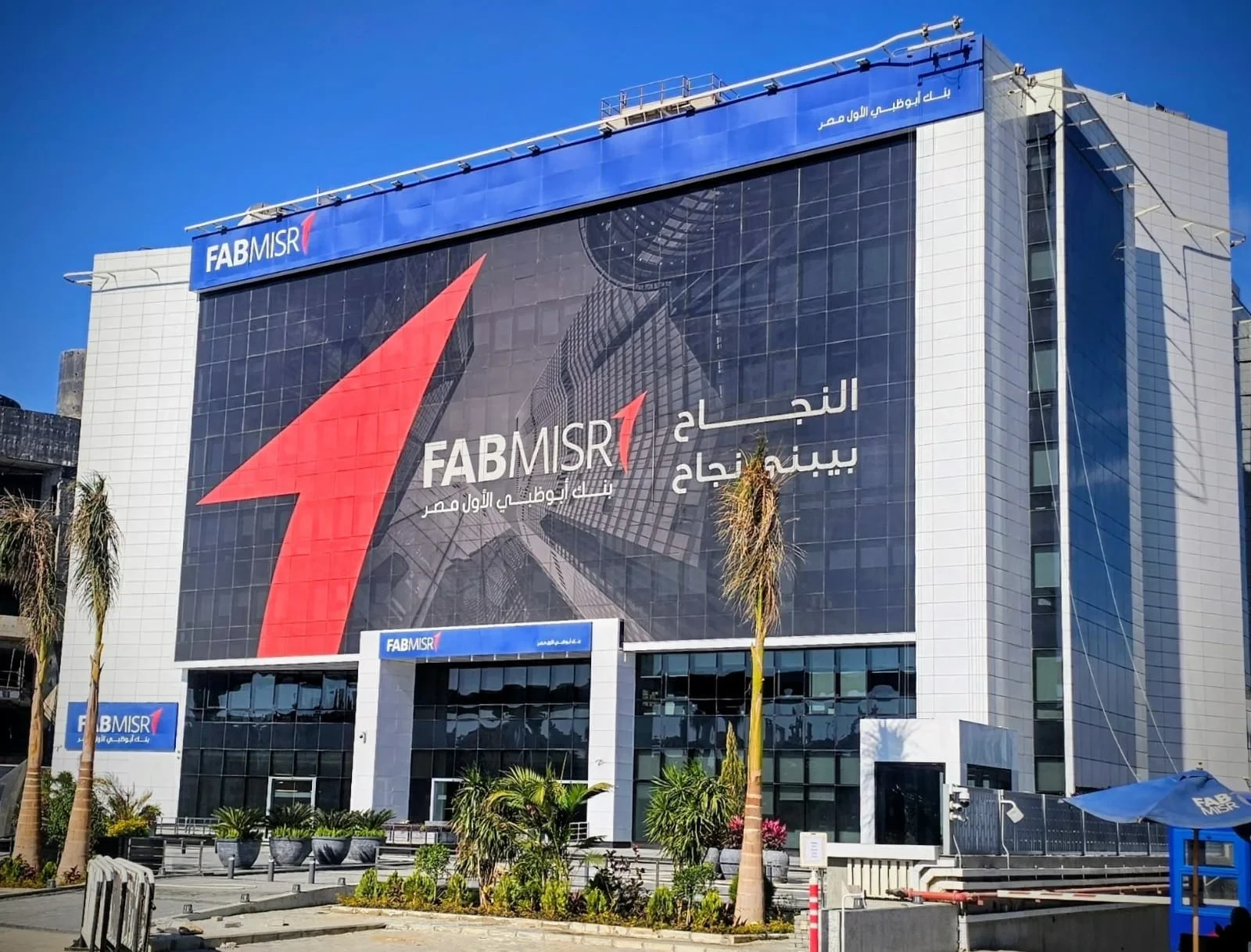
FABMisr profit growth accelerates across reporting periods
First Abu Dhabi Bank Misr reported net profit of EGP 15.8 billion (about US$330 million) in the first half of 2024, a 139 percent increase from EGP 6.6 billion in the same period a year earlier. Net interest income reached EGP 14.6 billion, up 116 percent from H1 2023.
The 2024 surge was flattered by foreign-exchange gains after the Egyptian pound’s sharp devaluation, and reported profits then normalised. In the first half of 2025, FABMisr posted net profit of EGP 8.6 billion (about US$175 million) with total assets of EGP 461 billion (about US$9.3 billion), while the quarter ending 31 March 2026 brought EGP 6.5 billion (about US$130 million) in net profit.
For full-year 2024, the bank recorded net profit of EGP 26.3 billion (about US$525 million), up 153 percent year on year, according to FABMisr’s results. For fiscal year 2025 it reported net profit of EGP 16.7 billion (about US$335 million), which it said marked 5 percent growth after neutralising foreign-exchange effects.
From Bank Audi Egypt to a UAE gateway bank
FABMisr emerged from a cross-border acquisition that reshaped Egypt’s banking landscape. On 13 June 2022, First Abu Dhabi Bank completed the legal merger of Bank Audi Egypt into its operations, rebranding all Egyptian assets under the FABMisr identity.
The merger created a combined Egyptian bank with pro-forma assets of about US$8.1 billion, ranking it among the country’s larger foreign lenders. Analysts describe the deal as a pivotal moment in Middle Eastern banking, sharply expanding FAB’s Egyptian footprint, though its overall market share still sits at around 2 percent.
FABMisr’s network now spans Cairo, Alexandria and strategic Red Sea corridors. That footprint positions the bank to service trade and infrastructure projects linked to UAE capital flows into Egypt.
Egypt as a priority market for Abu Dhabi capital
First Abu Dhabi Bank has signalled appetite for cross-border acquisitions, with analysts naming Egypt, Morocco and sub-Saharan Africa as target markets. Egypt stands out as a priority market due to its large population, under-penetrated banking sector and scope for consolidation among local institutions.
UAE-linked entities have committed tens of billions of dollars to Egyptian projects. These include a highly publicised US$35 billion commitment to the Ras El-Hekma coastal development and a 49 percent Abu Dhabi (ADNOC) stake in a BP-led Egyptian gas venture, into which BP plans to invest about US$1.5 billion.
Recent commentary frames this as an emerging UAE-Egypt-Libya economic nexus. Egypt sits at the centre thanks to its control of the Suez Canal, its Mediterranean coastline and its role as a gateway to African markets.
Gulf banks compete for African financial space
FAB’s Egyptian expansion is one piece of a broader competition among Gulf financial institutions to capture African growth. Banks from Saudi Arabia, Qatar and Egypt itself are also seeking acquisitions or greenfield expansion across the continent.
Gulf banks have built large capital buffers over the past decade, partly due to high oil revenues and domestic prudential regulation. They are now deploying those buffers outward, buying or merging with local banks in high-growth markets with improving regulatory frameworks.
FABMisr’s rising profits strengthen the UAE’s position relative to Saudi Arabia and Qatar in controlling strategic banking channels tied to trade corridors and infrastructure projects. The pattern fits the wider contest for influence covered in Africa: The New Scramble.
Egypt’s megaproject economy needs Gulf finance
FABMisr’s profitability sits against the backdrop of Egypt’s domestic political-economic transformation. Under President Abdel Fattah el-Sisi, Egypt has pursued large-scale projects from new cities to extensive agricultural developments.
One example is the planned Jirian city near Sheikh Zayed, launched in June 2025; Egyptian cabinet-linked reports put its combined cost and expected returns at around EGP 1.5 trillion (roughly US$30 billion), though the government has not disclosed an official cost. Ambitions to cultivate 4.5 million feddans of new agricultural land by 2027 underscore the scale of capital that will need financing and banking services.
Gulf-backed banks like FABMisr can play a crucial role in structuring finance for megaprojects and channelling foreign currency into Egypt. High profits and strong capital positions give the bank leverage in negotiations around project finance, syndicated loans and capital-market deals.
What to watch next for FABMisr and Egypt
Egypt’s repeated currency devaluations and complex foreign-exchange landscape mean headline profit numbers in Egyptian pounds can be volatile in dollar terms. FABMisr and its parent explicitly highlight profit metrics after neutralising foreign-exchange impact.
The bank’s stated interest in Morocco and sub-Saharan Africa signals a long-term strategy to make Abu Dhabi a significant player in African financial systems. The timing coincides with efforts across Africa to increase financial inclusion and develop more robust capital markets.
For investors and professionals watching North Africa, FABMisr’s trajectory offers a clear read on where Gulf capital is heading. FABMisr profit growth in Egypt is now a structural feature of the UAE’s regional power play, not a cyclical blip.
Frequently Asked Questions
How much profit did First Abu Dhabi Bank Misr make in H1 2024?
FABMisr reported net profit of EGP 15.8 billion (about US$330 million) in the first half of 2024, up 139 percent from EGP 6.6 billion in H1 2023.
Who owns First Abu Dhabi Bank Misr?
FABMisr is the Egyptian arm of First Abu Dhabi Bank, the largest bank in the United Arab Emirates by assets with a balance sheet of about AED 1.4 trillion (US$380 billion).
How did FABMisr enter the Egyptian market?
First Abu Dhabi Bank completed the legal merger of Bank Audi Egypt into its operations on 13 June 2022, rebranding the Egyptian assets as FABMisr and building a network of around 74 branches.
Connected Coverage
For more on how Gulf capital and external powers are reshaping African finance and infrastructure, read Africa: The New Scramble.
Sources
This article was produced by The Rio Times’ automated newsroom system. How we use AI · Report an error · Editorial responsibility: Matthias Camenzind, Editor-in-Chief
LatAm Markets: Live Signals → — real-time movers, turnover leaders and FX across Latin America.
Read More from The Rio Times