
ESWATINI · ARTIFICIAL INTELLIGENCE
Key Facts
- The country Eswatini is a small landlocked African kingdom with a US$5.2 billion economy in 2025.
- What happened A new study ranks Eswatini 52nd of 56 Commonwealth countries on youth readiness for artificial intelligence.
- How big AI could add about US$75 million over ten years in the study’s middle scenario.
- The catch That is about 1.5% of 2025 output, and it is a scenario, not a forecast.
- Who is hit The study puts youth unemployment at 52.6%, the highest of the 56 countries.
- What comes next The authors urge cheaper data, practical skills and clearer routes from training into paid work.
Eswatini could add about US$75 million (about E1.23 billion) to its economy over ten years from artificial intelligence (AI), but a new study says its young people are poorly placed to capture the gain. The study’s country results, as reported in Eswatini, rank the kingdom 52nd of 56 countries in the Commonwealth, a voluntary association of mostly former British territories.
For a US reader, the finding is a gauge of which small markets can use American AI tools, cloud services and training programmes, and which are held back by skills and data prices. It also shows how thin the payoff looks for a country of Eswatini’s size, even in the study’s most hopeful case.
What the Ayre Index Measured
The Ayre Index was produced by Ayre Think Tank, a new research group founded by Calvin Ayre, an investor in emerging technologies and enterprise. It was published on Thursday 5 November, the day after the Commonwealth heads of government meeting closed in St John’s, Antigua and Barbuda.
The study covers all 56 Commonwealth members and 732 million people aged 15 to 29, drawing on 1,128 published sources on connectivity, skills, employment, enterprise and safeguards. Only 15 of the 56 countries reached its readiness benchmark of 53 out of 100, and Singapore leads with 77.6.
Eswatini scored 36.9 out of 100 against that benchmark, which places it fifth from the bottom. Malawi and Lesotho finished at the bottom of the table, with 26.3 and 27.8.
The Money at Stake
The authors applied ten-year economic scenarios from the International Monetary Fund (IMF), the global lender, to each country’s economy. For Eswatini, the study’s middle scenario lifts the level of annual output by US$75 million after ten years.
The optimistic scenario reaches US$114 million and the cautious one US$36 million. Even the best case is small, because Eswatini’s whole economy was about US$5.2 billion in 2025, according to the World Bank.
The middle figure equals roughly 1.5% of that 2025 output, reached only at the end of the decade. It sizes the prize and does not predict what will happen.
Across the Commonwealth, the 15 countries that met the benchmark could gain a combined US$389.2 billion under the middle scenario, against US$29.2 billion for the other 41. The authors say the gap of about US$360 billion is more than twice the US$174 billion in aid that major donors gave last year.
Why Young People Are Held Back
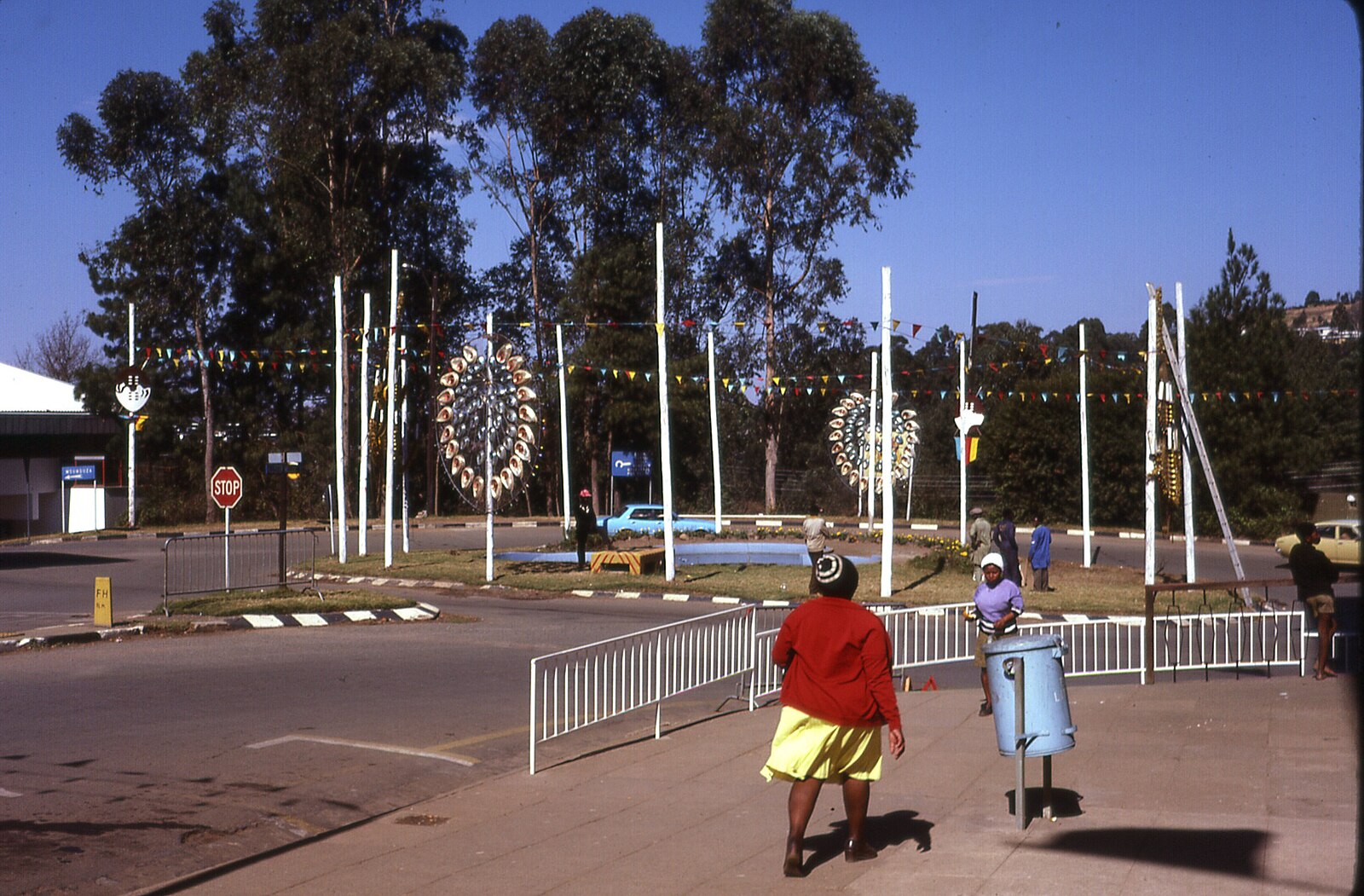
The study reports youth unemployment of 52.6% of the labour force in Eswatini, the highest of the 56 countries. The International Labour Organization, a UN agency, estimates 54.3% for ages 15 to 24 in 2025 in World Bank data, a different age band that points the same way.
Widespread informal work is a second barrier, because it limits access to stable livelihoods and to jobs where new technology is used. Informal work means jobs without contracts or social protection.
Cost is a third barrier, even though 66.3% of young people use the internet and electricity reaches 89.3% of the population. Mobile data costs 17.37% of income for the poorest 40% of the population, the study says.
The sharpest gap is in skills rather than access. Eswatini scored 7.1 out of 10 for meaningful access to technology but only 1.2 out of 10 for digital, data, media and AI capability.
What the Authors Recommend
Calvin Ayre said the contest is open to smaller economies: “this is not a race that only the biggest or richest countries can win.” He added that what matters is giving young people the skills and the chance to start businesses, find jobs or build something for themselves.
The accompanying white paper sets five priorities: affordable and reliable access, education that builds practical skills, stronger routes from training into jobs, AI tools suited to local languages, and safeguards that let young people question automated decisions. Only three of the 21 African members, Mauritius, South Africa and Nigeria, met the benchmark.
What It Means for US Readers
US technology firms and development agencies can read the index as a checklist for small markets: cheaper data, practical training and routes into work come before any AI rollout. The study’s figures suggest that electricity and basic access are not the main obstacles in Eswatini.
Investors should treat the US$75 million figure as the study’s middle estimate for a small economy, not a market opportunity on its own. The ranking is also a reminder that Eswatini sits behind larger African peers, Mauritius, South Africa and Nigeria, that cleared the benchmark.
What Is Not Known
- It is not known whether Eswatini’s government will act on any of the five priorities. Only its ministers can answer, most likely when they next present a budget or policy statement.
- It is not known whether the US$75 million gain will materialise, because the authors call the figures illustrative scenarios. Ayre Think Tank can say how it will update them, and its website gives no date for a next edition.
Frequently Asked Questions
What is the Ayre Index?
It is a ranking by Ayre Think Tank of how ready young people in 56 Commonwealth countries are to benefit from artificial intelligence. It was published on 5 November 2026 together with a white paper.
How much could AI add to Eswatini’s economy?
Under the study’s middle scenario, about US$75 million (about E1.23 billion) after ten years. The range runs from US$36 million to US$114 million.
Why does Eswatini rank so low?
The study points to youth unemployment of 52.6%, widespread informal work and costly mobile data. Eswatini also scored only 1.2 out of 10 for digital, data, media and AI capability.
Which African countries met the benchmark?
Only Mauritius, South Africa and Nigeria among the Commonwealth’s 21 African members reached it. Malawi and Lesotho finished at the bottom of the table.
Is this a forecast of Eswatini’s growth?
No, it is a scenario built on the IMF’s ten-year scenarios applied to Eswatini’s economy. The actual result depends on skills, data prices and jobs.
Connected Coverage: Eswatini Explained 2026 · US Buys Under 1% of Eswatini Exports
Sources: Ayre Think Tank, Ayre Index white paper page, 2026 (calvinayre.com); World Bank, GDP (current US$) and ILO modelled youth unemployment for Eswatini (data.worldbank.org); Commonwealth Secretariat, CHOGM 2026 page. Eswatini-level figures are the study’s results as reported in Eswatini on 6 November 2026, and the lilangeni (E) amount uses the South African Reserve Bank rand rate of 16.36 per US$1 on 5 November, with the lilangeni pegged one to one to the rand.
This article was produced by The Rio Times’ automated newsroom system. How we use AI · Report an error · Editorial responsibility: Matthias Camenzind, Editor-in-Chief