South Africa · ENERGY
Key Facts
The decision. President Cyril Ramaphosa endorsed government policy for an independent, state-owned Transmission System Operator on 31 July 2026, backing the Eskom transmission split after months of lobbying by the utility to keep the assets.
What moves. The National Transmission Company South Africa, already a legally separate Eskom subsidiary, is to be carved out of the group into a TSO that owns the grid outright rather than operating it for Eskom.
The stake. Transmission earned more than R35 billion (about US$2.1 billion) in core earnings in FY2025 and accounts for close to 40 percent of Eskom’s core earnings.
Eskom’s position. Chairman Mteto Nyati says the board shares the president’s vision of a TSO that owns the assets “at the appropriate point in the future.”
The conditions. The restructuring task team’s Phase I report says the transfer must respect lender requirements, avoid defaults and leave Eskom no worse off financially.
The build. NTCSA must add about 14,000 km of high-voltage line over a decade, at an estimated R440 billion (about US$26.9 billion).
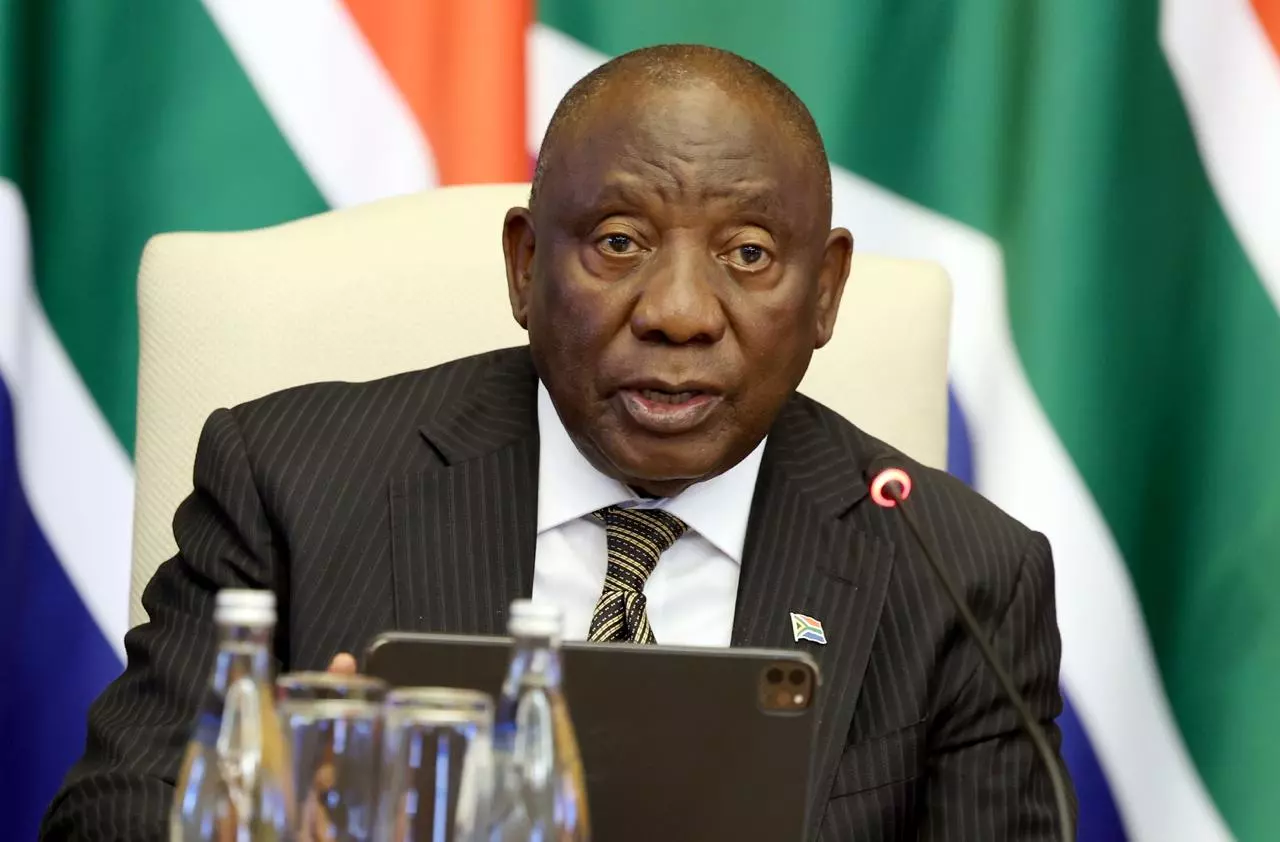
President Cyril Ramaphosa has backed the Eskom transmission split, ending months of lobbying by the utility to keep the grid inside the group and clearing the way for an independent state-owned operator that will eventually own the lines.
What the Eskom transmission split actually does
The reform is narrower than the word “breakup” suggests. Eskom has been splitting into generation, transmission and distribution since Ramaphosa announced the plan in February 2019, and the transmission arm already exists as a legally separate subsidiary, the National Transmission Company South Africa. The fight has been over one question: does NTCSA stay inside Eskom Holdings, or does it become a genuinely independent Transmission System Operator that owns the lines?
In December 2025 Electricity and Energy Minister Kgosientsho Ramokgopa approved a revised structure under which NTCSA would remain a wholly owned Eskom subsidiary and keep the assets. Creditors and foreign government funders objected. In his February 2026 State of the Nation Address Ramaphosa reversed course, appointed a restructuring task team under National Treasury director-general Duncan Pieterse, and reaffirmed a TSO that owns the grid outright. On 31 July he endorsed the task team’s Phase I report.
Why Eskom fought it, and what it settled for
Transmission is the reliable part of Eskom. It brought in more than R35 billion (about US$2.1 billion) of core earnings in FY2025 and makes up close to 40 percent of the group total. Moody’s warned that removing it could be credit negative and said it might downgrade; Fitch flagged execution risk and further delay. Those warnings came from the ratings agencies and a bondholder, not from Eskom’s board.
Chairman Mteto Nyati has been careful about where he stands. “Eskom is agnostic about who owns the assets,” he told CNBC Africa on 4 August. “We have never been married to where the assets sit.” The board, he says, shares the president’s vision of a TSO owning the grid at the appropriate point in the future. What Eskom wants first is a set of conditions met: the treatment of R119 billion (about US$7.3 billion) in municipal debt, consent from lenders who hold the assets as security, an agreed valuation, and a funding plan for the new entity.
That is what the task team’s Phase II is for. It focuses on financial sustainability, municipal debt and obligations to lenders — the practical obstacles rather than the principle.
The row that got personal
In July the argument spilled into public. Nyati accused Business Leadership South Africa and Business Unity South Africa of hypocrisy and of advocating political interference; BLSA chief executive Busisiwe Mavuso rejected the charge and told Eskom to stop rewriting settled policy. Business Day ran it under the headline “Stop rewriting settled policy, business tells Eskom over transmission assets.” Ramaphosa’s endorsement three weeks later settled the argument in business’s favour.
What has to be built
Whoever owns it, the grid needs work. NTCSA has to add roughly 14,000 km of new high-voltage line over the next decade to connect new renewable generation and stabilise the network, at an estimated R440 billion (about US$26.9 billion). Eskom operates around 403,000 km of transmission and distribution line today. When the current board took over in 2025 the group carried about R490 billion (about US$29.9 billion) of debt, roughly 15 times EBITDA; gross debt to EBITDA is now nearer four times, with a target of three.
The cost of getting this wrong is measurable. The OECD put the output lost to load shedding at R43.5 billion (about US$2.7 billion) between 2007 and 2019, then R224 billion (about US$13.7 billion) between 2020 and the first quarter of 2023. In 2023 alone, blackouts cut GDP growth by 1.5 percentage points, leaving it at 0.7 percent.
The argument Latin America has already had
This is the same fight Mexico and Brazil have run, with opposite outcomes. Brazil unbundled and part-privatised Eletrobras and now has a competitive generation market with an independent system operator. Mexico went the other way under the last two administrations, restoring CFE’s primacy and squeezing private renewables out of the dispatch order.
The South African argument is the same one: an integrated utility that both owns the grid and sells the power has an incentive to favour its own generation. If you hold Latin American utility paper, the interesting part is not the politics but the creditor mechanics — lenders hold Eskom’s transmission assets as security, and nothing moves until they consent. That constraint travels.
What to watch next
South Africa will appoint advisers within weeks to open negotiations with creditors on the spin-off, Bloomberg reported on 4 August. Those talks, the valuation of the assets and the fate of the municipal debt are the three things that will determine whether the TSO exists in practice or only on paper. Nyati’s term as chairman runs to the end of October 2026.
More: South Africa news in English, every day from The Rio Times.
Frequently Asked Questions
Has Eskom been broken up?
Not yet. Eskom has been separating into generation, transmission and distribution since 2019, and the transmission arm already exists as a subsidiary. What Ramaphosa endorsed on 31 July 2026 is the next step: moving it out of the group into an independent state-owned operator that owns the assets.
Did Eskom oppose the Eskom transmission split?
Eskom lobbied to keep the assets, but chairman Mteto Nyati says the board is “agnostic about who owns the assets” and shares the president’s vision of a TSO owning them at the appropriate point. Its conditions concern municipal debt, lender consent, valuation and funding.
Why do lenders matter here?
Eskom’s transmission assets are pledged as security against its debt. Moving them requires lender consent, and the task team’s report says the transfer must avoid defaults and leave Eskom no worse off.
How much does the new grid cost?
NTCSA needs to build about 14,000 km of high-voltage line over a decade, estimated at R440 billion (about US$26.9 billion).
What did load shedding cost South Africa?
The OECD estimated R43.5 billion (about US$2.7 billion) of lost output from 2007 to 2019 and R224 billion (about US$13.7 billion) from 2020 to early 2023. In 2023 blackouts cut GDP growth by 1.5 percentage points.
Sources
- Business Day — Ramaphosa backs Eskom asset split
- CNBC Africa — Nyati on the asset transfer
- Eskom — Phase I and Phase II statement
- Mining Weekly — transfer at the appropriate point
- Business Day — business leaders against the utility board
This article was produced by The Rio Times’ automated AI newsroom. Editorial responsibility: Matthias Camenzind, Publisher and Editor-in-Chief. The Rio Times also runs Ask Rio Times, which answers from 100,000+ of our own articles, the daily Latin America Power Map, and prediction-market odds on elections and markets.. How we use AI · Report an error
LatAm Markets: Live Signals → — real-time movers, turnover leaders and FX across Latin America.