Ecuador’s Capital Buckles Under Drug Gangs as Homicides Surge 58% in 2025
Quito’s southern neighborhood of Solanda—home to 150,000 residents—has become a flashpoint in Ecuador’s escalating drug war, with 10 murders recorded by mid-May 2025 alone.
Nationwide, intentional homicides rose to 3,094 between January and April, a 58% spike from 2024, according to police data. Once concentrated in coastal cities, violence now grips the capital as gangs battle for control of microtrafficking routes.
Criminal groups recruit teenagers in Solanda to sell drugs, exploiting Quito’s booming illicit market. A local leader intercepted a woman offering cash to youths for distributing narcotics, forcing her to flee within weeks.
Residents have barricaded streets with metal gates, transforming public parks into fortified zones. Bullet-riddled buildings, like a former bakery shattered in a shootout, stand as stark evidence of monthly gun battles.
President Daniel Noboa’s military operations, including a May 19 raid in Solanda, have failed to curb the crisis. Security forces face allegations of extrajudicial killings and torture, with over 200 abuse cases under investigation in 2025.
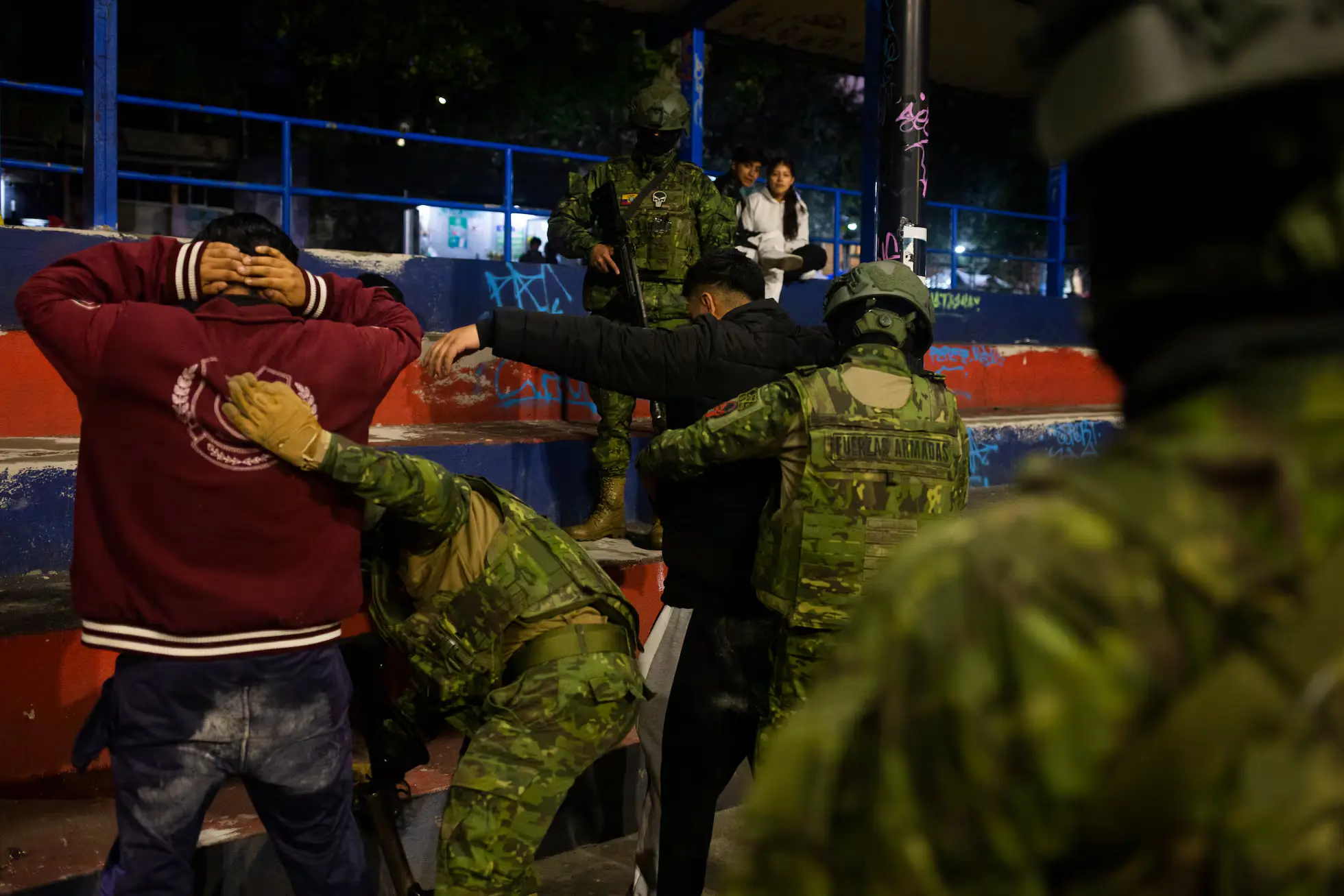
Police resources remain skewed toward coastal regions, leaving Quito understaffed. “Gangs act recklessly because they face no consequences,” said security analyst Pedro Manosalvas, citing links to extortion and arms trafficking.
Economic desperation fuels the chaos. With 37.3% of Ecuadorians in poverty, drug trafficking’s $10 billion annual revenue lures marginalized youths.
In Solanda, families report children coerced into dealing by threats. A mother recounted her son witnessing a double murder on May 9: “I can’t let him walk four blocks at night now.”
Authorities acknowledge Quito’s strategic value to gangs. “They see a consumer base and minimal state control,” said GI-TOC expert Carolina Andrade.
Despite a 32.4% rise in capital homicides this year, the government’s reliance on militarized tactics risks deepening human rights violations. For Solanda’s residents, survival hinges on fragile sanctuaries—like a volleyball court still open at night—as the drug trade reshapes their city.
More: Ecuador news in English, every day from The Rio Times.
This article was produced by The Rio Times’ automated newsroom system. How we use AI · Report an error · Editorial responsibility: Matthias Camenzind, Editor-in-Chief