Ecuador Declares Another Emergency, and the Homicide Rate Keeps Climbing
Key Facts
Ecuador has been under some form of emergency rule for most of the last three years. The newest decree is the clearest evidence that the tool is not working.
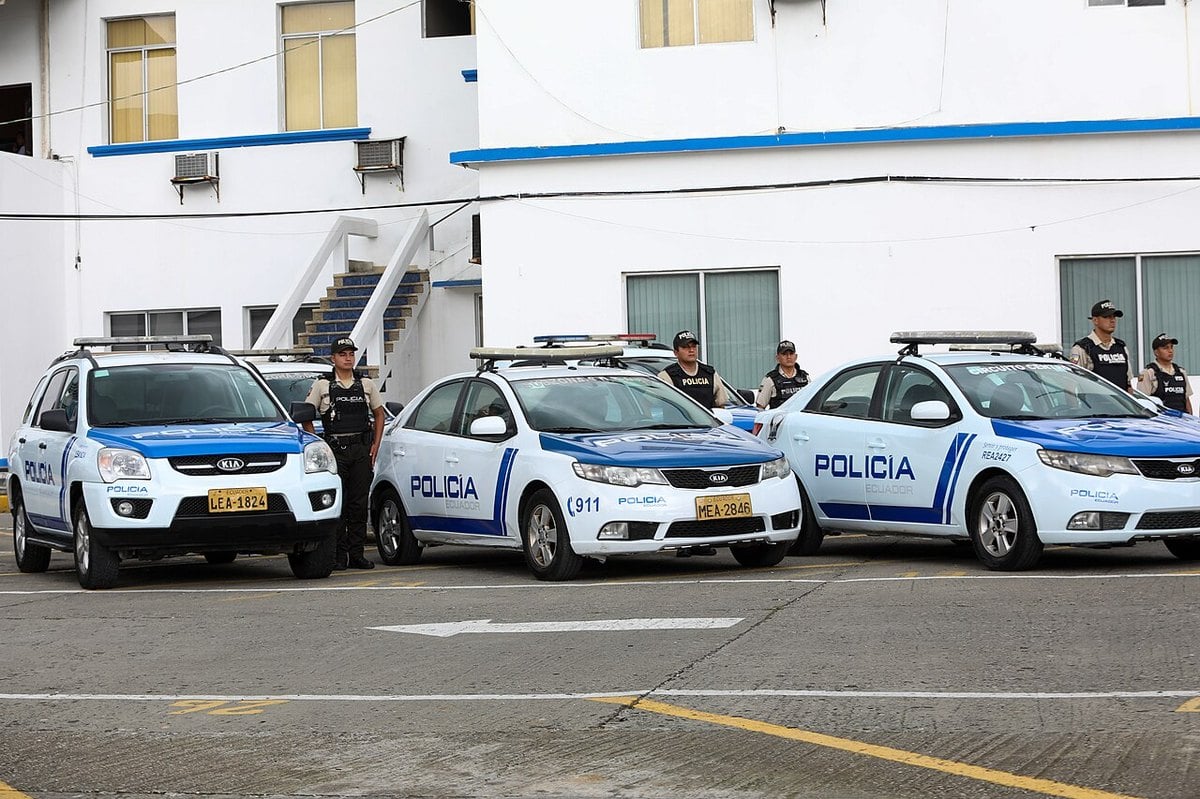
Executive Decree 498 took effect on 15 September 2026, for sixty days. It covers eight provinces and three cantons, and suspends three constitutional rights inside them.
Exactly Where It Applies
The eight provinces are El Oro, Esmeraldas, Guayas, Los Rios, Manabi, Pichincha, Santa Elena and Santo Domingo. Three cantons outside those provinces are also covered.
They are Camilo Ponce Enriquez, Las Naves and La Mana. Reports that describe eight provinces alone are leaving out a third of the geography.
The curfew is narrower than the decree, and this is where most coverage slips. It runs from midnight to five in the morning, in Guayas, Manabi, Los Rios and El Oro only.
It applies from 17 to 30 September. There are no transit permits, and breaking it carries one to three years.
What Rights Are Suspended
The decree suspends the inviolability of the home, which allows searches without a warrant. It suspends the inviolability of correspondence, allowing suspicious parcels to be intercepted on a technical report.
It suspends freedom of transit, which is the legal basis for the curfew. It authorises joint military and police operations.
And armed requisitions against trafficking and extortion groups. The stated ground is grave internal unrest, the standard constitutional formula for this kind of order.
The Numbers the Government Used
The decree cites 442 intentional homicides between 16 August and 10 September 2026. Guayas accounts for 187 of them, El Oro for 80 and Manabi for 73.
Los Rios recorded 52, Santa Elena 20, Esmeraldas 15, Pichincha 12 and Santo Domingo 3. Those are twenty-six days.
Annualised, the pace works out at roughly 6,200 killings a year. The government’s own justification document therefore describes an acceleration, not a decline.
Why the Falling Trend Is Not What It Looks Like
The official figures for January to July 2026 show 4,882 homicides, down 7.8% on the same period of 2025. That comparison flatters the present.
Ecuador’s 2025 total was 9,216, the worst year in its history. The first half of 2026 was still the second deadliest first half on record, at 4,154 killings.
Look at the monthly path instead. June recorded 693 violent deaths and July 704.
Both months were above the same months of 2025. The year-to-date decline was front-loaded and has since reversed.
The Rate That Tells the Longer Story
Ecuador’s homicide rate ran near 49 per 100,000 people on a rolling annual basis to 31 March 2026. Earlier in the year it touched about 51, the highest ever recorded in the country.
For comparison, the rate was around 8 per 100,000 in 2021. And the country logged 1,189 homicides in 2019.
Six Ecuadorian cities now rank among the ten most violent in South America by homicide rate. Those states of exception have run, in some form, throughout that entire climb.
The Court That Can Cut It Short
Ecuador’s Constitutional Court reviews every state of exception, and it does not always approve them in full. In March 2026 it cut one such decree to thirty days.
In June 2026 it upheld a decree covering ten provinces and three cantons. Its review of Decree 498 had not been issued when this article was published.
So the sixty days are not settled. They are the government’s request, pending judicial confirmation.
A Pattern Rather Than an Event
Noboa decreed a state of exception in January 2026, covering seven provinces for sixty days. He decreed another in June 2026, covering ten provinces and three cantons.
Counting back to January 2024, Decree 498 is roughly the twentieth of its kind. Presenting it as an escalation, without that cadence, misses what is actually being reported.
The more useful description is that emergency rule has become the ordinary condition of policing in Ecuador.
What It Means If You Live There or Travel There
If you are in Guayas, Manabi, Los Rios or El Oro, plan around a curfew from midnight to five until 30 September. Searches without a warrant are lawful inside the covered areas for the duration of the decree.
Outside those provinces and the three named cantons, nothing changes legally. For businesses, the operational risk is not the decree.
It is that the violence has moved rather than fallen. El Oro has risen sharply while Guayaquil improved, which is displacement rather than reduction.
What Is Not Yet Known
The Constitutional Court’s ruling on Decree 498 has not been published. Whether the curfew is extended beyond 30 September has not been announced.
August and September homicide totals beyond the 442 cited in the decree have not been released officially. Whether this decree is followed by another in November is the open question, and the record suggests it will be.
Frequently Asked Questions
What does Ecuador’s state of exception cover?
Decree 498 covers eight provinces and three cantons for sixty days from 15 September 2026. It suspends the inviolability of the home and of correspondence, and freedom of transit.
Where does the curfew apply?
In Guayas, Manabi, Los Rios and El Oro only, from midnight to five in the morning, between 17 and 30 September 2026.
Is violence in Ecuador falling?
Homicides for January to July 2026 were 7.8% below the same period of 2025, but 2025 was the worst year on record. June and July 2026 were both above their 2025 equivalents.
Can the decree be shortened?
Yes, and the Constitutional Court reviews every state of exception. It cut one to thirty days in March 2026, and its ruling on this decree is still pending.
Sources: Nodal, the decree and the provinces covered, El Diario, the curfew and the rights suspended, Diario Extra, homicides from January to July, Lupa, the first-half homicide comparison, Radio Pichincha, the homicide rate to March 2026, PADF, the regional homicide bulletins
This article was produced by The Rio Times’ automated newsroom system. How we use AI · Report an error
Read More from The Rio Times