Ecuador Curfew and Industrial Power Plan Are Two Separate Orders
ECUADOR · SECURITY AND ENERGY
Key Facts
- —The Ecuador curfew Decree 498 suspends movement from 00:00 to 05:00 in El Oro, Guayas, Los Ríos and Manabí.
- —How long The night restriction runs from 17 to 30 September 2026, inside a 60-day state of exception.
- —The arrests Interior Minister John Reimberg said 901 people were held for crimes in the first week.
- —The power order The energy ministry told 185 high-voltage industrial users to cut grid use one working day a week.
- —Why power Water at the Mazar reservoir has fallen fast, and the government wants it to last until December.
- —The catch The two orders share no legal link, and neither authority has said one caused the other.
One order is about crime. The other is about water in a reservoir. They are not the same policy.
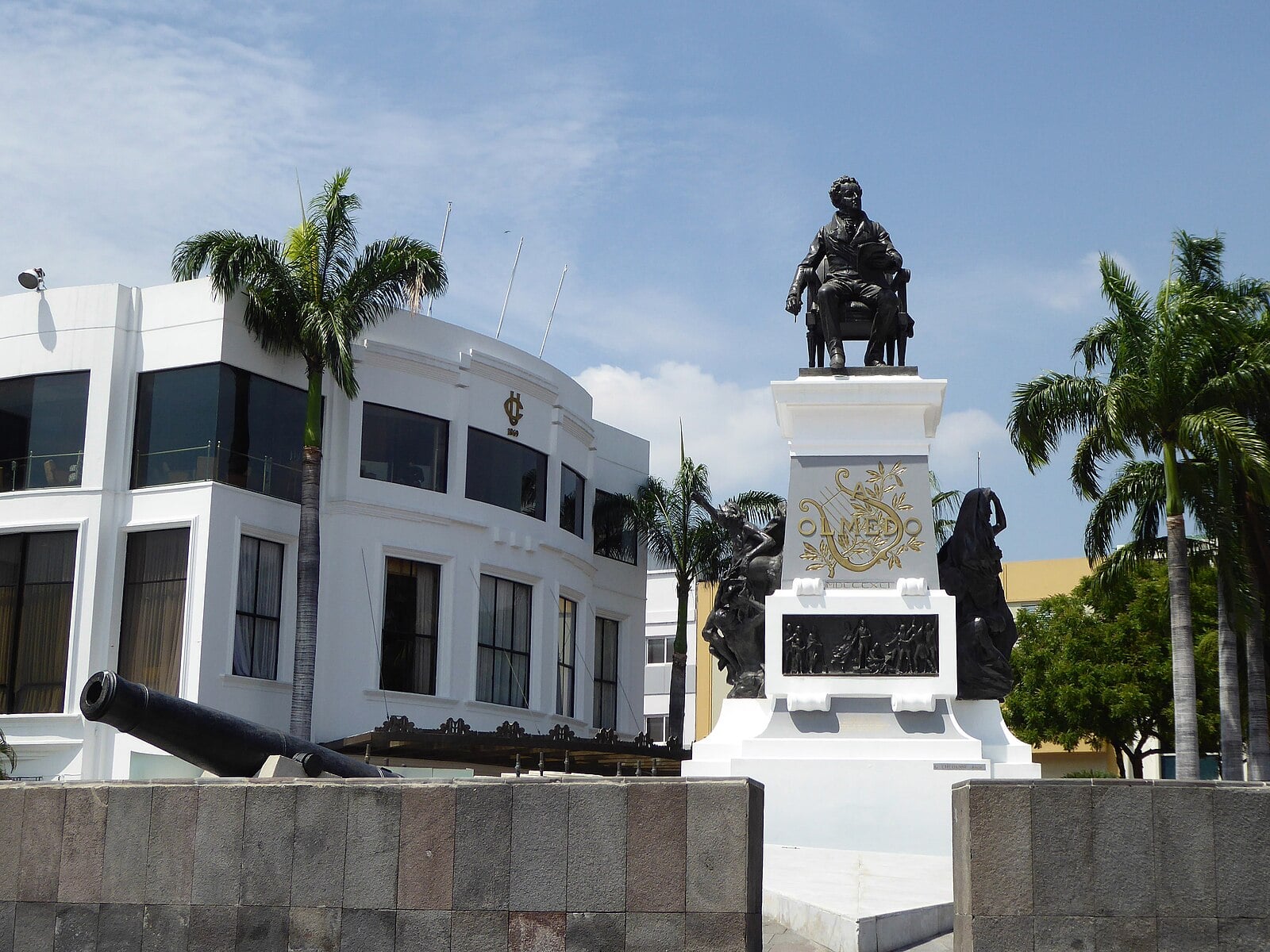
The Ecuador curfew now running in four coastal provinces comes from a security decree signed on 15 September 2026. A separate energy order, issued a week later, asks 185 large industrial users to draw less power.
Two orders, two ministries, two reasons
The Ecuador curfew was signed by President Daniel Noboa. The electricity order came a week later from the Ministry of Environment and Energy.
No official statement connects them. Neither authority has said that one measure caused the other.
The two do overlap on the map. Most affected factories sit in Guayaquil and Durán, in Guayas, which is also under the night rule.
What the Ecuador curfew covers
Executive Decree 498 was signed on Tuesday 15 September 2026 at the Carondelet Palace in Quito. It declares a state of exception for grave internal unrest, lasting 60 days.
That declaration covers eight provinces and three cantons. The night movement ban is narrower and applies only in El Oro, Guayas, Los Ríos and Manabí.
The restriction runs each day from midnight to 05:00. It started at 00:00 on Thursday 17 September and ends at 23:59 on Wednesday 30 September 2026.
The stated reason is organized crime. Reports behind the decree counted 107 intentional homicides in those provinces between 16 August and 10 September 2026.
This is the third such night restriction ordered in Ecuador this year. The earlier two ran in March and May 2026.
The arrest figure and where it comes from
Interior Minister John Reimberg gave a first-week tally on Wednesday 23 September 2026, in a radio interview. He said police had held at least 1,225 people since 17 September.
Of those, 901 were held for offences such as extortion, contract killing, weapons charges and drug trafficking. The other 324 were held for breaking the night restriction itself.
The minister also reported 650 operations and 506 checkpoints across the four provinces. Police seized more than 187 firearms, and the minister put drug seizures at about six tonnes.
The electricity order and what caused it
The Ministry of Environment and Energy published its statement on Tuesday 22 September 2026. It told 185 companies in the AV1 and AV2 segments to cut their grid use one day a week.
The target is a saving of about one gigawatt-hour, or 1,000 megawatt-hours, of energy a day. Firms may cut load, run their own generators or move production to other days.
The legal basis is ARCONEL Regulation 004/25, the rule on running the grid when generation falls short. ARCONEL is Ecuador’s electricity regulator.
The trigger was hydrology, not demand or transmission. CENACE, the national grid operator, warned on 15 September that covering demand had become high risk.
The Mazar reservoir feeds the Paute Integral complex, which can supply up to 30 percent of national demand. At 07:00 on 22 September it stood at 2,138.46 metres above sea level, 14.54 metres below its maximum.
What AV1 and AV2 mean, and who is spared
AV1 and AV2 are voltage bands in Ecuador’s national tariff schedule, not a list of the biggest firms. AV1 covers supply above 40 kilovolts and up to 138 kilovolts.
AV2 covers supply above 138 kilovolts, the level of the transmission system itself. Only industrial users in those bands are named in the order.
Energy Minister Juan Carlos Blum said on 18 September that Mazar would otherwise run dry by late October. The aim is to stretch it to December, when rain is expected.
The ministry says the order is for industry alone. It says no household or commercial disconnections are planned under this arrangement.
A separate decree gives AV1 and AV2 users until 15 December 2026 to install their own generation.
Ecuador has rationed power before
This is not new ground for the country. Ecuador rationed electricity from 27 October to 19 December 2023, during a change of government.
A worse round followed from 23 September to 19 December 2024. Outages reached 14 hours a day and averaged about eight hours over 87 days.
El Universo counted 691 hours without power in that 2024 stretch. That is the equivalent of 28 full days in the dark.
Officials say the current order is meant to avoid a repeat. That claim has not been tested through a full dry season.
Why this matters if you live in or invest in the region
Ecuador uses the US dollar, so every figure here is already in dollars. That removes the currency risk found in Brazil, Argentina or Colombia.
For residents, the Ecuador curfew is the more visible rule. Movement stops between midnight and 05:00 in the four named provinces until 30 September.
For investors, the energy order matters more. Firms that keep drawing at full rate may have to buy costly emergency barge power.
Several things are not known. The government has not published which weekday each company takes, nor an end date for the energy order.
Both orders are reversible, and both turn on conditions nobody controls. Rain at Mazar and homicide counts on the coast will shape what comes next.
Frequently Asked Questions
Are Ecuador’s curfew and its power measure connected?
No official statement links them. The Ecuador curfew comes from a security decree; the power order comes from the energy ministry.
Will homes lose electricity under the new order?
The Ministry of Environment and Energy says no. It states the measure is for industrial users only.
When does the night restriction end?
It is due to end at 23:59 on Wednesday 30 September 2026. Any extension would need a new decision.
Connected Coverage
Ecuador Army Rocket Strikes Target Illegal Mining in Imbabura
Sources: Executive Decree 498, signed 15 September 2026; Ministry of the Interior briefing by John Reimberg, 23 September 2026; Ministry of Environment and Energy statement, 22 September 2026; ARCONEL tariff schedule; El Universo, Primicias, Expreso, El Comercio, Extra and Radio Pichincha.
This article was produced by The Rio Times’ automated newsroom system. How we use AI · Report an error
Read More from The Rio Times