Driving in Costa Rica: Licence, Marchamo, Inspection and Apps
Guides · Costa Rica
Key Facts
- The country — Costa Rica is mountainous, wet for half the year and largely dependent on two-lane roads, so distances here are measured in hours rather than kilometres. Almost two million vehicles are registered.
- The standing rule — the traffic law, Ley 9078, governs licences and penalties. Every vehicle needs an annual marchamo, the circulation permit that bundles tax and compulsory insurance, and an annual technical inspection known as the RTV.
- What matters now — article 91 was reformed twice in 2024, and the operator of the inspection changed, so most English-language guidance on both points is now out of date.
- What happened — this guide records the rules and the published prices for driving in Costa Rica as they stand in September 2026, and flags the parts nobody can confirm.
- The numbers — the licence conversion costs ¢5,000 (about US$11), a light-vehicle inspection about ¢6,794 (about US$15) with tax, and the compulsory car insurance inside the marchamo ¢30,238 (about US$67).
- What it means for you — you may drive on your own licence for the whole period stamped on entry, and you no longer wait 91 days after your residence card to convert it.
- Still open — whether someone whose entry stamp lapses while an application is pending may lawfully drive, and what the mandatory medical report for conversion costs.
The three-month rule you have read about was repealed in 2024, Riteve no longer runs the inspection, and more than half of everyone killed on these roads is on a motorcycle.
Driving in Costa Rica is simpler than most guides suggest, because the rule that mattered changed in 2024 and much of what circulates online is now wrong. Your home licence is valid for as long as your legal stay, not for three months. This guide sets out the current position on licences, the annual marchamo, the technical inspection, the fines and the ride-hailing apps.
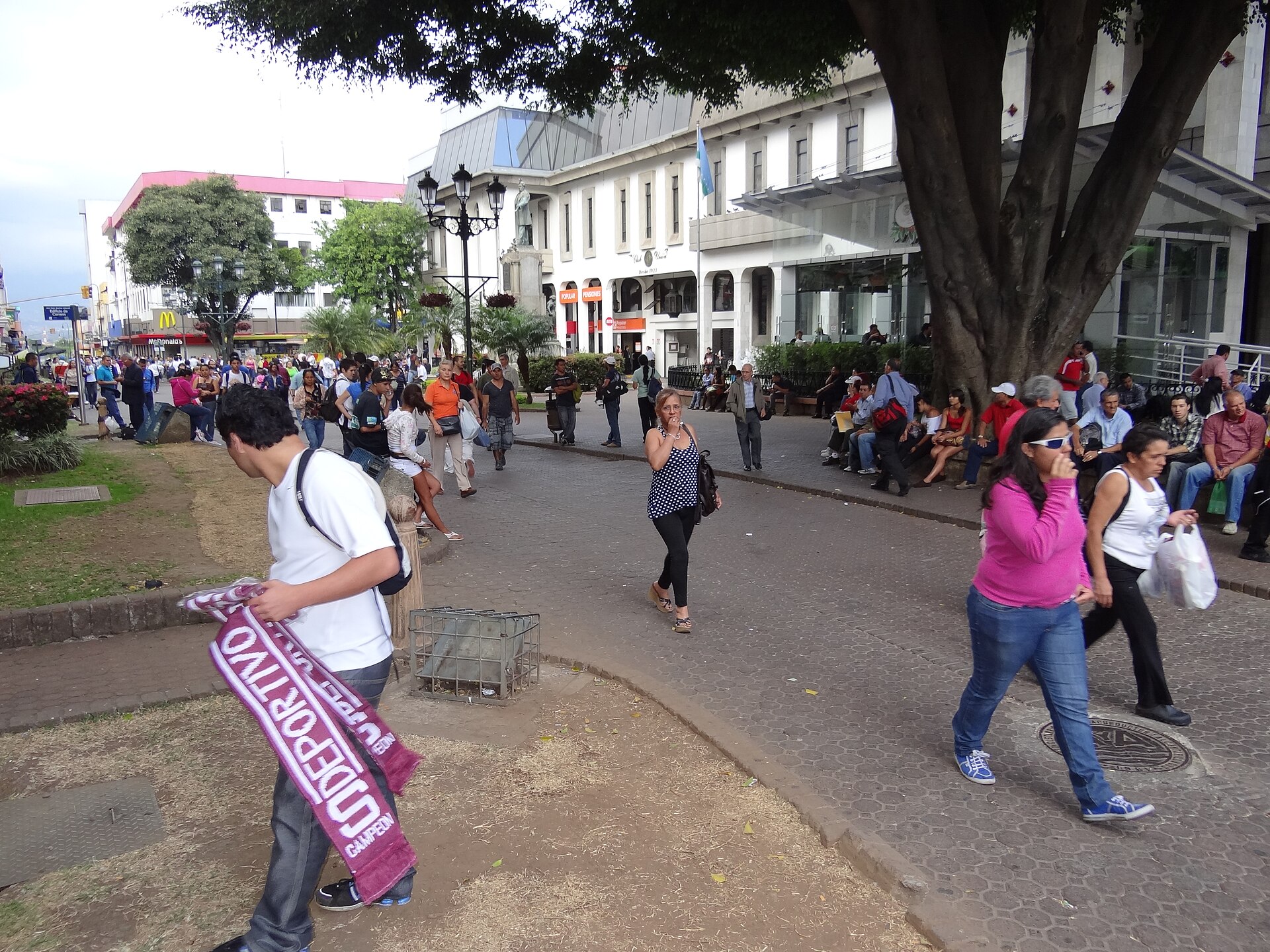
Driving in Costa Rica on a foreign licence
Article 91 of the traffic law was reformed twice, first in May 2024 and then by Ley 10591 in December 2024. The current text covers any driver holding a foreign licence, in any stay subcategory or in transit. They may drive the same class of vehicle for a period identical to the legal stay granted.
In plain terms, you may drive for the whole period stamped into your passport on arrival. Visa-free nationals are commonly admitted for up to 180 days, though the length is at the officer’s discretion rather than a right. The old three-month limit is gone, and any guide still printing it is wrong.
The same article adds that a licence may not be demanded in physical form where your home country issues it digitally. One ambiguity survives. If your entry stamp lapses while a residency or nomad application is pending, article 91 authorises driving only on condition that you obtain the Costa Rican licence. Do not assume you are covered.
Converting to a Costa Rican licence
Conversion is called homologación. It is available to anyone with approved migratory status and, since the 2024 reform, to anyone who has merely filed an application. The old requirement to wait 91 uninterrupted days after receiving your DIMEX card, the identity document issued to foreigners here, has been removed.
The road safety directorate waives both the basic road safety course and the practical driving test. You show a valid licence, an official translation of it, a certification of the licence, current migratory status, a medical report and no unpaid fines. The procedure is personal and in person, at one of 13 offices around the country.
Book the appointment free through the driver accreditation system online, and pay nothing beforehand. Once the directorate approves you, book a second slot at Banco de Costa Rica to have the card printed. That costs ¢5,000 (about US$11) plus a small bank commission and can be done the same day. Colón amounts here are converted at ¢450 (about US$1) to the dollar, the reference rate on 23 September 2026.
Two points stay unconfirmed. The medical report is an extra cost the ministry does not publish. And a business chamber reports that converted licences are issued with novice status valid for three years, which we could not find stated anywhere by the ministry itself.
The marchamo, the annual bill everybody talks about
The marchamo bundles several charges into one payment: the vehicle property tax, the compulsory accident insurance called the SOA, council contributions, value added tax, stamps and any unpaid fines.
For 2026 the property tax was 60 percent of the bill and the SOA 26 percent. The SOA premium for a private car is ¢30,238 (about US$67), up 17 percent on the year and the largest rise of any class. For a motorcycle it is ¢99,623 (about US$221), far above the car figure.
Property tax is a percentage of the fiscal value, from 0.6 percent up to ¢3,020,000 (about US$6,711) through bands to 3.5 percent above ¢13,070,000 (about US$29,044). An ordinary used car valued at ¢5,000,000 (about US$11,111) pays 2.1 percent, so the whole bill lands near ¢160,000 (about US$355) to ¢180,000 (about US$400). That last range is our arithmetic from the published bands, not a quoted figure.
Collection for the 2026 marchamo ran from 3 November to 31 December 2025, and about 1.94 million owners paid, raising roughly ¢335 billion (about US$744 million). Expect the 2027 window in early November. Paying late brings a traffic fine of about ¢60,000 (about US$133) plus interest and penalties.
The technical inspection, now run by DEKRA
The annual inspection is the RTV. Riteve no longer runs it. The operator is DEKRA, and any guide still naming Riteve is out of date. Under the tariff in force, a light vehicle pays ¢6,012 (about US$13) before tax, or about ¢6,794 (about US$15) once the 13 percent value added tax is added.
A motorcycle pays ¢4,562 (about US$10) before tax, about ¢5,155 (about US$11) with it. Electric and historic vehicles pay ¢4,700 (about US$10). Re-inspections cost less, and cash payments round down to the nearest ten colones.
Your month is set by the last digit of the number plate. Plates ending one to nine are inspected from January through September, and plates ending zero in October. Public transport and hazardous goods vehicles go twice a year. The only document the station asks for is a valid licence covering that class. Whether new vehicles are exempt at first is not stated by the operator.
Fines, road safety and the apps
Fines were reset on 1 January 2026 by a judicial circular. Category A, covering drink-driving and speeds above 120 kilometres an hour, is ¢362,839 (about US$806). Using a mobile phone at the wheel is category C at ¢122,598 (about US$272). Driving with no valid marchamo or inspection is category D at ¢60,680 (about US$135).
The safety numbers deserve a moment. In January and February 2026 alone, 113 people died on the roads, and 63 of them were motorcyclists. The whole of 2025 recorded 572 deaths. Excessive speed caused 44 deaths in those two months and lane invasion another 22. Motorcyclists are more than half of everyone killed.
Waze is the default navigation app here, because addresses are descriptive rather than numbered. Even the private hospitals publish Waze links to their own entrances. Uber and DiDi work throughout the metropolitan area, but neither is regulated, eleven years after Uber arrived.
That matters in a specific way. The driver, not the passenger, is the one outside the law. Penalties for drivers start at ¢122,597 (about US$272) and can reach seizure of the plates. No regulated insurance regime stands behind the ride. A bill to regulate the platforms reached the floor of the assembly in July 2026 and has still not been voted.
At the main airport, Uber now lets you hail the official orange taxi through its own app. A June 2026 comparison put a standard Uber at ¢8,190 (about US$18) against ¢15,949 (about US$35) for the taxi. One approved amendment to the bill would bar platform drivers from airports.
Frequently Asked Questions
How long can I drive in Costa Rica on my own licence?
For the whole period your entry stamp grants, since the 2024 reform of article 91 of the traffic law. The old three-month cap no longer exists. Visa-free nationals are commonly admitted for up to 180 days, but that length is discretionary.
What does converting my licence cost?
The card itself costs about US$11 at Banco de Costa Rica, plus a small commission. The appointment with the road safety directorate is free, but you also pay for an official translation and a medical report whose price is not published.
Who runs the vehicle inspection now?
DEKRA, not Riteve. A light vehicle pays roughly US$15 including tax, and the month of your inspection is set by the last digit of your number plate.
Is Uber legal in Costa Rica?
No. Eleven years after it arrived the platform is still unregulated, and the driver rather than the passenger carries the legal risk. A regulation bill went back to the floor of the assembly in July 2026 and has not yet been voted.
Connected Coverage
- Moving to Costa Rica: The Full Relocation Guide
- Costa Rica Residency Guide for Expats
- Cost of Living in Costa Rica: Budgets and Rent
This article was produced by The Rio Times’ automated newsroom system. How we use AI · Report an error
Read More from The Rio Times
Rotate for Best Experience
This report is optimized for landscape viewing. Rotate your phone for the full experience.
You've reached your free article limit
Subscribe to The Rio Times for unlimited access to expert analysis, market intelligence, and daily briefings on Latin America.