Datafolha Has Lula and Flavio Bolsonaro Tied Again, 46 to 44
Key Facts
Datafolha’s newest presidential poll moved almost nothing, and that is the finding. Just over two weeks from the first round, the runoff remains a coin toss.
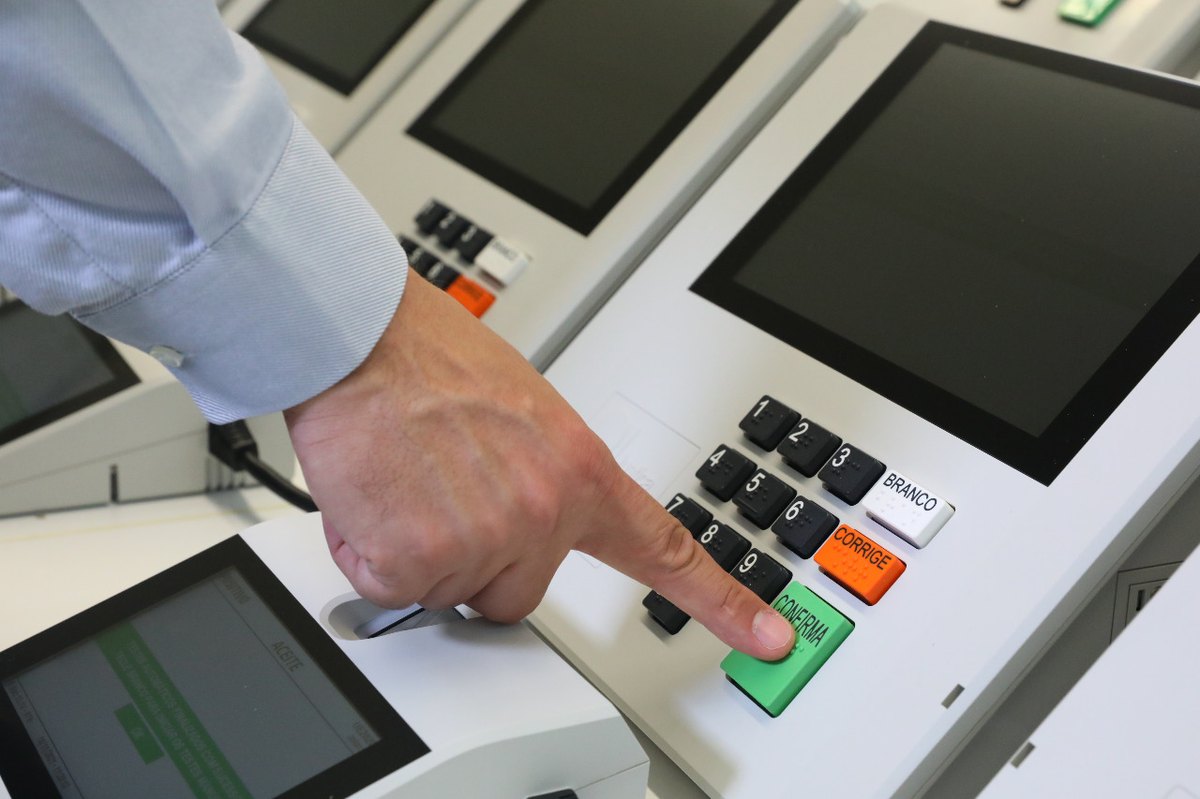
Datafolha published its latest national presidential survey on 17 September 2026. In a runoff it put Lula on 46% and Senator Flavio Bolsonaro on 44%.
What Datafolha Released
The institute interviewed 2,002 voters aged 16 and over between 15 and 17 September. The poll was commissioned by Folha de S.Paulo and Globo, and registered with the electoral court.
Its registration number is BR-04029/2026. The stated margin of error is two percentage points either way.
The confidence level is 95%. That means the error range holds in 19 samples out of 20.
Those methodology details are the whole story here, not a footnote. Without them, the headline numbers cannot be read correctly.
Live Market IntelligenceBrazil — Live Market Board
Rio Times · Live Market Intelligence
Brazil — Live Market Board
+0.24%
185,992.03
+0.24%
63,873.32
+0.58%
11,381.18
+1.30%
3,061,512
+1.08%
2,521.85
+0.40%
58,965.05
+1.80%
| Instrument | Last | Change | YoY | Prev. | High | Low | Volume |
|---|---|---|---|---|---|---|---|
| IBOV | 185,992.03 | +0.24% | +21.85% | 185,547.66 | 168,310 | 167,142 | — |
| USD/BRL | 5.16 | +0.01% | -5.13% | 5.16 | 5.18 | 5.14 | — |
| SELIC | 14.00% | — | — | — | — | — | |
| PETR4 | 41.64 | -0.05% | +35.19% | 41.66 | 41.97 | 41.15 | 41,499,400 |
| VALE3 | 72.97 | +0.83% | +30.75% | 72.37 | 73.54 | 72.66 | 17,658,000 |
| ITUB4 | 38.60 | -1.03% | +4.57% | 39.00 | 39.34 | 38.39 | 29,487,800 |
| BBDC4 | 16.85 | +0.36% | +3.50% | 16.79 | 16.90 | 16.67 | 19,416,900 |
| BBAS3 | 19.37 | +0.47% | +0.73% | 19.28 | 19.44 | 19.16 | 11,069,200 |
| B3SA3 | 14.26 | -0.21% | +12.73% | 14.29 | 14.47 | 14.11 | 33,037,800 |
| ABEV3 | 14.89 | -0.80% | +21.91% | 15.01 | 15.07 | 14.81 | 16,453,100 |
| WEGE3 | 47.59 | +0.49% | +29.99% | 47.36 | 48.08 | 47.36 | 3,364,600 |
| PRIO3 | 59.14 | -0.19% | +50.67% | 59.25 | 59.81 | 58.74 | 3,325,600 |
| SUZB3 | 41.33 | +2.35% | -23.55% | 40.38 | 41.48 | 40.35 | 3,914,900 |
| RENT3 | 34.68 | -0.09% | +0.84% | 34.71 | 34.96 | 34.35 | 7,979,100 |
| AZZA3 | 15.89 | -2.63% | -53.76% | 16.32 | 16.42 | 15.82 | 1,330,300 |
| CSNA3 | 4.30 | +0.47% | -42.65% | 4.28 | 4.41 | 4.26 | 10,076,100 |
| GGBR4 | 24.69 | +2.19% | +51.38% | 24.16 | 24.85 | 24.18 | 7,047,600 |
| ENEV3 | 24.21 | -1.38% | +70.49% | 24.55 | 24.64 | 23.99 | 9,297,000 |
The First-Round Field
In the stimulated first-round question, Lula took 39% and Flavio Bolsonaro 36%. The writer Augusto Cury, of Avante, came third on 6%.
Goias governor Ronaldo Caiado, of PSD, took 4%. Renan Santos, of Missao, took 3%.
Minas Gerais governor Romeu Zema, of Novo, took 2%. Two smaller names registered 1% each, Samara Martins and Rui Costa Pimenta.
Four others registered zero. Blank, null and none-of-these together came to 6%, with 3% undecided.
Datafolha also asked the question without a list of names. On that spontaneous measure Lula had 35%, Flavio 26%, and 21% could not name anyone.
What a Statistical Tie Actually Means
The three-point first-round gap and the two-point runoff gap both sit inside the margin of error. Brazilian coverage describes both as technical ties.
A margin of error is not a promise that the true figure lies within it. It is a statement about how often repeated samples would land in that band.
When two candidates are separated by less than twice the margin, the ordering is not established. Either could be ahead in the underlying electorate, and the poll cannot tell you which.
So the honest reading is that the runoff is level, not that Lula is ahead. The same caution applies to the 39 to 36 first-round figure.
The Other Runoff Match-Ups
Datafolha tested five runoff pairings, not one. Against Augusto Cury, Lula drew level at 44% to 44%.
Against Ronaldo Caiado, Lula had 46% to 42%, a four-point gap. Against Renan Santos, Lula had 47% to 38%.
Against Romeu Zema, Lula had 49% to 39%, the widest margin tested. Only two of the five scenarios produce a gap that clears the error band.
In the Lula versus Flavio scenario, blank, null and none-of-these took 8%. Undecided voters were 1%, which leaves little room left to move.
Approval at 48 and Disapproval at 50
Datafolha also asked whether voters approve of the way Lula is governing. Forty-eight percent said they approve and 50% said they disapprove.
That two-point gap again falls inside the margin of error. The previous Datafolha wave, taken 8 to 10 September, had 47% approval and the same 50% disapproval.
Asked to grade the government itself, 34% called it excellent or good. Twenty-three percent called it average and 42% called it poor or very poor.
Approval and vote intention are different questions, and they do not move together. A voter can disapprove of a government and still prefer its candidate to the alternative.
The Bolsa Familia and Piaui Cuts
Datafolha broke the runoff question down by Bolsa Familia receipt. Among voters in households receiving the cash transfer, Lula had 60% and Flavio 33%.
In the first round among the same group, Lula had 53% and Flavio 28%. On the spontaneous question that group gave Lula 44% and Flavio 19%.
The floor rose 15% to R$691 a month on 17 September, about US$134 at the Central Bank rate. That rate was 5.1521 reais to the dollar on 17 September 2026, per the Banco Central PTAX series.
Datafolha released a Piaui state poll in the same window, for TV Clube. It surveyed 826 voters from 14 to 16 September, with a three-point margin and registration PI-03643/2026.
In Piaui the first round read Lula 59% and Flavio 20%. The state runoff read Lula 67% to 27%, which is a different country from the national number.
Flavio Bolsonaro and the Supreme Court Seats
At a campaign event in Vitoria da Conquista, Bahia, on 17 September, Flavio Bolsonaro turned to the Supreme Court. He said a president would have four seats to fill, then raised the figure.
Brazilian outlets quoted him saying it would not be four but five, because Alexandre de Moraes could not remain. He then said it could be six, because Flavio Dino could not stay either.
He said his appointees would oppose drugs and abortion and would respect the constitution. He did not, in the quoted remarks, tie any of this to the Datafolha figures.
The arithmetic behind the number is worth setting out plainly. It is less automatic than the campaign line suggests.
How Six Seats Would Have to Happen
The court has eleven seats and currently ten sitting justices. Luis Roberto Barroso retired early in October 2025 and his seat is still open.
The Senate rejected Lula’s nominee Jorge Messias by 42 votes to 34 on 29 April 2026. The Senate said it was the first rejection of a Supreme Court nominee in 132 years.
Three sitting justices reach the compulsory retirement age during the next term. Luiz Fux goes in 2028, Carmen Lucia in 2029 and Gilmar Mendes in 2030.
Three retirements plus the vacant Barroso seat is four, and only if Lula does not fill it first. Getting to five or six requires removing sitting justices, which is a separate process.
Under Article 52 of the constitution, the Senate tries a justice for a crime of responsibility. Removal needs two-thirds of the chamber, which is 54 of 81 senators.
A December 2025 injunction by Gilmar Mendes raised the bar for opening such a case to two-thirds of the Senate. No sitting Supreme Court justice has ever been removed this way under the 1988 constitution.
Where Datafolha Sits Among Other Pollsters
Datafolha is not the only institute in the field, and the others do not agree with it. Quaest polled 2,004 voters from 10 to 13 September for Globo, with a two-point margin.
Its registration is BR-03607/2026, and it put Flavio on 42% and Lula on 40% in a runoff. Quaest had the first round at Lula 36% and Flavio 31%, with rejection at 55% for both.
AtlasIntel surveyed 5,018 respondents from 11 to 16 September under registration BR-06221/2026. It reported Flavio on 47.2% and Lula on 46.8% in a runoff, and a one-point margin of error.
AtlasIntel also had disapproval at 53.6% against 45.4% approval, a wider gap than Datafolha found. Other institutes, including PoderData and Gerp, polled in the same window with similar spreads.
The Rio Times covered the divergence between institutes on 17 September in a separate piece. On the runoff, all three polls sit inside their own error bands, so none of them names a winner.
What It Means If You Are Watching Brazil
For investors, the useful signal is the absence of movement. Datafolha’s runoff number has not shifted since its previous wave, which also read 46 to 44.
Its 18 to 20 August wave had Lula on 47% and Flavio on 43%. That is a four-point gap narrowing to two, which is itself within noise.
Anyone pricing a clean outcome into Brazilian assets is pricing something the polling does not support. The first round is on 4 October and a runoff, if needed, falls on 25 October.
A candidate avoids the runoff only by clearing half the valid votes outright. On these numbers, neither front-runner is close to that.
The Bolsa Familia split matters for anyone reading fiscal policy signals. A candidate with 60% among transfer recipients has little reason to propose cutting the transfer.
What Is Not Yet Known
We could not find a direct Flavio Bolsonaro response to the Datafolha numbers themselves. His Supreme Court remarks were made on the same day, but the quoted comments do not reference the poll.
One outlet dated the approval fieldwork 15 to 16 September rather than 15 to 17. The registration number, sample and margin match across sources, so we have used the 15 to 17 window.
Datafolha has not published every cross-tab from this wave. Regional, income and religious breakdowns beyond the Bolsa Familia cut were not in the coverage we read.
Whether Lula names a second Supreme Court nominee before January 2027 is undecided. That single decision changes the vacancy arithmetic for whoever wins.
Frequently Asked Questions
Who is ahead in the Datafolha runoff poll?
Neither candidate is established as ahead. Lula has 46% and Flavio Bolsonaro 44%, and that gap is inside the two-point margin of error.
What is the margin of error and sample size?
Datafolha interviewed 2,002 voters between 15 and 17 September 2026. The margin of error is two percentage points at a 95% confidence level, under registration BR-04029/2026.
How do Bolsa Familia recipients vote in this poll?
Among voters in households receiving Bolsa Familia, the runoff reads Lula 60% and Flavio Bolsonaro 33%. In the first round the same group gives Lula 53% and Flavio 28%.
Could a president really appoint six Supreme Court justices?
Three justices retire between 2028 and 2030, and one seat is already vacant. Going beyond four would require the Senate to remove sitting justices by a two-thirds vote.
Sources: O Povo, the full Datafolha tables and methodology, Gazeta do Povo, all five runoff scenarios, Terra, the Bolsa Familia cross-tab, InfoMoney, approval at 48% and disapproval at 50%, CNN Brasil, the Datafolha poll in Piaui, Revista Forum, Flavio Bolsonaro on the Supreme Court, Senado Federal, the rejection of the Messias nomination, Poder360, the Quaest poll of 10 to 13 September
This article was produced by The Rio Times’ automated newsroom system. How we use AI · Report an error
Read More from The Rio Times