Cuba Marks 10 Years Without Fidel Castro
A weather alert moved Cuba's tribute to Fidel Castro by one day, and a young communist leader used the night to attack US pressure on the island.

Politics: Cuba
Cuba paid tribute to Fidel Castro, the revolutionary leader who led the island for almost half a century, on Thursday 26 November 2026, ten years after his death. President Miguel Díaz-Canel, who also leads the Communist Party of Cuba, the island’s ruling party, joined a crowd of young people on the steps of the University of Havana.
The ceremony came while Cuba lives through a prolonged economic crisis and argues with Washington over sanctions and energy supplies. Readers in the United States follow that argument because it touches sanctions policy, migration and travel.
Key Facts
- Who. President Miguel Díaz-Canel led Cuba’s tribute to Fidel Castro at the University of Havana.
- What. The tenth-anniversary ceremony was moved one day by a weather alert and held on 26 November.
- Prediction markets. Polymarket gives 6.5% to a US strike on Cuba by 31 December (26 Nov, 11:19 p.m. ET).
- Power Index. Cuba ranks 14th of 14 in The Rio Times Latin America Power Index, with 22.5 points (November 2026 edition).
- As of. 27 November 2026, 05:15 GMT.
A weather alert moved Cuba’s tribute to Fidel Castro by one day, and a young communist leader used the night to attack US pressure on the island.
Fidel Castro, born in August 1926, led the revolution that took power on 1 January 1959. He led Cuba for almost half a century and died on 25 November 2016.
The anniversary falls in the centenary year of his birth, which Cuba has celebrated all through 2026. The tribute capped a week of events across the island, and Cuban state media gave their front pages to it.
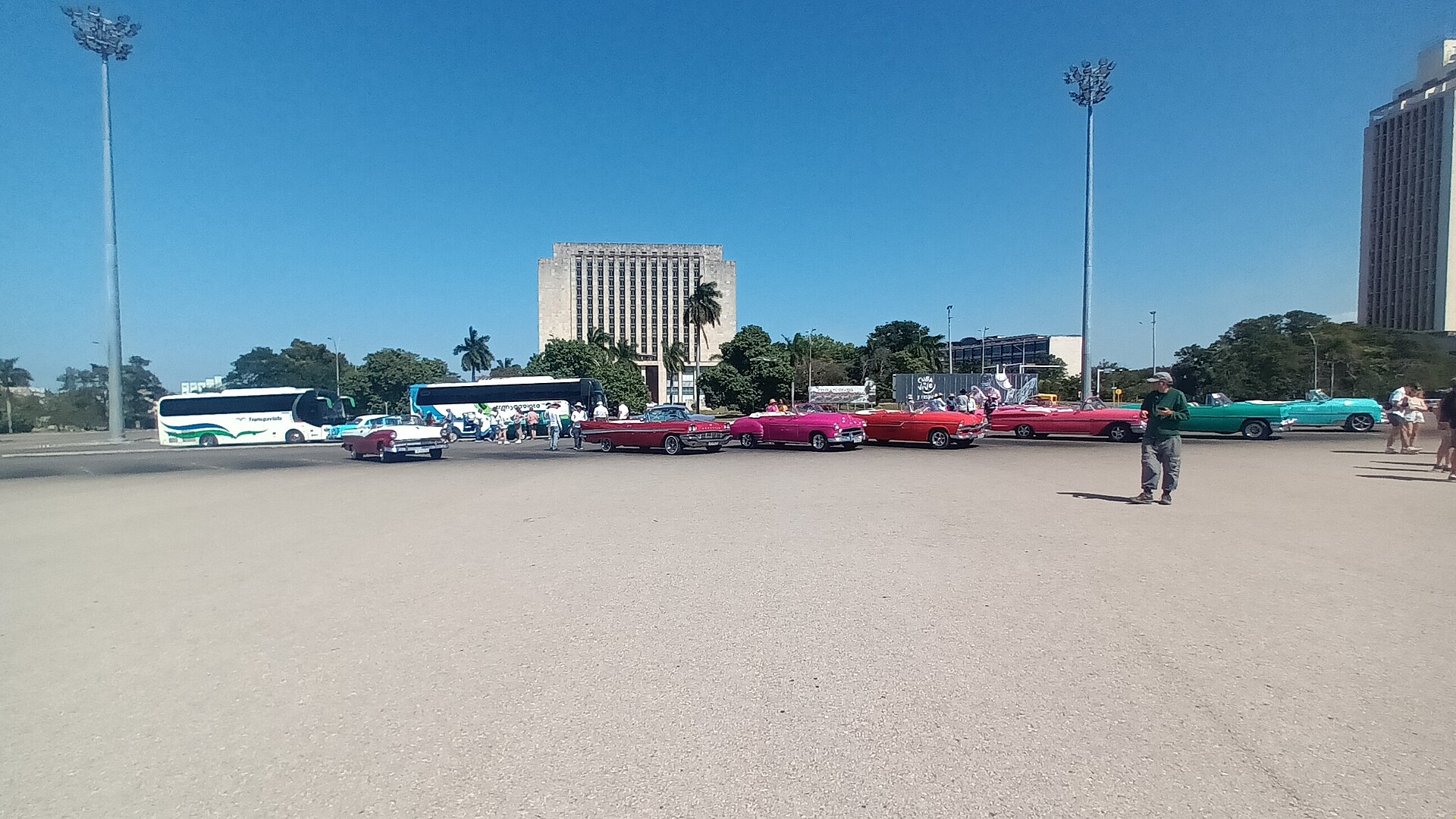
The evening ceremony was first planned for Wednesday 25 November. Cuba’s National Civil Defence Staff, the body that coordinates disaster response, then issued an early-warning alert about worsening weather, so the event moved to Thursday 26 November, says the official account of the ceremony.
It took place on the steps of the University of Havana, with President Díaz-Canel present. Relatives of Fidel Castro and many young people, mainly from military schools, also attended.
The programme included documentaries about his life. Viengsay Valdés, director and prima ballerina of Cuba’s National Ballet, opened the evening by dancing “The Death of the Black Swan”, and children’s dance companies and choirs sang songs in his honour.
Meyvis Estévez, first secretary of the Union of Young Communists (UJC, the Communist Party’s youth wing), gave the main speech on 26 November, according to the state news agency’s account of her speech. “Today we are still Fidel, because it is not a marble memory; it is the decision of every young person who gets up to study …,” she said, in a translation of her words.
She also warned: “There are genocidal plans and economic asphyxiation … in this battle, young people are on the front line.” The wire report of the ceremony reads this as a reference to US pressure since January, namely an energy blockade and secondary sanctions, which are penalties on outside firms that deal with Cuba.
Estévez also said that Cuban youth face an intensifying aggression of more than six decades, in her words, and called on them to build Cuba from their communities. These are her claims, and the reports on the ceremony carry no reply from Washington.
The wire report says Cuba marks the anniversary during a prolonged economic crisis. Our explainer on Cuba’s economy and remittances shows how that strain reaches households on the island.
The reports on the ceremony contain no independent Cuban voices, so the mood beyond the official ceremony is not on record. They also disagree on the crowd, which one report puts at hundreds of young people and another at thousands.
Nor do the reports describe any new policy announced on the night. They mention no measures to ease the economic crisis either.
Frequently Asked Questions
Why was the ceremony moved by one day?
Cuba’s National Civil Defence Staff issued an early-warning alert about worsening weather. The tribute was then held on Thursday instead of Wednesday evening.
Who spoke at the tribute?
Meyvis Estévez, head of the Communist Party’s youth wing, gave the main speech. President Díaz-Canel attended the ceremony.
Why do the claims about US pressure matter?
They show how Havana frames its crisis, as the result of US sanctions and an energy squeeze. They are Estévez’s claims, and Washington’s view is not in the reports.
Sources
Source: Official account of the ceremony (26 November 2026) · Account of the UJC speech (26 November 2026) · Wire report of the ceremony (26 November 2026) · Polymarket (a prediction market where users bet real money; US strike on Cuba by 31 December, read 27 November 2026, 04:19 UTC).
Connected Coverage
Cuba news · Cuba Economy and Remittances Explained 2026 · Cuba Visitors Down 65.7% Through October
This article was produced by The Rio Times’ automated AI newsroom. Editorial responsibility: Matthias Camenzind, Publisher and Editor-in-Chief. The Rio Times also runs Ask Rio Times, which answers from 100,000+ of our own articles, the daily Latin America Power Map, and prediction-market odds on elections and markets.. How we use AI · Report an error
Cuba and the United States
- What Is Going On Between Cuba and the United States?
- What Is Going On Between Cuba and the United States?
- Can Americans Still Travel to Cuba in 2026?
- Who Runs Cuba in 2026? Raúl Castro and the US Murder Charge