Copper Fund Edges Up 0.21% as Southern Copper Gains 1.93% | Copper, Nov 4

Key Facts
- Copper steadied after a bruising week: the copper-tracking fund closed at US$38.59, up 0.21% on Wednesday, November 4, 2026, yet still down 4.31% over five sessions.
- The miners moved far more than the metal: Southern Copper rose 1.93% to US$176.84 and Freeport-McMoRan rose 1.34% to US$62.60, both bouncing from sharp falls.
- The peak is still distant: the fund sits 6.9% below its 12-month high of 41.43, set on 2026-09-22, but 26.4% above its November 2025 low of 30.53.
- The dollar and bond yields helped: the US dollar index slipped 0.37% to 101.49 and the 10-year Treasury yield fell 5 basis points to 4.90%.
- Chile’s supply is the long-run worry: Chile’s copper commission Cochilco now sees 2026 output falling 8.4% to 4.94 million tonnes.
- Oil’s collapse signals easing tension: the oil fund dropped 8.07% while the S&P 500 gained 1.58%, a risk-on day that lifted most cyclical assets.
- Prediction markets: Polymarket puts a 20.5% chance on copper cable facing US Section 232 tariffs by 31 December 2026 and 51.5% by end-2027 (US$17,220 traded, 7:42 p.m. ET, 4 November).
Today’s Focus
Copper ended Wednesday, November 4, 2026 almost flat, but the quiet headline hides a tense backdrop. The copper-tracking fund, which follows copper futures (contracts to buy the metal at a set future date) rather than the spot price, rose 0.21% after falling 4.31% over the previous five sessions.
The lift came from the same forces that moved every market that day: a weaker dollar, lower bond yields and a rush into risk after the US midterm elections, in which Democrats took control of Congress. A cheaper dollar makes dollar-priced metals less expensive for buyers in euros, yuan and pesos.
The big copper producers bounced harder than the metal itself, though from deeper holes. Southern Copper is still 18.7% below its 25 August peak, and Freeport-McMoRan is 21.7% below the same-day high.
What matters today. Copper is holding up because the dollar is soft, while the real story, shrinking Chilean output, is a slower force that has not yet been priced in a lasting way.
01 The session in one read
Copper had its best day in a week by doing very little. The copper-tracking fund added 0.21%, its first rise after a run of weakness, while shares of the world’s big copper producers jumped much more.
The reason is a broad market mood swing. Investors bought shares and sold safe havens’ rivals alike after the US midterm results, and the S&P 500 gained 1.58%.
One calm session after a 4.31% five-day drop looks like a pause in a pullback rather than a change of direction, because the fund remains 6.9% below its September high. The variable to watch is the US dollar index: if it holds below 101.49, copper has room to rebuild, and if it turns higher, the bounce will likely fade.
02 The board
Southern Copper, the Peru- and Mexico-focused miner controlled by Grupo Mexico, rose 1.93%, and Freeport-McMoRan, which runs the giant Grasberg mine in Indonesia and large US operations, rose 1.34%. Miners tend to amplify the metal’s moves because their profits swing sharply with each change in the copper price.
That leverage cuts both ways, which is why the two shares are down 7.89% and 6.01% respectively over five sessions, far worse than the metal.
| Asset | Level | Change |
|---|---|---|
| Copper (CPER tracker) | US$38.59 | +0.21% |
| Southern Copper | US$176.84 | +1.93% |
| Freeport-McMoRan | US$62.60 | +1.34% |
Source: RT close, 2026-11-04. Where a commodity has no spot feed, an exchange-traded tracker or leading producer is shown as a labelled proxy.
Live Market IntelligenceThe live market board
Rio Times · Live Market Intelligence
Latin America — Cross-Market Board
| Instrument | Last | Change | YoY | Prev. | High | Low | Volume |
|---|---|---|---|---|---|---|---|
| IBOV | 167,563.47 | +1.23% | +19.56% | 165,528.92 | 178,526 | 175,157 | — |
| IPSA | 10,627.00 | +2.52% | — | 10,366.16 | 10,722 | 10,633 | — |
| IPC MEX | 71,385.90 | +1.71% | +12.74% | 70,184.33 | 70,008 | 69,383 | 49,372,306 |
| MERVAL | 2,848,945 | — | +12.65% | 2,859,051 | — | — | — |
| COLCAP | 2,506.42 | -0.84% | — | — | — | — | — |
| USD/BRL | 5.34 | -1.32% | -0.84% | 5.42 | 5.42 | 5.30 | — |
| EUR/BRL | 5.95 | +7.53% | -4.87% | 5.54 | 6.04 | 5.92 | — |
| USD/MXN | 18.69 | +0.62% | +1.45% | 18.57 | 18.69 | 18.54 | — |
| USD/CLP | 983.47 | -0.57% | +5.64% | 989.13 | 991.87 | 979.07 | — |
| USD/COP | 3,149 | +3.06% | -18.02% | 3,056 | 3,173 | 3,111 | — |
| USD/PEN | 3.45 | +0.17% | +3.85% | 3.44 | 3.45 | 3.44 | — |
| USD/ARS | 1,537 | -0.28% | +3.77% | 1,541 | 1,541 | 1,537 | — |
| USD/UYU | 40.21 | +3.57% | +2.29% | 38.83 | 40.21 | 40.08 | — |
| USD/PYG | 5,803 | +3.78% | -16.54% | 5,592 | 5,803 | 5,735 | — |
| USD/BOB | 11.97 | +4.93% | +77.92% | 11.41 | 11.97 | 11.82 | — |
| USD/DOP | 60.54 | +1.83% | -4.34% | 59.45 | 61.14 | 59.85 | — |
| USD/CRC | 451.24 | +2.13% | -7.80% | 441.83 | 451.40 | 450.04 | — |
| USD/GTQ | 7.64 | +3.23% | +2.18% | 7.40 | 7.64 | 7.64 | — |
03 Why it moved
First and heaviest, the dollar and yields eased. The dollar index fell 0.37% and the 10-year Treasury yield dropped 5 basis points (a basis point is one hundredth of a percentage point) to 4.90%, which lowers the cost of holding commodities and makes them cheaper abroad. Confidence: high.
Second, risk appetite returned. The VIX, Wall Street’s fear gauge, fell 20.26% to 16.61, and gold rose 3.68% on the gold fund as traders watched talks on Iran, while oil dropped 8.07% on the oil fund. Cheaper oil lowers costs for miners and factories, a modest help to copper. Confidence: medium.
Third, supply is a slow-burning support. Cochilco, Chile’s copper commission, has cut its 2026 output forecast to 4.94 million tonnes, 8.4% below 2025, citing falling ore grades (less copper per tonne of rock), maintenance and slower project ramp-ups. It expects a 3% rebound to 5.08 million tonnes in 2027. That helps explain why copper is only 6.9% off its high despite a weak week. Confidence: medium.
The conflict is plain: the dollar and yields eased, yet copper rose only 0.21%. The best reading is that traders still doubt Chinese factory demand, so they would not push the price higher on cheaper money alone. Confidence: low to medium.
China’s October PMI surveys from S&P Global, sponsored by RatingDog, gave a manufacturing reading of 52.0, where anything above 50 means growth, and a services reading of 50.8, down from 51.6 in September, according to the RT economic calendar. Chinese demand is still growing, but the services side is cooling.
04 The trend behind it
Over 20 sessions the copper fund is down 3.06%, and over 60 sessions down 4.1%, so this is a gentle slide rather than a crash. It peaked at 41.43 on 2026-09-22 and sits 26.4% above its low of 30.53 from 2025-11-04, which means the year’s big gain is mostly intact.
The miners tell a harsher story. Southern Copper is down 10.95% over 20 sessions and 53.3% above its November 2025 low, while Freeport-McMoRan is down 12.89% over 20 sessions and 62.0% above its low. This looks like a continuation of a correction, not a new phase, until the dollar proves otherwise.
05 What it means for Latin America
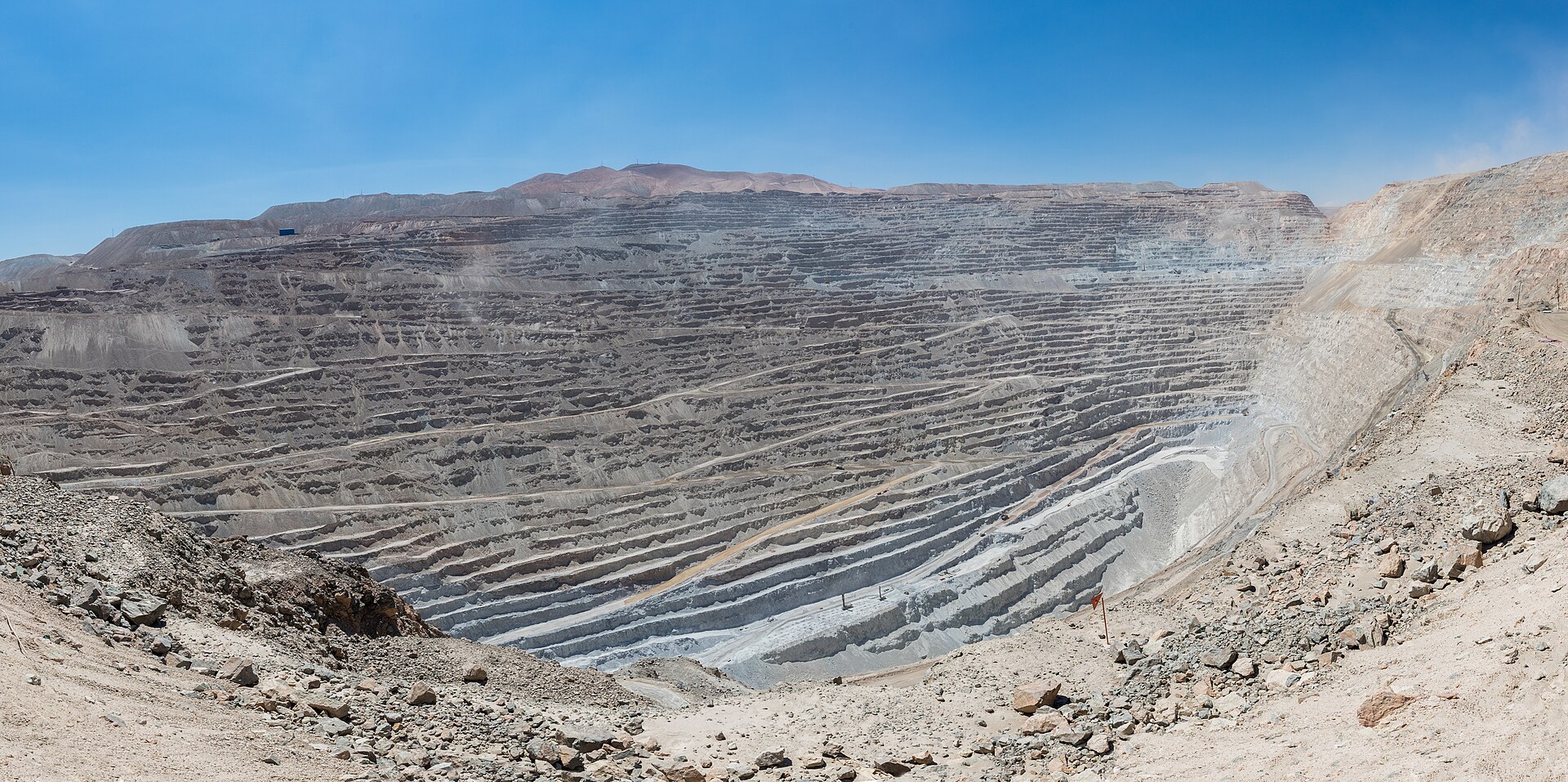
Chile, the world’s largest copper producer, earns a large share of its export income and state revenue from the metal, so a shrinking harvest from its mines is a double hit when prices also wobble. Cochilco’s 8.4% forecast drop for 2026 means fewer tonnes to sell, and that matters for the budget and the peso.
Peru and Mexico feel it through Southern Copper, whose Peruvian and Mexican mines make it a bellwether for both countries’ stock markets. A reader in Lima or Santiago should treat copper as the economy’s pulse: weaker prices cool mining investment, local currencies and tax receipts.
Cheaper oil, down 8.07% on the oil fund, offers some relief to fuel-importing copper producers, since diesel is a major mine cost.
06 The names to watch
Southern Copper has the largest known reserves among listed producers and a dividend-paying history, but it has the further to climb back, 18.7% to its August high. Freeport-McMoRan is the more volatile of the two, 21.7% below its own August high.
Here is a number only we can print. Southern Copper fell 10.9% in 20 sessions, and in the 59 earlier cases in our own history since 2007 with a drop at least that large, it was higher 20 sessions later in 30 of 59 cases, or 51%, with a median gain of 1.6% and a worst case of 74.4% lower. History is not a forecast, but it says that after a fall like this, the odds are close to a coin toss.
07 What would end it
The nearest ceiling for the copper fund is the September peak at 41.43, and the nearest floor is a retest of recent weakness before the long-run low of 30.53. A move beyond either would change the picture.
The dollar is the swing factor, followed by Chinese demand data and any further Cochilco revisions to Chilean output. The honest answer to whether the slide stops is yes, if the dollar keeps easing, but without firmer Chinese buying the rebound is likely to stay small.
08 What to watch
- US dollar: Whether the dollar index stays below 101.49, since a stronger dollar would pressure dollar-priced copper.
- Chilean output: Further revisions from Cochilco to its 4.94 million tonne forecast for 2026.
- China demand: Factory and property data from the biggest copper buyer, which sets the tone for the metal.
- Copper fund levels: The 41.43 September high on the upside and the recent weakness on the downside.
What Prediction Markets Say
Polymarket, a prediction market where users bet real money, shows a 20.5% chance that US copper cable is hit with Section 232 tariffs by 31 December 2026 and 51.5% by 31 December 2027, with US$17,220 traded. Prices were read at 7:42 p.m. ET on 4 November 2026. These are bets, not forecasts.
Why we show this: prediction markets turn real-money bets into a live probability that moves within minutes of the news, which is why investors, campaigns and newsrooms in the United States now follow them closely. We show them next to polls and official results, never instead of them.
Frequently Asked Questions
Why did copper rise only slightly on Wednesday, November 4, 2026?
A softer dollar and lower Treasury yields helped, but doubts about Chinese demand limited the gain to 0.21% on the copper-tracking fund.
Is the CPER price the same as the spot price of copper?
No, it tracks copper futures, which are contracts for later delivery, so it can differ from the price paid for metal today.
Why does Chile matter so much for copper?
Chile is the world’s largest producer, and Cochilco expects its 2026 output to fall 8.4% to 4.94 million tonnes.
What does this mean for an ordinary investor?
Miners’ shares swing much more than the metal, so exposure through Southern Copper or Freeport-McMoRan carries bigger gains and bigger losses than copper itself.
Market data: The Rio Times
This article was produced by The Rio Times’ automated newsroom system. How we use AI · Report an error · Editorial responsibility: Matthias Camenzind, Editor-in-Chief
LatAm Markets: Live Signals → — real-time movers, turnover leaders and FX across Latin America.