Copper Fund Falls 2.18% as Southern Copper Drops 3.27% | Copper, Nov 3

Key Facts
- Miners at three-month lows: Southern Copper and Freeport-McMoRan both posted their lowest close in at least three months on Tuesday, 3 November 2026, after falling 3.27% and 1.91% respectively.
- Copper slipped again: the CPER fund, which tracks copper futures rather than the physical metal, fell 2.18% to US$38.51.
- Shares fell harder than the metal: Southern Copper is 20.2% below its 25 August peak, and Freeport is 22.7% below the same peak.
- Markets turned nervous: the VIX fear gauge is up 18.89% in five sessions, while gold also fell 0.66%, so investors sold both metals.
- Supply is not the problem: Chile’s state copper commission sees refined copper supply growing only 0.2% in 2026 against demand growth of 1.9%.
- History is mildly reassuring: after earlier falls this large, Southern Copper was higher 20 sessions later in 66% of cases, though the worst outcome was a further 43.4% drop.
Today’s Focus
Copper miners sold off on Tuesday, 3 November 2026, and two of the biggest listed names ended at their lowest close in at least three months. Southern Copper closed at US$173.49, down 3.27%. Freeport-McMoRan finished at US$61.77, down 1.91%.
The metal itself was weaker too. The CPER fund, which holds copper futures (contracts to buy or sell the metal at a set future date), fell 2.18% to US$38.51, and is 7.0% below its 22 September high.
The best-supported reading is a broad retreat from risk, not a collapse in copper demand. Investors are demanding high returns from safe bonds, stocks are wobbling and the fear gauge has jumped, so they sell cyclical assets (those that rise and fall with the economy) first.
What matters today. For Chile and Peru, which supply the world’s copper, the miners’ shares are falling faster than the metal, which says investors are worried about the economy rather than about a shortage.
01 The session in one read
Think of a copper miner as a geared bet on the metal. When the metal dips a little, the shares usually dip a lot, and that is what happened on Tuesday, 3 November 2026.
Southern Copper and Freeport are the two big listed copper producers in the Americas. Both closed at their lowest in at least three months, and both are down more than 14% over the past 20 sessions.
Copper has slipped for 20 sessions without breaking, while the shares of the miners that dig it have fallen several times as far. That gap points to investors cutting risk and borrowing costs bearing down, rather than a change in the metal’s long-term story of tight supply and growing demand. The variable to watch is the US 10-year yield, now 4.97%: if it keeps pressing higher, the pressure on miners will continue.
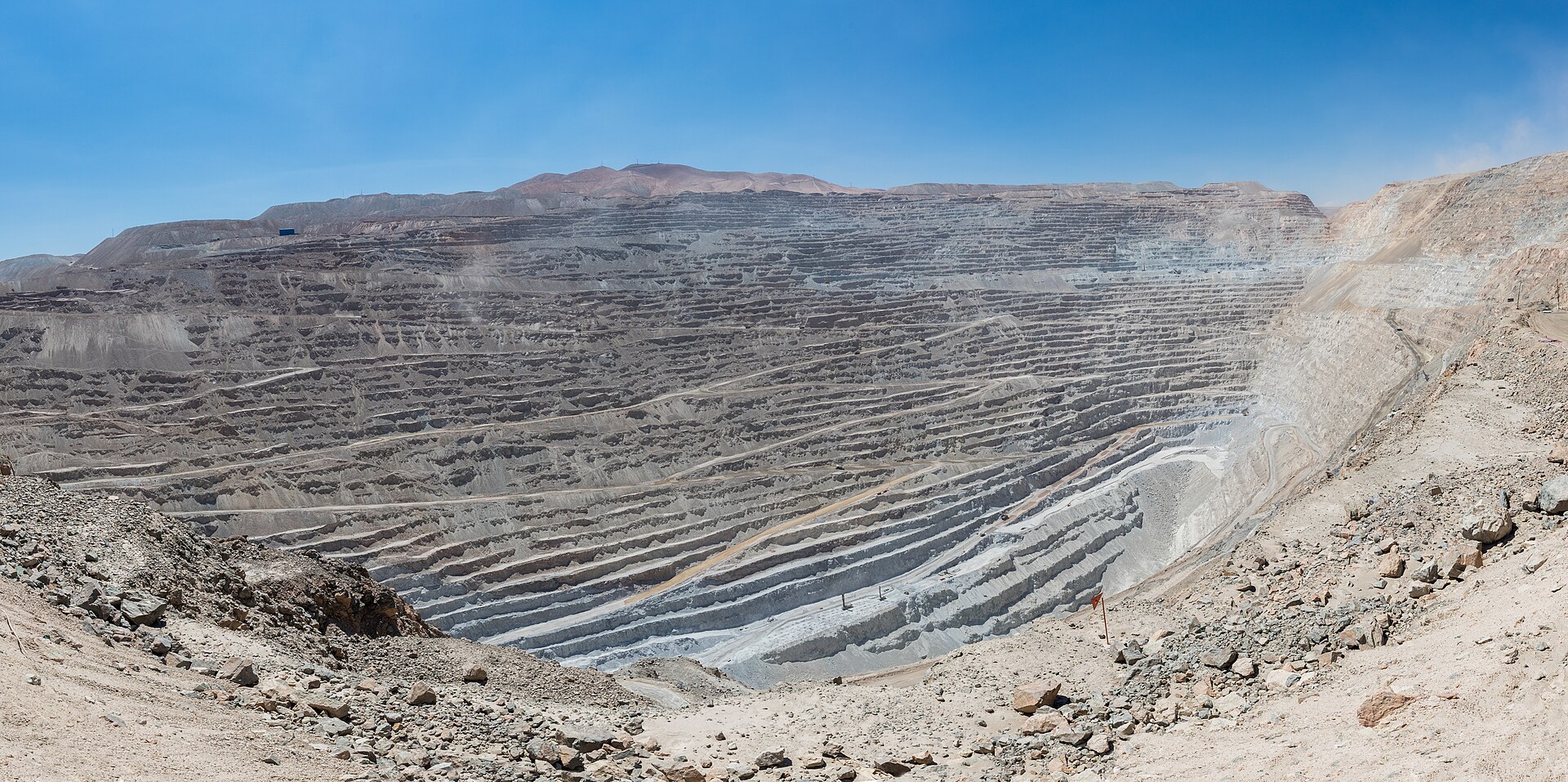
02 The board
Copper’s tracker fund fell 2.18%, less than Southern Copper’s 3.27% drop and more than Freeport’s 1.91%. All three are down over five sessions, by 3.85%, 10.77% and 6.34% respectively, so the pressure has built for more than a week.
The shares are the sharper story. Southern Copper is 20.2% below its 25 August high, while the copper fund is only 7.0% below its September peak.
| Asset | Level | Change |
|---|---|---|
| Copper (CPER tracker) | US$38.51 | -2.18% |
| Southern Copper | US$173.49 | -3.27% |
| Freeport-McMoRan | US$61.77 | -1.91% |
Source: RT close, 2026-11-03. Where a commodity has no spot feed, an exchange-traded tracker or leading producer is shown as a labelled proxy.
Live Market IntelligenceThe live market board
Rio Times · Live Market Intelligence
Latin America — Cross-Market Board
| Instrument | Last | Change | YoY | Prev. | High | Low | Volume |
|---|---|---|---|---|---|---|---|
| IBOV | 165,528.92 | -1.42% | +19.56% | 167,921.80 | 178,526 | 175,157 | — |
| IPSA | 10,365.73 | -0.09% | — | 10,375.55 | 10,722 | 10,633 | — |
| IPC MEX | 70,848.90 | +1.53% | +12.74% | 69,779.20 | 70,008 | 69,383 | 49,372,306 |
| MERVAL | 2,848,945 | — | +12.65% | 2,859,051 | — | — | — |
| COLCAP | 2,527.66 | +1.47% | — | — | — | — | — |
| USD/BRL | 5.34 | -1.32% | -0.84% | 5.42 | 5.42 | 5.30 | — |
| EUR/BRL | 5.95 | +7.53% | -4.87% | 5.54 | 6.04 | 5.92 | — |
| USD/MXN | 18.69 | +0.62% | +1.45% | 18.57 | 18.69 | 18.54 | — |
| USD/CLP | 983.47 | -0.57% | +5.64% | 989.13 | 991.87 | 979.07 | — |
| USD/COP | 3,149 | +3.06% | -18.02% | 3,056 | 3,173 | 3,111 | — |
| USD/PEN | 3.45 | +0.17% | +3.85% | 3.44 | 3.45 | 3.44 | — |
| USD/ARS | 1,537 | -0.28% | +3.77% | 1,541 | 1,541 | 1,537 | — |
| USD/UYU | 40.21 | +3.57% | +2.29% | 38.83 | 40.21 | 40.08 | — |
| USD/PYG | 5,803 | +3.78% | -16.54% | 5,592 | 5,803 | 5,735 | — |
| USD/BOB | 11.97 | +4.93% | +77.92% | 11.41 | 11.97 | 11.82 | — |
| USD/DOP | 60.54 | +1.83% | -4.34% | 59.45 | 61.14 | 59.85 | — |
| USD/CRC | 451.24 | +2.13% | -7.80% | 441.83 | 451.40 | 450.04 | — |
| USD/GTQ | 7.64 | +3.23% | +2.18% | 7.40 | 7.64 | 7.64 | — |
03 Why it moved
First, and heaviest, was a retreat from risk. The VIX, Wall Street’s fear gauge, is up 18.89% in five sessions, and the S&P 500 is down 1.99% over the same stretch. Gold, usually a refuge, also fell 0.66% on the day, which suggests investors were selling whatever could be sold, not hiding in metals.
Second, borrowing costs stayed high. The US 10-year Treasury yield rose 7 basis points (hundredths of a percentage point) to 4.97%, and the dollar index edged up 0.14% to 101.89. A stronger dollar makes copper dearer for buyers in other currencies, and high yields make it costlier to finance mines and factories.
Third, China, which buys 57.6% of the world’s copper according to Chile’s state copper commission, Cochilco, still has a weak property sector. Cochilco expects Chinese demand to grow just 2.7% this year, so there is little room for disappointment.
The usual drivers did not fully explain the day, since the dollar and yields moved only slightly. We put MEDIUM confidence on risk aversion as the main cause, because the five-day swings in fear and equities are large, and LOW-to-MEDIUM on any China-specific trigger, which we could not confirm.
04 The trend behind it
Copper has been drifting down since its 12-month high of 41.43 on 22 September, and is down 3.80% over 20 sessions. It remains 26.1% above its 12-month low of 30.53, set a year ago on 4 November 2025.
The miners peaked later and have fallen further. Southern Copper is 15.06% lower over 20 sessions and Freeport 14.87% lower. This looks like a continuation of an autumn correction, not a new phase, though three-month lows raise the stakes.
Our own history gives a rare comparison. After earlier falls this large, Southern Copper was higher 20 sessions later in 23 of 35 cases, or 66%, with a median gain of 4.4% and a worst case of minus 43.4%. Freeport was higher in 30 of 57 cases, or 53%, with a median gain of 1.5% and a worst case of minus 41.7%. History is not a forecast.
05 What it means for Latin America
Chile and Peru together mine more copper than anyone else, and mining taxes and royalties feed their budgets directly. Cochilco expects Chile’s output to fall 2.6% to 5.27 million tonnes in 2026, because of lower ore grades (less metal in each tonne of rock), maintenance and slow project start-ups. Lower output at a lower price is a double squeeze on Chilean revenue.
Southern Copper’s mines are in Peru and Mexico, so its fall is felt in Lima and Mexico City, where the company is a major taxpayer and employer. Freeport also operates in Chile and Peru, though much of its output is elsewhere.
For a traveller or saver in the region, the effect is indirect. Weaker copper tends to soften the Chilean peso and Peruvian sol, which makes imports pricier and holidays abroad dearer.
06 The names to watch
Southern Copper has the purest exposure, with Peru and Mexico as its home bases. Its 12-month low of 115.21 and high of 217.40 show how wide the swings can be, and the shares are now 50.6% above that low.
Freeport trades at 59.8% above its 12-month low of 38.65, but 22.7% below its high of 79.91. Both stocks should react to any change in the dollar, yields or Chinese data before the metal does.
07 What would end it
The fund’s nearest support is the recent run of closes near 38.51, then the 12-month low of 30.53 far below. Resistance is the 22 September peak of 41.43, which the fund would need to retake to show that the decline is over.
The next catalysts are China’s monthly trade and industrial output data, due in the coming days, and Cochilco’s next quarterly copper update, after its August report. The thing that would change the picture is a retreat in the 10-year yield from 4.97% together with calmer stock markets.
The honest answer is that the decline can pause quickly because supply is tight, with Cochilco expecting refined copper supply to grow only 0.2% against demand growth of 1.9%. It will not reverse while fear is rising.
08 What to watch
- US yields: The 10-year Treasury yield at 4.97% is the main weight on miners. A clear drop would ease pressure on the shares.
- China demand: China buys 57.6% of the world’s copper, so its trade and factory data matter more than anything else.
- Chile and Peru output: Cochilco expects Chile’s 2026 output to fall 2.6%, so mine news from either country can move prices.
- Fear gauge: The VIX at 20.83 is up 18.89% in five sessions. A calmer reading would help the miners recover.
Frequently Asked Questions
Why did copper fall on Tuesday, 3 November 2026?
The best-supported reading is a broad retreat from risk. The fear gauge is up sharply, stocks are lower over five sessions, and US borrowing costs and the dollar edged up. Our confidence is medium.
Is CPER the price of copper?
No. CPER is a fund that holds copper futures, which are contracts for future delivery, so it can differ from the price of the physical metal.
Why are copper miners falling faster than copper?
Miners carry fixed costs and debt, so small price changes swing profits sharply. Investors also sell shares first when they fear a slowdown.
Does this hurt Chile and Peru?
Yes, through lower mining tax revenue and weaker currencies, although the effect depends on how long prices stay down. Chile’s output is also forecast to fall 2.6% this year.
Market data: The Rio Times
This article was produced by The Rio Times’ automated newsroom system. How we use AI · Report an error · Editorial responsibility: Matthias Camenzind, Editor-in-Chief
LatAm Markets: Live Signals → — real-time movers, turnover leaders and FX across Latin America.