Key Facts
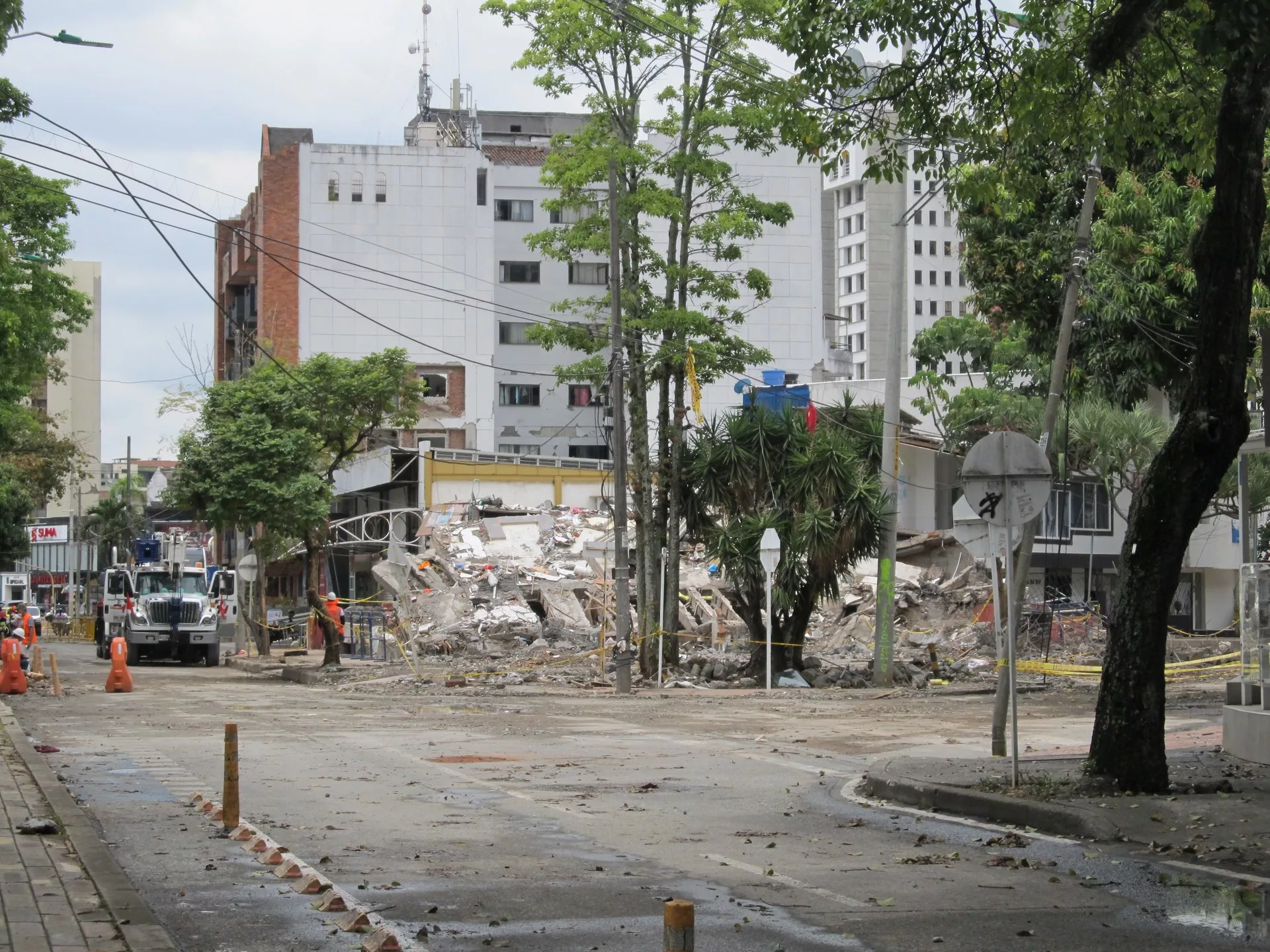
- Quake. A magnitude 7.4 earthquake struck Colombia on 10 August 2026, with its epicentre in Chocó, a western department.
- Gap. Recovery is costed at US$17.6 billion, and US$15.2 billion of it has no identified funding.
- People. The victims’ registry lists 363,791 families, and 104,049 homes are uninhabitable.
- Unknown. Which part of the gap the government will fund, and when payments follow.
- Status. As of 12 November 2026, 18:40 GMT
- Colombia ranks 6th of 14 in The Rio Times Latin America Power Index, with 51.1 points (November 2026 edition).
Three months after a magnitude 7.4 earthquake, Colombia has identified only a small part of the money it needs to rebuild.
Colombia’s earthquake recovery still has a funding gap of about US$15.2 billion, three months after the disaster. The Defensoría del Pueblo, the state human-rights ombudsman, said so in a communiqué dated Tuesday 10 November 2026.
The magnitude 7.4 quake struck on Monday 10 August 2026, with its epicentre near San José del Palmar, a town in Chocó. The Defensoría reports damage in Chocó, Risaralda, Quindío and Valle del Cauca, all western Colombian departments.
For US readers, the gap matters to anyone weighing donations, project finance or exposure to Colombian public debt. What the government will fund is the central open question.
What the Ombudsman Counts
The Defensoría estimates the recovery will cost COP 58.29 trillion (about US$17.6 billion). Amounts here are in Colombian pesos (COP), converted at the market-data rate of 3,305 pesos per US$ from RT, a financial data provider, on 12 November 2026.
Only COP 8.21 trillion (about US$2.5 billion) has been identified as resources, it says. That leaves COP 50.08 trillion (about US$15.2 billion) as what the ombudsman calls a “brecha por financiar”, a gap still to be financed.
The Defensoría lists a COP 624.66 billion (about US$189 million) addition to the national budget. That sum is about 1.2% of the COP 50.08 trillion (about US$15.2 billion) gap.
The victims’ registry, known as the RUD, listed 363,791 families and 776,119 people as of Tuesday 3 November. The Defensoría counts 104,049 homes as uninhabitable and 19,149 as destroyed.
It cites figures from the UNGRD, the national disaster-risk agency, with a cutoff of Tuesday 27 October: 334 dead, 4,516 injured and 102 missing. All of these counts come from the Defensoría’s 10 November communiqué.
Displaced families get a rent subsidy of COP 1,050,000 (about US$318) a month for three months. The Defensoría says rebuilds can take 12 to 18 months, longer than the three payments.
What the President Said in Roldanillo
On Wednesday 11 November 2026, three months on, President Abelardo de la Espriella gave a balance of aid in Roldanillo, in Valle del Cauca. Canal 1, a Colombian TV channel, reports that the UNGRD has delivered more than COP 347.42 billion (about US$105 million) in cash support to victims.
Canal 1 reports, in millions of pesos, that more than 108,000 was allocated to Risaralda (about US$33 million), and 87,000 to Valle del Cauca (about US$26 million), with a further 65,000 for the city of Cali (about US$20 million). Quindío was allocated 36,000 (about US$11 million), Chocó 25,000 (about US$7.6 million), Caldas 20,000 (about US$6.1 million), Antioquia 1,328 and Cauca 1,300.
On housing, Canal 1 reports 834 new homes and 3,504 improvements are planned, with a target of 4,753 homes by the end of 2026. It adds that 510 priority families in Risaralda, Quindío and Caldas are having their paperwork validated.
Senators Press for Concrete Results
The Senate’s own news service, on 17 October 2026, reported that Senator María Irma Noreña asked for rent-subsidy funds for Pereira victims and for the registry to reopen. Ms Noreña belongs to the Partido de La U, a Colombian party.
“Queremos resultados concretos,” or “we want concrete results”, she said. Senator Norma Hurtado, of the same party, said the Senate commission will keep up “control político y seguimiento”, meaning political oversight and follow-up.
In Plain English
The Defensoría del Pueblo is an independent state office that monitors human rights and speaks for citizens. The UNGRD is the government agency that manages disaster risk and pays emergency aid.
The RUD is the official list of disaster victims, and being on it opens the door to aid. A “billón” in Spanish means a trillion, while “mil millones” means a billion.
What Is Not Known
We found no official page confirming the COP 347.42 billion (about US$105 million) total, which rests on Canal 1 alone. The regional amounts Canal 1 lists add up to about COP 343.6 billion, roughly COP 3.8 billion (about US$1.1 million) below the stated total.
Canal 1 does not explain the gap, and we have treated Cali’s 65 billion as separate from the Valle del Cauca figure. It is not known which part of the COP 50.08 trillion (about US$15.2 billion) gap the government says it will fund.
Dates of the next payments are also unknown.
What It Means for You
The gap is an official figure, and we found no public plan to close it. Readers tracking Colombian public finances can note that S&P Global Ratings, a US credit-rating agency, (its rating action of 8 April 2026) rates Colombia’s foreign-currency debt BB-, which is below investment grade.
The main date to watch is the end of 2026, the deadline for the housing target of 4,753 homes. That target comes from Canal 1’s report of the president’s balance.
More: Colombia news in English, every day from The Rio Times.
Frequently Asked Questions
How big is Colombia’s earthquake funding gap?
The Defensoría del Pueblo puts the recovery cost at COP 58.29 trillion (about US$17.6 billion). It says COP 50.08 trillion (about US$15.2 billion) still has no identified funding.
How many people are affected?
The victims’ registry listed 363,791 families and 776,119 people as of 3 November. The national disaster-risk agency cited 334 dead, 4,516 injured and 102 missing as of 27 October.
How much cash aid has been paid?
Canal 1 reports the president said the disaster-risk agency has paid more than COP 347.42 billion (about US$105 million) in cash support. We found no official page confirming that total.
When will the homes be built?
Canal 1 reports a target of 4,753 homes by the end of 2026. Payment dates and the share of the gap the government will fund are not known.
Sources: Defensoría del Pueblo communiqué 149 (10 November 2026); Canal 1 (11 November 2026); Senate of Colombia (17 October 2026); RT USD/COP close (12 November 2026). Related: Colombia Quake Rebuild Cost Hits US$18B; Colombia Weighs Another US$200M Quake Loan; Colombia earthquake reconstruction finance.
In depth
This article was produced by The Rio Times’ automated AI newsroom. Editorial responsibility: Matthias Camenzind, Publisher and Editor-in-Chief. The Rio Times also runs Ask Rio Times, which answers from 100,000+ of our own articles, the daily Latin America Power Map, and prediction-market odds on elections and markets.. How we use AI · Report an error