Why Chile Is Asking the US Ambassador for Proof About Its 2019 Riots
Key Facts
Six years on, Chileans still argue over who, if anyone, organised the violence of the 2019 protests. Now the US ambassador says American intelligence has the answer, and the government wants to see it.
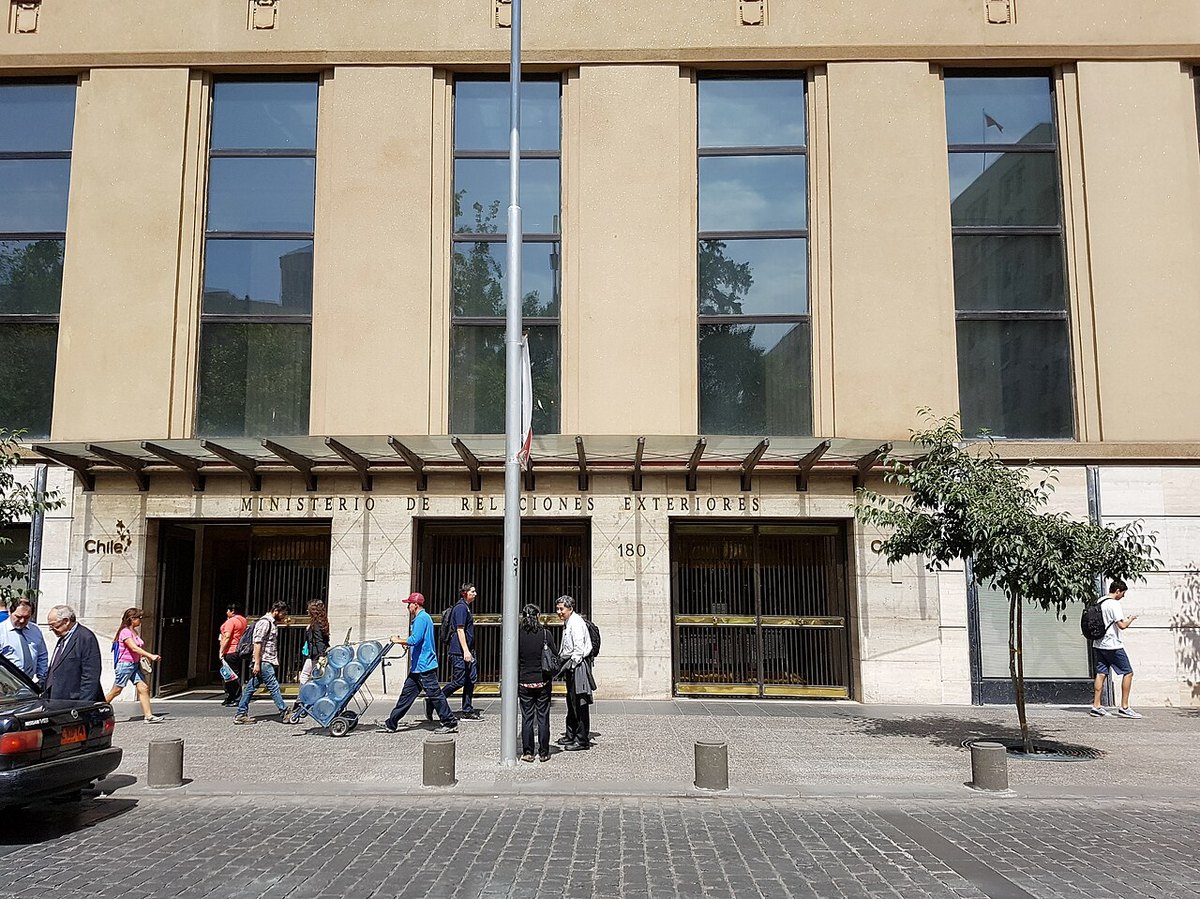
US Ambassador Brandon Judd made the claim to CNN Chile, in an interview reported on 8 September 2026. The foreign ministry, under President José Antonio Kast, summoned him the same day to request the material.
Why This Matters
The estallido social, or social outburst, began in Santiago on 18 October 2019 over a rise in metro fares. By February 2020, 36 people had died, and more than 200 had suffered eye injuries from rubber pellets.
President Sebastián Piñera declared a state of emergency on 18 October and imposed the first curfew a day later. On 20 October he said, “we are at war against a powerful enemy that doesn’t respect anything or anyone.”
Amnesty International and the UN human rights office documented excessive force, torture and sexual abuse against demonstrators. The crisis led to a November 2019 agreement in Congress to hold a referendum on a new constitution.
In the 2020 referendum, 78% of voters backed drafting a new constitution. A left-leaning draft was then rejected by 62% of voters in September 2022.
A conservative draft shaped by Kast’s Republican Party was rejected by 56% in December 2023. Kast won the presidency in December 2025 with over 58% of the vote and took office on 11 March 2026.
The United States is a key partner, with a free trade agreement with Chile in force since 2004. A US claim about Chile’s most sensitive recent event therefore lands in domestic politics and diplomacy at once.
What the Ambassador Said
Brandon Judd, the United States ambassador to Chile, gave an interview to CNN Chile reported on 8 September. He said that in 2019, what American intelligence tells us is categorically that it came from leftist organisations.
He was referring to the estallido social, the wave of protests and rioting that began in Santiago in October 2019. He said the analysis was done without US agencies coming to Chile.
He also said he had not shared it with Chilean prosecutors. He added that the material could be made available if Chile asked for it formally.
What Is Not There
No document was published. No agency was named, and no date was given for the analysis.
This is an ambassador’s spoken assertion rather than a released intelligence product. That distinction matters.
Nothing independent corroborates it. Everything in circulation traces back to the same television interview.
So the accurate phrasing is that the ambassador said US intelligence had reached a conclusion. Writing that US intelligence linked the protests to the left goes further than the record allows.
Chile’s Response Is Not a Protest
The foreign ministry summoned Judd on 8 September for a meeting the following day. Its stated purpose concerned the violence of 18 October 2019.
It said it considers any information that helps clarify those events to be of the greatest importance. The aim it gave was identifying those responsible for acts of violence.
That is a request for evidence, not an objection. The reason is political, because Kast’s government has long argued the protests were organised rather than spontaneous.
The foreign minister, Francisco Pérez Mackenna, took the post with the Kast cabinet. He now handles a claim that suits his government’s view of 2019 but still lacks published evidence.
An Earlier Row That Is Easy to Confuse With This One
In November 2025, Chile’s then foreign minister delivered a formal note of protest to the same man. That was under President Gabriel Boric, a left-wing leader, and Judd was still ambassador-designate at the time.
The note called his remarks inappropriate and unfortunate, and described them as interference in Chile’s internal affairs. That statement is still on the ministry’s website and is a different episode entirely.
Anyone citing it as Chile’s reaction to the 2019 claim has the wrong year and the wrong government. The contrast between the two responses reflects the change of government in Santiago.
Who Brandon Judd Is
Judd is the 50th United States ambassador to Chile. President Donald Trump nominated him in December 2024, and he was confirmed in October 2025.
He took office on 10 November 2025. Before that he led the US Border Patrol union for more than a decade.
He retired from the Border Patrol in May 2024. He was not a career diplomat, and that background shapes how his remarks are read in Santiago.
The embassy had not published a response at the time of writing. Judd has said the material could be shared through a formal request.
What Chile’s Courts Have and Have Not Found
The protests spread within days, and metro stations and buildings were burned. The government deployed troops under the state of emergency.
Who organised the violence, and whether it was organised at all, has been argued over in Chile ever since. That is why an ambassador’s remark on the subject lands as heavily as it does.
Chile’s own prosecutors have brought cases over specific acts of arson and looting. No court has found a single organising hand behind the whole thing.
That is the gap the ambassador’s claim steps into. It is also why the government wants the paperwork rather than an argument.
The Wider Pressure on the Foreign Ministry
The opposition is separately gathering signatures to formally question Pérez Mackenna in Congress. That move concerns Argentine statements about the Strait of Magellan, the waterway at South America’s tip, and ties with Washington.
It is a different matter from the Judd remarks. The two are running at the same time and are being reported together.
The government is also under pressure at home on the economy. Inflation and the central bank’s rate decision landed the same week.
What It Means If You Follow Chile
The episode shows a Chilean government treating a US ambassador’s claim as potential evidence rather than interference. That is a marked shift from the formal protest note sent under President Boric in 2025.
If the material is handed over and made public, it could feed both prosecutions and the political argument over 2019. If it is not, the claim will remain an unsupported assertion from one interview.
What Is Not Yet Known
It is not known which US agency, if any, produced the analysis the ambassador described. It is not known whether the embassy will hand over any material to Chile.
The outcome of the 9 September meeting had not been published at the time of writing. It is not clear whether Chilean prosecutors could use such material as evidence.
Frequently Asked Questions
Why does this matter?
The 2019 unrest left 36 people dead and led to two rejected drafts of a new constitution. Who organised the violence remains one of the most divisive questions in Chilean politics.
What did the US ambassador actually say?
Brandon Judd told CNN Chile that American intelligence concluded categorically that the 2019 unrest came from leftist organisations. He named no agency and released no document.
Did Chile protest against the remarks?
No. It summoned him to request the underlying material, and said any information clarifying the 2019 violence is of the greatest importance.
Is there any published evidence?
None so far. No document, agency or date has been made public, and the claim rests on a single television interview.
Sources: Emol, the ambassador’s remarks on CNN Chile, La Tercera, the foreign ministry summons, Cooperativa, the ministry’s stated purpose, BioBioChile, the summons reported, Chilean foreign ministry, the November 2025 protest note, Chilean foreign ministry, the minister takes office, El Mostrador, the move to question the minister in Congress, Wikipedia, the 2019–2022 Chilean protests, Wikipedia, the 2022 constitutional plebiscite, Wikipedia, the 2023 constitutional plebiscite, Wikipedia, José Antonio Kast, Wikipedia, Brandon Judd, Wikipedia, Economy of Chile, USTR, the US-Chile free trade agreement
This article was produced by The Rio Times’ automated newsroom system. How we use AI · Report an error · Editorial responsibility: Matthias Camenzind, Editor-in-Chief