Chile Private Mining to Pay Record US$8 Billion to State
Chile Fiscal Windfall
Key Facts
—Record payment. Private miners will pay US$8,039 million to the Chilean state in 2026, a 32% jump from 2025.
—Budget share. The sum equals 9.1% of all projected central government revenues for the year.
—Copper driver. High copper prices and strong export volumes are the main engine behind the record contribution.
—Royalty effect. A new mining royalty law, fully active since 2024, adds roughly US$1.35 billion annually to state income.
—Regional share. About US$450 million of the royalty revenue is legally earmarked for regional and municipal funds.
Chile private mining companies are projected to transfer a record US$8,039 million to government coffers in 2026, reshaping the fiscal landscape for Latin America’s richest mining economy.
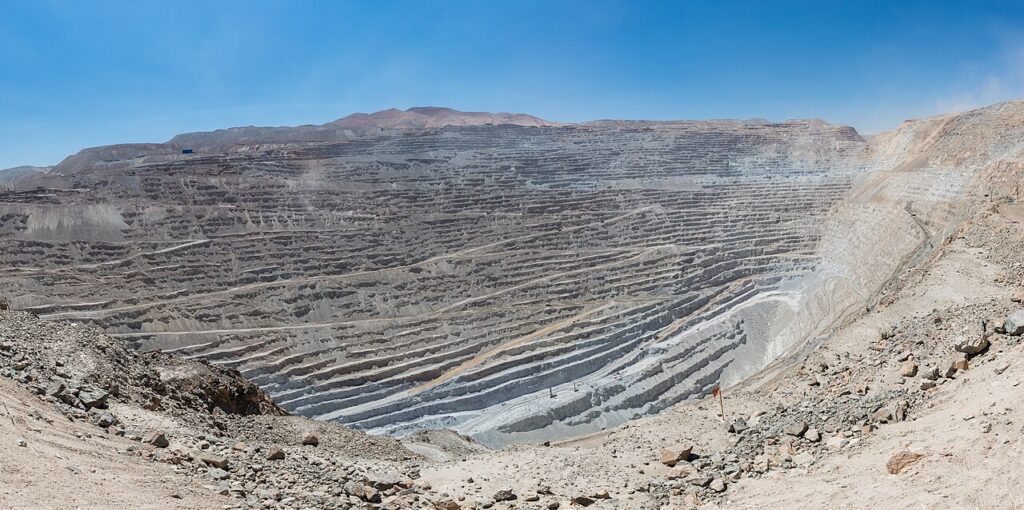
A Historic Payment Reshapes the Budget
Chile’s Budget Office (Dipres) has pencilled in US$8,039 million from large private mining operators for 2026. The figure marks the largest payment from the industry since records began.
The sum represents a 32% increase over 2025 private mining payments. It also shatters the previous record of US$6,207 million set during the commodity super-cycle of 2007.
Total central government revenues for 2026 are projected at US$88,842 million. Private mining alone will cover roughly 9.1% of that total, giving the sector outsized weight in national accounts.
For a foreign reader, Dipres is the government body that prepares the national budget and monitors public spending. Its projections carry official weight because they form the basis of the fiscal plan presented to Congress each year.
The 2007 record it broke came during a period when China’s rapid industrialization drove copper prices to historic highs. Surpassing that benchmark now suggests the current cycle is even more intense, though the global economic backdrop is quite different.
Copper Remains the Undisputed Fiscal Engine
Copper is the dominant force behind the numbers. In the first half of 2026, copper exports reached US$30.236 billion, accounting for 50.1% of all Chilean exports.
The Ministry of Finance explicitly links the revenue jump to high copper prices and strong production volumes. Each US$0.01 per pound increase in the copper price adds an estimated US$27–35 million to fiscal revenues.
Copper provided 43% of all mining-related government revenue in 2024, a year when total mining income stood near US$5 billion. The 2026 projection shows that dependence intensifying rather than easing.
This sensitivity to a single commodity is both a strength and a vulnerability. When global demand for copper is strong — driven by construction, manufacturing, and the green energy transition — Chile benefits disproportionately.
But any slowdown in major buyers such as China can quickly reverse the fiscal picture.
Live Market IntelligenceChile — Live Market Board
Rio Times · Live Market Intelligence
Chile — Live Market Board
+1.30%
185,229.17
-0.41%
63,375.93
-0.78%
11,381.18
+1.30%
3,021,926
-1.29%
2,548.22
+1.05%
60,023.65
-1.13%
| Instrument | Last | Change | YoY | Prev. | High | Low | Volume |
|---|---|---|---|---|---|---|---|
| IPSA | 11,381.18 | +1.30% | — | 11,235.60 | 11,210 | 10,984 | 1,513,213,483 |
| USD/CLP | 913.98 | +0.04% | -5.67% | 913.65 | 915.11 | 906.68 | — |
| COPPER | 6.61 | +0.03% | +46.70% | 6.61 | 6.71 | 6.61 | 39,543 |
| SQM-B | 65,305 | -0.84% | +49.03% | 65,860 | 66,949 | 64,978 | 76,539 |
| COPEC | 5,964 | -1.09% | -11.70% | 6,030 | 6,100 | 5,960 | 634,331 |
| BSANTANDER | 78.37 | -2.28% | +35.94% | 80.20 | 81.69 | 78.34 | 36,288,711 |
| FALABELLA | 6,334 | -1.48% | +23.28% | 6,429 | 6,450 | 6,300 | 26,085,814 |
| ENELAM | 87.09 | +0.10% | -10.13% | 87.00 | 87.40 | 86.50 | 13,106,417 |
| CENCOSUD | 1,946 | -2.19% | -35.30% | 1,990 | 2,010 | 1,945 | 966,528 |
| CMPC | 1,020 | -1.96% | -29.10% | 1,040 | 1,050 | 1,015 | 3,526,677 |
| BANCO CHILE | 184.96 | -1.01% | +32.87% | 186.85 | 189.99 | 184.33 | 18,101,240 |
| LATAM AIR | 24.08 | -1.11% | +16.61% | 24.35 | 24.59 | 23.88 | 573,612,753 |
| SOUTHERN COPPER | 193.97 | -0.26% | +104.01% | 194.48 | 199.36 | 192.59 | 367,102 |
The New Royalty Law Delivers on Its Promise
A structural shift underpins the record. The Mining Royalty Law, fully in force from 2024, combines a 1% ad valorem tax on copper sales with a margin-based royalty of 8–26% on adjusted mining operating income.
The government estimates the law will generate about US$1.35 billion annually from 2025 onward, equivalent to 0.45% of GDP. The total tax burden for the largest producers is capped at 46.5% of operating profit.
Bank reports for 2025 already showed private mining revenues rising 47–50% year-on-year. Dipres projections simply extend that trend into 2026, confirming the royalty is working as designed.
An ad valorem tax means the government takes a fixed percentage of the sales value regardless of profitability. The margin-based component, by contrast, rises and falls with how much profit a mine actually generates, making the system more responsive to real business conditions.
Where the Money Goes: Regions Get a Guaranteed Slice
Not all the new revenue stays in Santiago. Roughly US$450 million of the annual royalty take is legally earmarked for regional and municipal funds.
The Regional Productivity and Development Fund receives about US$225 million. A Territorial Equity Fund for lower-income municipalities gets roughly US$170 million, while a Mining Municipalities Compensation Fund takes around US$55 million.
This distribution mechanism is designed to ease local opposition to mining projects. Communities that host operations now have a direct fiscal stake in the industry’s success.
The earmarking is significant because it creates a legal obligation rather than a discretionary promise. Even if political priorities shift in Santiago, these funds must flow to the regions, giving local governments a more predictable revenue stream for long-term planning.
Codelco and Lithium Add Further Fuel
The private sector is not the only contributor. State-owned Codelco is projected to transfer US$3,188 million to the state in 2026, its largest contribution in five years and a 58% real increase over 2025.
Lithium property rents administered via development agency Corfo are set to reach US$1,231 million, a 234% jump versus the prior year. Combined, total mining-related public revenue will comfortably exceed US$12 billion.
Mining accounts for 10–12% of Chile’s GDP and 50–60% of exports. The 2026 figures confirm the sector’s role as the irreplaceable backbone of public finance.
Corfo, the Chilean Economic Development Agency, manages the country’s lithium reserves on behalf of the state. The sharp rise in lithium rents reflects both higher production from the Atacama salt flats and strong global demand for the mineral used in electric vehicle batteries.
What Investors and Expats Should Watch Next
The record contribution signals a stable, rules-based fiscal framework for mining investors. The royalty law’s cap on total tax burden provides predictability that global boards value.
However, the heavy reliance on copper prices cuts both ways. Part of the windfall flows into the Economic and Social Stabilization Fund, a sovereign wealth vehicle designed to smooth budget swings when commodity cycles turn.
For expats and professionals in Santiago, the fiscal bounty could ease pressure on public services and infrastructure spending. The regional distribution of royalty funds may also unlock new opportunities in mining-adjacent communities across the north.
One open question is whether the government will use the windfall to reduce public debt or increase social spending, a choice that will shape the investment climate for years. Another is how much of the stabilization fund will actually be saved rather than redirected to immediate priorities, given the political pressures that typically accompany large surpluses.
For mining communities, the key unknown is whether the earmarked regional funds translate into visible improvements in roads, schools, and water infrastructure — or whether bureaucratic delays slow their impact. The answer will influence local attitudes toward future mining projects across the copper-rich north.
More: Chile news in English, every day from The Rio Times.
Frequently Asked Questions
How much will Chile private mining pay the state in 2026?
Chile’s Budget Office projects private mining companies will contribute US$8,039 million in 2026. This is a 32% increase over 2025 and the largest payment from the industry on record.
What is driving the record mining revenue in Chile?
High copper prices and strong export volumes are the main drivers. The new Mining Royalty Law, which combines an ad valorem tax and a margin-based royalty, is also contributing roughly US$1.35 billion annually from 2025 onward.
Where does the mining royalty money go in Chile?
About US$450 million of the annual royalty revenue is legally earmarked for regional and municipal funds. This includes money for a Regional Productivity and Development Fund, a Territorial Equity Fund for lower-income municipalities, and a compensation fund for mining communes.
Connected Coverage
Caserones Copper Outage Hits Chile Mine, Lundin Keeps Target
Sources: Chile’s Budget Office (Dipres).
This article was produced by The Rio Times’ automated newsroom system. How we use AI · Report an error
In depth
Read More from The Rio Times