Foreigners Can Buy Freehold Property in Belize, 8% Duty
BELIZE · PROPERTY
Key Facts
- —Can a foreigner own freehold Yes, on the same terms as a national. There is no alien landholding licence in force.
- —The currency risk None on paper. The Belize dollar has been pegged at BZ$2.00 to US$1.00 since May 1976.
- —Transfer cost Stamp duty at 8%, with the first BZ$20,000, about US$10,000, exempt.
- —Two title systems The Registered Land Act gives a state-backed Land Certificate. Older deeds property does not.
- —Annual property tax Very low. Ceilings of 1% to 2% of value depending on the authority, set annually.
- —Retirees can’t bank their own dollars locally Retirees under the QRP programme are expressly barred from holding foreign currency accounts at domestic banks.
Belize sells itself to foreign buyers on English common law, a dollar peg and no restriction on ownership. All three are real. What the brochures leave out is exchange control, and it is the part that decides how easily money leaves again.
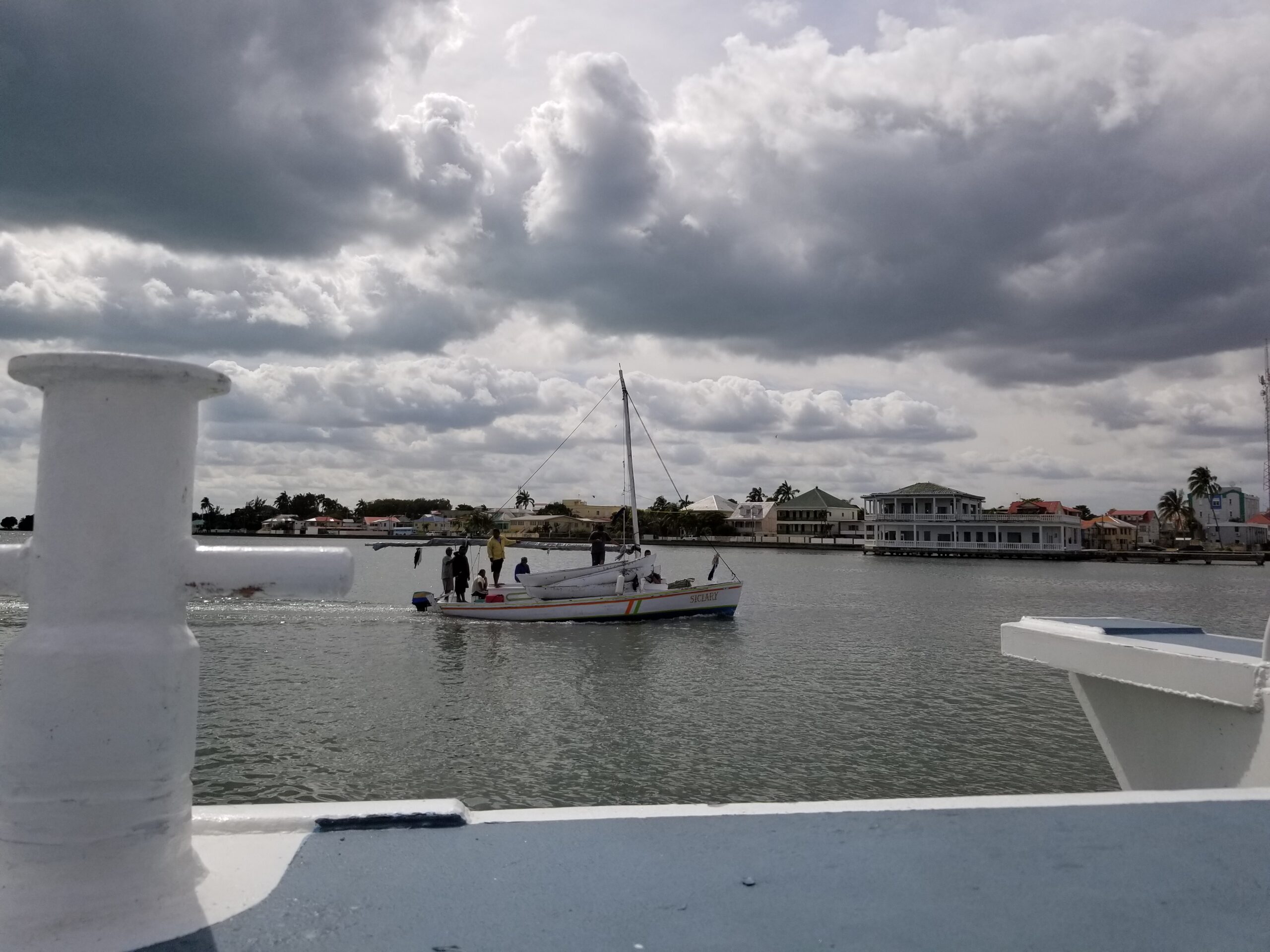
Belize is the only Central American country where a foreigner can buy freehold land on the same footing as a citizen. The whole transaction runs in English, priced in a currency that has not moved against the dollar in half a century. The complications sit elsewhere.
Open Land Titles, Closed Currency Rules
Belize markets itself on three simple facts: open ownership, a common-law system, and a currency peg that has held since 1976. Buyers from outside the region tend to take them as the whole story. Each is real, and each is also incomplete on its own. The reason is that none of them describes what happens to your money once you own the property.
That gap between marketing and mechanics is not unique to Belize, but it is unusually wide here. A country can be genuinely open on title and genuinely restrictive on currency at the same time. A buyer who checks only the first before signing is checking the easier, less important half.
Ownership Is Genuinely Unrestricted
Foreigners may hold freehold on the same terms as nationals, and there is no alien landholding licence in operation. The Central Bank of Belize frames its own procedure around the transfer of real property between a resident and a non-resident: the bank must be notified, not asked for permission.
The Belize Tourism Board goes further and lists ease of purchasing land among the benefits of its retirement programme. Read together, the official position is that nationality is not a barrier to title.
One qualification matters here: the statute repealing the old alien landholding regime could not be verified against primary text. The reason is that the official Belize statute website has been abandoned and its domain now serves unrelated content. The practice itself is clear, but a Belizean attorney should confirm the citation before you rely on it in a contract.
Two Title Systems, and Only One of Them Is Safe
Under the Registered Land Act, Chapter 194, Belize operates a Torrens-style register that produces a Land Certificate. This is the modern system and the state stands behind what the register says. If the certificate names you, you own it.
Alongside it sits the older General Registry, a deeds system in which conveyances are recorded as documents. That is a record of paperwork, not a guarantee of title. Establishing ownership requires an abstract tracing the chain back through prior deeds. Much of the mainland and older Belize City property still sits in this system.
The practical answer to the deeds problem is title insurance, and it exists here. Barrow and Williams in Belize City states that it is approved and registered with Stewart Title, RF and G Insurance and First American Title Insurance. All three provide title insurance. Two United States underwriters and a local insurer write Belize policies, placed through approved attorneys. On a deeds-system purchase, treat a policy as mandatory, not optional.
What the Transfer Actually Costs
In Belize stamp duty is the transfer tax. There is no second, separately named property transfer tax layered on top. That trips up buyers arriving from jurisdictions that have both.
The headline is 8% on conveyance, with the first BZ$20,000 of value, roughly US$10,000, exempt. That much is consistently reported. A separate and unresolved question is whether nationals pay less. One Belizean news report states that transfers from Belizeans to foreigners attract 8%, against 5% for Belizeans.
Both versions cannot be casually reconciled. The Stamp Duties Act itself is not currently retrievable from any government domain. So budget on 8% of the full price less the exemption and have your attorney confirm the applicable rate in writing before you sign. It is the most-cited number in every Belize property guide, and the one most worth confirming before you sign.
Annual Property Tax Is Close to Trivial
Outside the municipalities, land tax under the Land Tax Act is assessed on unimproved value. Inside town boundaries, the Towns Property Tax Act applies. In Belize City, a 1994 amendment assesses market value whether the property is occupied or not. The rate is set annually by the Minister, on the recommendation of the city council, and capped at 2% of market value.
Those are Revised Edition 2000 ceilings, rather than current rates. The actual figures are fixed each year by ministerial order or council recommendation. San Pedro Town Council, Placencia Village Council and Belize City Council all differ. In absolute terms the bills are small. Annual carrying cost is rarely what makes or breaks a Belize purchase.
Exchange Control Is the Real Constraint
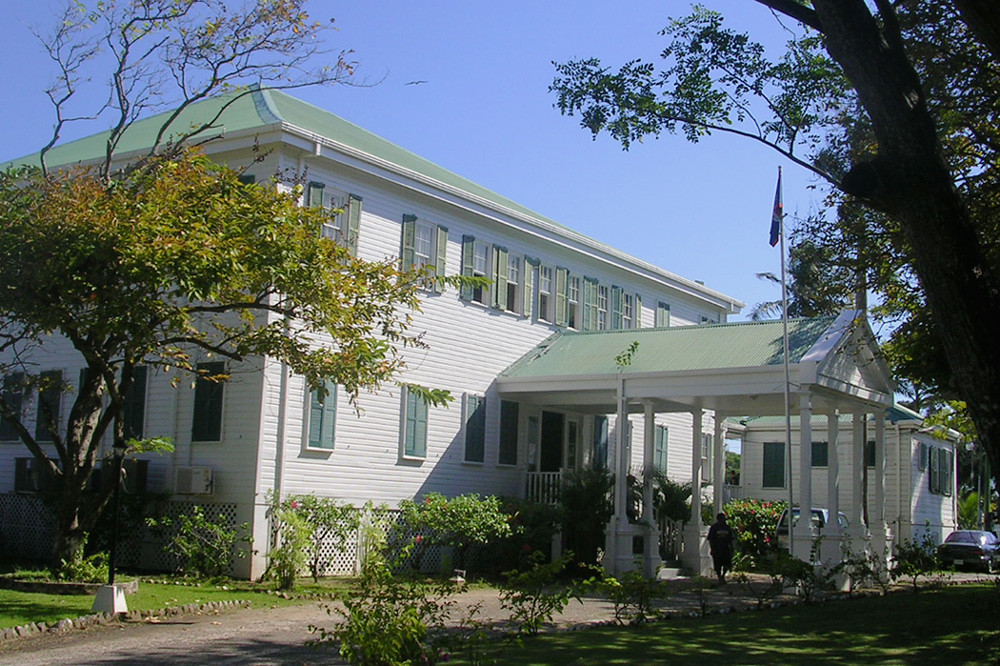
This is Belize’s most under-reported buyer risk. The Central Bank of Belize states that its approval. Confirmation of notice, are required for all capital account transactions involving residents and non-residents. That current transactions require a foreign exchange permit.
Foreign currency accounts are where it bites. The central bank’s Exchange Control Direction 10/2014 grants them primarily to entities in the export-earning sector. Explicitly not for the purpose of accumulating foreign currency. Domestic banks are not permitted to open foreign currency accounts for non-residents at all. Those clients are directed instead to institutions licensed under the International Banking Act. Banks set ceilings on account balances, and any excess must be sold to the bank.
Then there is the line that cuts directly against how the retirement programme is marketed. The central bank states, in terms, that retirees under the Qualified Retired Persons Incentives Act do not qualify to operate foreign currency accounts. A retiree whose income arrives in dollars, who assumed it would sit in a dollar account locally, needs to rethink the plan before buying.
What the QRP Retirement Programme Actually Offers
The Qualified Retired Persons programme is administered by the Belize Tourism Board under the Retired Persons Incentives Act, Chapter 62. Applicants must be 45 or over. They must prove income of US$2,000 per month, or US$24,000 per year, from a source outside Belize, in United States dollars, sterling, euros or Canadian dollars. Applicants must also undertake to deposit that amount with a Belizean financial institution.
The residence requirement is light, at a minimum of thirty consecutive days in the country annually. Benefits include a renewable resident card and multiple visa-free entry. There is import duty and tax exemption in the first year on household effects, a vehicle, a light aircraft and a boat. There is also exemption from tax on income from sources outside Belize, as well as from capital gains and inheritance tax.
On property, the entitlement is to purchase land to build a home or to buy a home for residential use only. A QRP wanting to carry on business in Belize must apply separately to the tourism board. Show residence of at least ninety non-consecutive days.

Financing and Market Conditions
Local credit is available but not cheap by regional standards. The Central Bank of Belize reported new lending rates of 8.77% in May 2026, two basis points lower than a year earlier. New deposit rates stood at 1.74%. Excess cash in the banking system stood at BZ$481.1 million, about US$240.6 million, more than double the level at the start of the year.
That combination, liquid banks and high lending rates, tells you the constraint on Belizean mortgage lending is appetite rather than funding. Most foreign buyers pay cash or finance abroad.
There is no official house price index in Belize and no recorded-sales database. Anyone quoting you market averages is quoting listing asks. Ambergris Caye, Placencia and Belize City are separate markets with little in common. The only defensible approach is dated asking prices from two or three named brokerages, treated as asks rather than as transactions.
Check the Money Rules Before You Buy the Land
Taken together, Belize gives a buyer real, verifiable openness on the question people worry about first: who is allowed to own the land. It also gives real, under-discussed friction on the question they worry about second: what happens to the money afterward. Both are true at once. Treating the first as proof of the second is the mistake that catches otherwise careful buyers.
The two title systems mean due diligence cost varies enormously by property. So establishing which register you are in changes the entire budget for professional fees. The exchange control regime means a retiree’s own income can be harder to bank locally than the property itself was to buy. Plan for both before you commit funds, not after.
What to Do, in Order
Establish first whether the land is registered. The answer changes the entire due diligence exercise, and the cost of it. If it is unregistered, expect to trace the chain of title through indentures and probate documents, and budget accordingly.
Instruct a Belizean attorney independently of the agent, and agree the transfer tax and fee split in writing. Then deal with the money question early rather than late. Understand exactly which accounts you will be permitted to hold, in which currency, before you commit funds into the country.
The ownership rules in Belize are as open as the marketing says. The exchange control rules are not. The gap between those two facts is where foreign buyers get caught.
More: Belize guides and news, every day from The Rio Times.
Frequently Asked Questions
Can foreigners own land in Belize?
Yes. Foreigners hold freehold on the same terms as nationals and no alien landholding licence is in force.
What does it cost to transfer property?
Stamp duty of 8% on conveyance, with the first BZ$20,000, about US$10,000, exempt. Confirm the rate with an attorney, as the treatment of nationals is disputed.
Is the Belize dollar pegged?
Yes, at BZ$2.00 to US$1.00 since May 1976, and the peg has held.
Is title insurance available?
Yes. Stewart Title, First American and local insurer RF and G write Belize policies through approved attorneys.
Can a retiree hold a US dollar account in Belize?
No. The central bank states that QRP retirees do not qualify to operate foreign currency accounts. Domestic banks cannot open them for non-residents.
What income does the QRP require?
US$2,000 a month or US$24,000 a year from a source outside Belize, plus a minimum stay of thirty consecutive days each year.
Sources: Central Bank of Belize, Belize Tourism Board, Registered Land Act Cap. 194, Towns Property Tax Act Cap. 65, Land Tax Act Cap. 58, Barrow & Williams, Breaking Belize News.
This article was drafted with automated assistance and reviewed before publication. How we use AI · Report an error · Editorial responsibility: Matthias Camenzind, Editor-in-Chief
Expat Guide to Belize
What The Rio Times publishes for foreigners who live in or move to Belize.
Start here
- Investing in Belize as a Foreigner 2026 — Costs, Title and Residency Rules
- Moving to Belize and what the first year actually demands
- Healthcare in Belize for expats and what happens when it gets serious
- Open a bank account in Belize as a foreigner without wasting a trip
Understand Belize