Belize Explained 2026: The Country, Its Economy, Its Politics and What to Watch
GUIDES · BELIZE
Key Facts
- —Capital Belmopan, a small planned inland capital of about 22,000 people. The largest city and main port is Belize City, with about 65,000.
- —Population About 423,000 in 2025, according to the World Bank, a little more than Iceland. The 2022 census counted 397,483 people.
- —Currency The Belize dollar (BZ$), pegged at BZ$2 to US$1 since May 1976. To convert any local price into US dollars, halve it.
- —Language English is the official language, unique in Central America. Spanish and Belizean Kriol are widely spoken in daily life.
- —GDP About US$3.3 billion in 2025 (World Bank), or roughly US$7,900 per person, around a tenth of the US level. Growth was 2.7 percent that year.
- —Government A parliamentary democracy with King Charles III as head of state. Prime Minister John Briceño’s party holds 26 of the 31 elected seats.
Belize explained from the ground up: an English-speaking, dollar-pegged country the size of New Jersey on the Caribbean edge of Central America. Here is how it is run, how it earns its money, and which dates in the next six months matter.
Belize explained in one line: a Caribbean nation on the Central American mainland, run on British parliamentary rules and priced in a currency fixed to the US dollar. It has fewer people than many American cities, yet it receives more overnight visitors each year than it has residents.
What kind of country is this?
Belize sits on the Caribbean coast of Central America, with Mexico to the north and Guatemala to the west and south. It covers 22,966 square kilometres, about the size of New Jersey and slightly larger than Wales. New Jersey holds more than nine million people; Belize holds about 423,000.
That works out at roughly 18 people per square kilometre, so much of the country is forest, farmland and empty coast. Offshore lies what UNESCO calls the largest barrier reef in the northern hemisphere. The reef, its atolls and several hundred sand cays form a World Heritage site and the core of the tourism economy.
The country was the British colony of British Honduras until independence on 21 September 1981. On 21 September 2026 it marked 45 years of independence. That colonial past explains the English language, the Westminster-style parliament and a British monarch as head of state.
It is also a genuinely mixed society. In the 2022 census, 51.7 percent of residents identified as Mestizo or Hispanic, 25.2 percent as Creole, 9.8 percent as Maya and 4 percent as Garifuna. The median age was 25, against 21 in 2010.
Most foreigners meet three places. Belize City, with about 65,000 people, is the commercial hub and port. San Pedro on Ambergris Caye, the main resort island, has about 16,000 residents and receives nearly 28 percent of all overnight visitors. Belmopan, the capital, is a quiet government town of about 22,000.
Who runs Belize and how
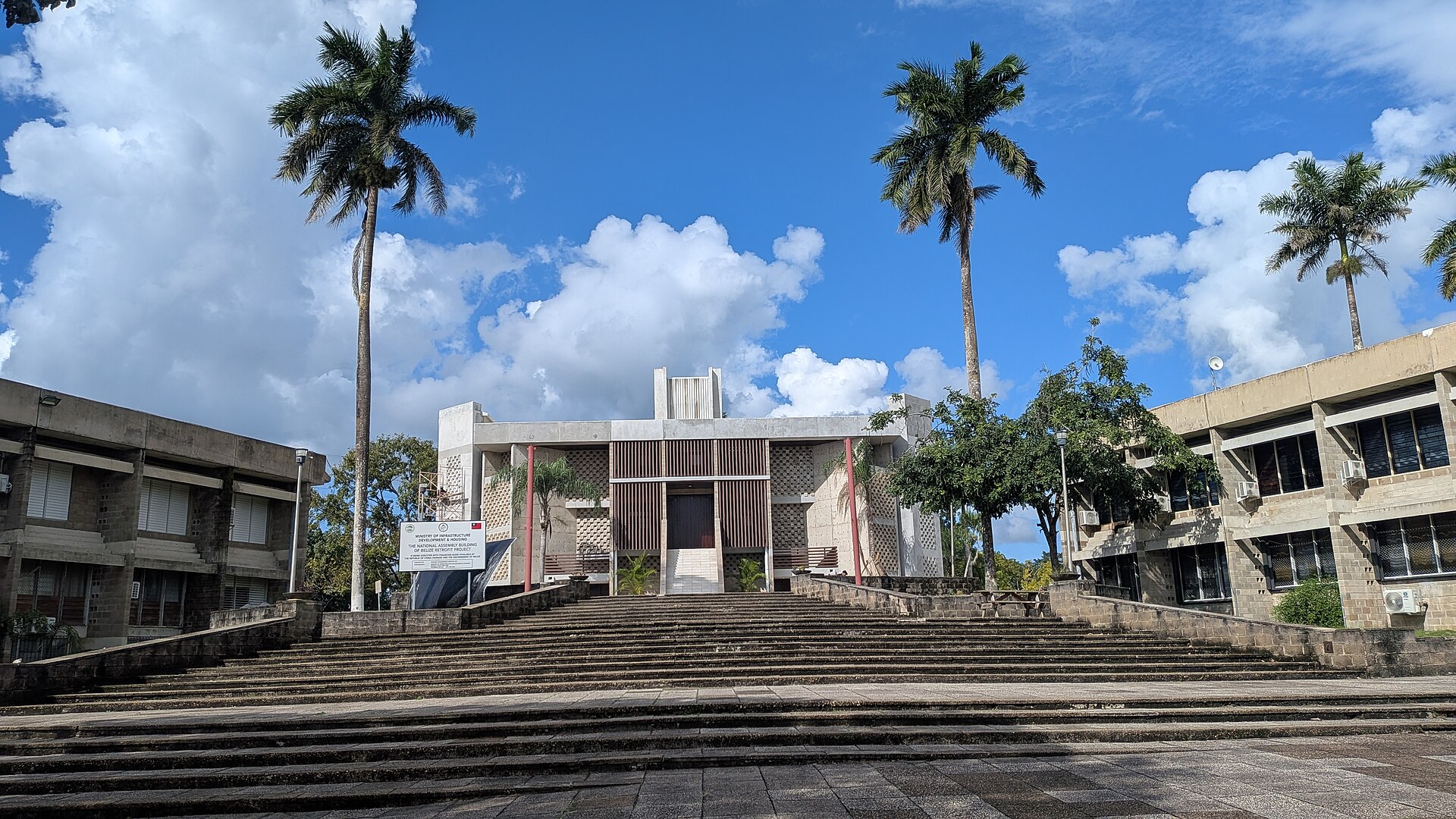
Belize is a parliamentary democracy on the British Westminster model. King Charles III is head of state, represented locally by a Governor-General, currently Dame Froyla Tzalam. Real power sits with the prime minister and cabinet, who must keep the confidence of the elected House of Representatives.
The House has 31 members, each elected by simple majority in a single constituency, as in Britain. The Senate is appointed rather than elected. There is no directly elected president, so whoever commands the House runs the country.
Two parties have traded power since independence. The People’s United Party (PUP) sits on the centre-left, the United Democratic Party (UDP) on the centre-right. The PUP, led by John Briceño, has governed since November 2020.
At the general election of 12 March 2025, the PUP kept 26 of the 31 seats with 67.9 percent of the vote. Turnout was 65 percent. The UDP ran two rival slates after a leadership split, and its then-leader Moses “Shyne” Barrow lost his own seat.
Tracy Panton of the UDP was sworn in as Leader of the Opposition on 14 March 2025, the first woman in the role. With 26 seats, the government rarely needs opposition votes in the House. The next general election is due by 2030.
One issue dominates foreign policy: Guatemala’s claim to more than 11,000 square kilometres of Belizean land, islands and sea, roughly half the country. Guatemala approved sending it to the International Court of Justice (ICJ), the UN’s top court, by referendum in 2018. Belize followed in 2019, with 55.37 percent voting yes.
Belize formally submitted the case in June 2019. A second, separate case followed in November 2022, when Belize asked the ICJ to confirm its sovereignty over the Sapodilla Cayes, small islands also claimed by Honduras.
How the economy works
Belize is small, open and dependent on imports. The World Bank puts output at about US$3.3 billion in 2025, roughly US$7,900 per person. Between January and July 2026 the country imported BZ$1.912 billion (US$956 million) of goods and exported only BZ$205.2 million (US$102.6 million).
Tourism closes that gap. The Belize Tourism Board (BTB) counted a preliminary 551,698 overnight visitors in 2025, more than the entire resident population. Cruise passengers reached 967,214, still 17.4 percent below the 2019 peak of 1,170,558.
The United States is the market that matters. According to the International Monetary Fund (IMF), about 70 percent of overnight visitors come from there. A slowdown in American travel reaches Belizean hotels, tour guides and tax receipts within months.
Goods exports are farm and sea products. In 2025 they totalled BZ$390.0 million (US$195 million), down 16 percent. Sugar earned BZ$113.7 million (US$56.9 million), bananas BZ$91.0 million (US$45.5 million), lobster and conch BZ$46.4 million (US$23.2 million), citrus BZ$35.0 million (US$17.5 million).
Sugar is in trouble. A fungal disease and a mealybug infestation have cut production nearly in half compared with three years ago, the prime minister said on 15 September 2026. Sugar revenue fell by BZ$68.6 million (US$34.3 million) in 2025 alone.
The currency anchors everything. Since 11 May 1976 the Belize dollar has been fixed at BZ$2 to US$1, and the peg turned 50 in May 2026. Market data confirmed the rate at exactly 2.00 on 26 September 2026, and every conversion in this guide uses it.
To defend the peg, the Central Bank of Belize must hold foreign assets worth at least 40 percent of its domestic liabilities. The trade-off is simple. Belize imports US price stability, but it cannot devalue to cushion a shock.
Public debt fell sharply after the pandemic, from 103.3 percent of output in 2020 to 61.1 percent at the end of 2024, according to the IMF. Strong growth did most of the work. So did a discounted settlement of Venezuelan PetroCaribe oil debt and a 2021 debt-for-nature swap.
In that swap, Belize bought back a US$553 million bond at a 45 percent discount, funded by a US$364 million loan arranged by The Nature Conservancy, a US charity. The deal cut public debt by 12 percent of output. In return, Belize committed to protect 30 percent of its ocean by 2026.
What is happening right now
As of 26 September 2026, the economy is growing faster than forecasters expected. The Statistical Institute of Belize (SIB) measured first-quarter growth of 5.1 percent over a year earlier, with quarterly output of BZ$1.454 billion (US$727 million). In July 2025 the IMF had projected 2.4 percent for the whole of 2026.
Unemployment was just 1.9 percent in April 2026. That figure needs care. The labour force shrank by 13,313 people over the year, mainly because fewer women were looking for work, so the low rate partly reflects people leaving the job market.
Prices are the pressure point. Consumer prices rose 4.1 percent in the year to July 2026, after average inflation of about 1 percent in 2025. Transport led the increase, up 6.3 percent in the first seven months of the year.
Prime Minister Briceño used his State of the Nation address on 15 September to call inflation “largely imported”. His government has removed the general sales tax from electricity bills for all 100,000 residential customers of Belize Electricity Limited. It also raised the minimum wage to BZ$5 (US$2.50) an hour, with a rise to BZ$6 (US$3) promised “in the near future”.
Nearly 16,000 public employees, from teachers to soldiers, are due an 8 percent pay adjustment by the end of the fiscal year, costing BZ$112 million (US$56 million) a year. Opposition Leader Tracy Panton argues that relief still falls short for struggling families. Tourism has also been dented in recent months by sargassum seaweed on the beaches of Ambergris Caye, Caye Caulker, Hopkins and Placencia.
The border cases moved on 17 September 2026. The ICJ registrar set oral hearings in the Guatemala case for 22 to 26 February 2027, and in the Honduras case for 1 to 5 March 2027. Briceño addressed the nation by radio and television and pledged that Belize will accept the court’s decisions.
On credit, the prime minister said Standard & Poor’s had recently reaffirmed Belize at B-/B with a stable outlook. That is a speculative grade, six notches below investment grade. It means borrowing on international markets remains expensive.
What to watch
The next SIB release is the first test. As of 26 September 2026, second-quarter output and August inflation had not yet been published. Watch whether growth stays near 5 percent and whether inflation drops back below 4 percent.
The Atlantic hurricane season runs until 30 November. The IMF lists natural disasters among the main risks to Belize’s outlook, and a direct hit on the coast would strike tourism and public finances at once.
At home, watch the date of the promised BZ$6 (US$3) minimum wage and the municipal elections due in 2027. The UDP says it will present nine mayoral candidates for a vote that is the first real test of opposition recovery since its 2025 defeat.
Abroad, the fixed dates are Monday 22 February 2027, when Guatemala opens its case at The Hague, and Monday 1 March 2027 for the Sapodilla Cayes. No judgment date exists; the court only begins its deliberation once the hearings close.
Two long-term markers matter too. The government says redevelopment of the Port of Belize, worth over BZ$800 million (US$400 million), starts in 2027. The IMF wants public debt cut to 50 percent of output by 2030; on unchanged policies it projected debt staying near 58 percent.
What this means for foreigners
Entry is easy for most Western visitors. Citizens of the United States, Canada, the United Kingdom and most European Union states need no visa for tourism. Visitors receive up to 30 days, extendable in 30-day steps at an immigration office for BZ$200 (US$100) each time.
The US Embassy advises carrying proof of onward travel and sufficient funds, and budgeting about US$40 for the departure fee. A visitor permit does not allow paid or unpaid work, or running a business, without the consent of the Director of Immigration.
For Americans, the peg removes currency risk: a US$ salary or pension buys the same in BZ$ year after year. Canadians, Britons and Europeans still carry the swing between their own currency and the US dollar. Local inflation, not the exchange rate, is what erodes a budget here.
The retirement route is the Qualified Retired Persons programme, run by the tourism board. Applicants must be 40 or older and deposit retirement income of at least US$2,000 a month from abroad. Under the Retired Persons (Incentives) Act, their foreign income is exempt from Belizean tax.
Anyone buying land should follow the ICJ cases, because the court will rule on where Belize’s borders lie. Our Belize property, residency, tax and safety guides go through the practical detail, from title searches to road risk.
Connected Coverage
Belize Economy Pins Recovery on Record Overnight Tourism as Cruise Visits Still Trail 2019 Peak
Belize Rents Run Fourfold Higher on the Islands Than in Corozal
Moving to Belize and what the first year actually demands
Belize residency visa requirements and the two systems behind them
Retire in Belize at 40 — US$2,000 a Month, Duty-Free Import and a Work Ban With One Exception
Taxes in Belize 2026 — What Is Really Untaxed, and What Quietly Is Not
Investing in Belize as a Foreigner 2026 — Costs, Title and Residency Rules
Buying Property in Belize as a Foreigner: Title, Tax and Currency
Open a bank account in Belize as a foreigner without wasting a trip
Healthcare in Belize for expats and what happens when it gets serious
Belize Safety for Expats 2026: The Roads Are as Dangerous as the Crime
Sources: Output, prices, trade, labour and census data from the Statistical Institute of Belize; the exchange-rate regime from the Central Bank of Belize; debt and forecasts from the IMF; tourism from the Belize Tourism Board; election results from the Elections and Boundaries Department; entry rules from the Belize Immigration Department. All accessed 26 September 2026.
- Statistical Institute of Belize — first-quarter 2026 GDP, April 2026 labour force, May 2026 prices
- Statistical Institute of Belize — July 2026 consumer prices and external trade
- Statistical Institute of Belize — external trade, December and full year 2025
- Statistical Institute of Belize — key findings of the 2022 census
- Central Bank of Belize — 50 years of the BZ$2 to US$1 peg
- International Monetary Fund — 2025 Article IV staff concluding statement
- World Bank — Belize GDP, population and surface area
- Belize Tourism Board — preliminary 2025 arrivals
- National Assembly of Belize — 2025 general election result
- Belize Immigration Department — visa requirements and visitor permit extensions
- Belize Tourism Board — Qualified Retired Persons programme
- The Nature Conservancy — Belize debt conversion case study
- UNESCO World Heritage Centre — Belize Barrier Reef Reserve System
What Is Not Known
How the ICJ will rule, or when. Hearings are fixed for February and March 2027, but the court has announced no judgment date. Belize has pledged to accept the outcome; how any change of borders would be implemented on the ground is not yet clear.
Whether the growth spurt lasts. The 5.1 percent first-quarter reading is well above the IMF’s last published forecast, which predates it. Second-quarter figures were not yet out as of 26 September 2026.
Whether sugar recovers. Replanting and pest-control programmes are under way, but the government has given no timetable for production returning to earlier levels.
Whether Belize met its blue-bond promise to protect 30 percent of its ocean by 2026. No final public confirmation had been published as of 26 September 2026. The dates of the 2027 municipal elections and of the next minimum-wage step have not been announced either.
Frequently Asked Questions
What currency does Belize use?
The Belize dollar, which has been fixed at BZ$2 to US$1 since May 1976. To convert a local price into US dollars, halve it. The Central Bank of Belize defends the peg by holding foreign assets worth at least 40 percent of its domestic liabilities.
Do Americans need a visa to visit Belize?
No. Citizens of the United States, Canada, the United Kingdom and most European Union states can visit for tourism without a visa. Visitors receive up to 30 days, extendable in 30-day steps for BZ$200 (US$100) each, and may not work on a visitor permit.
Who governs Belize in 2026?
Prime Minister John Briceño of the People’s United Party, in office since November 2020 and re-elected on 12 March 2025 with 26 of 31 seats. King Charles III is head of state, represented by Governor-General Dame Froyla Tzalam. Tracy Panton of the United Democratic Party leads the opposition.
What is the Belize–Guatemala dispute and when will it be heard?
Guatemala claims more than 11,000 square kilometres of Belizean land, islands and sea, roughly half the country. Both countries approved sending the claim to the International Court of Justice by referendum. Oral hearings are set for 22 to 26 February 2027, with a separate Belize–Honduras case over the Sapodilla Cayes from 1 to 5 March 2027.
What drives the Belize economy?
Tourism above all. Belize received a preliminary 551,698 overnight visitors and 967,214 cruise passengers in 2025, with about 70 percent of overnight visitors coming from the United States. Goods exports are led by sugar, bananas, lobster and conch, and citrus.
This article was produced by The Rio Times’ automated newsroom system. How we use AI · Report an error
Read More from The Rio Times