BURUNDI · NEIGHBOURHOOD
Key Facts
- The country Burundi is a landlocked Great Lakes country with 14.4 million people and a US$3.4 billion economy as of October 2026 (2025 data).
- The neighbours Rwanda to the north, DR Congo to the west and Tanzania to the east, plus Lake Tanganyika along the south-west edge.
- The Rwanda border Burundi closed the land border after a December 2023 attack, and no reopening appears in official sources as of October 2026.
- The war next door UN experts estimated 7,000 to 9,000 Burundian troops in eastern DR Congo in April 2025, backing Congo’s army against M23 rebels.
- People on the move Burundi hosted 157,165 refugees and asylum seekers on 30 September 2026, while about 318,000 Burundians were refugees abroad at the end of 2025.
- Regional roles Member of the East African Community since 2007, host of the Great Lakes conference secretariat, and holder of the African Union chair in 2026.
- What it means for US readers The State Department rates Burundi and Rwanda Level 3, DR Congo Level 4 and Tanzania Level 2 for travel.

The Burundi neighbours, Rwanda, the Democratic Republic of the Congo (DR Congo) and Tanzania, decide how this small, crowded, landlocked country trades, defends itself and shelters refugees. Its land border with Rwanda has been closed since a December 2023 attack, its army has fought across the Congolese frontier, and Tanzania is its largest regional supplier and refugee host as of October 2026.
In Plain English
East African Community (EAC): a regional bloc of eight partner states, headquartered in Arusha, Tanzania, that Burundi joined in 2007. International Conference on the Great Lakes Region (ICGLR): a 12-member peace and development body whose secretariat sits in Bujumbura.
CNDD-FDD: the National Council for the Defence of Democracy and the Forces for the Defence of Democracy, Burundi’s ruling party, which has dominated politics since 2005. FDNB: the Burundi National Defence Force, the country’s army.
RED-Tabara: a Burundian armed opposition group that UN experts place in eastern DR Congo. M23: the March 23 Movement, an armed group in eastern DR Congo that the United States and the United Nations have designated.
UN experts: the Group of Experts on the DR Congo, an independent panel that reports to the UN Security Council. Its 2024 and 2025 final reports are the main UN sources used here.
UNHCR: the UN refugee agency, which counts refugees country by country. World Bank: the global development lender whose data on population, income and trade this guide uses.
Burundi Neighbours at a Glance
Burundi covers 27,834 square kilometres and had 14.39 million people in 2025, which works out at about 517 people for every square kilometre as of October 2026 in World Bank data. Only 25.7% of them lived in towns, and 44% were under 15.
The economy produced US$3.36 billion in 2025, or US$234 per person, the lowest income per person among its three neighbours as of October 2026. The same measure was US$1,124 in Rwanda, US$1,319 in Tanzania and US$807 in DR Congo.
Growth was 4.2% in 2025, but inflation averaged 34% in 2025 after peaking at 45.5% in April, the World Bank’s country overview records. It had fallen to 8.4% by August 2026 as good harvests lowered food prices and the government stopped central bank financing of its deficit.
About 85% of jobs are in subsistence farming, and services make up 51% of output, agriculture 31.6% and industry 17.4%. Fuel shortages and a wide gap between the official and parallel exchange rates remain pressure points.
One party dominates politics: the CNDD-FDD holds 100 of 103 seats in the National Assembly after the 2025 election, and presidential elections are scheduled for 2027. A reform in July 2025 cut the country from 18 provinces to 5.
President Évariste Ndayishimiye also chairs the African Union in 2026, a continental post that gives a small, poor country a wide diplomatic platform. The African Union’s own press releases give his title as President of the Republic of Burundi and Chairperson of the African Union.
The Rio Times Burundi explained guide covers politics, the economy and risks in more depth. Daily coverage sits on the Burundi page.
Three Land Borders and a Lake
Burundi is surrounded by Tanzania to the east, DR Congo to the west and Rwanda to the north, and Lake Tanganyika borders it to the south-west, the World Bank notes. The country has no coast, so heavy freight has to cross a neighbour’s land or water.
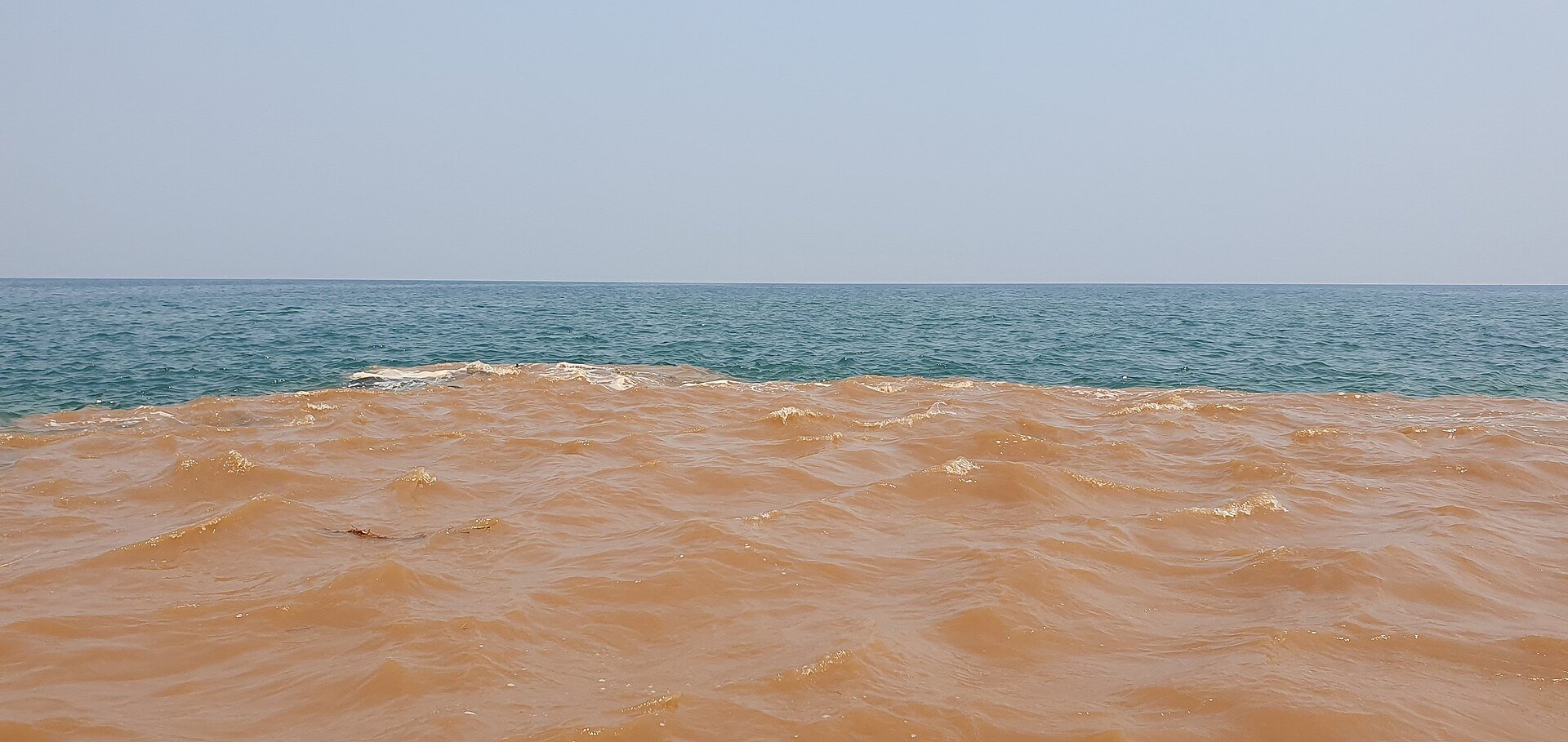
In the north-west the Ruzizi Plain is the lowland near where Burundi, Rwanda and DR Congo meet, and UN experts place many Burundian soldiers there. The photo above shows the muddy water of the Ruzizi River meeting the lake.
Burundi’s neighbours are far bigger or far richer than it is. Tanzania has 70.5 million people and DR Congo 112.8 million, while Rwanda has 14.57 million and produced US$16.4 billion in 2025.
Rwanda has almost as many people as Burundi, yet its output per person is 4.8 times higher as of October 2026. Its economy also grew 9.4% in 2025, against 4.2% for Burundi.
The next sections take the three borders one at a time. The sharpest is the one with Rwanda.
Rwanda and the Closed Border
Burundi’s relations with Rwanda are the sharpest of its three borders. After a December 2023 attack in Vugizo, in which UN experts record that 20 civilians were reportedly killed, the President of Burundi decided to close the land borders with Rwanda.
Burundi’s president publicly blamed Rwanda for backing the rebel group RED-Tabara, which Rwanda rejected, the UN experts wrote. RED-Tabara claimed the attack but denied working with Rwanda and accused Burundi’s army of the killings.
The UN experts add that the closure was a unilateral decision that was not unanimously approved inside the ruling party. They also say it hit economic activity, including for Congolese who used to cross Rwanda to reach Burundi around the Ruzizi Plain.
Tension rose again in February 2025, when Burundi’s president accused Rwanda of intending to invade, a charge the UN experts quote from his own statements. In mid-March 2025 both countries agreed on verbal and military de-escalation, reportedly concluding a non-aggression agreement.
Trade with Rwanda was small even before the closure. World Bank tables for 2023, the latest year available, show US$14.9 million of imports from Rwanda, 1.3% of Burundi’s total, and US$5.8 million of exports, 2.7%.
The State Department warns that Burundi’s borders may close without notice. No official source reviewed for this guide announces a reopening of the Rwanda border as of October 2026.
Rwanda’s side of the same quarrel is set out in the Rio Times guide to Rwanda and its neighbours. A separate Rio Times report looks at Rwandan trade data for 2026.
DR Congo and the War Next Door
DR Congo is the giant of the neighbourhood, with 112.8 million people and a US$91.0 billion economy in 2025 as of October 2026 in World Bank data. Its eastern provinces of North Kivu and South Kivu have been at war for years, and South Kivu borders Burundi.
UN experts record significant territorial gains in 2025 by the M23 rebels and the Rwandan army, and the US Treasury says Rwanda’s security apparatus supports M23 with thousands of troops. M23 is designated by both the United States and the United Nations.
Burundi answered by sending its army, the FDNB, to back the Congolese army. UN experts put the number at 7,000 to 9,000 Burundian troops in DR Congo in April 2025, most of them in South Kivu, in about 14 battalions under an umbrella called Task Force Congo.
Ten of the 14 battalions were in the Ruzizi Plain, two were in and around Uvira and two were on the Hauts Plateaux near Minembwe, all in South Kivu. Heavy clashes with M23 fighters and Rwandan soldiers cost several hundred Burundian casualties, the experts wrote.
UN experts say Burundi made its military deployment in North Kivu more overt after the December 2023 attack. They link the build-up to its aim of containing M23 and Rwandan expansion southwards.
The US Treasury says the United States brokered the Washington Accords for Peace and Prosperity, which the heads of state of DR Congo and Rwanda signed on 4 December 2025. Burundi was not a signatory, and the US Embassy in Bujumbura issued security alerts on 8 and 10 December 2025 about increased armed violence at and near Burundi’s border with DR Congo.
Tanzania, the Largest Regional Supplier
Tanzania is Burundi’s largest regional supplier: it sold US$149 million of goods to Burundi in 2023, or 12.6% of imports, in World Bank trade tables. Only the United Arab Emirates, at 16.8%, and China, at 14.0%, supplied more.
Kenya supplied 4.8% and Uganda 4.3%, so Tanzania, Kenya and Uganda together provided about 22% of Burundi’s imports. Burundi sold little to any of them: US$6.1 million to Tanzania, US$5.0 million to Uganda and US$1.4 million to Kenya.
Tanzania is also the largest host of Burundian refugees: UNHCR, the UN refugee agency, counted 131,156 Burundian refugees and 5,541 asylum seekers there at the end of 2025. That is about 2.6 times the 50,746 refugees counted in Rwanda.
Tanzania has 70.5 million people and a US$90.1 billion economy, nearly 27 times Burundi’s output as of October 2026. Its president is Samia Suluhu Hassan, as the State House website confirms as of October 2026.
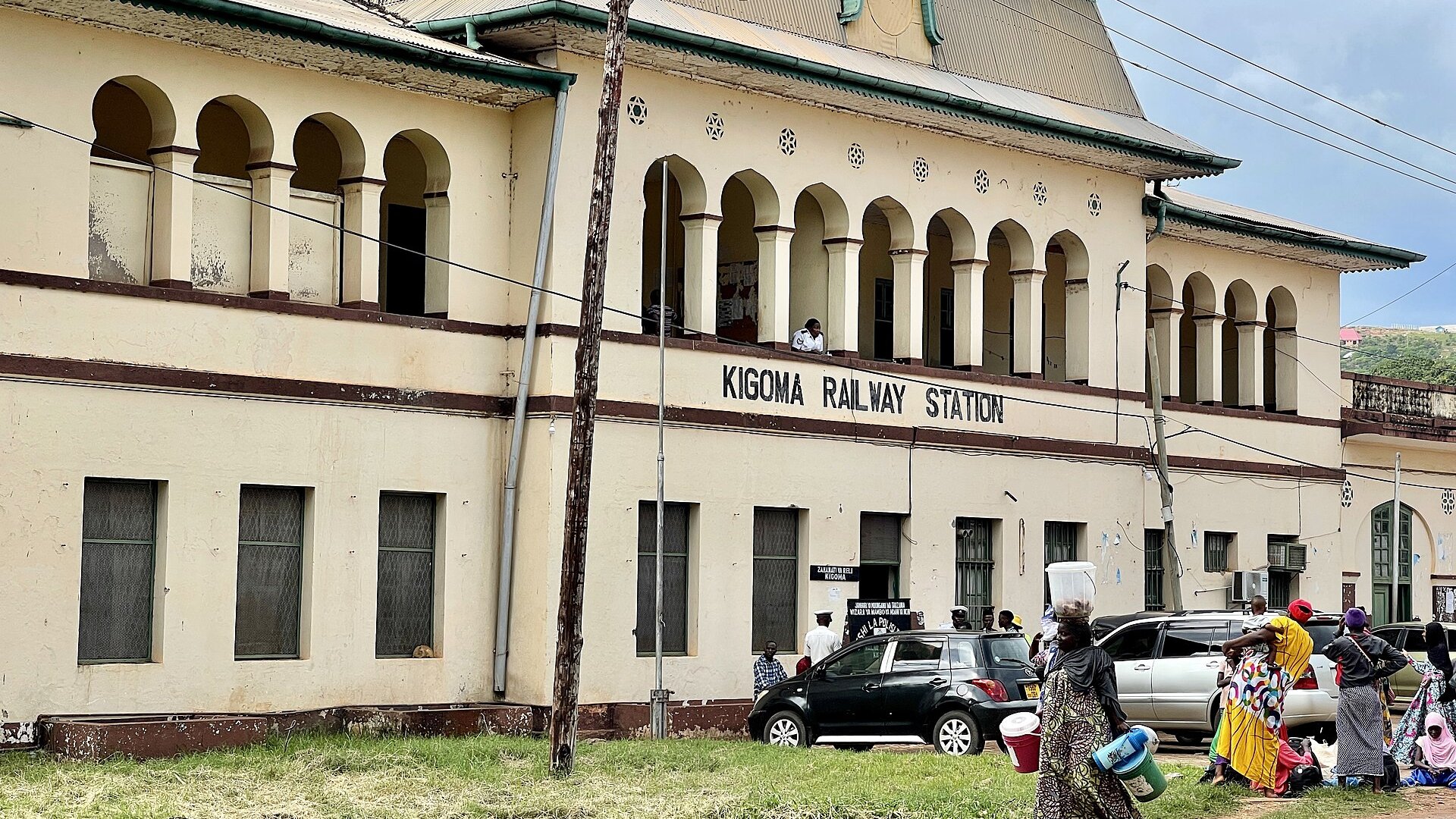
The headquarters of the East African Community are in Arusha, Tanzania, so Burundi’s regional trade diplomacy runs through Tanzanian soil. Kigoma railway station, shown above, stands on the Tanzanian shore of Lake Tanganyika.
Refugees, Trade and Money Across the Borders
Burundi itself shelters refugees: UNHCR counted 157,165 refugees and asylum seekers there on 30 September 2026, and 99.3% of them came from DR Congo. Another 101,821 people were displaced inside Burundi on 31 August 2026, according to IOM, the UN migration agency.
Burundians are also on the move abroad. UNHCR counted 318,291 Burundian refugees and 64,899 asylum seekers worldwide at the end of 2025.
After Tanzania with 131,156 refugees, the biggest hosts were Rwanda with 50,746, DR Congo with 46,897 and Uganda with 43,677. Rwanda therefore sheltered more Burundian refugees than DR Congo did, despite the border dispute.
Burundi buys far more than it sells. In 2023 it imported US$1.18 billion of goods and exported US$217 million, a gap of about US$965 million, and refined petroleum products alone were US$255 million of the imports, or 21.6%.
Gold (US$75 million), coffee (US$41 million) and tea (US$19 million) led its exports. The United Arab Emirates took 37.0% of all exports, ahead of DR Congo at 20.4%.
Money sent home by Burundians abroad reached US$273 million in 2025, about 8.1% of the economy, as of October 2026 in World Bank data. The same overview credits higher mining and coffee exports for a narrower current account deficit in 2025.
Regional Clubs from Arusha to Bujumbura
The East African Community has eight partner states: DR Congo, Somalia, Burundi, Kenya, Rwanda, South Sudan, Uganda and Tanzania. Burundi acceded to its treaty on 18 June 2007 and became a full member on 1 July 2007.
Burundi, Rwanda, DR Congo and Tanzania therefore sit in the same trade bloc, which makes a border closure between two members a regional matter as well as a bilateral one. The bloc’s own overview lists Arusha as its headquarters.
The International Conference on the Great Lakes Region has 12 member states, including Burundi, Rwanda, DR Congo, Tanzania and Uganda, and its secretariat is in Bujumbura. Its regional ministers held their 20th ordinary session in Lusaka, Zambia, in October 2026.
At continental level Burundi’s president holds the chair of the African Union in 2026. The Burundian presidency’s website lists his speeches in that role, including one at the United Nations General Assembly in September 2026.
What It Means for US Readers
The State Department rates Burundi Level 3, reconsider travel, citing political violence, crime and health, and warns that the borders may close without notice. It tells travellers not to go to Cibitoke and Bubanza provinces and Kibira National Park because of potential armed violence.
US government employees in Burundi may not travel outside the city of Bujumbura after dark, and the US government has limited ability to help citizens elsewhere in the country. Medical care falls well below US standards, and the department strongly recommends medical evacuation insurance.
Rwanda is also Level 3, and the department advises against travel within 10 kilometres of Rwanda’s border with DR Congo. DR Congo is Level 4, do not travel, and because of the Ebola outbreak there the Department of Homeland Security bars US citizens who were in DR Congo in the past 21 days from boarding commercial flights to the United States.
Tanzania is Level 2, exercise increased caution, a lower rating than Burundi, Rwanda or DR Congo as of October 2026. A trip that mixes Burundi with the Congolese side of the border therefore carries different rules for the flight home than a trip that mixes Burundi with Tanzania.
A presidential proclamation signed on 16 December 2025 and in force since 1 January 2026 keeps Burundi on the list of countries whose nationals face a partial suspension of US entry, and it suspends immigrant visas and tourist, business, student and exchange visas for nationals of Tanzania. Rwanda and DR Congo are not named in the proclamation, and the Secretary of State must report on every listed country every 180 days.
UNHCR counted 639 Burundian refugees and 70 asylum seekers in the United States at the end of 2025, a small diaspora beside the 131,156 refugees in Tanzania. The Rio Times travel advice for Americans explains the Level 3 rating in plain terms.
What Is Not Known
The UN estimate of 7,000 to 9,000 Burundian troops in South Kivu dates from April 2025, and no primary source reviewed for this guide gives a later figure. Whether the soldiers are still in the same places as of October 2026 is therefore not confirmed.
No official announcement of a reopening of the Rwanda border appears in the sources reviewed, and the date of any reopening is unknown. Official trade tables after 2023 were not available for this guide, so the effect of the closure on trade is not measured here.
How the presidential election scheduled for 2027 will shape relations with Rwanda and DR Congo is not known. Nor is it known whether Burundi’s chairmanship of the African Union will bring a mediating role in its own neighbourhood.
Frequently Asked Questions
Which countries border Burundi?
Three: Rwanda to the north, DR Congo to the west and Tanzania to the east. Lake Tanganyika borders Burundi to the south-west, and the country has no coast.
Is the border between Burundi and Rwanda open?
Burundi closed it after a December 2023 attack, and no official source reviewed for this guide announces a reopening as of October 2026. The State Department also warns that Burundi’s borders may close without notice.
Why does Burundi have troops in DR Congo?
UN experts estimated 7,000 to 9,000 Burundian troops in DR Congo in April 2025, most of them in South Kivu, backing Congo’s army. They link the build-up to containing M23 and Rwandan expansion southwards.
Which neighbour trades most with Burundi?
Tanzania supplied 12.6% of Burundi’s imports in 2023, the most among its neighbours. DR Congo bought 20.4% of Burundi’s exports, the most among its neighbours.
How many refugees does Burundi host?
UNHCR counted 157,165 refugees and asylum seekers in Burundi on 30 September 2026. Almost all, 99.3%, came from DR Congo.
What does the US government advise about Burundi and its neighbours?
The State Department rates Burundi and Rwanda Level 3, DR Congo Level 4 and Tanzania Level 2. Americans who were in DR Congo in the past 21 days cannot board commercial flights to the United States.
Which regional groups does Burundi belong to?
Burundi has belonged to the East African Community since 2007 and hosts the secretariat of the Great Lakes conference in Bujumbura. Its president chairs the African Union in 2026.
Sources: World Bank, World Development Indicators API (population, area, GDP, growth, inflation, remittances, urban share), Burundi, Rwanda, Tanzania, DR Congo, 2025 data, opened 30 October 2026; World Bank, Burundi country overview, October 2026; World Bank WITS, Burundi trade summary and partner data, 2023; UNHCR Operational Data Portal, Burundi, data of 30 September 2026; UNHCR Refugee Data Finder, Burundi as country of origin and asylum, end of 2025; UN Security Council, final report of the Group of Experts on the DR Congo, document 2025/446, 3 July 2025; UN Security Council, final report of the Group of Experts on the DR Congo, document 2024/432, 2024; US State Department, travel advisories for Burundi, Rwanda, DR Congo and Tanzania, feed of 30 October 2026; White House, proclamation on entry restrictions, 16 December 2025; US Embassy Bujumbura, security alerts of 8 and 10 December 2025; US Treasury, press release on Rwanda, M23 and the Washington Accords, 28 October 2026; East African Community, overview, 30 October 2026; International Conference on the Great Lakes Region, home page, 30 October 2026; African Union, press release of 29 October 2026; Presidency of Burundi, news page, 30 October 2026; Rwanda Ministry of Foreign Affairs, news page, October 2026; Tanzania State House, news page, October 2026.
This article was produced by The Rio Times’ automated newsroom system. How we use AI · Report an error · Editorial responsibility: Matthias Camenzind, Editor-in-Chief