Burundi Inflation Fell From 45% to 8.4%. The Dollar Shortage Did Not
BURUNDI · MACRO
Key Facts
- —The fall Year-on-year inflation peaked at 45.5% in April 2025 and reached 8.4% in August 2026, the national statistics institute reports.
- —The other measure The 12-month moving average was still 14.3% in August 2026. The two figures describe the same economy in different ways.
- —What paid for it Coffee export value roughly doubled in 2025 and gold export volume tripled, from about 400 kilograms to 1.2 tonnes.
- —The currency The premium on the parallel market for dollars was about 100% at the end of April 2026, according to the IMF.
- —The buffer Gross reserves stood at about US$213.9 million at the end of 2025, or 1.6 months of imports.
- —The programme Burundi drew SDR 46.2 million of an agreed SDR 200.2 million before its IMF facility lapsed in January 2025. No review was ever completed.
- —The warning The IMF projects inflation averaging 14.5% in 2026 and 15.3% in 2027, above the central bank’s 8% target.
Coffee and gold earnings gave Burundi its first real breathing room in years, and prices stopped climbing. The currency problem underneath is untouched, and the IMF expects inflation to climb back.
A Real Fall, Measured Two Ways
Burundi has had the sharpest disinflation in East Africa, and the numbers are not in dispute. Year-on-year inflation peaked at 45.5% in April 2025. By August 2026 it was 8.4%.
That is the figure the national statistics institute published on 11 September 2026. It is the most recent reading available, and it is lower than the 10.8% for March 2026 and the 8.6% for April 2026 that circulated earlier this year.
There is a second measure, and it matters. The 12-month moving average for August 2026 was 14.3%. That number averages the past year rather than comparing one month with the same month a year earlier.
Both are correct. They answer different questions. The year-on-year figure tells you what prices did over the last twelve months. The moving average tells you what the average household has actually been living through.
This is why the IMF’s forecast of 14.5% for 2026 does not contradict the 8.4% print. The Fund is forecasting a period average. Anyone comparing the two as if they measured the same thing will reach the wrong conclusion.
Food inflation, which is what most Burundian households feel first, was running at 2.6% year on year in August 2026. The consumer price index actually fell 0.7% month on month.
What Actually Paid for the Fall
The disinflation was not engineered by monetary policy alone. It was bought, in large part, by a commodity windfall.
Coffee export value roughly doubled in 2025. Gold export volume tripled, from about 400 kilograms to 1.2 tonnes. Export volumes of goods rose 45.3% over the year. For an economy that earns hard currency from a very short list of products, that is transformative.
More dollars arriving meant the parallel exchange rate stopped sliding as fast. Since Burundi imports most of what it consumes beyond food, a steadier parallel rate feeds directly into slower price rises.
The government also stopped financing its deficit through central bank advances from the middle of 2025. The overall fiscal deficit is projected to narrow from 5.5% of GDP in the 2024/25 financial year to 3.4% in 2025/26.
In January 2026 the authorities adopted a Macroeconomic Stabilization Plan covering fiscal consolidation, tighter money, foreign exchange reform and sector measures. Real growth came in at 4.2% in 2025, after 4.1% in 2024.
The catch is in the word windfall. The IMF’s own downside scenario has medium-term growth slowing to 3.3% and inflation rising to 20.8% if export prices weaken. Everything described above rests on coffee and gold prices holding.
The Two-Price Currency
This is the part that has not improved, and for anyone doing business in Burundi it is the part that decides everything.
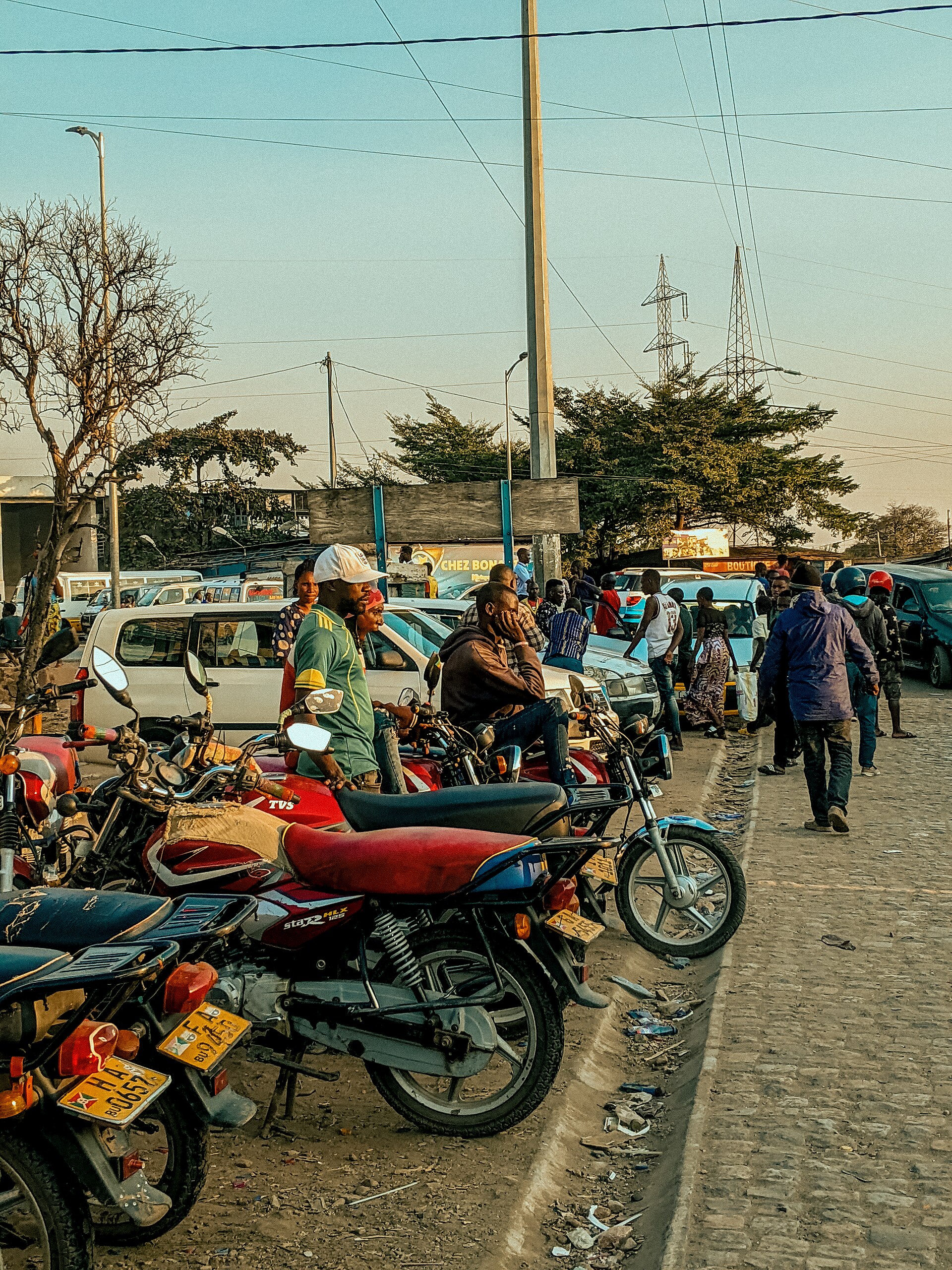
Burundi runs two exchange rates. The official rate published by the central bank was about 3,002 Burundian francs to the dollar on 6 August 2026. The rate people actually transact at on the parallel market is roughly double that.
The IMF put the premium at about 100% at the end of April 2026. That is down from a peak the African Development Bank reported at 160% for 2024, so it is narrowing. It was around 40% in May 2023.
A 100% premium means foreign currency at the official rate is rationed rather than sold. The central bank allocates it by priority sector. The IMF describes the official rate as appearing significantly overvalued.
The practical consequence is documented rather than theoretical. Foreign companies operating in Burundi report receiving only a fraction of the foreign exchange they request, sometimes for months at a time. That has prevented them from repatriating profits, servicing dollar debt and buying imports.
Burundi’s IMF programme collapsed over precisely this issue. The 38-month Extended Credit Facility was approved in July 2023 for SDR 200.2 million, about US$271 million at the time. Only the first disbursement of SDR 46.2 million, about US$62.6 million, was ever drawn.
No review was ever completed. A first-review mission in January 2024 ended without agreement, and the IMF’s lending record shows the arrangement expiring on 16 January 2025. The United States State Department attributes the termination to the failure to unify the two exchange rates.
How Much Debt, Depending on Who Counts
Burundi’s solvency looks either comfortable or alarming depending on which institution you read, and the gap is not small.
The IMF puts public debt at 41.6% of GDP for 2025, down from 53.3% in 2024. The World Bank’s Macro Poverty Outlook puts 2025 at 67.1%. For 2024 the African Development Bank cites 50.4%, the IMF 53.3% and the World Bank 69.0%.
That is a spread of more than 25 percentage points on the single most important measure of whether a country can pay its debts. None of the three has published a reconciliation.
What they agree on is the rating. The IMF’s 2026 Article IV assessment finds debt sustainable but at high risk of external and overall debt distress. Those two phrases sit together deliberately.
Reserves are the more immediate constraint. Gross international reserves were about US$213.9 million at the end of 2025, covering 1.6 months of imports. The IMF’s medium-term projection reaches roughly US$500 million, or 2.8 months, by 2031.
Nominal GDP was about US$6.8 billion in 2025, for a population of 14.5 million. GDP per capita was US$467.7, among the lowest anywhere. About 74% of the population lives on less than US$3.00 a day, and 85% of the workforce is in subsistence agriculture.
What This Means If You Do Business Here
The honest summary is that Burundi’s macro numbers improved and its business mechanics did not.
There is no regulation formally restricting international transactions. In practice the government restricts payments and transfers because there is not enough foreign currency to go round. Conversion is legal, subject to availability, and availability is the binding term.
Budget for that. An earlier State Department assessment put the average delay on remitting investment returns at about three months. Companies report receiving a fraction of what they ask for.
Foreign and domestic companies have the same rights to establish and operate, and there are no general limits on foreign ownership outside weapons and military enterprises. The investment code was revised in June 2021.
That revision raised the minimum investment qualifying for code benefits from US$50,000 to US$500,000. The benefits are real: exemption from property transfer duty, from VAT and from customs duties on construction materials and production inputs.
Profit tax is reduced to between 5% and 25% for the first five years, reverting to the standard 30% corporate rate afterwards. Value added tax is 18%, with a reduced 10% band for food, farm inputs and hospitality. Withholding tax is 15% on dividends and interest.
Investors on record complain about three things consistently. Access to foreign exchange for imports and repatriation. Delays importing equipment. And difficulty obtaining tax exemptions that were already agreed.
There is no current business climate ranking for Burundi. The Doing Business series was discontinued after 2020, when Burundi ranked 166th of 190 countries. Do not trust a current rank quoted from anywhere.
Why the Fund Expects Prices to Rise Again
The most useful thing in the IMF’s 2026 Article IV is not the celebration. It is the forecast.
The Fund projects inflation climbing back out of single digits in the second half of 2026, to a 14.5% period average for the year and 19.6% at end-2026. For 2027 it forecasts 15.3%. It expects 11.5% as late as 2031.
The central bank’s own target is 8%. On the IMF’s numbers that target is missed every year through the end of the decade.
Two forces drive the projection. Base effects wear off, because the comparison months stop being the extreme ones. And fuel prices are expected to rise, which feeds into transport and therefore into almost everything else.
The statistics institute’s monthly series through August 2026 does not yet show that turn. Whether 8.4% is a floor or a waypoint is the open question of the next six months.
The deeper point is structural. Until the two exchange rates converge, the price level in Burundi is set partly by a rationing system rather than by a market. Disinflation achieved without fixing that is disinflation that can be reversed.
What Is Not Known
Which debt figure is right. The IMF says 41.6% of GDP for 2025 and the World Bank says 67.1%. Neither has explained the difference, and the gap is larger than most countries’ entire debt stock changes in a year.
The parallel exchange rate itself. No central bank, IMF or statistical publication gives one. The IMF publishes the premium, not the rate. Figures circulating in local outlets could not be corroborated.
Whether a successor IMF arrangement is being negotiated. The June 2026 Board statement mentions continued engagement and capacity development, but no new financing programme.
When, and at what cost, the exchange rates will be unified. The IMF calls a sequenced reform roadmap the critical step, but no roadmap, target rate or date has been published.
Foreign direct investment for 2025. The most recent confirmed figure is 2024, at about US$33.3 million. The World Bank and third-party aggregators disagree on the 2025 direction.
Connected Coverage
- Taxes in Ghana for Expats 2026: Residency Can Raise Your Rate
- Kenya Residency Visa Requirements 2026: Class K Starts at 35
- Open a Bank Account in Kenya as a Foreigner, Step by Step
Sources
- IMF — Executive Board concludes the 2026 Article IV consultation with Burundi, 17 June 2026
- IMF — staff completes the 2026 Article IV mission to Burundi, 18 May 2026
- Institut National de la Statistique du Burundi — consumer price index bulletins
- Banque de la République du Burundi — daily exchange rates
Frequently Asked Questions
What is Burundi’s inflation rate now?
Year-on-year inflation was 8.4% in August 2026, according to the national statistics institute, down from a peak of 45.5% in April 2025. The 12-month moving average was 14.3%, which is a different measure of the same economy.
Why does the IMF forecast 14.5% when inflation is 8.4%?
The two figures measure different things. The 8.4% compares August 2026 with August 2025. The IMF’s 14.5% is a forecast for the average of the whole of 2026, and it also expects prices to rise again in the second half of the year.
Can foreign companies repatriate profits from Burundi?
Legally yes, subject to the availability of foreign exchange, which is the binding constraint. Companies report receiving only a fraction of the foreign currency they request, sometimes for months, which has prevented repatriation and dollar debt service.
What happened to Burundi’s IMF programme?
The 38-month Extended Credit Facility approved in July 2023 for about US$271 million lapsed in January 2025 after only the first disbursement of about US$62.6 million. No review was ever completed, and the failure to unify the two exchange rates is cited as the reason.
What is the minimum investment for Burundi’s investment code benefits?
US$500,000 for the incentives under the code revised in June 2021, up from US$50,000. Benefits include exemptions from VAT and customs duties on inputs, and profit tax of 5% to 25% for five years before the standard 30% rate applies.
This article was produced by The Rio Times’ automated newsroom system. How we use AI · Report an error
LatAm Markets: Live Signals → — real-time movers, turnover leaders and FX across Latin America.
Read More from The Rio Times