What Is Happening in Burundi? Power, a Dollar Shortage and War Next Door
AFRICA · BURUNDI
Key Facts
- —The country Landlocked Burundi has about 14 million people on 27,834 square kilometres beside Lake Tanganyika.
- —Who rules President Évariste Ndayishimiye, a former rebel commander, has led the CNDD-FDD government since June 2020.
- —The numbers Inflation fell from 45.5% in April 2025 to 8.4% in August 2026.
- —The catch Reserves covered only 1.6 months of imports at the end of 2025, so dollars and fuel stay scarce.
- —Why it matters Burundian troops fight beside Congo’s army against the M23 rebels, and the Rwanda border stays shut.
Burundi is a small, landlocked and very poor country, yet it sits on the fault line of the Great Lakes conflicts. This guide explains who runs it, how its economy works and what outsiders should know as of September 2026.
For most foreigners, Burundi appears in the news only when its army, its refugees or its fuel queues make headlines. Behind those stories stand a ruling party that has governed since 2005 and an economy chronically short of hard currency.
Where Burundi Is and Why It Matters
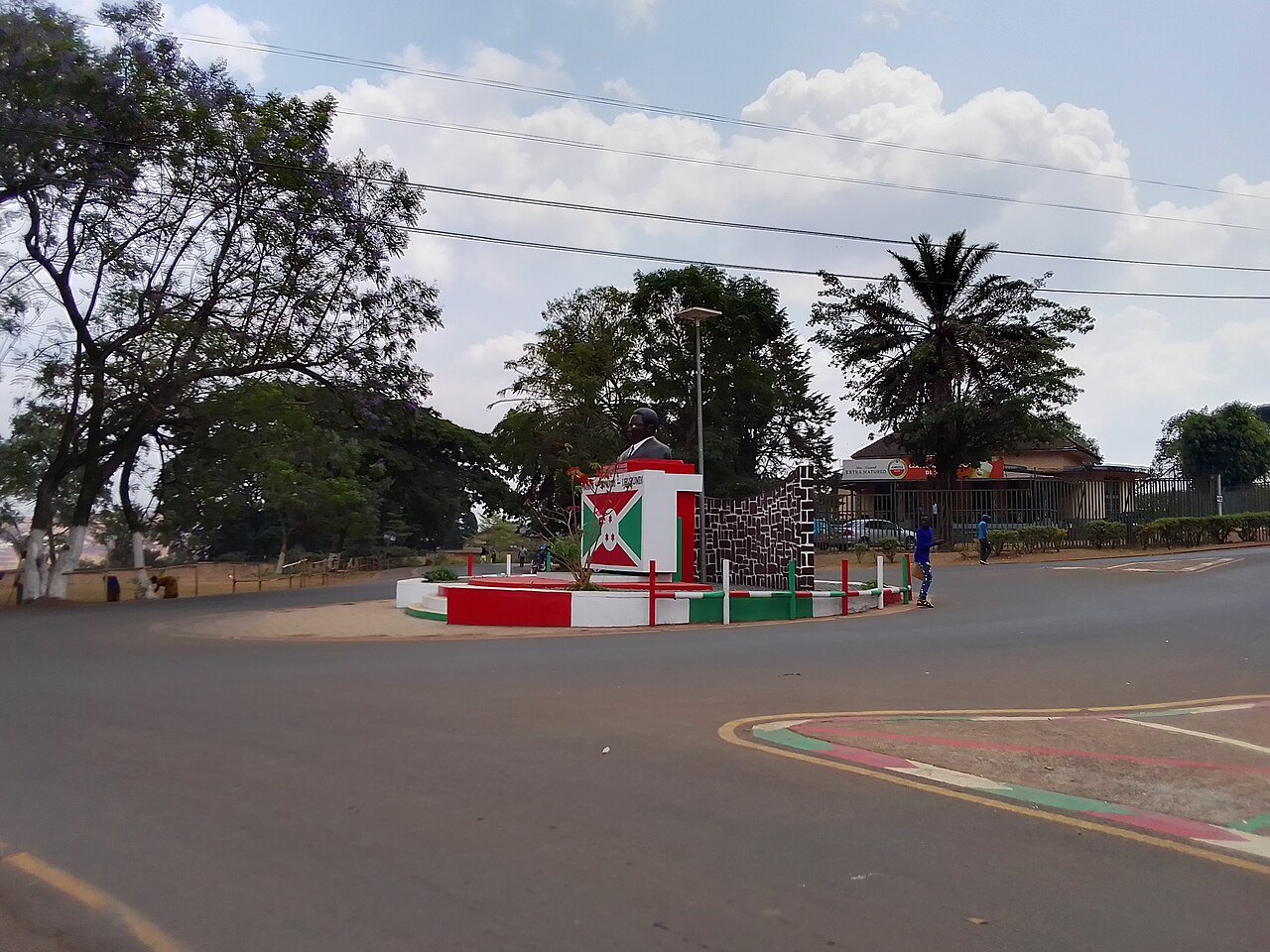
Burundi lies in the African Great Lakes region, between Rwanda, Tanzania and the Democratic Republic of Congo. Its territory covers 27,834 square kilometres, and Lake Tanganyika forms much of its south-western edge.
The World Bank puts the population at about 14 million, packed at 442 people per square kilometre. Agriculture employs about 85% of workers but produces only 31.6% of economic output.
Gitega, in the centre of the country, has been the political capital since a law of February 2019. Bujumbura, on the lake shore, remains the economic capital and hosts the main international airport.
The currency is the Burundian franc, and the official languages are Kirundi, French and English. Burundi joined the East African Community, the regional trade bloc, in 2007.
The country matters beyond its size because it sits between Congo’s war zone and Rwanda, a neighbour it accuses of backing rebels. Its president also chairs the African Union, the continental body of African states, for 2026.
From Kingdom to Civil War
Burundi began as a kingdom in the 16th century and became part of German East Africa in 1899. Belgian troops took the territory in 1916, and Belgium later ruled it as part of Ruanda-Urundi under a League of Nations mandate.
Independence came on 1 July 1962, first as a constitutional monarchy under King Mwambutsa IV. The monarchy was overthrown in 1966, and Prime Minister Michel Micombero seized power that November.
Politics has long been shaped by the divide between a Hutu majority of about 85% and a Tutsi minority of about 14%. Belgian administrators had governed indirectly, building on a Tutsi-dominated hierarchy.
In 1972 an estimated 200,000 to 300,000 Hutu were killed in a wave of massacres. In June 1993 Melchior Ndadaye was elected as the first Hutu president, and Tutsi army extremists assassinated him that October.
His murder set off a civil war that killed an estimated 300,000 people. The Arusha agreement of 2000 laid down power-sharing and an ethnically balanced army and government.
The CNDD-FDD rebel movement signed a peace deal in November 2003 and joined the transitional government. Its leader Pierre Nkurunziza was elected president by parliament in August 2005, and the party has governed ever since.
In April 2015 Nkurunziza announced a bid for a third term, which set off weeks of street protests. A coup attempt led by General Godefroid Niyombare failed in May, and tens of thousands of people fled the country.
Agence France-Presse (AFP), citing the International Criminal Court, has reported that at least 1,200 people were killed in the crisis. Nkurunziza won the July 2015 vote without opposition participation, and he died in June 2020.
Who Holds Power in 2026
Évariste Ndayishimiye, born in 1968, joined the CNDD-FDD rebels in 1995 after fleeing ethnic violence at university. He later led the movement’s fighters, served as interior minister and became Nkurunziza’s military aide.
He won the May 2020 presidential election with more than two-thirds of the vote, although the opposition alleged fraud. He took office on 18 June 2020, nine days after Nkurunziza’s death.
The presidential term is seven years, and the CNDD-FDD named him its candidate for the 2027 election in April 2026. “I pledge to continue the work we are doing,” he wrote on X, according to AFP.
Day-to-day government runs through Prime Minister Nestor Ntahontuye, a former finance minister. He took office on 5 August 2025, after his predecessor Gervais Ndirakobuca moved to the Senate presidency.
The ruling party’s grip tightened in the June 2025 legislative elections, which it won with 96.51% of the vote. It took all 100 contested National Assembly seats, and no other party cleared the 2% threshold.
Officials described the vote as peaceful and orderly, Africanews reported. Opposition parties denounced the polls as fraudulent and undemocratic, the same outlet reported.
The main opposition party, the National Congress for Liberty (CNL), lost its founder Agathon Rwasa to a dissident congress in March 2024. Secretary general Simon Bizimungu called that congress, held under heavy police presence, a breach of party statutes, AFP reported.
Rwasa, a former rebel leader, told Voice of America that democracy was at stake and urged the international community to act. Human Rights Watch (HRW) says opposition parties were effectively sidelined before the 2025 vote by legal, administrative and coercive means.
A territorial reform cut the number of provinces from 18 to five and the communes from 119 to 42. Both chambers of parliament approved it, and the new map took effect with the 2025 elections.
The Economy: Coffee, Gold and a Dollar Shortage
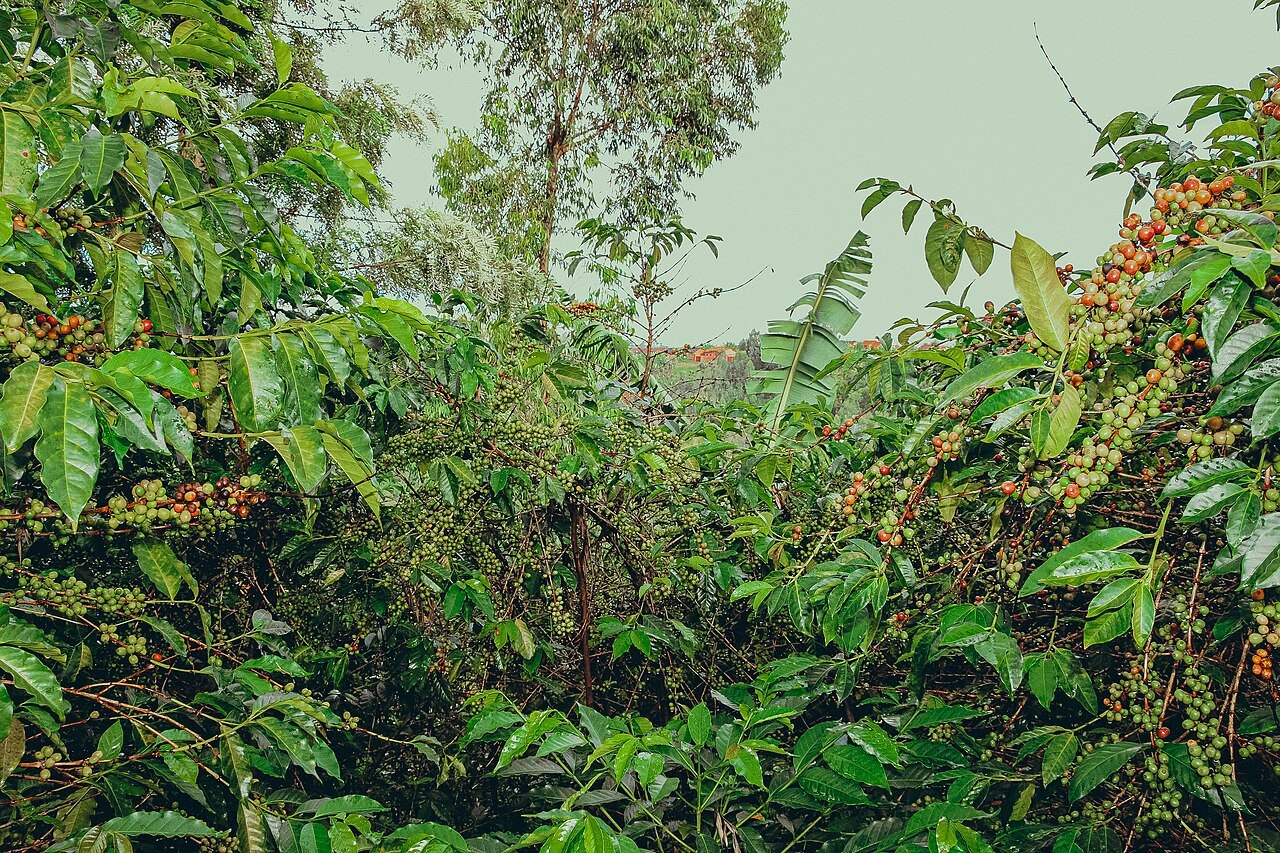
The World Bank classifies Burundi as a low-income economy, with services at 51% of output, farming at 31.6% and industry at 17.4%. Coffee, tea and gold are the main exports, while food, fuel, fertiliser and medicines must be imported.
The International Monetary Fund (IMF), the Washington-based crisis lender, put reserves at about US$214 million at the end of 2025. That covers only 1.6 months of imports, and fuel shortages have recurred as dollars run short.
The central bank’s official mid rate was 3,008 francs per US dollar on 25 September 2026. The IMF found that dollars cost roughly twice as much on the parallel market in April 2026.
Inflation, by contrast, has fallen sharply from a peak of 45.5% in April 2025. The national statistics institute, INSBU, measured 8.7% in July 2026, and the August figure eased to 8.4%.
The IMF credits higher gold and coffee prices, larger export volumes and tighter fiscal and monetary policy for the turnaround. Gold exports tripled from about 400 kilograms in 2024 to 1.2 tonnes in 2025, according to the Fund.
Growth reached 4.2% in 2025, and the IMF projects 3.9% for 2026. Public debt fell from 53% of GDP in 2024 to 42% in 2025, but the risk of debt distress remains high.
In January 2026 the government launched a stabilisation plan built on tighter budgets, tighter money and sector reforms. The central bank, the Bank of the Republic of Burundi (BRB), has held its policy rate at 10% since 26 February.
IMF mission chief Alexandre Chailloux called the outlook positive if reform momentum holds and external conditions normalise, Ecofin Agency reported. The Fund still judges the official exchange rate to be significantly overvalued.
Burundi’s last IMF loan, an Extended Credit Facility approved in July 2023, expired in January 2025 without a completed review. Our earlier report explains why falling inflation has not ended the dollar shortage.
Rights, Media and the Ruling Party’s Reach
Human rights groups describe a tightly controlled political space. HRW cites reports that the ruling party’s youth league, the Imbonerakure, harassed, intimidated and arbitrarily arrested opponents during the 2025 campaign.
From August 2024, HRW reports, citizens had to pay party contributions of 1,000 to 5,000 francs (about US$0.33 to US$1.66). Businesses faced demands of up to 100,000 francs (about US$33), enforced through threats and denial of public services.
HRW’s 2026 report cites UN experts who recorded 605 extrajudicial killings and 892 arbitrary detentions between January 2024 and May 2025. These figures are allegations compiled by UN monitors, not findings of any court.
Journalist Sandra Muhoza of the online newspaper La Nova Burundi was arrested in April 2024 over comments in a WhatsApp group. The Committee to Protect Journalists (CPJ) followed her case through two trials and a four-year sentence in January 2026.
An appeals court in Ngozi closed the case on 14 April 2026 with a six-month sentence for racial hatred, already served. The more serious charge of undermining territorial integrity was dismissed, and she was freed.
Pressure also reaches the army, where HRW says 272 soldiers were convicted in 2024 for refusing to deploy to Congo. A court confirmed their heavy sentences, including life terms, in February 2025.
War Next Door: Congo, Rwanda and Refugees
Burundi’s army backs Congo’s forces in the east against the M23, a rebel group widely described as Rwanda-backed. Critical Threats, a project of the conservative American Enterprise Institute, estimated about 18,000 Burundian troops in South Kivu in December 2025.
The M23 entered Uvira, the Congolese lake port across the border from Bujumbura, on 10 December 2025. More than 100,000 refugees crossed into Burundi, and the army shut its two main border posts with Congo.
The rebels left Uvira in January 2026 after US mediators asked them to withdraw, and the Gatumba crossing reopened in late February. HRW later documented killings and sexual violence during the month-long occupation.
As of September 2026, Burundian soldiers were still fighting beside Congolese troops and allied militias around Minembwe, in the South Kivu highlands. Pro-M23 sources have claimed Burundian losses, but these claims have not been independently confirmed.
Burundi hosted about 230,000 Congolese refugees by February 2026, even as many Burundians left. UNHCR, the UN refugee agency, says 18,232 refugees had returned to Congo voluntarily by 11 September 2026.
Relations with Rwanda are worse still. Burundi closed the land border on 11 January 2024, accusing Kigali of backing RED-Tabara, a Burundian rebel group.
“Today we closed the borders,” Interior Minister Martin Niteretse said at the time. Rwanda’s government spokesperson Yolande Makolo replied that the decision violated the principles of East African integration.
The land border remains shut as of September 2026. Rwanda also refuses to extradite 34 people Burundi seeks over the failed 2015 coup, as the Rio Times reported.
Trade continues regardless, and Kigali’s KT Press counted US$13.39 million of Rwandan exports to Burundi in the second quarter of 2026. That was double the first-quarter figure, a sign of how badly Burundi needs nearby suppliers.
As African Union chair since 15 February 2026, Ndayishimiye has promised to make integration and peace “realities for our citizens”. Kenya’s President William Ruto welcomed his term and said he hoped it would drive reform of the AU.
What It Means for Foreigners and Investors
Burundi is open to visitors, but it is not an easy destination. The US State Department rates it Level 3, “Reconsider Travel”, citing political violence, crime and health risks.
Visitors can buy a 30-day visa on arrival at Bujumbura airport for US$90, and a yellow fever vaccination card is expected. Most transactions are in cash, and ATMs in Bujumbura dispense only Burundian francs.
Hotels usually require non-residents to pay in US dollars, and many vendors accept only near-mint notes printed after 2009. Credit cards are rarely accepted outside upscale Bujumbura businesses, so travellers should carry clean dollar bills.
For investors, the gap between official and parallel exchange rates is the central risk. Profits earned in francs can be hard to convert, and any move toward the parallel rate would shift local costs and margins.
The IMF urges better governance in mining, tax policy and the allocation of foreign exchange. Those are also the points where foreign firms deal with the state, through licences, tax bills and access to dollars.
Firms also face reputational questions, given the record described by HRW and the CPJ. The coffee and gold export boom has helped exporters, but it has not yet ended the dollar shortage.
What to Watch
The 2027 presidential election is the next political test, though no firm date had been set by April 2026. With the opposition weakened and the ruling party holding every contested seat, Ndayishimiye starts as the clear favourite.
On the economy, watch whether inflation stays near the central bank’s 8% target. The IMF itself expects prices to rise 14.5% on average in 2026, well above the latest monthly readings.
Reserves are the other gauge, and the IMF projects them to rise above US$500 million by 2031. A sustained fall in the parallel-market premium would be the clearest sign of real progress.
In the east, the course of the Congo war will decide whether refugees keep returning and whether trade with Uvira recovers. A settlement that includes Rwanda could also reopen Burundi’s northern border, but none exists as of September 2026.
Much remains unknown, including the true size of Burundi’s deployment in Congo and its casualties. Burundi does not publicise troop numbers, so estimates come from outside analysts such as Critical Threats.
Frequently Asked Questions
Is Burundi safe to visit?
The US State Department advises travellers to reconsider travel to Burundi because of political violence, crime and health risks. Visitors who go should carry clean US dollar notes and a yellow fever card.
Who is the president of Burundi?
Évariste Ndayishimiye, a former CNDD-FDD rebel commander, has been president since June 2020. His party named him its candidate for the 2027 election in April 2026.
What is the capital of Burundi?
Gitega has been the political capital since 2019. Bujumbura, on Lake Tanganyika, remains the economic capital and hosts the main international airport.
Why is there a fuel shortage in Burundi?
Burundi pays for imported fuel in foreign currency, but reserves covered only about 1.6 months of imports at the end of 2025. When dollars run short, fuel imports slip and queues form.
Why is the border with Rwanda closed?
Burundi closed it in January 2024, accusing Rwanda of backing the RED-Tabara rebels. Rwanda rejects the accusation, and the land border remains shut as of September 2026.
What currency does Burundi use?
Burundi uses the Burundian franc. The official rate was about 3,008 francs per US dollar on 25 September 2026. Parallel-market dollars have cost roughly twice as much.
This article was produced by The Rio Times’ automated newsroom system. How we use AI · Report an error
Read More from The Rio Times