Burkina Faso Territory Is 74.53% Under Government Control, the Junta Says. Nobody Else Can Check.
BURKINA FASO · SECURITY
Key Facts
- —The country Burkina Faso, landlocked in West Africa, ruled by a military government since 2022.
- —The war A jihadist insurgency that began in 2015 and has driven more than two million people from home.
- —The claim The government says it held 74.53% of the country at the end of June.
- —The problem No named official, no method, no definition of control, no independent verification.
- —What others say Estimates of militant reach run from 40% of the country to open movement across 80%.
- —The catch Aid workers say displacement figures are being managed, and the army stops civilians leaving besieged towns.
A war statistic precise to a hundredth of a percentage point is telling you something. It is rarely the thing it appears to say.
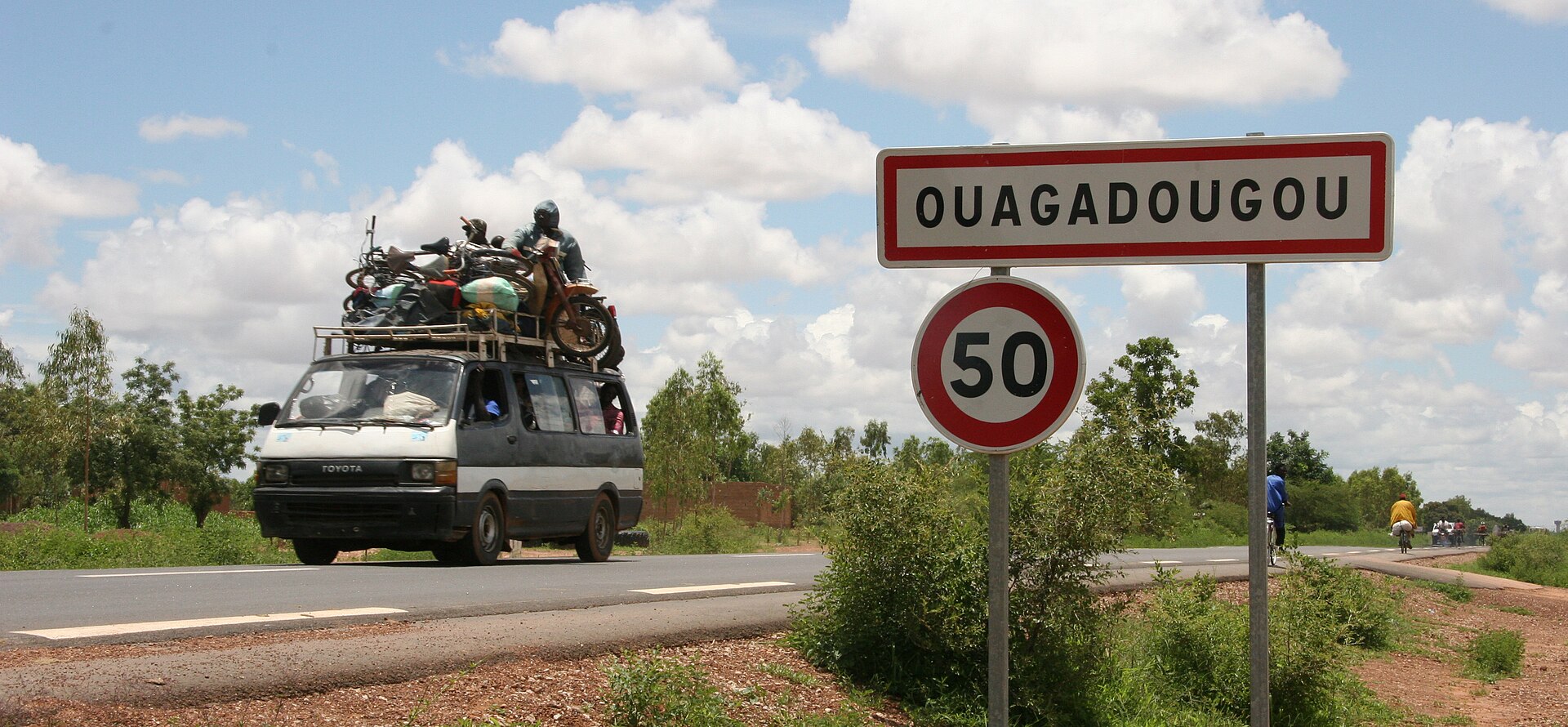
In late July the military government announced that 74.53% of Burkina Faso territory was under state control as of 30 June 2026. Six months earlier the figure had been 73.56%.
That is a gain of 0.97 of a percentage point, stated to two decimal places. It describes a country where almost nobody can travel safely outside the main cities.
The precision is the first thing to notice about it.
What Is Behind the Number
No official put his name to the announcement. There was no forum where it was presented, no published method and no definition of what control means.
Does a district count as controlled if a prefect sits in the town hall but every road out is mined? The claim does not say.
Without that definition the percentage cannot be compared with anything, including the government’s own earlier numbers.
Those earlier numbers do not line up either. In September 2024 the foreign minister told the United Nations that the state held nearly 70%, against 40% in 2022.
Getting from 70% to 74.53% in under two years is a modest claim. It is also unverifiable, which is the more important quality.
What Independent Researchers Say
No outside body endorses any percentage of Burkina Faso territory, which is itself informative. The estimates that do exist vary enormously.
The monitoring group ACAPS puts non-state armed groups in control of roughly 40% of the country. It counts 800,000 people cut off inside besieged towns.
Human Rights Watch counts around forty localities under blockade, affecting up to two million people. Neither organisation offers a figure for what the state holds.
At the other end, analysis around the Global Terrorism Index describes militants moving openly across as much as 80%. Moving openly and governing are different things.
That gap is much of why the published range is so wide. The International Crisis Group and ACLED decline to publish a territorial figure at all.
What they publish instead is events, and the events are easier to check.
In May 2025 the jihadist coalition JNIM seized the town of Djibo and held it for nine hours. More than a hundred people were killed.
The air force turned back that day. The army lacked the vehicles and the artillery to reach the town in time.
ACLED recorded roughly 10,000 deaths in the first eleven months of 2025. The Global Terrorism Index ranks Burkina Faso the worst affected country in the world.
One in four extremist attacks recorded anywhere on earth happens there.
A Figure That Keeps Being Inverted
One claim circulating alongside the official number says jihadist groups contest nearly 60% of Burkina Faso territory. That cannot be true while the state holds 74.53%.
It comes from a 2022 Al Jazeera report quoting a regional mediator. He said 40% of the country was out of state control.
The headline said the state controlled just 60%, and the sentence has been read backwards ever since. It is also four years old.
Neither number belongs in a 2026 account of the war.
What the Government Says It Rebuilt
Prime Minister Rimtalba Jean Emmanuel Ouedraogo addressed the transitional legislature on 30 January 2026. He set out what the state says it has restored.
Seventy-three prefectures and town halls reopened, he said, along with more than 600 schools and 38 health facilities.
He also said 442 villages had been liberated and resettled. A further 1,160,935 people had been resettled across 871 localities, stated as done rather than intended.
Each of those figures is a government claim and none has been independently verified. The scale of the numbers is what makes verification matter.
The Number That Describes the War
More than 2.3 million people are internally displaced inside Burkina Faso, roughly one person in ten. That figure comes from Human Rights Watch in April 2026.
The government says displacement has fallen from its peak. Aid workers told The New Humanitarian in July that the statistics are being politicised.
The effect, they said, is to make the situation look better than it is.
The same investigation documented the army preventing civilians from leaving besieged towns. It named Djibo, Kantchari, Boulsa and others.
People recorded as having returned home and people stopped from fleeing are not independent facts. They can be the same people, counted twice.
A Human Rights Watch report published on 2 April 2026 documented 57 separate incidents. More than 1,800 civilians were killed in them between January 2023 and August 2025.
It attributes crimes to all sides, the army and its auxiliaries as well as the jihadists. The deadliest single incident killed more than 400 civilians near Djibo in December 2023.
Captain Ibrahim Traore has led the country since seizing power in September 2022. Burkina Faso broke off diplomatic relations with France on 26 June 2026.
More: Africa news in English, every day from The Rio Times.
Frequently Asked Questions
How much of Burkina Faso territory does the government control?
The government says 74.53% as of 30 June 2026. No independent body verifies that figure, and no method or definition of control has been published.
What do independent researchers say?
Estimates vary widely. ACAPS puts non-state armed groups in control of around 40%, while analysis around the Global Terrorism Index describes militants moving openly across as much as 80%.
Is it true that jihadists contest 60% of the country?
No. That figure comes from a 2022 report in which a mediator said 40% was out of state control. The headline said the state controlled 60%, and it has been read backwards since.
How many people have been displaced?
More than 2.3 million, roughly one Burkinabe in ten, according to Human Rights Watch in April 2026. Aid workers say government displacement data is being politicised.
Who governs Burkina Faso?
Captain Ibrahim Traore, who took power in a coup in September 2022. Rimtalba Jean Emmanuel Ouedraogo is prime minister, and the country cut relations with France on 26 June 2026.
Sources: Burkina Faso Prime Minister’s office, Xinhua and Africa24, Human Rights Watch, ACLED, ACAPS, International Crisis Group, the Global Terrorism Index and The New Humanitarian.
This article was produced by The Rio Times’ automated newsroom system. How we use AI · Report an error
Read More from The Rio Times