Buenos Aires Blackout Traced to Faulty Switch as Regulator Weighs Fines
Key Facts
Greater Buenos Aires depends on two private distributors, and large outages can bring regulatory fines. The distributor Edenor has now named the fault behind Saturday’s outage, and the regulator is weighing fines.
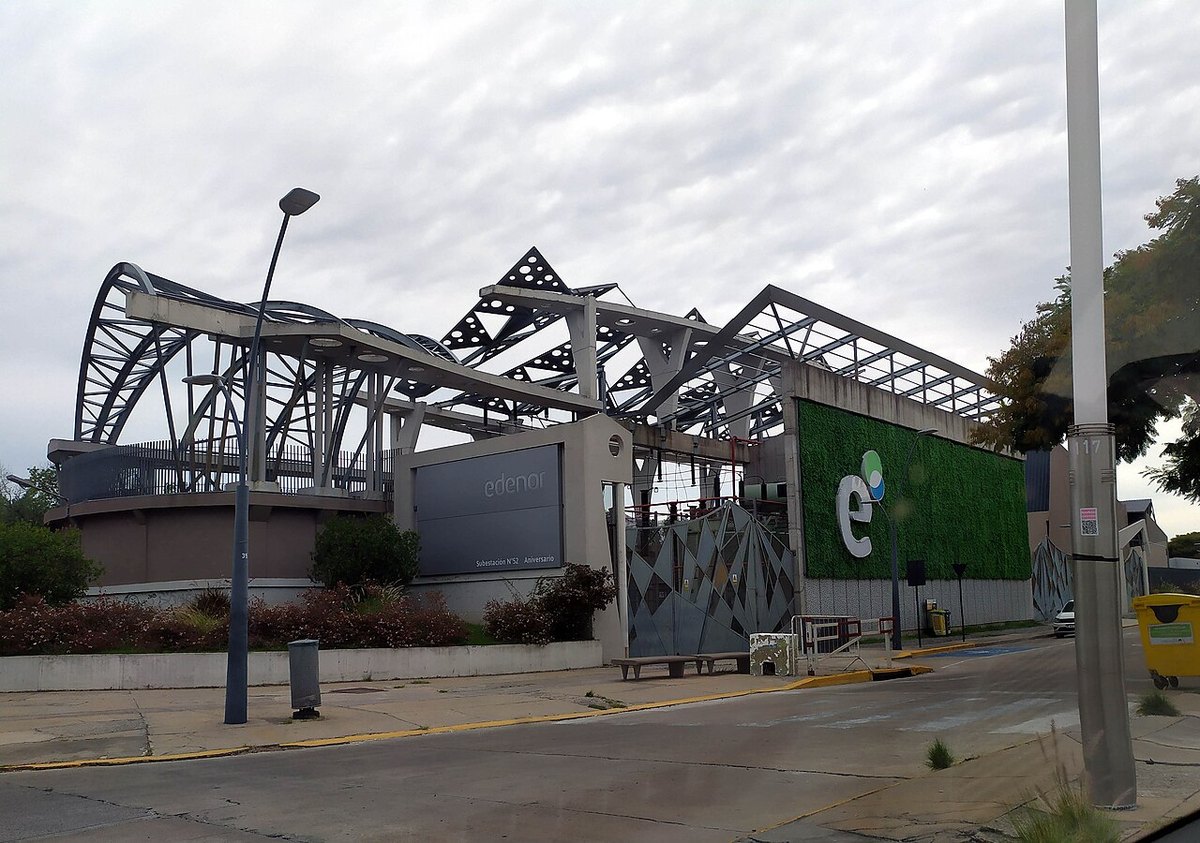
Edenor, the private distributor for northern greater Buenos Aires, blamed a faulty switch on Sunday 20 September. The regulator said it will study responsibility for the outage and apply the fines in its supply rules if warranted.
Why It Matters
The outage on Saturday 19 September cut power to about 600,000 customer accounts across the city and its northern suburbs. Belgrano, Palermo, Recoleta, Núñez and Vicente López were among the districts left in the dark.
Infobae and C5N also listed Colegiales, Villa Crespo, Villa Urquiza, Saavedra, Caballito, Flores and the suburb of Munro. Clarín estimated that between 1.5 million and 2 million people were affected, since one account often serves a whole household.
Traffic lights and street lighting failed in several districts, causing traffic disruption, El Liberal reported. Two private companies share the network of the metropolitan area, known as AMBA.
Edenor serves the north and northwest, while Edesur serves the south of the metropolitan area. Edenor says it is Argentina’s largest distributor, with 3.39 million customers and about 9 million inhabitants in its area.
Its concession covers 4,637 square kilometres in 20 municipalities, from San Isidro and Tigre to La Matanza and Pilar. Its shares trade in Buenos Aires and, as American depositary shares, on the New York Stock Exchange under the ticker EDN.
Edesur belongs to Enel Argentina, part of the Italian energy group Enel. The Rio Times reported the outage and its scale on Sunday.
The question now is who pays, since large outages can bring fines and compensation for customers. The answer also matters for a government that is asking private investors to fund new transmission lines around the capital.
What Edenor and the Regulator Said
Edenor attributed the failure to a defect in a 220-kilovolt switch at its Malaver substation in San Martín. The company said technical work continues to establish exactly why the equipment failed, Infobae reported.
At the peak, at 21:45, 519,472 Edenor customers and 78,125 Edesur customers had no power. Most areas had their supply back by about 23:00, according to Infobae and C5N.
Reported start times vary, from about 19:45 in MDZ and El Liberal to 21:00 in Infobae and C5N. The difference has not been explained, and neither company has published a detailed timeline.
ENReGE, the national electricity and gas regulator, said it will analyse the causes and responsibilities. If warranted, it will apply the sanctions set out in the supply regulations, MDZ and El Liberal reported.
How the Fault Spread
Clarín reported that a busbar opened on a high-voltage line leaving the Malaver station. The same report said this tripped a Central Puerto combined-cycle unit and caused 410 megawatts of outages.
A busbar is a heavy conductor that links lines and equipment inside a substation. When it opens, every line connected to it can lose supply at the same moment.
Clarín said the Santa Rita substation was also affected, which helps explain how the outage reached districts far from San Martín. The newspaper noted that the fault came at normal demand, unlike outages driven by summer heat waves.
The regulator said it will ask SACME for information to identify responsibilities, according to Clarín. SACME is the company that coordinates and operates the high-voltage network belonging to Edenor and Edesur.
It says that network serves more than 13 million people across about 8,000 square kilometres. ENReGE describes its own role as regulating the transport and distribution of gas and electricity under federal jurisdiction.
Edesur’s Position
Edesur said at 21:30 that it had restored service to customers affected by a system failure outside its own network. It said the incident reached clients in the south and north of the metropolitan area, some within its concession.
That statement places the origin of the fault on Edenor’s side, which Edenor has since confirmed. Edesur’s share of affected customers, about 78,000, was much smaller than Edenor’s.
A History of Large Outages
Clarín recalled that a previous large outage, in January 2022, affected about 700,000 customers at its peak. In March 2023, after a wave of outages in the south, the government prepared criminal complaints against Edesur.
The worst failure in recent memory came on 16 June 2019, when a blackout hit Argentina, Uruguay and Paraguay. About 48 million people lost power after an operating error at Transener, the high-voltage transmission company.
Transener had rerouted power over a nearby line without updating an automatic generation shutdown system. About 98 percent of Argentina had power again by that evening, and nearly all areas by the next day.
Saturday’s event was much smaller, and most customers had their supply back before midnight. It still shows how a single piece of equipment can darken large parts of a city of millions.
The Investment Behind the Grid
The Energy Secretariat opened a national and international tender on 11 August for a project called AMBA I, Infobae reported. The project, valued at US$800 million, would add 270 kilometres of 500, 220 and 132 kilovolt transmission lines.
It also includes a new transformer station and would add about 2,000 megawatts of capacity. Private companies would finance, build, operate and maintain the new lines under the tender’s design.
What It Means If You Live in or Invest in Buenos Aires
Residents who lost power should keep records of spoiled food or damaged appliances in case compensation is offered. The regulator has not said whether it will order automatic bill credits, so customers should watch official notices.
Investors in Edenor should watch the size of any fine, which the regulator has not yet set. A finding of poor maintenance would weigh more heavily than a finding of random equipment failure.
Holders of Edenor’s New York shares should treat the review as a test of how strictly service rules are enforced. Bidders for the AMBA I transmission tender will also read the outcome as a signal about regulatory risk.
Visitors and business travellers should expect the grid to work normally, since supply returned the same night. Anyone who relies on power for medical equipment should keep a backup source, since the cause is not yet fixed.
What Is Not Yet Known
Edenor has not said why the switch failed or whether maintenance played a part. The regulator has not named any amount for possible fines or said when its review will end.
It is also unclear whether affected customers will receive automatic credits on their bills. Neither company has published a full technical report on the sequence of the failure.
Frequently Asked Questions
Why does the Buenos Aires blackout matter?
It left about 600,000 customer accounts without power in the capital and its northern suburbs. The regulator may now fine the distributors, which affects customers and investors.
What caused the Buenos Aires blackout?
Edenor said a defect in a 220-kilovolt switch at its Malaver substation in San Martín caused it. The company is still investigating why the switch failed.
Will Edenor and Edesur be fined?
Not yet. The regulator ENReGE said it will study responsibility and apply the supply-rule sanctions if warranted.
Is power back in Buenos Aires?
Yes. Most areas had supply back by about 23:00 on Saturday, according to Infobae and C5N.
Sources: Infobae, Edenor confirms the cause of the blackout, C5N, Edenor statement on the Malaver substation, MDZ, government weighs sanctions for Edenor and Edesur, El Liberal, regulator investigates the outage, Clarín via Qpasó, grid failures and Central Puerto unit, Edenor, company profile, SACME, company profile, ENReGE, regulator profile, Wikipedia, Edesur and the 2023 complaints, Wikipedia, the June 2019 regional blackout
This article was produced by The Rio Times’ automated newsroom system. How we use AI · Report an error
Read More from The Rio Times