Brazil’s Rising Role in Cocaine Trade to Europe via Africa
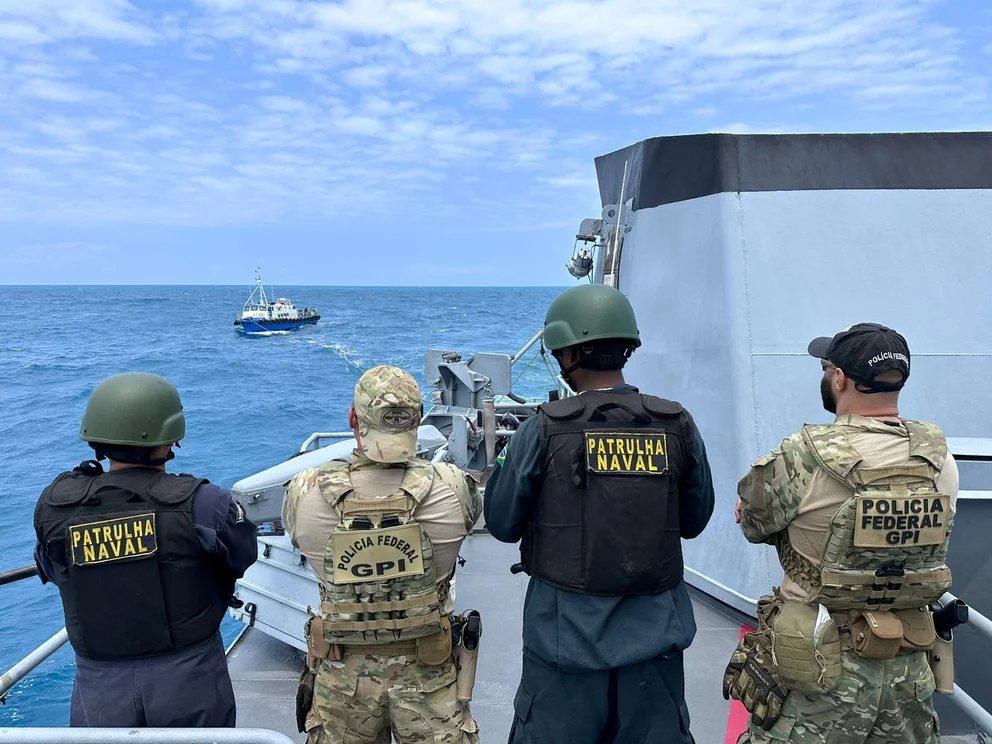
Last week, Brazil set a record by seizing 3.6 tons of cocaine off Pernambuco’s coast.
This event validates European anti-drug reports, identifying Brazil as a key hub for shipping cocaine to Africa and then Europe.
The capture took place 33 km from Recife, the state capital, on a fishing boat named Palmares 1.
This incident showcases the shifting tactics of Brazilian traffickers in choosing where to ship from.
Less monitored ports like Suape in Pernambuco and São Sebastião in São Paulo are gaining favor to dodge scrutiny.
According to Italian data, between 2015 and 2021, 70% of cocaine moving from Brazil flowed through Africa.
Ecuador followed with 14%, and Colombia with 11%. Records indicate that cocaine seizures in Brazil doubled from 33 tons in 2018 to 66.9 tons in 2019.
Brazilian criminal groups, chiefly the First Capital Command (PCC), find Africa a convenient location for operations, thanks in part to corrupt local networks.
Both groups rake in huge profits in cahoots with Italy’s ‘Ndrangheta mafia.
The PCC nets around $200 million per year, while the ‘Ndrangheta gets 66% of its income from the cocaine trade, totaling an estimated €44 billion annually.
Apart from Africa, traffickers also use West and North Africa as stepping stones to Europe. Cocaine gets funneled through the loosely governed Sahara and Sahel regions.
Recent busts have uncovered drug routes crisscrossing Africa.
To counter this, Brazil has upped its port surveillance since April 2016. All containers headed for Europe must undergo scans as per federal rules.
Yet, a police operation last March disclosed that other ports like Itajaí and Rio Grande in southern Brazil also demand close monitoring.
The sting broke up a ring that shipped 17 tons of cocaine to Europe via Africa.
In summary, Brazil’s emergence as a pivotal launchpad for cocaine shows the global scope of drug trafficking and the challenges in stopping it.
While Brazil steps up monitoring, international cooperation remains vital in addressing this far-reaching problem.
More: Brazil news in English, every day from The Rio Times.
This article was produced by The Rio Times’ automated newsroom system. How we use AI · Report an error
Read More from The Rio Times