Brazil presidential polls diverge sharply 17 days before the vote
Brazil · Election
Key Facts
- —Brazil votes Brazil elects a president on Sunday 4 October 2026, with a runoff on 25 October if nobody wins outright.
- —What happened Four pollsters published national numbers on 17 September 2026. Their runoff results do not match.
- —The range Runoff readings run from a 0.4-point gap to a seven-point gap, depending on which pollster you read.
- —The catch The spread between the four polls is wider than the margin of error any single one of them claims.
- —Still to come Datafolha was due to publish at about 19h15 Brasília time on 17 September 2026, after this piece closed.
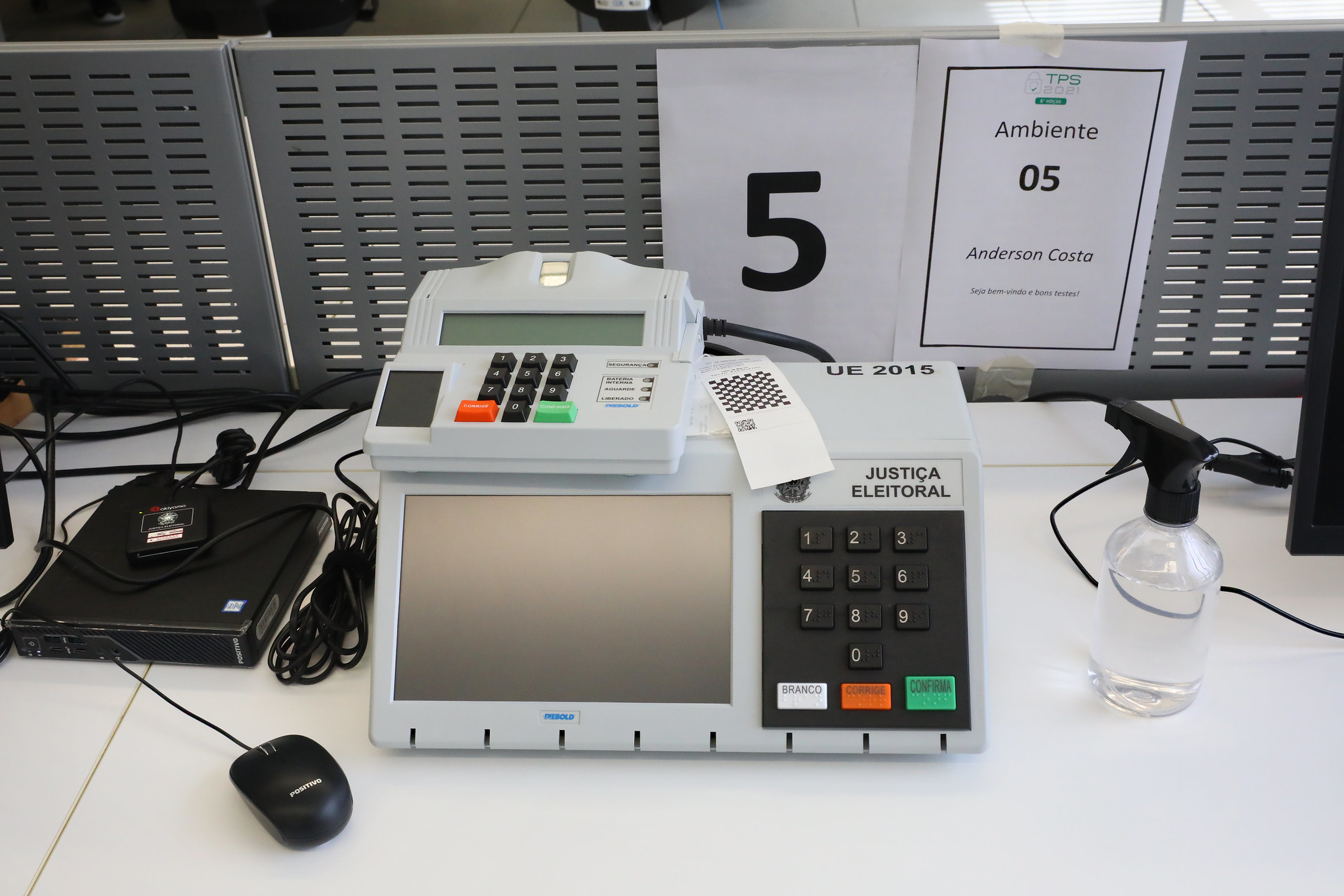
- —How to check Every poll must carry a registration number from the electoral court, filed before publication. The court checks no results.
Four registered pollsters went to the field in the same week and came back with four different races. The gap between them is wider than any one poll’s margin of error.
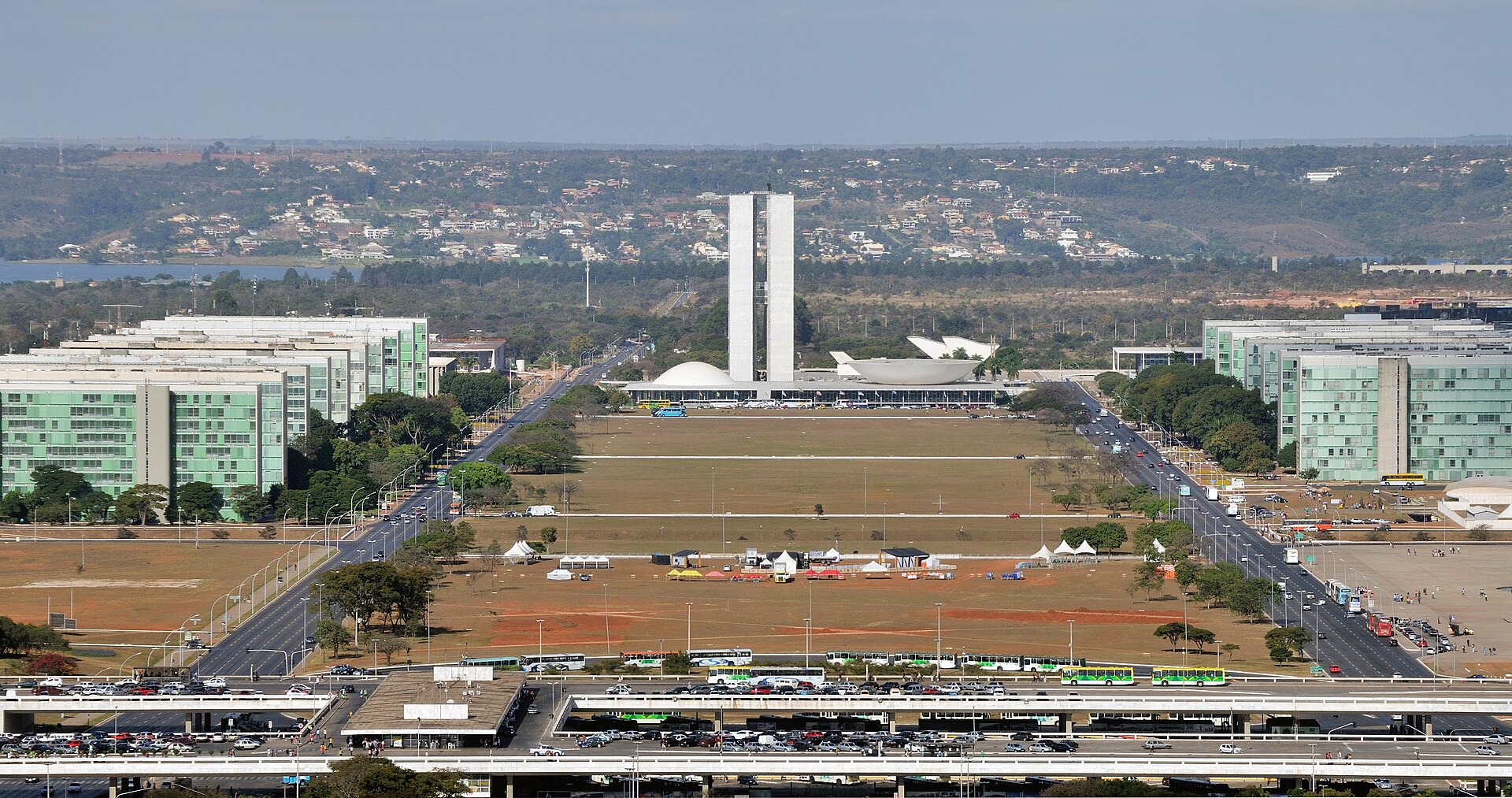
Four Brazil presidential polls landed on the same day, seventeen days before the first round. They do not agree with each other.
The runoff readings published on 17 September 2026 run from a 0.4-point gap to a seven-point one. All four surveys are registered with the electoral authorities.
Brazil elects a president on Sunday 4 October 2026, with a runoff on 25 October if nobody wins outright. Those dates are fixed by the 1988 Constitution.
Four pollsters, four different runoffs
The four Brazil presidential polls published on Thursday share little beyond their timing. Their samples, field dates and methods all differ.
AtlasIntel, published in partnership with Bloomberg, put Flávio Bolsonaro on 47.2 percent and Lula on 46.8 percent in a runoff. The firm calls that a technical tie.
It surveyed 5,018 voters nationwide from 11 to 16 September 2026, with a margin of error of one point. The poll is registered as BR-06221/2026 with the Superior Electoral Court, which runs Brazilian elections.
Who paid for it is disputed. Exame reports that Bloomberg commissioned the survey; Poder360 reports that AtlasIntel funded it itself.
Gerp, which commissioned its own poll, gave Flávio Bolsonaro 50 percent against Lula’s 43 percent in a runoff. It interviewed 2,400 respondents from 14 to 16 September 2026.
Gerp puts its margin of error at two points and its registration at BR-00535/2026.

PoderData, the polling arm of Grupo Poder360, was commissioned by Aya Bancah. It found Flávio Bolsonaro on 46 percent and Lula on 44 percent in a runoff.
It reached 3,000 voters aged 16 and over across 623 municipalities, from 13 to 16 September 2026. Its registration number is BR-00360/2026.
Poder360 gives the margin of error as 1.8 points; Gazeta do Povo renders it as two.
Futura Inteligência had Flávio Bolsonaro on 48.1 percent and Lula on 43.7 percent in a runoff. The poll was commissioned by 100% Cidades, which is not a news outlet.
Futura polled 2,000 voters from 11 to 15 September 2026, with a margin of error of 2.2 points. It notes that its runoff lead sits just outside that margin, and its registration is BR-00749/2026.
Datafolha was due to publish at about 19h15 Brasília time on 17 September 2026, from fieldwork of 15 to 17 September. That is after this piece closed, and its results are not here.
Its poll of 3 September 2026 had Lula ahead of Flávio Bolsonaro by 46 to 44 in a runoff. That is the one major pollster still showing Lula leading a second round.
Approval, and the question that is not the same question
AtlasIntel measured approval of the government at 45.4 percent, against 53.6 percent who disapprove. Another 0.9 percent offered no opinion.
A separate question in the same poll asked how voters rate Lula’s own performance in the job. There, 40.9 percent said excellent or good, 7.6 percent regular and 51.5 percent bad or terrible.
What the polls found about the Supreme Court
Two of the Brazil presidential polls published on Thursday also asked about the judiciary. The Supreme Federal Court is the country’s highest court and its constitutional court.
PoderData found 53 percent disapprove of that court as an institution, 30 percent approve and 17 percent gave no answer. Poder360 notes the fieldwork partly caught reaction to a session held on 15 September.
In that session the court shielded Justice Alexandre de Moraes from investigation.
André Mendonça is recognised by 82 percent of respondents. Among those who know him, 50 percent approve of his work and 36 percent disapprove.
Moraes is recognised by 92 percent. Among those who know him, 33 percent approve and 57 percent disapprove.
These are approval rates among the voters who recognise each justice, measured on different recognition bases. They are not a head-to-head comparison between the two men.
AtlasIntel asked a different question about the same crisis. It found 49.5 percent think it damages Lula most, and 20.9 percent think it damages Flávio Bolsonaro.
Two state races in the same wave
AtlasIntel published state numbers alongside its Brazil presidential polls. In Paraná it surveyed 1,794 voters aged 16 and over from 11 to 16 September 2026.
Sérgio Moro of the Liberal Party took 49.1 percent of all votes. Requião Filho of the Democratic Labour Party had 28.2 percent and Sandro Alex 18.6 percent.
On valid votes, which exclude blank and spoiled ballots, Moro reaches 50.7 percent. That is just over the threshold for winning without a runoff.
The Paraná poll carries a two-point margin of error and registrations PR-02671/2026 and BR-09264/2026. Across the runoff scenarios tested, Moro scores between 50.4 and 57.0 percent, and no single head-to-head figure is published.
In Pernambuco, AtlasIntel polled 1,793 voters over the same dates, with a two-point margin of error. The registration there is PE-02989/2026.
Governor Raquel Lyra of the Social Democratic Party leads the first round on 48.7 percent, against 45.6 percent for João Campos. Campos is the mayor of Recife and stands for the Brazilian Socialist Party.
In a second round the poll gives Lyra 51.1 percent and Campos 47.3 percent. AtlasIntel describes both cuts as a technical tie.
What to do with a spread this wide
Brazil presidential polls must be registered with the Superior Electoral Court before publication. That duty comes from Lei 9.504/1997, the law that governs elections.
Registration is not a quality check. The court states that “the Electoral Justice does not perform any prior control over poll results”.
It acts only when someone files a formal complaint. In February 2026 it suspended publication of a poll that had not been registered.
For a reader with money or a life in the country, the useful figure is the spread itself. Four registered pollsters, working the same week, produced runoff gaps from 0.4 points to seven.
That spread is wider than the margin of error any one of them claims. It tells you the race is unsettled, and very little else.
More: Brazil coverage, every day from The Rio Times.
Frequently Asked Questions
When does Brazil actually vote?
Brazil holds the first round of its presidential election on Sunday 4 October 2026. If no candidate passes 50 percent of valid votes, the top two meet in a runoff on Sunday 25 October 2026. Both dates are set by the 1988 Constitution rather than by the government of the day. The winner takes office on 5 January, a date moved forward by a constitutional amendment passed in 2021.
Why does every Brazilian poll carry a registration number?
Under Lei 9.504/1997, the law governing Brazilian elections, polling firms must register each survey with the Superior Electoral Court before they publish it. The filing has to be made up to five days in advance through a system called PesqEle, and the data stays publicly available for 30 days. The court is explicit that it does not check the results themselves in advance; it acts only when someone files a formal complaint, as it did in February 2026 when it suspended an unregistered poll.
What does a technical tie mean in these numbers?
Every poll has a margin of error, which is the range within which the true figure is expected to sit. When the gap between two candidates is no larger than that margin, pollsters describe the result as a technical tie. AtlasIntel, for example, reports a margin of one point and a 0.4-point gap between the two leading candidates. That gap is smaller than the measurement error, so the poll cannot say which of them is ahead.
Who is on the ballot?
Thirteen candidates filed for the presidency by the deadline of 15 August 2026. The Superior Electoral Court validated six presidential registrations on 2 September 2026, including Lula for the Workers’ Party with Geraldo Alckmin as running mate, and Flávio Bolsonaro for the Liberal Party with Alfredo Gaspar. Seven more were still pending at that date, among them Augusto Cury, Renan Santos and Ronaldo Caiado. Voters choose by typing a number, and the main ones are 13 for Lula, 22 for Flávio Bolsonaro and 30 for Romeu Zema.
Sources: Gazeta do Povo on the AtlasIntel national numbers, Poder360 on government approval, Exame on who the court crisis damages, Gazeta do Povo on the Gerp runoff, Poder360 on the PoderData court ratings, Exame on the Futura Inteligência runoff, Poder360 on the Paraná governor race, Metrópoles on the Pernambuco second round, Gazeta do Povo on the Datafolha poll of 3 September, The Superior Electoral Court on poll registration
This article was produced by The Rio Times’ automated newsroom system. How we use AI · Report an error
Read More from The Rio Times