Brazil: Federal Police Indict 13 Fund and Fintech Executives in PCC Money-Laundering Probe
Brazil · Crime & Finance
Key Facts
—What happened. Brazil’s Federal Police indicted 13 people linked to investment funds, brokerages and fintechs on Wednesday, closing the Operação Quasar inquiry into the PCC crime gang’s infiltration of the financial system.
—The charges. Criminal organisation, money laundering and fraudulent management.
—The scheme. Proceeds of tax evasion and fuel-sector crimes were channelled into the formal financial system; police attribute the illegalities to the group formed by Aster Petróleo and Copape Produtos de Petróleo.
—The alleged bosses. Investigators say the network was run by Mohamad Hussein Mourad, “Primo”, and Roberto Augusto Leme da Silva, “Beto Louco” — both fugitives since 2025.
—What comes next. The Federal Prosecution Service (MPF) decides in the coming days whether to file formal charges, order further investigation or shelve the case.
Brazil’s Federal Police have indicted 13 executives from the worlds of investment funds, brokerages and fintechs, closing the Operação Quasar inquiry — the financial-system offshoot of the largest investigation ever mounted into organised crime’s infiltration of the country’s formal economy.
The Quasar Indictments
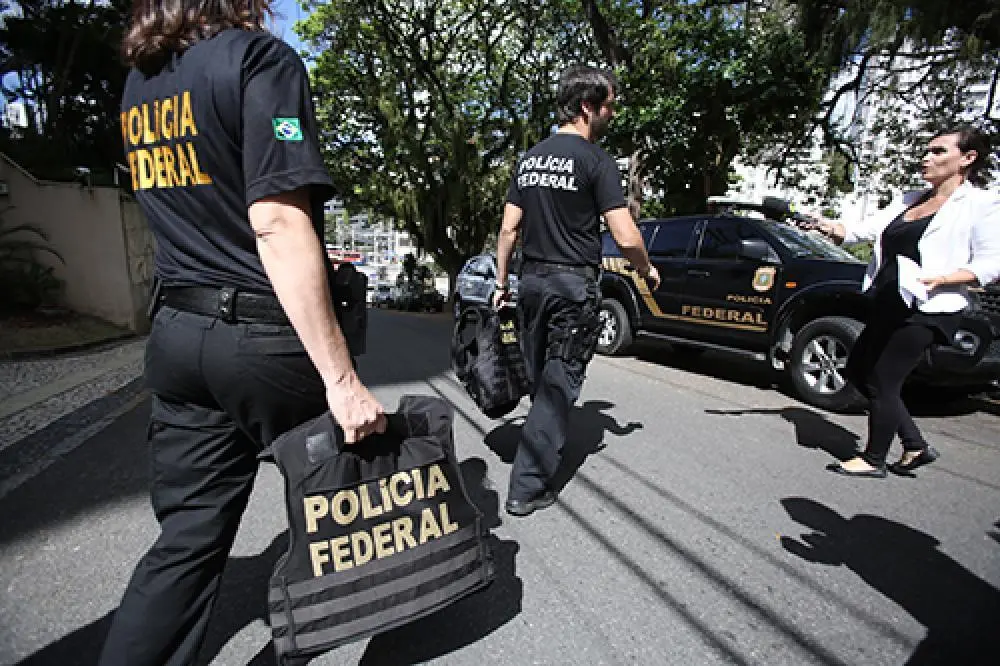
The Federal Police concluded the Operação Quasar inquiry on Wednesday, 30 September, indicting 13 people connected to investment funds, brokerages and fintechs. The investigation was derived from Operação Carbono Oculto, the mega-probe into the PCC’s move into the fuel trade and the financial system. News of the indictments was first obtained by g1 and confirmed across Brazilian outlets.
Those indicted are accused of criminal organisation, money laundering and fraudulent management. According to the police, they assisted a scheme managed by businessmen Mohamad Hussein Mourad, known as “Primo”, and Roberto Augusto Leme da Silva, known as “Beto Louco” — both fugitives since 2025 and among eight targets placed on Interpol’s red diffusion list after fleeing before an August 2025 operation.
The named indictees are Artur Martins de Figueiredo, Caio Henrique Hyppolito Galvani, Camila Cristina de Moura Silva, Danilo Augusto Tonin Elena, João Carlos Falbo Mansur, João Eduardo Gomes Santiago, Luis Fernando de Almeida, Luiz Felipe Sousa Leão Volani, Marcelo Dias de Moraes, Paula Rios Borges, Ramon Pessoa Dantas, Rogério Garcia Peres and Silvano Gersztel.
Police cited as evidence messages, contracts, spreadsheets, forensic accounting work and bank statements obtained under judicial authorisation. With the inquiry closed, the report now sits with the Federal Prosecution Service, which must decide whether to bring formal charges, request further investigation or archive the case.
From Fuel Pumps to the Financial System
The Quasar case is the financial face of a much larger machine. Operação Carbono Oculto, launched in August 2025, was described as the biggest operation ever conducted against the infiltration of organised crime into Brazil’s formal economy: 1,400 agents executed around 200 search warrants against roughly 350 targets across eight states, including fund managers and companies based on Avenida Faria Lima, São Paulo’s financial hub.
Investigators mapped a chain running from fuel imports through production and distribution to the petrol station till — with product adulterated using methanol along the way — while illicit cash was fed into fintechs and investment funds to buy companies, property and luxury goods. In the sister “Tank” investigation, police estimated that the analysed stations alone received at least R$133.8 million in fractioned deposits, and concluded that heavy transactions between stations of different corporate groups indicated common control by the organisation.
In the Quasar phase, police concluded that proceeds of tax evasion and fuel-sector crimes were inserted into the financial system and moved through accounts and funds, attributing the illegalities to the economic group formed by Aster Petróleo and Copape Produtos de Petróleo. The structure, they say, served to hide the true owners of the money and lend a legal appearance to a patrimony built by organised crime — with the fund companies involved participating in that structure.
Why the Case Reaches Beyond the PCC
The indictments land at a sensitive moment for Brazilian finance. Some of the names now indicted have previously surfaced in reporting around the collapsed Banco Master: Valor Econômico reported last year that Artur Martins de Figueiredo, a director at Prime Aviation and linked to the managers Trustee and Banvox, was named in the infiltration investigation, and João Carlos Falbo Mansur founded Reag Investimentos, a firm probed over funds allegedly used to inflate Banco Master’s assets. The new indictment round does not itself level accusations about the bank, but it tightens the net around the fund ecosystem that grew up alongside it.
The case also carries political weight. The division of operations between federal and São Paulo state actors last year exposed a rivalry for protagonism between President Lula’s federal government and Governor Tarcísio de Freitas — a rivalry likely to resurface as prosecutors decide how far the financial-system charges will go. For the PCC, Brazil’s most powerful criminal organisation, the stakes are existential: every conviction in the fund-and-fintech layer cuts the plumbing that turns drug revenue into legitimate-looking capital.
What We Could Not Confirm
The MPF has not yet said whether it will file formal charges, and no court has ruled on the merits of the police conclusions. Defence positions for the 13 indictees were not yet public at the time of publication. We could not confirm the total sums moved by those now indicted, the full list of funds and companies in the structure, or whether further indictment rounds are planned. Reported links between individual indictees and Banco Master-related funds come from earlier press investigations, not from the Quasar indictment itself.
More: Brazil news in English, every day from The Rio Times.
Frequently Asked Questions
What is Operação Quasar in Brazil?
Operação Quasar is a Federal Police inquiry derived from Operação Carbono Oculto, targeting the financial-system side of the PCC’s money-laundering machine. It concluded on 30 September 2026 with 13 indictments of executives linked to investment funds, brokerages and fintechs for criminal organisation, money laundering and fraudulent management.
Who are “Primo” and “Beto Louco”?
Mohamad Hussein Mourad (“Primo”) and Roberto Augusto Leme da Silva (“Beto Louco”) are the businessmen whom investigators accuse of managing the laundering scheme the indicted executives assisted. Both have been fugitives since 2025 and are on Interpol’s red diffusion list after fleeing ahead of an August 2025 operation.
What happens next in the PCC financial infiltration case?
The police report goes to the Federal Prosecution Service (MPF), which must decide in the coming days whether to file formal charges against the 13 indictees, request further investigation or shelve the case. Only a formal MPF charge would send the case to court.
Sources
Connected Coverage
The PCC and the money trail — our related reporting:
Brazil’s Supreme Court Freezes Banco Master Cases Until After the Election
Chile Raids Target First Local Cell of Brazil’s PCC Crime Gang
Sources: g1; Veja São Paulo; CNN Brasil; Estadão; Poder360; Valor Econômico.
This article was produced by The Rio Times’ automated newsroom system. How we use AI · Report an error
Read More from The Rio Times