
BRAZIL · HOUSING
Key Facts
- The country Brazil, where a federal board set 2027 low-income housing money at US$23.5 billion.
- What happened On Thursday 29 October 2026 the FGTS board approved US$27.0 billion for housing in 2027, unchanged from 2026.
- The programme Most of the money flows through Minha Casa Minha Vida, Brazil’s flagship subsidised home-buying scheme.
- The wider plan The fund’s total 2027 investment budget is US$31.6 billion, falling to US$30.6 billion a year to 2030.
- Power Index Brazil ranks 1st of 14 in The Rio Times Latin America Power Index, with 75.0 points (October 2026 edition).
The Brazil housing budget for 2027 stays at US$27.0 billion, including US$23.5 billion for low-income families, the same as this year. The board of the country’s workers’ savings fund approved it on Thursday 29 October 2026.
For US readers the decision is a signal for Brazilian homebuilders and for Brazil’s biggest housing programme. It shows that the government of President Luiz Inácio Lula da Silva, re-elected on 25 October, is keeping housing aid at this year’s level.
In Plain English
The FGTS, short for Fundo de Garantia do Tempo de Serviço, is a savings fund that employers pay into for every formal worker. Its governing board, the Conselho Curador, decides each year how the fund’s profits are lent for housing, sanitation and other projects.
The real, written R$, is the Brazilian currency, worth about US$0.19 on 30 October 2026. Caixa Econômica Federal, the state-owned bank, operates the fund and makes the loans.
What Happened to the Brazil Housing Budget
On Thursday 29 October 2026 the FGTS board approved R$169 billion (about US$31.6 billion) for 2027. Housing gets R$144.5 billion (about US$27.0 billion), and the rest goes to sanitation, infrastructure and health.
The Labour Ministry says the Brazil housing budget equals the figure set for 2026. Within it, R$125.5 billion (about US$23.5 billion) goes to low-income families, mainly through Minha Casa Minha Vida.
Another R$15 billion (about US$2.8 billion) is reserved for middle-class buyers inside the same programme. A further R$4 billion (about US$0.7 billion) funds Pró-Cotista, a cheaper-interest loan line for workers with an FGTS account.
The board also approved R$13 billion (about US$2.4 billion) in subsidies for low-income families, which cut the amount a buyer must borrow. The ministry notes that the subsidy and Pró-Cotista amounts overlap with the other lines and should not be added to them.
The Plan Through 2030
The board also set housing budgets for 2028 to 2030. It plans to keep R$125.5 billion (about US$23.5 billion) a year for low-income families over those three years.
The middle-class line falls to R$10 billion (about US$1.9 billion) a year from 2028. The fund’s total investment budget is set to fall to R$163.7 billion (about US$30.6 billion) a year until 2030.
The Labour Ministry, which supervises the fund, links the drop to special FGTS withdrawals and to loans for health projects. These sums are managed apart from workers’ individual balances and come from the fund’s annual profit.
Why It Matters
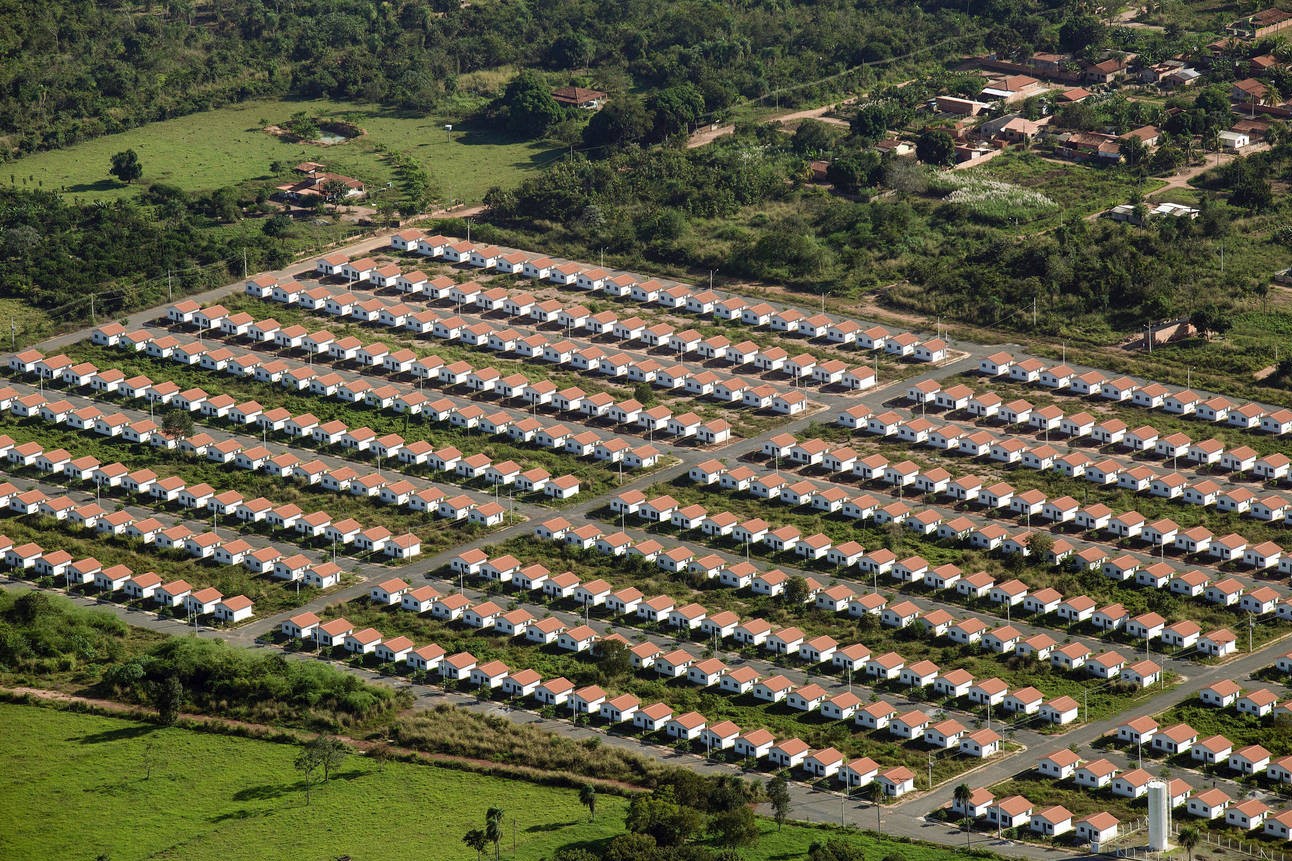
Minha Casa Minha Vida is the main route to home ownership for millions of families. A flat Brazil housing budget means no new cuts and no large expansion.
The decision comes days after Lula won the 25 October runoff, a result our Big Read on Brazil covers. The Labour Ministry says the lower totals after 2027 reflect special FGTS withdrawals and health loans, not a cut to the low-income housing line.
What It Means for You
Investors in Brazilian homebuilders get a clear funding level for 2027, because the subsidised lending lines are what many of these companies build for. The flat Brazil housing budget supports demand but offers no new boost.
Rates matter as much as subsidies for these companies, because buyers borrow at set interest rates. All figures here are converted at about 5.35 reais per US dollar on 30 October 2026.
Travellers and expats gain little directly, since the aid is meant for Brazilian workers with formal jobs. The programme does not change travel costs or visa rules.
What Is Not Known
The board’s release does not say how many homes the R$125.5 billion (about US$23.5 billion) will finance in 2027. It also does not say how many families the 2027 money will reach.
The release does not say how the programme fares in the federal budget bill for 2027. It is also open whether the cut in total fund spending after 2027 will hit the Brazil housing budget later.
Connected Coverage
Our report on Brazil’s housing credit jumping 23% shows how fast mortgage lending grew this year. The Caixa strike story covers the state bank that operates the fund.
The Big Read on Brazil sets out the election result behind this budget. Our Brazil news page lists the latest stories.
More: Brazil news in English, every day from The Rio Times.
Frequently Asked Questions
How much will Brazil spend on low-income housing in 2027?
The FGTS board approved R$125.5 billion (about US$23.5 billion) for low-income families. That sits inside a R$144.5 billion (about US$27.0 billion) housing budget.
What is Minha Casa Minha Vida?
It is Brazil’s federal housing programme, offering cheaper loans and subsidies to help families buy homes. The FGTS fund supplies most of its loan money.
Is this the same as Brazil’s federal budget?
No, the FGTS money is managed apart from workers’ accounts and comes from the fund’s annual profit. The federal budget bill for 2027 is a separate law.
Sources: Ministério do Trabalho e Emprego, FGTS board approves 2027 investment budget, 29 October 2026; Ministério das Cidades, FGTS and Minha Casa Minha Vida, consulted 30 October 2026; Banco Central do Brasil, exchange rates, consulted 30 October 2026.
This article was produced by The Rio Times’ automated newsroom system. How we use AI · Report an error · Editorial responsibility: Matthias Camenzind, Editor-in-Chief
Brazil runoff, Sunday, October 25: Brazil runoff date. Latest: Brazil runoff polls, Flávio 51%, Lula 49%.