Brazil to Offer Foz do Amazonas Oil Frontier, Reigniting the Amazon Energy Fight
Foz do Amazonas — Brazil’s government has confirmed it will offer the equatorial margin off Amapá, near the mouth of the Amazon, for oil exploration, reopening the country’s sharpest dispute between energy ambition and environmental protection.
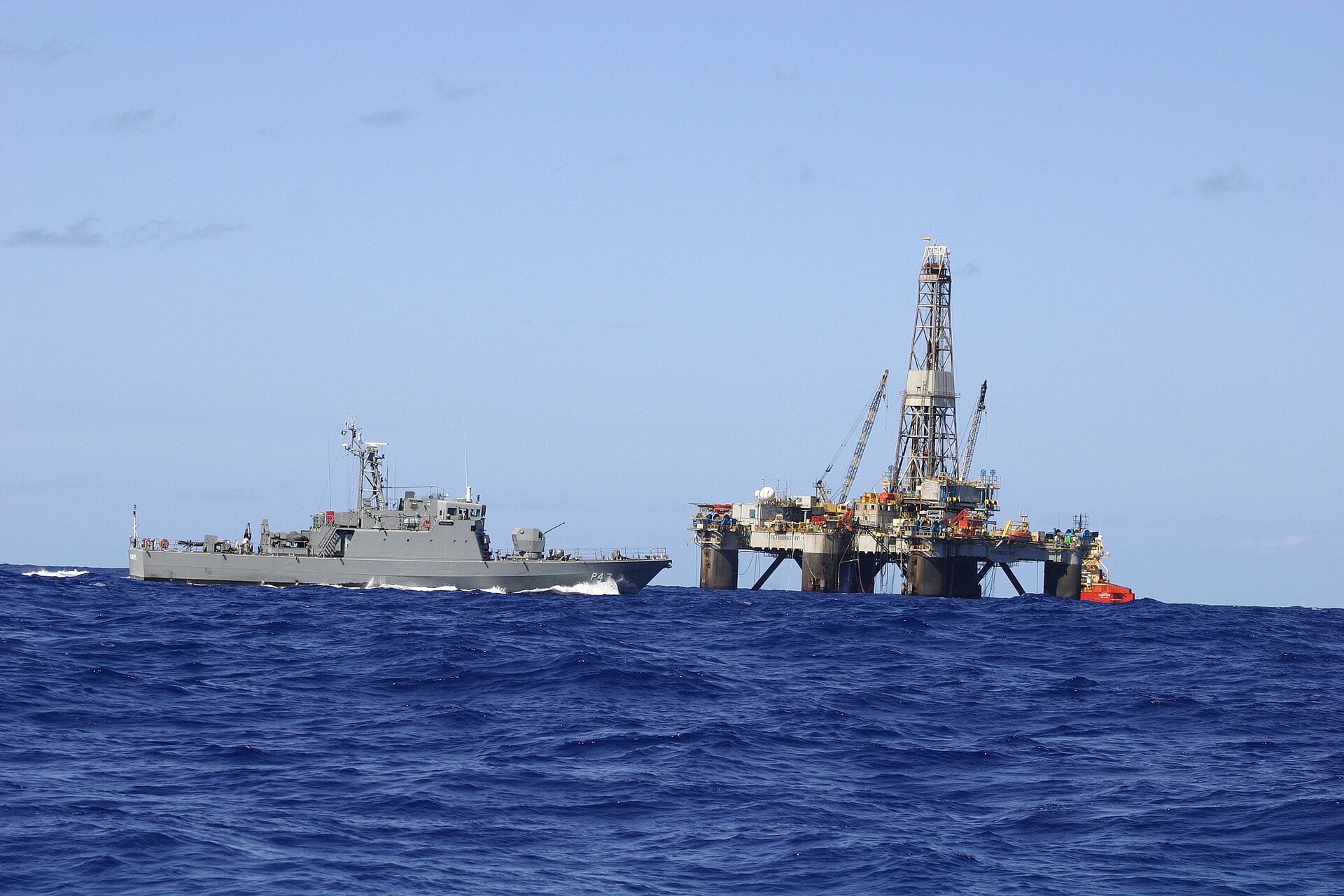
Brasília Confirms the Amazon Frontier Will Be Offered
Brazil’s government has confirmed that the equatorial margin, including the Foz do Amazonas region offshore the northern state of Amapá, will be offered for oil exploration. The area lies near the mouth of the Amazon river, the most symbolically charged stretch of coastline in the country. With the confirmation, a dispute that had simmered for years inside ministries, courts and Congress becomes an open political contest. Supporters present the region as Brazil’s last opportunity to add large volumes of crude; opponents call it the wrong place to look for them.
Two federal institutions stand between the announcement and any barrel of oil. The National Petroleum Agency, the ANP, runs the licensing process that awards exploration blocks to companies. The Brazilian Institute of Environment and Renewable Natural Resources, IBAMA, issues the environmental permits without which no well can be drilled. The two tracks are separate and have not always moved at the same pace, which is why an offered block does not automatically become a drilling programme.
What the Equatorial Margin Actually Is
The equatorial margin is the arc of Brazilian offshore territory running along the northern and north-eastern coast, ending off Amapá at the Foz do Amazonas basin. In exploration terms it is barely tested: very few wells have been drilled there compared with the mature basins further south. Brazilian output today is dominated by the pre-salt fields of the Santos and Campos basins, off the south-east coast. Those fields are highly productive but finite, and the industry expects their combined output to plateau at some point in the 2030s.
That arithmetic is the core of the industry’s case. Without a new frontier, Brazil’s production profile eventually turns downward, taking with it export earnings, government revenue and much of the investment case for Petrobras. Industry estimates put potential resources along the equatorial margin above 30 billion barrels, a figure that remains entirely unproven and rests on geological modelling rather than on wells. Analysts caution that estimates of that kind routinely shrink once drilling begins to return data.
The Guyana and Suriname Analogy
The commercial excitement rests on geography. Offshore Guyana and Suriname, on the same equatorial stretch of the Atlantic, a run of large discoveries over the past decade turned a small economy into one of the fastest-growing oil producers in the world. Geologists point out that the basins off Amapá and those off the Guyanas belonged to the same geological system before the Atlantic opened, and that source rocks and reservoir conditions may therefore be comparable. That is the analogy officials and industry executives return to whenever the frontier is discussed.
The comparison is suggestive rather than conclusive. Basins that look alike on a map can behave very differently once a drill bit reaches the target, and exploration history is full of promising analogues that produced nothing commercial. The Foz do Amazonas basin also carries a complication the Guyanese fields do not: the enormous sediment load carried out by the Amazon river, which alters the geology and makes seismic imaging harder to interpret. Until a well is completed and tested, the analogy remains a hypothesis.
Petrobras and the Morpho Well Off Amapá
Petrobras is drilling the pioneering well known as Morpho, in block FZA-M-59 in the Foz do Amazonas basin, after IBAMA granted the environmental licence the company had sought for years. Drilling was expected to reach a key stage in August 2026, according to the timetable described publicly; no results had been announced. A pioneering well of this type is designed to establish whether a working petroleum system exists at all, not to begin production.
Even a successful result would not translate quickly into barrels. Appraisal wells, development studies, separate environmental licences and a final investment decision would all follow, a sequence that typically takes years in deep water. A negative result, by contrast, would land immediately in the political debate and weaken the case for opening the wider margin. Both possibilities explain why so much attention has attached to a single well in a remote block.
US$2.5 Billion and About 15 New Wells
Petrobras’ business plan for 2026 to 2030 foresees about US$2.5 billion of spending on the equatorial margin and roughly 15 new wells. Measured against the company’s total capital programme the sum is modest, but exploration budgets are always small relative to development spending. The significance lies in the commitment to keep drilling across several years rather than in the size of the figure itself.
The strategic logic is reserve replacement. Every barrel Petrobras produces must eventually be replaced by a new discovery if the company is to sustain output beyond the pre-salt plateau, and the equatorial margin is the largest under-explored acreage available to it inside Brazil. Offering blocks through the ANP would also draw in international operators willing to share exploration risk, which is the standard model for frontier drilling anywhere in the world.
Why Environmental Groups Say the Risk Is Unacceptable
Environmental organisations argue that a spill near the mouth of the Amazon would be exceptionally difficult to contain. The area combines strong currents, a vast freshwater plume and remoteness from the ports and airbases on which response operations depend. Campaigners warn that oil reaching the coast would threaten coral formations documented on the outer shelf and the mangrove belt along the Amapá and Pará coastline, described by researchers as among the most extensive continuous mangrove systems anywhere.
Those systems are also the basis of local livelihoods. Artisanal fishing communities and Indigenous groups along the northern coast have said they were inadequately consulted, and their objections have been a recurring theme throughout the licensing dispute. Critics add that response times in the region would be measured in hours or days rather than minutes, and that this is the variable which determines how far contamination spreads before it can be checked.
Supporters of drilling reply that the licence was not granted casually. IBAMA reviewed the project over an extended period, and the permit followed an assessment of the company’s emergency-response arrangements, including its capacity to mobilise vessels and equipment in the region. Environmental groups dispute that the assessment was adequate and have signalled that they will keep contesting each new authorisation, administratively and in the courts.
A Government Divided Over Its Own Policy
The dispute runs through the federal government itself. The mines and energy side of the administration has consistently pushed to open the frontier, presenting it as a source of revenue, jobs and energy security for one of Brazil’s poorest regions. The environment side has been considerably more reluctant, and the tension between the two has been visible at every stage of the licensing process.
Regional politics pull in the same direction as the energy ministry. Politicians from Amapá and neighbouring northern states argue that the Amazon region has borne the costs of conservation policy without receiving a proportionate share of its economic benefits, and that royalties from offshore production would fund services the states cannot otherwise afford. That argument has proved persuasive in Congress, where support for opening the margin crosses party lines.
Licensing Steps, and What Is at Stake for Brazil
The mechanics from here run through the ANP, which decides which blocks are offered, under what contractual terms and on what timetable. Winning bidders acquire the right to explore, not the right to drill: each well still requires its own environmental licensing from IBAMA, and each of those decisions can be contested administratively and in court. Legal challenges have accompanied every stage of the dispute so far and are expected to continue.
The wider stake is Brazil’s position in world oil markets and the credibility of its climate diplomacy. The country has spent years presenting itself as a leader on deforestation and on the energy transition, including as host of the COP30 climate conference in the Amazon city of Belém, while simultaneously planning to increase crude output. Whether those two positions can be held together at the same time is, in the end, the question the equatorial margin poses.
Background: our buying property in brazil as a foreigner complete guide.
More: Brazil news, every day from The Rio Times.
Background: our brazil renewable energy guide.
Frequently Asked Questions
Where exactly is the Foz do Amazonas basin?
The basin lies offshore the northern state of Amapá, in Atlantic waters near the mouth of the Amazon river. It forms the far northern end of what Brazil calls the equatorial margin, the arc of offshore territory running along the northern and north-eastern coast. Petrobras is drilling the pioneering Morpho well there, in block FZA-M-59. The blocks are offshore rather than in the river itself, although the coastal ecosystems campaigners are worried about lie nearby.
Has oil actually been found in the equatorial margin?
No commercial discovery has been confirmed in the Foz do Amazonas basin. Industry estimates put potential resources along the whole margin above 30 billion barrels, but that figure is unproven and based on geological modelling rather than production data. The pioneering well now being drilled is designed to test whether a working petroleum system exists at all. Until results are released and verified, everything about the frontier remains a projection.
Why is the comparison with Guyana made so often?
Offshore Guyana and Suriname sit on the same equatorial stretch of the Atlantic, and a series of large discoveries there over the past decade turned the area into one of the fastest-growing oil provinces in the world. Geologists argue the basins were part of the same system before the Atlantic opened, so source rocks and reservoirs may be comparable. That comparison is the central argument used by supporters of exploration in Brazil. It remains a hypothesis, however, and only drilling can confirm or disprove it.
Who decides whether drilling actually goes ahead?
Two federal bodies share the decision. The ANP conducts licensing rounds and awards exploration blocks, setting the contractual terms companies must meet. IBAMA, the federal environmental agency, decides separately whether a specific well may be drilled and under what conditions, and it granted the licence for the current Petrobras well. Because the two processes are independent, and because both can be challenged in court, a block awarded by the ANP does not guarantee that any well will be authorised.
Sources: Petrobras, IBAMA, ANP.
This article was produced by The Rio Times’ automated newsroom system. How we use AI · Report an error
Read More from The Rio Times