Flávio Led 15 States, Lula 12 in Brazil’s First Round

Neither Flávio Bolsonaro nor President Lula won Brazil’s presidential election outright on Sunday 4 October 2026, so the two meet in a runoff on Sunday 25 October. Flávio, a senator for the conservative Liberal Party (PL), has 47.04% of valid votes. Lula, of the leftist Workers’ Party (PT), has 45.15%, according to the Superior Electoral Court (TSE).
Flávio finished first in 15 of the 27 states, including São Paulo, Rio de Janeiro and Minas Gerais. Lula finished first in 12, led by the nine states of the Northeast. For US readers, this is a polarised, two-way race over the largest economy in Latin America, with the real and Brazilian stocks next in line to react when markets open on Monday.
Key Facts
—Result. Flávio Bolsonaro 47.04% (56,098,129 votes), Lula 45.15% (53,845,563 votes), a gap of 2,252,566 votes or 1.89 points, at 99.96% of polling stations counted (TSE, 22:56 Brasília time on 4 October; 21:56 US Eastern).
—Turnout. Abstention was 21.08%, or 33.5 million of 158.7 million registered voters. Blank and null ballots together came to about 6.0 million.
—States. Flávio led in 15 states and Lula in 12. Amapá is the closest, with Lula ahead by 225 votes at 100% counted.
—Minas Gerais. Flávio leads with 48.24% to Lula’s 43.32% in Brazil’s second-largest electorate, a state that has backed the national winner in the deciding round of every presidential election since 1989.
—Governors. Ten are elected, five states go to a governor runoff on 25 October, and twelve are still open in the official count.
—Next. Runoff on Sunday 25 October 2026, polls close at 17:00 Brasília time (16:00 US Eastern).
Live map
See every state on the live map
The official TSE count for president, governors and the Senate, with every candidate’s share and the state map.
How the 27 States Voted
The TSE count shows a country split by region. Each card below lists a region’s states in alphabetical order, with the first-place candidate in bold. Shares are of valid votes.
North: Flávio 4, Lula 3
Northeast: Flávio 0, Lula 9
Centre-West: Flávio 4, Lula 0
Southeast: Flávio 4, Lula 0
South: Flávio 3, Lula 0
The pattern is clear in the numbers. Lula won all nine Northeast states, with his best result in Piauí (71.0%) and Bahia (66.1%). Flávio won the whole South, the whole Centre-West and the whole Southeast, with his best results in Roraima (71.1%), Rondônia and Santa Catarina.
The North was split: Flávio led in Acre, Rondônia, Roraima and Tocantins, while Lula led in Amapá, Amazonas and Pará. Amapá is the closest state in the country. Lula leads there with 45.71% to Flávio’s 45.67%, a gap of 225 votes with all polling stations counted.
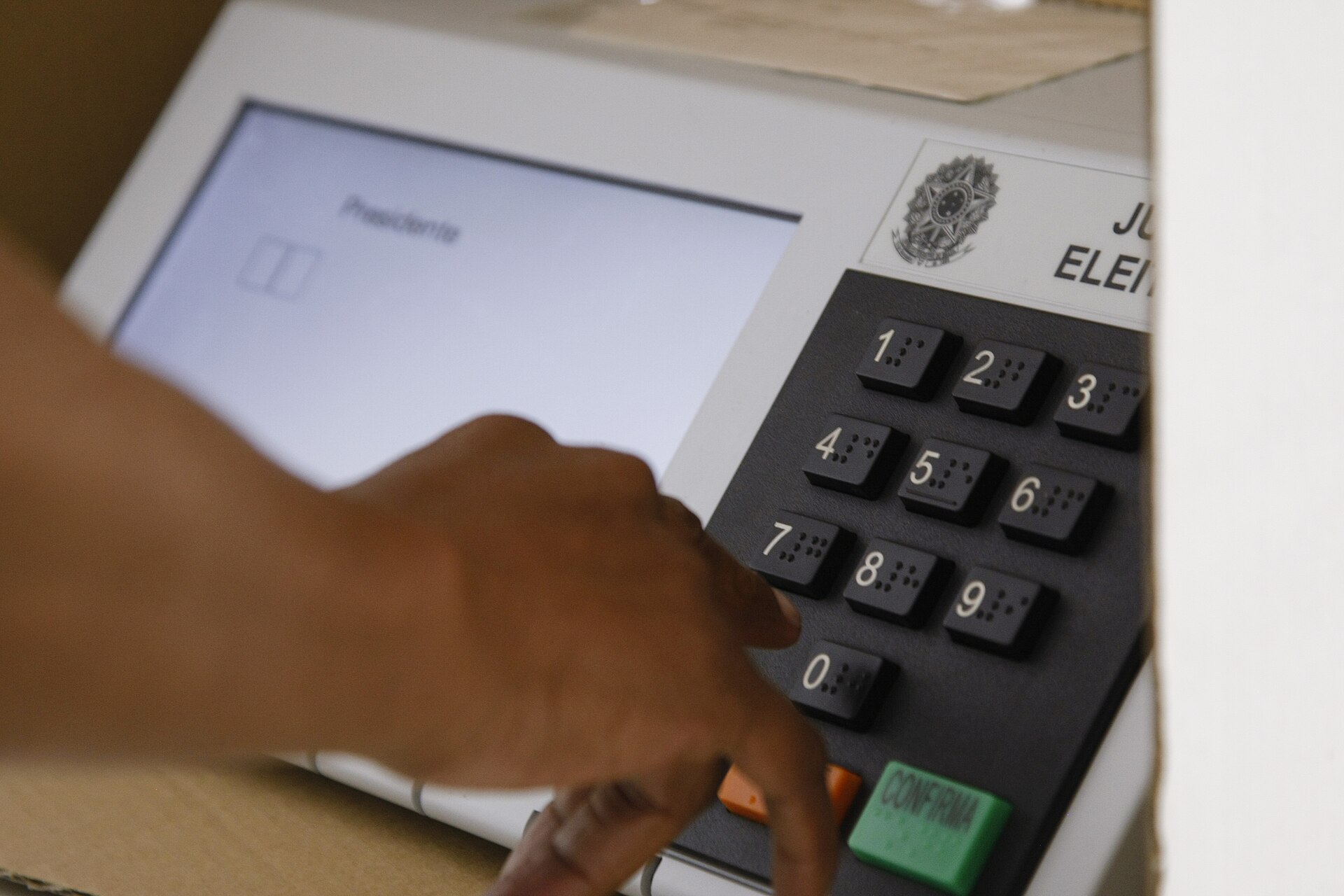
Minas Gerais, the Swing State
Minas Gerais is Brazil’s second-largest electorate, with 16.4 million registered voters, behind only São Paulo. It is also the state analysts watch as a bellwether. On Sunday Flávio won it with 48.24% (5,777,009 votes) to Lula’s 43.32% (5,187,765 votes), a lead of 589,244 votes or 4.9 points, at 99.98% counted.
That is a shift from 2022. Lula carried Minas in that year’s runoff, 50.20% to 49.80%, a margin of roughly 50,000 votes, according to press tallies of the TSE count. Flávio’s lead this time is about 590,000 votes.
History gives the state its reputation. CNN Brasil and the news site ND Mais both report that Minas has backed the eventual national winner in the deciding round of all nine presidential elections since 1989. Minas voted for Fernando Collor in 1989, Fernando Henrique Cardoso in 1994 and 1998, and Lula in 2002 and 2006. It then voted for Dilma Rousseff in 2010 and 2014, Jair Bolsonaro in 2018 and Lula in 2022.
The record shows that Minas does not lean one way. The PT candidate won the state in five of the six deciding rounds from 2002 to 2022. The exception was Bolsonaro in 2018. A right-wing lead in the first round is therefore unusual in recent years, but it is not unknown.
Two cautions apply. A first-round lead is not a deciding round, and nine elections are a small sample. The Minas result is the state’s verdict on 4 October, and the runoff on 25 October is open.
Governors: Who Won and Who Faces a Runoff
Brazil elected 27 governors on Sunday. A candidate needs more than half of the valid votes to win in the first round. The TSE marks each race as elected, runoff or not yet decided. Our full state-by-state coverage is in our governors report.
Elected in the first round (12)
- Alagoas: JHC (PSDB, centrist), 52.2%
- Amapá: Dr. Furlan (PSD, centre-right), 62.8%
- Goiás: Daniel Vilela (MDB, centrist), 59.2%
- Mato Grosso: Otaviano Pivetta (Republicanos, conservative), 60.8%
- Mato Grosso do Sul: Eduardo Riedel (PP, centre-right), 67.1%
- Paraná: Sergio Moro (PL, right), 50.1%
- Pernambuco: Raquel Lyra (PSD, centre-right), 53.3%
- Rio Grande do Sul: Zucco (PL, right), 58.0%
- Rondônia: Marcos Rogério (PL, right), 56.9%
- Roraima: Arthur Henrique (PL, right), 69.1%
- Santa Catarina: Jorginho Mello (PL, right), 69.0%
- Sergipe: Fábio Mitidieri (PSD, centre-right), 59.3%
Runoff on 25 October (5)
- Acre: Mailza Assis (PP, centre-right), 49.8%, against Alan Rick (Republicanos, conservative), 32.3%
- Distrito Federal: Celina Leão (PP, centre-right), 49.9%, against Leandro Grass (PT, left), 34.5%
- Espírito Santo: Lorenzo Pazolini (Republicanos, conservative), 49.6%, against Ricardo Ferraço (MDB, centrist), 34.1%
- Rio de Janeiro: Douglas Ruas (PL, right), 49.3%, against Eduardo Paes (PSD, centre-right), 42.8%
- Tocantins: Professora Dorinha (União Brasil, centre-right), 45.5%, against Vicentinho Júnior (PSDB, centrist), 43.9%
Not yet declared by the TSE (10)
In these states the TSE had not yet marked a winner when we pulled the data. We name the leader and the share counted, and nothing more.
- Amazonas: Omar Aziz (PSD, centre-right) leads with 40.6% (99.82% counted), ahead of Professora Maria do Carmo (PL, right), 24.5%
- Bahia: Jerônimo Rodrigues (PT, left) leads with 55.8% (99.75% counted), ahead of ACM Neto (União Brasil, centre-right), 43.8%
- Ceará: Elmano de Freitas (PT, left) leads with 53.2% (99.97% counted), ahead of Ciro Gomes (PSDB, centrist), 46.2%
- Maranhão: Eduardo Braide (PSD, centre-right) leads with 54.0% (99.83% counted), ahead of Orleans Brandão (MDB, centrist), 34.7%
- Minas Gerais: Cleitinho Azevedo (Republicanos, conservative) leads with 55.4% (99.98% counted), ahead of Patrus Ananias (PT, left), 26.3%
- Paraíba: Lucas Ribeiro (PP, centre-right) leads with 64.3% (99.98% counted), ahead of Efraim Filho (PL, right), 24.2%
- Pará: Dr. Daniel (Podemos, centrist) leads with 51.4% (99.96% counted), ahead of Hana Ghassan (MDB, centrist), 46.5%
- Piauí: Rafael Fonteles (PT, left) leads with 70.9% (99.83% counted), ahead of Joel Rodrigues (PP, centre-right), 27.5%
- Rio Grande do Norte: Allyson (União Brasil, centre-right) leads with 36.9% (100% counted), ahead of Cadu de Lula (PT, left), 36.2%
- São Paulo: Tarcísio de Freitas (Republicanos, conservative) leads with 62.7% (100% counted), ahead of Fernando Haddad (PT, left), 36.4%
Party directions follow the Rio Times party guide on our live results page. The PL won outright in Paraná, Rio Grande do Sul, Santa Catarina, Rondônia and Roraima. The PT leads in Bahia, Ceará and Piauí, and its candidate trails Cleitinho Azevedo of Republicanos by a wide margin in Minas Gerais.
The Senate
Brazilians also chose 54 of the 81 senators on Sunday, two thirds of the chamber. The Senate has no runoff, and the new senators take office in February 2027. The seat-by-seat count is in our Senate report.
Who Is Who
Flávio Bolsonaro (PL, right) is a senator and the eldest son of former president Jair Bolsonaro. Lula (PT, left) is the sitting president, in office since 2023.
Augusto Cury (Avante, centrist) is a psychiatrist and best-selling author who took 2.89%. Renan Santos (Missão, right) co-founded the activist group MBL and took 2.24%. Ronaldo Caiado (PSD, centre-right) is a former governor of Goiás and took 2.18%. Romeu Zema (Novo, pro-market right) is a former governor of Minas Gerais and took 0.27%.
What It Means for the Runoff
The gap is 2,252,566 votes, or 1.89 points. Together Flávio and Lula hold 92.2% of valid votes. All other candidates combined took 7.8%, or about 9.3 million votes, which is more than four times the gap.
Those voters are the pool both campaigns will court. The runoff also arrives with five governor races on the same ballot, in Acre, the Federal District, Espírito Santo, Rio de Janeiro and Tocantins. Whether the 33.5 million people who stayed home vote on 25 October is a second unknown. Our turnout report has the detail, and the runoff explainer covers the rules.
Why It Matters for the US
Brazil is the largest economy in Latin America and a major supplier of oil, iron ore, coffee and soy. The real, the Ibovespa stock index and US-listed Brazilian stocks will be the first to show how investors read the result when trading resumes on Monday 5 October.
US investors hold Brazil through ADRs such as Petrobras and Vale and through funds such as the iShares MSCI Brazil ETF (EWZ). We quote no prices here, because markets were closed when the count was finalised. Our Monday market reports will track the moves.
On the data calendar, the central bank publishes its weekly Focus survey of economists on Monday morning. September inflation (IPCA) follows on Friday 9 October. Both give investors a read on the economy the next president will inherit. The Brazil election guide explains how the system works.
What It Means for You
If you live in or travel to Brazil, the next election day is Sunday 25 October, with polls open from 08:00 to 17:00 Brasília time. Foreign residents who are not naturalised Brazilian citizens cannot vote, but the day can affect transport and security around polling places. Check local notices before you plan.
What Is Not Known
The TSE has not finished the count, so the final figures may move by small amounts. It has not marked a winner in twelve governor races. We have no primary-source report of who the eliminated candidates will back in the runoff, and no way to know how the 33.5 million absent voters will act. We make no forecast.
Who won the first round of Brazil’s presidential election?
Nobody won outright. Flávio Bolsonaro has 47.04% of valid votes and Lula has 45.15%, with 99.96% of polling stations counted, according to the TSE. They meet in a runoff on Sunday 25 October 2026.
How many states did Flávio Bolsonaro and Lula win?
Flávio Bolsonaro led in 15 of the 27 states, covering the South, the Centre-West, the Southeast and part of the North. Lula led in 12, including all nine states of the Northeast.
Did Minas Gerais vote for the right?
Flávio Bolsonaro leads Minas Gerais with 48.24% to Lula’s 43.32%, at 99.98% counted. Lula carried the state in the 2022 runoff, and this result is the first-round count, not the final verdict.
Which states will hold a governor runoff on 25 October?
Five: Acre, the Federal District, Espírito Santo, Rio de Janeiro and Tocantins, according to the TSE count.
Sources
- Tribunal Superior Eleitoral (TSE), Resultados portal, presidential and governor counts by state, pulled 5 October 2026 (count generated 4 October, 22:56 Brasília time): resultados.tse.jus.br
- ND Mais, who wins Minas Gerais wins the presidency, the phenomenon explained
- CNN Brasil, Minas keeps its tradition of backing the winner
- TSE, final 2022 runoff count
More on Brazil: our running first-round results report, the live results map, the election guide and the runoff explainer. Also: turnout, governors and the Senate.
Frequently Asked Questions
This article was drafted with automated assistance and reviewed before publication. How we use AI · Report an error · Editorial responsibility: Matthias Camenzind, Editor-in-Chief