
Brazil: Drug Policy
Brazil spent at least R$14.5 billion (about US$2.5 billion) in 2024 enforcing its drug law, said CESeC, a Brazilian research centre on security and citizenship, on Tuesday 17 November 2026. Almost half of it, 48.9%, paid for military police (the state-level uniformed forces) and the prison system, the study showed.
The study, titled “Drogas: Quanto Custa Proibir” (Drugs: How Much Does Prohibition Cost), covers the 26 states, the Federal District (Brazil’s capital district) and federal institutions. CESeC released the findings on Tuesday 17 November 2026.
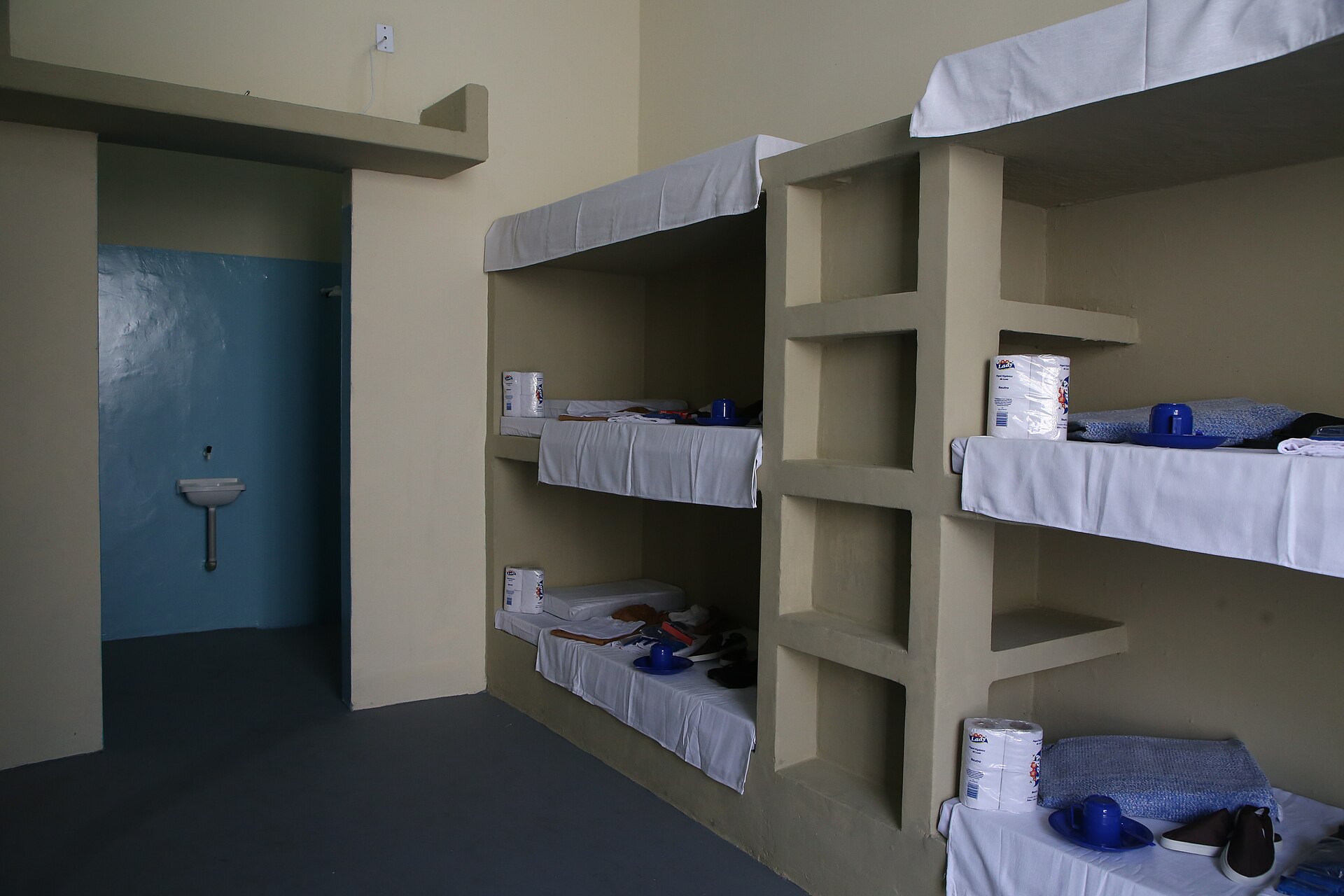
CESeC said on Tuesday 17 November 2026 that the spending comes from Law 11.343 of 2006, the Lei de Drogas (Drug Law). The World Prison Brief, run by a London research institute, counted 964,668 prisoners in Brazil on Wednesday 31 December 2025, 141.4% of official capacity, so its prisons were over capacity.
Key Facts
- Cost. At least R$14.5 billion (about US$2.5 billion) spent in 2024 applying the 2006 Drug Law nationwide.
- Where it went. 48.9% paid for state military police and prisons; only 10% for programmes for young offenders.
- A floor. The total leaves out costs such as the full price of police operations and raids.
- Prisons. Brazil’s prisons held 964,668 people at the end of 2025, at 141.4% of capacity.
- Power Index. Brazil ranks 1st of 14 in The Rio Times Latin America Power Index, with 74.2 points (November 2026 edition).
A Brazilian research centre has put a price on two decades of drug prohibition, and says the money bought mass imprisonment rather than less supply or weaker gangs.
The Big Picture
CESeC said on 17 November that Law 11.343 of 2006 has missed its goal after 20 years. The 2006 text promised to separate users from traffickers to cut imprisonment, but without an objective criterion the choice was left to police, prosecutors and judges, the centre said.
The result, CESeC said on 17 November, was “an explosion of mass incarceration, with no evidence of reduced drug supply or reduced power of the gangs.” Here, the gangs are the criminal factions the study refers to.
The burden is uneven, the centre said on 17 November: the law takes 7.9% of state criminal-justice budgets on average. The state of Paraná spends the highest share at 11.8%, followed by Espírito Santo at 11.5% and São Paulo at 11.1%.
Why It Matters
The R$14.5 billion (about US$2.5 billion) is a floor, CESeC said on 17 November, because the study leaves out costs such as the full price of police operations and raids. We use a rate of US$1 = R$5.78 (RT, a market-data provider, 17 November 2026) for every conversion in this article.
CESeC says the money could have built almost 6,000 CAPSad centres (the report’s calculation), which are public drug and alcohol treatment centres. Julita Lemgruber, the CESeC coordinator, said on 17 November: “Any amount of the public budget used to produce insecurity, violence and death is badly spent.”
The Rio de Janeiro Case
A Rio de Janeiro state case study cited in the CESeC report counted 1,965 police operations in 2024, more than five a day. They cost about R$440 million (about US$76 million) in officers, helicopters, armoured vehicles, cars and ammunition, CESeC said on 17 November.
In Plain English
Drug Law. Brazil’s main drug statute, passed in 2006 as Law 11.343. It promised to separate users from traffickers.
CAPSad. Public drug and alcohol treatment centres, short for Centros de Atenção Psicossocial Álcool e Drogas. CESeC says the money could have built almost 6,000.
Socio-educational measures. Programmes for young offenders. They received 10% of the spending, CESeC said on 17 November.
What to Watch
We did not find any scheduled government response, hearing or vote on the Drug Law as of 17 November 2026. Any official reply would show whether federal or state authorities accept CESeC’s figures.
The Strongest Counter-View
Brazil’s Ministry of Justice and Public Security said in a statement on 17 November 2026 that an effective drug policy combines action against trafficking with prevention, care and social development. It also said 2024 operations seized 779.5 tonnes of drugs and led to 51,649 arrests.
What Is Not Known
The findings released do not list every state’s cost in reais, nor the cost of police operations nationwide. Our account rests on CESeC’s published findings, as we could not open the full report.
What It Means for You
For a reader in the United States, the study offers a Brazilian number for a familiar argument: what a country pays to enforce drug prohibition, and what that buys. It is one research centre’s estimate for 2024, and it describes costs, not the result of any policy change.
Related Rio Times coverage: Six Brazil Prison Guards Held in Bribe Probe and Brazil Police Chief Cites US$3.5B in 4 Years. More is in our Brazil section.
Frequently Asked Questions
What is Brazil’s Drug Law?
Law 11.343 of 2006, called the Lei de Drogas, is Brazil’s main drug statute. It promised to separate users from traffickers to reduce imprisonment, but CESeC says it set no objective criterion for the difference.
How much did Brazil spend on it?
Brazil spent at least R$14.5 billion (about US$2.5 billion) in 2024 applying the law, CESeC said on 17 November 2026. Of that, 48.9% went to repression, meaning military police and the prison system.
What does the study not count?
The study leaves out some costs, such as the full price of police operations and raids, so CESeC calls the total a floor. The findings released also do not list every state’s cost in reais.
Sources
CESeC study “Drogas: Quanto Custa Proibir” (17 November 2026) · Law 11.343 of 2006 · World Prison Brief, Brazil
This article was produced by The Rio Times’ automated AI newsroom. Editorial responsibility: Matthias Camenzind, Publisher and Editor-in-Chief. The Rio Times also runs Ask Rio Times, which answers from 100,000+ of our own articles, the daily Latin America Power Map, and prediction-market odds on elections and markets.. How we use AI · Report an error
Brazil runoff, Sunday, October 25: When is the Brazil runoff election. Latest: Brazil runoff polls, Flávio 51%, Lula 49%.