IBOV 183,476.86 ▼ 0.27% IPSA 11,256.80 ▼ 0.38% IPC MEX 64,992.23 ▲ 1.13% MERVAL 2,893,751 ▼ 1.57% COLCAP 2,584.72 ▼ 0.95% BVL PERÚ 59,934.37 ▲ 1.27% USD/BRL5.19▼ 0.12% USD/MXN17.68▼ 0.27% USD/CLP960.63▼ 0.27% USD/COP3,293▲ 0.20% USD/PEN3.39▼ 0.67% USD/ARS1,525▲ 0.30% USD/UYU40.21▲ 3.50% USD/PYG5,870▲ 2.23% USD/BOB12.17▲ 2.05% USD/DOP59.35▲ 0.25% USD/CRC450.87▲ 2.53% USD/GTQ7.64▲ 3.22% USD/HNL26.85▲ 0.31% USD/NIO36.62— 0.00% USD/VES853.52▼ 0.13% USD/PAB1.00— 0.00% USD/BZD2.00— 0.00% USD/JMD 157.28 — 0.00% USD/TTD6.77▲ 2.72% EUR/BRL5.91▲ 0.63% BRENT 88.88 ▼ 0.03% WTI 83.11 ▼ 0.11% IRON ORE 161.91 — — COPPER 6.61 ▲ 0.03% GOLD 4,461 ▲ 1.78% SILVER 65.59 ▲ 1.26% SOY 1,184 ▲ 3.20% CORN 480.50 ▲ 10.02% WHEAT 655.00 ▲ 3.93% COFFEE 317.25 ▼ 5.51% SUGAR 16.43 ▼ 1.79% ORANGE JUICE 138.55 ▼ 0.47% COTTON 85.03 ▲ 2.33% COCOA 5,719 ▲ 3.18% BEEF 223.60 ▼ 3.93% CATTLE 339.10 ▼ 3.16% LITHIUM 75.20 ▲ 1.47% PETR4 41.64 ▼ 0.05% VALE3 72.97 ▲ 0.83% ITUB4 38.60 ▼ 1.03% BBDC4 16.85 ▲ 0.36% ABEV3 14.89 ▼ 0.80% BBAS3 19.37 ▲ 0.47% B3SA3 14.26 ▼ 0.21% WEGE3 47.59 ▲ 0.49% PRIO3 59.14 ▼ 0.19% SUZB3 41.33 ▲ 2.35% RENT3 34.68 ▼ 0.09% AZZA3 15.89 ▼ 2.63% CSAN3 3.22 ▼ 1.83% RAIZ4 0.25 — 0.00% PCAR3 2.75 ▼ 0.36% GMAT3 3.65 ▼ 1.08% PSSA3 48.13 ▼ 0.54% CVCB3 1.33 ▼ 2.92% POSI3 3.36 ▲ 2.44% SLCE3 13.34 ▲ 0.30% NATU3 8.14 ▼ 0.73% IBOV 183,476.86 ▼ 0.27% IPSA 11,256.80 ▼ 0.38% IPC MEX 64,992.23 ▲ 1.13% MERVAL 2,893,751 ▼ 1.57% COLCAP 2,584.72 ▼ 0.95% BVL PERÚ 59,934.37 ▲ 1.27% USD/BRL 5.16 ▲ 0.01% USD/MXN 17.06 ▼ 0.24% USD/CLP 913.98 ▲ 0.04% USD/COP 3,140 ▲ 0.03% USD/PEN 3.36 ▼ 0.66% USD/ARS 1,493 ▲ 0.10% USD/UYU 40.27 ▲ 1.24% USD/PYG 5,939 ▲ 1.68% USD/BOB 11.64 ▼ 0.76% USD/DOP 58.34 ▲ 1.25% USD/CRC 445.92 ▲ 0.89% USD/GTQ 7.62 ▲ 2.21% USD/HNL 26.79 ▲ 1.57% USD/NIO 36.62 ▲ 0.69% USD/VES 762.44 ▼ 0.13% USD/PAB 1.00 — 0.00% USD/BZD 2.00 — 0.00% USD/JMD 157.28 — 0.00% USD/TTD 6.70 ▲ 0.61% EUR/BRL 5.95 ▲ 1.01% BRENT 88.88 ▼ 0.03% WTI 83.11 ▼ 0.11% IRON ORE 161.91 — — COPPER 6.61 ▲ 0.03% GOLD 4,461 ▲ 1.78% SILVER 65.59 ▲ 1.26% SOY 1,184 ▲ 3.20% CORN 480.50 ▲ 10.02% WHEAT 655.00 ▲ 3.93% COFFEE 317.25 ▼ 5.51% SUGAR 16.43 ▼ 1.79% ORANGE JUICE 138.55 ▼ 0.47% COTTON 85.03 ▲ 2.33% COCOA 5,719 ▲ 3.18% BEEF 223.60 ▼ 3.93% CATTLE 339.10 ▼ 3.16% LITHIUM 75.20 ▲ 1.47% PETR4 41.64 ▼ 0.05% VALE3 72.97 ▲ 0.83% ITUB4 38.60 ▼ 1.03% BBDC4 16.85 ▲ 0.36% ABEV3 14.89 ▼ 0.80% BBAS3 19.37 ▲ 0.47% B3SA3 14.26 ▼ 0.21% WEGE3 47.59 ▲ 0.49% PRIO3 59.14 ▼ 0.19% SUZB3 41.33 ▲ 2.35% RENT3 34.68 ▼ 0.09% AZZA3 15.89 ▼ 2.63% CSAN3 3.22 ▼ 1.83% RAIZ4 0.25 — 0.00% PCAR3 2.75 ▼ 0.36% GMAT3 3.65 ▼ 1.08% PSSA3 48.13 ▼ 0.54% CVCB3 1.33 ▼ 2.92% POSI3 3.36 ▲ 2.44% SLCE3 13.34 ▲ 0.30% NATU3 8.14 ▼ 0.73%
since 2009
Sunday, September 27, 2026

Southeast Asia Pacific

Beyond Military Alliances: Australia and Indonesia’s Treaty-Level Defense Strategy

By · August 15, 2024 · 2 min read

The LatAm Brief

One email, every weekday morning. What moved in Latin American markets, politics and expat life.

Yesterday’s subject line: “The US Army is quietly planning for Cuba”

Free. We send a confirmation link first — nothing arrives until you click it. Unsubscribe with one click in any edition. If you stop opening us for 30 days we stop sending by ourselves, as we assume the interest is no longer there. See our privacy policy. We never share your email.

Australia and Indonesia are poised to significantly boost their defense collaboration through a new agreement, marking a pivotal evolution in their long-standing relationship.

This advance, although shy of a full military alliance, signals a deepening of diplomatic and security ties that have seen both cooperation and tension over the decades.

Established over 75 years ago, the diplomatic relationship between Australia and Indonesia has endured its share of ups and downs.

The 1995 security pact, which Australia annulled in 1999 due to its intervention in East Timor, briefly derailed relations.

Nevertheless, the 2006 Lombok Treaty restored and focused on shared security challenges.

Prabowo Subianto’s tenure as Indonesia’s Defense Minister since 2019 has revitalized defense cooperation, as evidenced by increased joint military exercises and training initiatives.
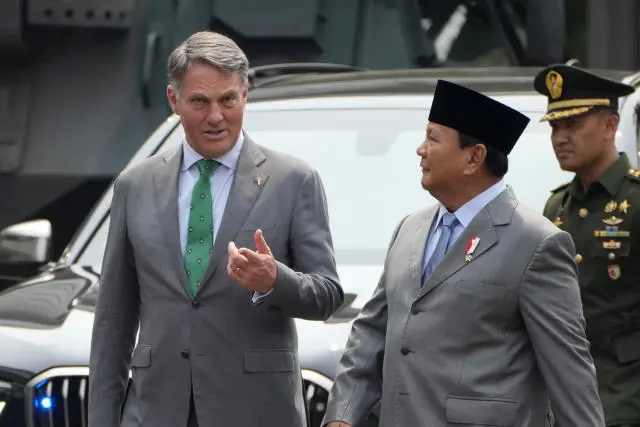
Beyond Military Alliances: Australia and Indonesia's Treaty-Level Defense Strategy - Richard Marles and Prabowo Subianto.
Beyond Military Alliances: Australia and Indonesia’s Treaty-Level Defense Strategy – Richard Marles and Prabowo Subianto.
One-stop reference
Company Intelligence
Every listed company in Latin America — financials, ownership and structure for 1,450+ companies across 26 exchanges, in one place.
Browse the directory →
RT
Ask Rio Times
17 years of Latin America reporting, on demand.
Open the full Ask Rio Times →

Details of the Defense Agreement

Australian officials describe the impending defense agreement as a “treaty-level” document, illustrating a significant step in security cooperation.

Conversely, Indonesian officials prefer not to label it strictly as a treaty to preserve their non-aligned stance internationally.

This agreement strategically bolsters security cooperation without directly aligning against global powers such as China or the United States.

It emphasizes soft-power elements, including cultural exchanges and educational programs.

The expanding security partnership must be viewed against the backdrop of the ongoing US-China rivalry.

Both countries maintain a neutral stance towards China, even as Australia participates in the AUKUS alliance to counter China’s rising regional influence.

Indonesia manages a delicate balance in its foreign relations, engaging with both Western and Eastern powers.

Recent dialogues with China and interactions with Western leaders underscore Indonesia’s intricate geopolitical navigation.

Australia and Indonesia’s Treaty-Level Defense Strategy

With Prabowo anticipated to ascend to the presidency, the bilateral relationship is expected to evolve further. The defense pact is likely to bolster strategic interests and foster regional stability.

However, the focus will probably remain on non-military cooperation, aligning with Indonesia’s preference for non-alignment. The 2024 geopolitical landscape reveals a multipolar world with evolving alliances.

Indonesia’s strategic decisions and closer ties with Australia are key to regional stability and security. These developments bolster bilateral relations and enhance overall global stability.

Military Comparison

The military forces of Australia and Indonesia differ significantly in terms of size, budget, and technological capabilities.

Size and Personnel: Indonesia’s military is large, with 400,000 active personnel. In contrast, Australia has 60,330 active personnel.

Budget and Spending: Australia spends $34.4 billion annually on defense, significantly more than Indonesia’s $9 billion. This supports advanced technology.

Equipment and Capability: Australia operates modern Western aircraft, including the F-35. Meanwhile, Indonesia focuses on a larger number of tanks.

Strategic Alliances: Australia strengthens its military through ANZUS and AUKUS treaties. These alliances enhance strategic capabilities with the U.S. and U.K.

Military Cooperation: Despite differences, Australia and Indonesia engage in joint exercises. Their partnership ensures regional security and stability in Southeast Asia.

This article was produced by The Rio Times’ automated newsroom system. How we use AI · Report an error

Read More from The Rio Times

The Rio Times · Power Map
See who really holds power in Latin America
Click to open the Power Map →

Rotate for Best Experience

This report is optimized for landscape viewing. Rotate your phone for the full experience.