Thai Politics: A Family Affair with Paetongtarn Shinawatra’s Rise
In Thailand, the political stage often mirrors a family drama, with the recent elevation of Paetongtarn Shinawatra to the role of prime minister adding a new chapter to this narrative.
At 37, Paetongtarn steps into a role previously held by her father, Thaksin Shinawatra, and her aunt, Yingluck Shinawatra. She secured her position with a robust 319 out of 500 votes in parliament.
Her rise is not merely a continuation of her family’s legacy but also a testament to the enduring clout of the Shinawatra surname in Thai politics.
Paetongtarn’s ascendancy follows a turbulent period marked by the ousting of her predecessor for ethical violations, spotlighting the chronic instability that characterizes Thai governance.
The backing of her nomination by a coalition that includes both conservative and military-backed parties suggests a strategic alliance.
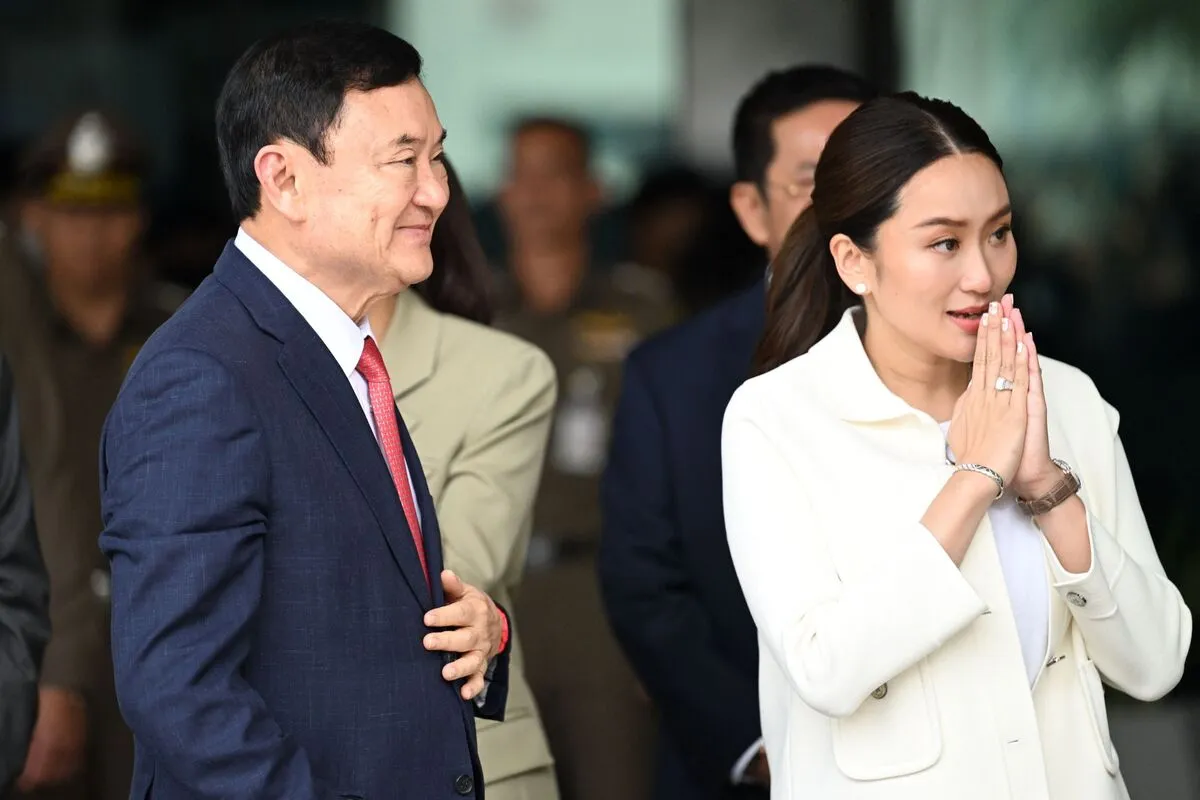
This alliance balances traditional royalist interests with the Shinawatra family’s populist appeal. Her tenure begins under the shadow of her father, Thaksin, who returns from a 15-year exile.
Thaksin’s influence is undeniable, not just as a familial patriarch but also as a political strategist. His tenure saw significant economic reforms and deep political divisions.
Paetongtarn Shinawatra’s Leadership
This familial backdrop is pivotal, as Paetongtarn inherits a political landscape fraught with economic challenges and deep societal divisions.
Economic stagnation and soaring household debt frame her immediate challenges. With growth rates stumbling below 2% over the past decade and foreign investor confidence waning, her government’s economic policies are under scrutiny.
Analysts speculate a minimal deviation from her predecessor’s policies, although ambitious economic stimulus plans might be reconsidered. The intricate dance of power within Thai politics continues, with Paetongtarn at its center.
Her role will test her ability to navigate the entrenched military and royalist powers while also addressing the demands of a growing pro-democracy movement.
The movement faced a setback with the dissolution of the Move Forward Party. This highlights the potent influence of Thailand’s judiciary in shaping political trajectories.
Paetongtarn Shinawatra’s premiership is more than a political appointment; it is a continuation of a familial saga that has dominated Thai politics for decades.
Her leadership will determine whether she can carve out her legacy. She must balance the weight of her family’s past and the expectations of a nation yearning for stability and reform.
This article was produced by The Rio Times’ automated newsroom system. How we use AI · Report an error · Editorial responsibility: Matthias Camenzind, Editor-in-Chief