Brazil’s Exchange Courts Small Savers Just as Lula Moves Against Bet Apps
Key Facts
Brazil’s government is moving against online gambling, which reached nearly 32 million bettors, weeks before a national election. This week the country’s stock exchange pitched small savers a regulated yes-or-no contract on economic data.
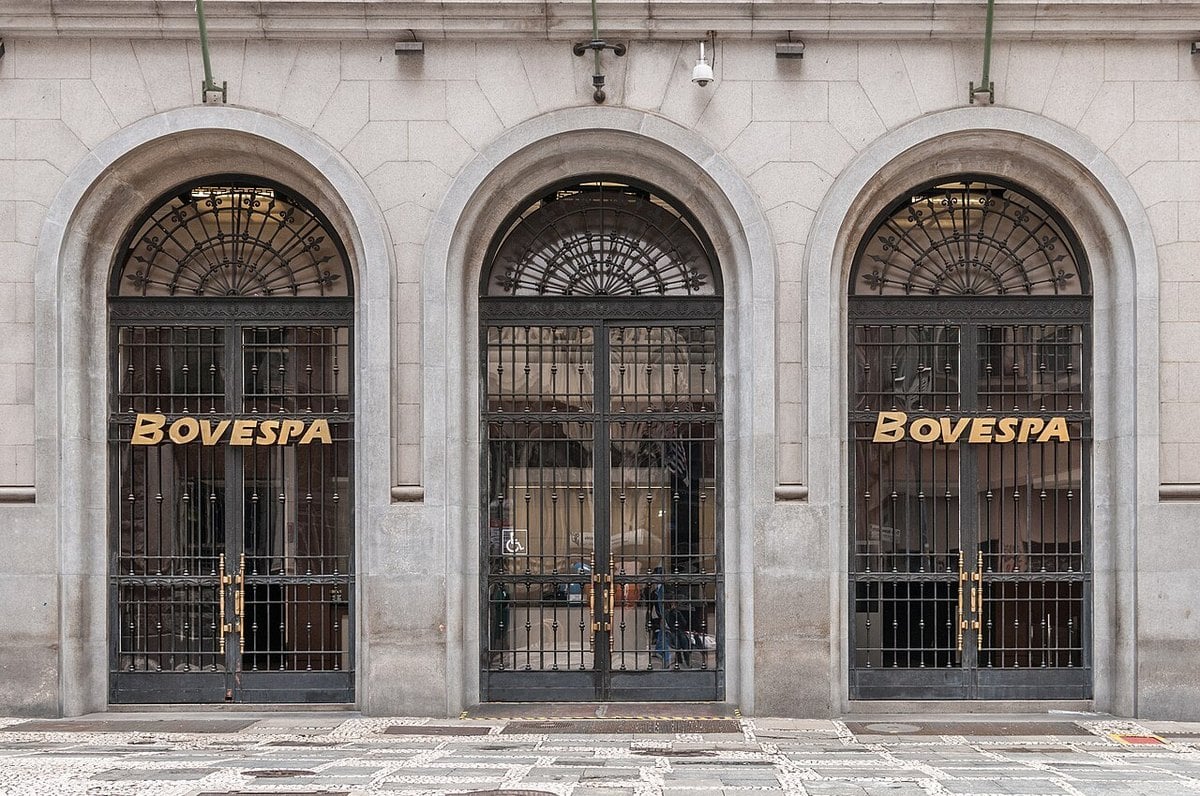
B3, Brazil’s only stock exchange, is weighing retail access to its event contracts, executives told a São Paulo panel on 15 September. Two days later, the São Paulo daily Estadão reported that the finance ministry had drafted a measure to ban online casino apps.
Why This Matters
Brazil legalised fixed-odds sports betting in 2018 and set detailed rules in Law 14,790 of 2023. The licensed market began operating on 1 January 2025, with authorised sites using a bet.br web address.
Bettors deposited R$88.4 billion, about US$17.2 billion, with licensed sites in the first half of 2026, Estadão reported. The newspaper counted 31,821,805 unique bettors across almost 119 million accounts.
President Luiz Inácio Lula da Silva said on 14 September that betting is a disease and not a game. He said the government would announce a drastic decision soon.
Brazilians elect a president, governors, senators and deputies on 4 October, with any runoff on 25 October. That timing turns gambling into a campaign issue as well as a household-debt and budget question.
B3 is pitching its event contracts as a regulated product tied to economic data, not to football or elections. Every dollar figure here uses R$5.1521 to the dollar, the Banco Central PTAX selling rate for 17 September 2026.
What B3 Has Already Built
B3 is Brazil’s only stock and derivatives exchange, based in São Paulo. A forerunner product on rate decisions dates from 2020.
The event-contract line itself began on 27 April 2026, when six contracts started trading. Those six reference the Ibovespa benchmark stock index, the United States dollar and bitcoin.
Contracts on the IPCA consumer price index and on quarterly GDP followed. Luiz Masagão is B3’s vice-president for products and customers; he said the launch followed the evolution of prediction markets abroad.
Masagão said the contracts deliver a simplified experience for investors. He added that they keep the safety parameters of B3’s regulated environment.
The exchange publishes the product list on its own website. Twelve contracts across seven underlyings are listed there now, including ether and solana.
How an Event Contract Works
Each contract asks one question with a yes or no answer. An example is whether the dollar closes above a set level that day.
Prices move between R$0 and R$100 (about US$19.41). A holder who is right receives R$100 (US$19.41) and a holder who is wrong receives nothing.
The price therefore reads as a probability. A contract at R$70 (about US$14) implies a seventy per cent chance in the market’s view.
Jerson Zanlorenzi, a partner at investment bank BTG Pactual, made that point at the B3 Week event. He said a contract at 70 cents in a hundred shows the probability directly.
Zanlorenzi called it a lower-risk entry point for people new to futures. He said the gain and the loss are both known in advance.
That differs from a futures contract, which needs margin and daily settlement. The event contract simply pays a fixed sum or nothing.
The Rule That Draws the Line
The National Monetary Council, Brazil’s top financial rule-maker, issued Resolution 5,298 on 24 April 2026. It took effect on 4 May.
The rule bans derivatives referenced to sporting, political, electoral, cultural or entertainment events. It allows those tied to economic and financial variables.
Permitted references include interest rates, exchange rates, price indices, commodities and listed securities. The CVM, Brazil’s securities regulator, may bar further underlyings at its discretion.
The ban also reaches offers made into Brazil from abroad. Law firm Machado Meyer read it as covering indirect access arrangements.
That wording pushed foreign prediction platforms Polymarket and Kalshi outside the Brazilian perimeter. It left B3’s economic contracts inside it.
The CVM has separately limited these products to professional investors. That means R$10 million in financial assets, about US$1.9 million, or a regulator’s certification.
Why B3 Now Wants the Retail Investor
The pitch was made at B3 Week 2026 in São Paulo on 15 September. Fintech news site Finsiders Brasil reported the panel the next day.
Estadão, reporting the panel on 16 September, headlined its account on how the exchange hopes to avoid an efeito bet. The phrase means a betting effect and is the newspaper’s own.
Silvia Bugelli, then B3’s legal director, had put the commercial case in March. She said that without a broad market there is no liquidity.
Bugelli added that without liquidity a contract does not form a price. That is the exchange’s core argument for widening access.
Daniel Maeda, B3’s superintendent for legal affairs, spoke at Rio Innovation Week on 4 August. He said B3 had discussed the target audience with the CVM.
João Accioly, a CVM director, said removing the audience barrier is the watershed for this market. He also said the bureaucrat needs educating alongside the investor.
B3’s Own Words on Bets
B3 runs an education portal called Bora Investir. It published an explainer on prediction markets and bets in December 2025.
The portal says that in prediction markets people bet against other people, not against the house. That is the exchange’s own framing of the difference.
It adds that a betting firm sets the odds itself and profits when bettors lose. Prediction market operators instead earn fees per transaction.
The portal also notes that a position can be traded before the event settles. A sports bet cannot be resold in the same way.
Thiago Godoy, who runs the Papai Financeiro education project, sounded a warning on the same panel. He described users trading hundreds and then thousands of times in short periods.
Godoy said technology can track how often someone trades and how much they stake. He argued that such monitoring should come with retail access.
The Measure Against Betting Apps
Estadão reported on 17 September that the finance ministry had drafted a provisional measure. It said the text was under review at the Planalto, the presidential palace.
The report said publication was expected within days, before the first round of the October election. A provisional measure takes effect on publication and then needs congressional approval.
It is valid for 60 days and is extended automatically once for another 60, according to Congress. After that it needs a vote in both houses to survive.
The draft targets online casino games rather than sports betting. Estadão reported that sports wagers and club sponsorship would stay outside it if the current design holds.
The government is studying a clause delaying the ban by 180 days. That would force Congress to vote before any prohibition started.
Estadão said the finance ministry and the Casa Civil, the president’s chief-of-staff office, did not comment. Nothing has been published in the official gazette as of 18 September.
What a Ban Would Cost the State
Industry figures cited by Estadão put online casino games at about 80 per cent of operator revenue. A ban would therefore hit most of the sector’s income.
Each licensed company paid R$30 million, about US$5.8 million, for a five-year authorisation. Estadão reported that the state would have to refund part of that money.
Brazil’s fiscal responsibility law also requires compensation for forgone revenue. That is a second budget problem for the same measure.
The Receita Federal, the federal tax agency, collected R$8.747 billion (about US$1.7 billion) from gaming and betting between January and July 2026. That is roughly 77 per cent more than a year earlier.
The levy on gross gaming revenue was 12 per cent until March and 13 per cent from April. A separate 15 per cent income tax applies to bettors’ net prizes.
Football’s Sponsorship Problem
Eight clubs signed a joint manifesto against a ban on 17 September, and a dozen more published the text. Flamengo, Vasco, Fluminense, Botafogo, São Paulo, Santos, Palmeiras and Cruzeiro signed it.
The São Paulo and Rio de Janeiro state federations signed as well. Sports daily Lance reported that betting firms pay top-division clubs more than R$1 billion (about US$194 million) a year.
The sums differ sharply from club to club. Individual deals run from around R$100 million (about US$19 million) a year at Palmeiras to far more at Flamengo.
The manifesto argued that the money also reaches smaller clubs and lower divisions. It said no other sector could immediately replace that investment in the interior.
The sector’s own estimate of the loss to football is around R$1 billion (about US$194 million). Those figures come from clubs and industry bodies, not from an audited filing.
Betting associations have warned that demand would move to unlicensed sites. The sector estimates the illegal market already matches the legal one in size.
What the Household Data Shows
Brazil’s central bank published a technical study on the betting market in September 2024. It used Pix instant payment receipts from betting companies as its base.
That study found monthly transfers of R$18 billion to R$21 billion, roughly US$3.5 billion to US$4.1 billion. It counted about 24 million individuals sending at least one payment.
The CNC, Brazil’s trade confederation, put monthly spending at R$30 billion for March 2026. That is about US$5.8 billion, drawn from its own consumer debt survey.
The CNC used a difference-in-differences method comparing the periods before and after regulation. Its chief economist, Fabio Bentes, linked the outflow to weaker retail sales.
A study by the Made centre at the University of São Paulo landed on 15 September. It estimated that betting cut economic activity by R$120 billion (about US$23.3 billion) to R$141 billion (about US$27.3 billion) in 2025.
That range equals about US$23.3 billion to US$27.4 billion, or 0.9 to 1.1 per cent of output. The finance ministry works with a smaller estimate of around R$60 billion, near US$11.6 billion, a year.
What It Means If You Invest or Live in Brazil
Retail investors cannot buy these contracts today. Access still depends on a CVM rule change that has no published timetable.
Anyone offering contracts on football matches or elections to Brazilian residents sits outside Resolution 5,298. That applies to offshore platforms marketing into the country.
B3 itself trades in São Paulo under the ticker B3SA3. Event contracts are a small line next to its equities and futures business.
Investors holding Brazilian media or football-linked assets face a different question. Sponsorship income would be exposed if the measure widened to sports betting.
The real has moved little this month against the dollar. Readers converting older reais figures should check the rate for the date concerned.
What Is Not Yet Known
The text of the provisional measure has not been published. Everything about its scope comes from reporting, not from an official document.
It is not confirmed that sports betting and club sponsorship will be spared. Earlier reports described a broader prohibition under discussion.
The CVM has not opened a public consultation on retail access to event contracts. No B3 executive has given a launch date for a retail product.
The size of any licence refund is unclear. Some 188 brands appear on the regulator’s authorised list, though company counts differ by source.
Estimates of household betting outflows vary widely by method. Deposits, losses and gross gaming revenue are three different measures and are often conflated.
Whether Congress would approve a ban is untested. A provisional measure lapses if deputies and senators do not vote it through.
Frequently Asked Questions
Why does B3’s plan matter now?
Brazil’s government is preparing to curb online casino apps weeks before the 4 October election. B3 is pitching its event contracts as a regulated alternative tied to economic data.
What is a B3 event contract?
It is a binary derivative that pays R$100, about US$19.41, if a stated economic outcome occurs. It pays nothing if the outcome does not occur.
Can ordinary Brazilians buy them?
Not yet, because the CVM limits them to professional investors with R$10 million, about US$1.9 million, in assets. B3 said on 15 September that it wants that widened.
What would the provisional measure ban?
Estadão reported that the draft targets online casino games rather than sports betting. The text has not been published, so the scope is not confirmed.
Sources: Finsiders Brasil, B3 executives on taking event contracts to retail, Bora Investir (B3), the exchange’s own note on the April launch and Masagão’s quote, Bora Investir (B3), how prediction markets differ from bets, Machado Meyer, analysis of CMN Resolution 5,298, Estadão, the finance ministry’s draft measure on online casinos, Estadão, licence refunds and first-half deposit figures, Lance, the manifesto signed by eight Série A clubs, Banco Central do Brasil, technical study on the online betting market, Legal 500, Brazil gambling law guide (Laws 13,756/2018 and 14,790/2023), IstoÉ Dinheiro, the regulated market from 1 January 2025, TSE, the 2026 election calendar, Congresso Nacional, how provisional measures are processed
This article was produced by The Rio Times’ automated newsroom system. How we use AI · Report an error · Editorial responsibility: Matthias Camenzind, Editor-in-Chief
LatAm Markets: Live Signals → — real-time movers, turnover leaders and FX across Latin America.
Brazil runoff, Sunday, October 25: Brazil runoff: date, poll closing times and when results start. Latest: Brazil runoff polls, Flávio 51%, Lula 49%.