At 61, he decided to row 8,000 km along the Brazilian coast
By Luciano Nagel
The 61-year-old Adelson Carneiro Rodrigues, from Cananéia, on the southern coast of São Paulo state, decided to launch a daring challenge for himself.
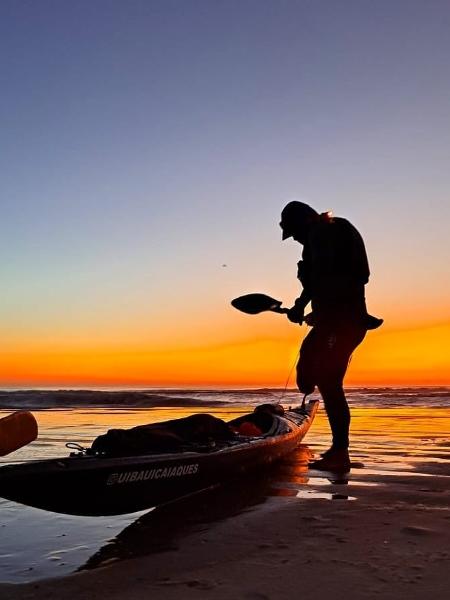
To cross from Oiapoque to Chuí, along the entire Brazilian coast, rowing in an ocean kayak.
In total, it is 8,000 kilometers from the far west of the state of Amapá to the last resort in the south of Rio Grande do Sul.
The idea came up in 2015, after much research into the project, but was put into practice only on February 17, 2020, when he left his job as a physical educator in São Paulo, sold some belongings, and threw himself into the sea.
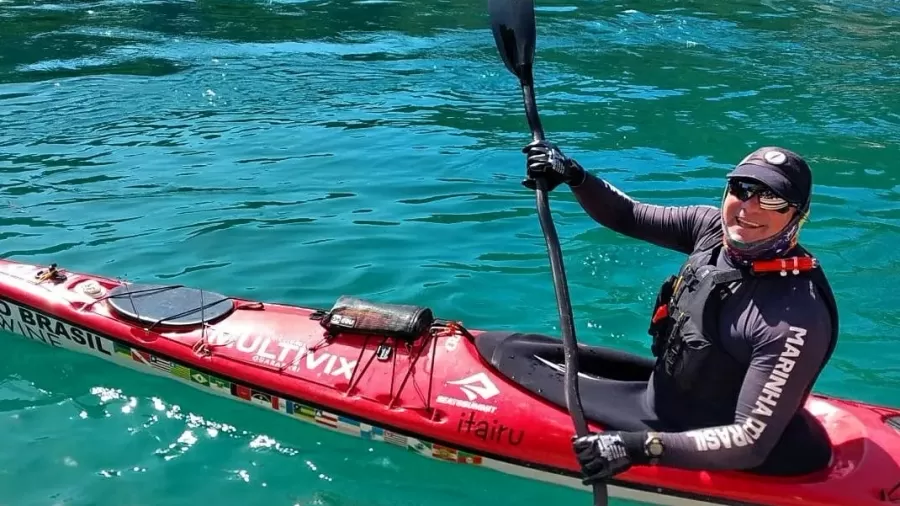
But he needed a lot of physical and psychological preparation to make a crossing like this, along the sea coast from North to South aboard a 5.5-meter-long kayak.
ATHLETE SINCE CHILDHOOD
In an interview with Nossa/UOL, already on the coast of Rio Grande do Sul, Adelson Carneiro Rodrigues revealed to the reporter that he had practiced sports since he was ten.
I have done swimming, cycling, and running, and as an adult, I have participated in more than 100 triathlon races and three IronMan – Spain, Brazil, and South Africa.
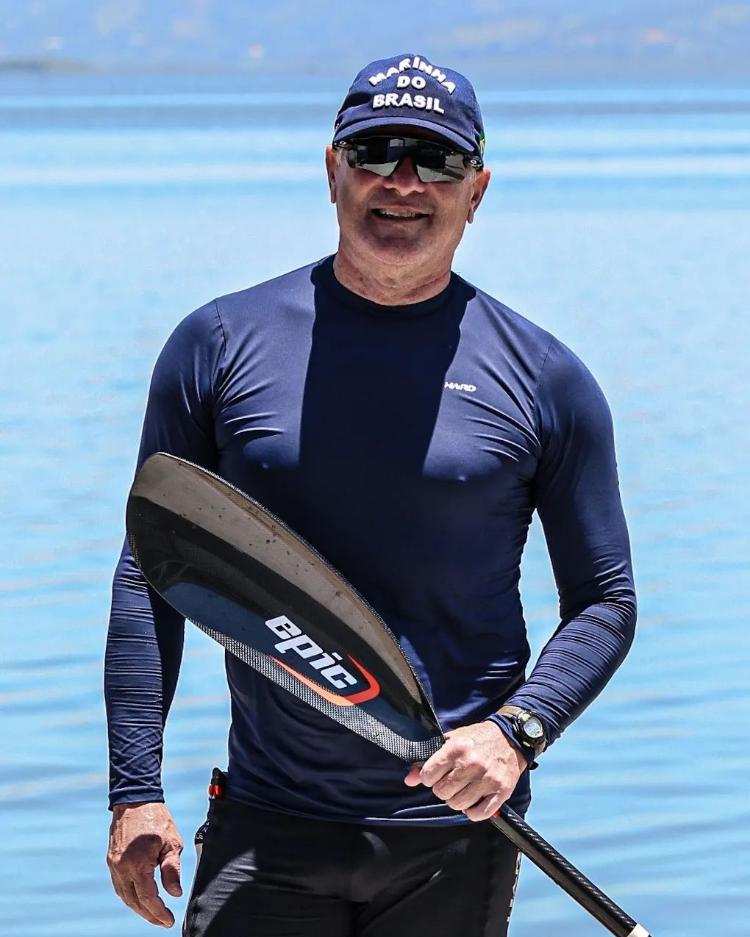
Canoeing appeared in the athlete’s life in 2003 after having practiced mountaineering and climbing.
The countless benefits of paddling, besides the contact with nature, made Adelson, for more than a decade, cover 100, 200, and 400 kilometers in weeks.
“There came a time when I decided I wanted more, something authentic.”
“So I started researching the Brazilian coast from North to South five years before starting this journey called – Expedition from Oiapoque to Chuí.”
“It was a tough decision because I dropped everything.”
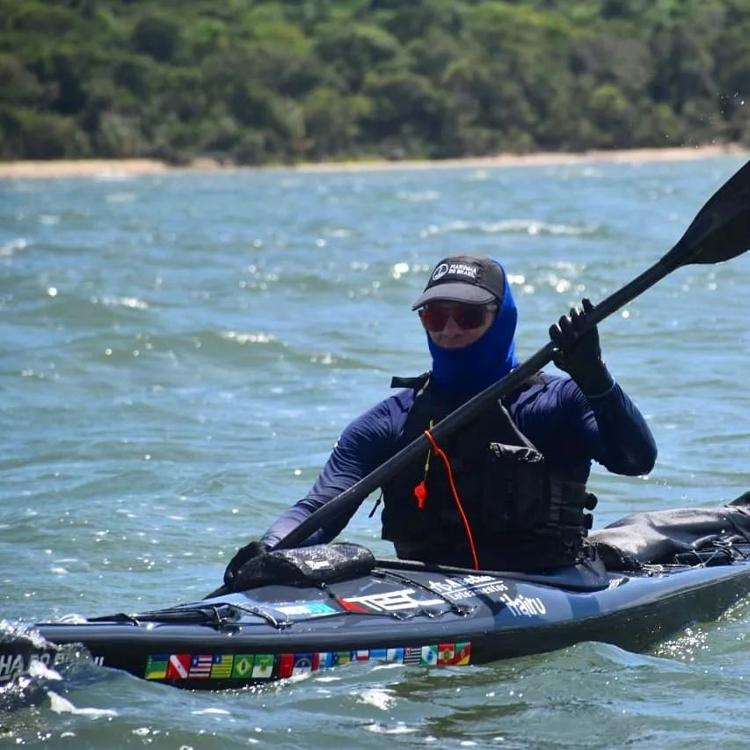
Adelson, who used to be a personal trainer, left his job and sought some kind of sponsorship, which didn’t happen.
“I contacted at least 400 companies in Brazil to ask for support and, unfortunately, they all denied it”.
At the time, as an alternative, the physical education teacher and personal trainer sold his motorcycle and some sports equipment to run the project.
Giving up was never an option.
MORE IS LESS
Right at the beginning of his journey, the Brazilian kayaker realized that carrying so many items in his kayak, which can carry up to 100 kg and the athlete’s weight, wasn’t necessary.
He discovered that he could refuel himself in several stops.
“I paddled for 7 or 8 hours a day and stopped at some little beach and was soon welcomed by the natives who gave me food and shelter.”
“The people of the North and Northeast are very hospitable.”
HELP FROM THE NAVY
But it was in the sea of Fortaleza, the capital of Ceará state, that the watchful eyes of the Brazilian Navy noticed the daring canoeist.
They offered him support by providing food, accommodation, and logistics – both in emergencies at sea and when moving on land to the seaside resort of Chuí, the last beach in Rio Grande do Sul state, already on the border with Uruguay.
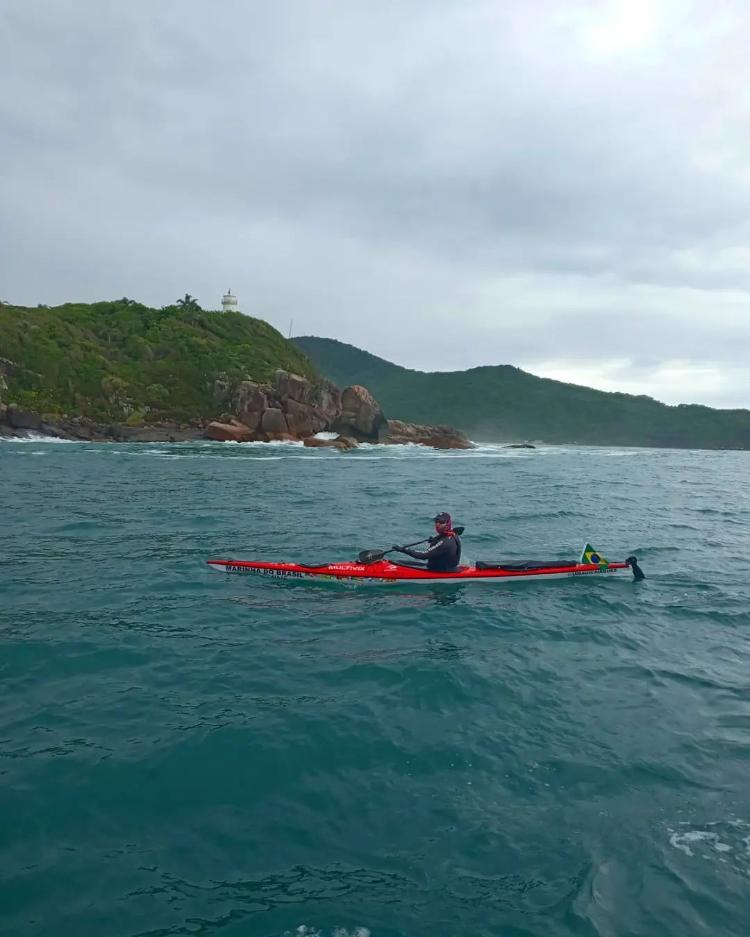
“This help was fundamental for me. They, from the Navy, believed in my project, and I have only to thank them.”
From paddle to paddle, passing through Brazil’s sea coast, Adelson Carneiro Rodrigues remembered some “tense moments” during these three years of crossing.
One happened on the country’s northern coast when he faced strong winds, waves over 5 meters high [Maranhão and Ceará], and unexpected visits from many sharks around his kayak.
In São João do Barra (RJ), the canoeist recalled asking the Navy for help to get out of the sea due to the strong waves.
Among the most beautiful places he visited during his maritime expedition, Adelson highlighted the beaches of Alagoas [Jequiá da Praia and Barra de São Miguel], Ceará [Moitas Beach], Rio de Janeiro [Angra dos Reis], and the coast of Santa Catarina, especially the Magic Island, Florianópolis.
BY THE LAGOONS OF RS
On January 29, 2023, the canoeist Adelson Carneiro arrived in the state of Rio Grande do Sul (RS) in Torres beach, also paddling through lagoons [considered escape routes, in cases of the rough sea] as Itapeva Lagoon, Quadros Lagoon, and Barros Lagoon.
In Tramandaí, in early February, after covering 7,4000 km of the 8,000 km planned, the athlete was received with applause by members of the Navy, vacationers, and residents.
During the interview, Adelson pointed out that to reach Chuí, there are still eight lagoons, including the Patos and Mirim lagoons.
His most recent post on Instagram showed that he was in Arroio Bretanha in Mirim Lagoon.
“The coast of RS, starting from the Rio Grande down, is 240 km of a totally deserted beach.”
“Can you imagine if something happens?”
“Therefore, with the logistics of the Navy, I was advised to row across the Rio Grande do Sul lagoons.”
“Despite this alternative, those who think that navigating in freshwater is easier are mistaken; it isn’t.”
“Freshwater is much heavier and requires much more effort than rowing in the sea, and some aquatic plants and reeds make rowing difficult.”
Weather permitting, Adelson will always be in the water rowing, on average 40 km a day [8h], in the Patos Lagoon towards Chuí.
The forecasted arrival on the last beach of Rio Grande Sul is still this month.
THE NEXT CHALLENGE?
To row from Chuí to Ushuaia, a city in Argentina and the capital of the Province of Tierra del Fuego, known as the southernmost city in the world or the city of the End of the World.
With information from UOL
More: South Africa news in English, every day from The Rio Times.
This article was produced by The Rio Times’ automated newsroom system. How we use AI · Report an error
Read More from The Rio Times