Argentina’s Nationwide Strike Grounds Flights and Disrupts Economy
Argentina faced widespread disruption as a general strike, organized by major labor unions, halted transportation and economic activities nationwide.
Workers protested against President Javier Milei’s austerity policies, which include deep cuts to public spending, pensions, and education. These measures aim to stabilize Argentina’s economy but have intensified unemployment and poverty.
The strike coincided with Milei’s negotiations for a $20 billion IMF bailout. While the IMF supports his fiscal reforms, critics argue they disproportionately harm low-income citizens while benefiting investors.
The unrest highlights growing dissatisfaction with Milei’s administration, which has faced three general strikes in just over a year. Airlines canceled hundreds of flights due to the strike’s impact on airport operations.
Aerolíneas Argentinas canceled 258 flights, affecting 20,000 passengers. LATAM reported disruptions to 46 flights, impacting 4,000 travelers. Flybondi relocated operations to Ezeiza International Airport and managed to operate 51 flights for over 9,000 passengers.
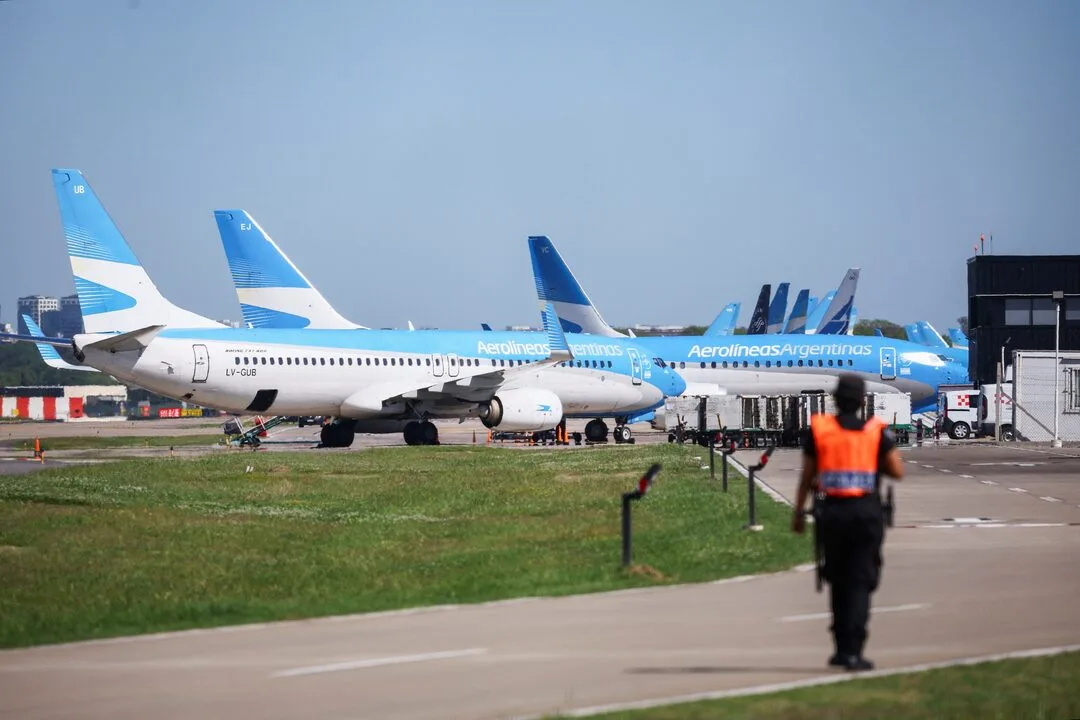
Public transport systems and ports also came to a standstill as unions joined the strike. Protesters gathered in Buenos Aires and other cities, demanding fair wages and an end to austerity policies.
Pensioners joined the demonstrations, calling for higher benefits amid Milei’s budget cuts. The government accused unions of undermining economic recovery efforts while unions criticized the administration for ignoring workers’ rights.
The strike underscores Argentina’s deep social divisions as it struggles with inflation and financial instability. The unrest complicates Milei’s efforts to secure IMF funding and stabilize the economy.
As protests grow louder, the government faces mounting pressure to address inequality while balancing fiscal reforms.
More: Argentina news in English, every day from The Rio Times.
This article was produced by The Rio Times’ automated newsroom system. How we use AI · Report an error
In depth
Read More from The Rio Times