
ARGENTINA · OIL OUTPUT
Key Facts
- The country Argentina is a major South American economy whose Vaca Muerta shale formation is driving a record oil boom, while Guyana is the offshore newcomer next door.
- Why it matters Chevron, a US oil major, holds stakes in both countries, so the race touches US investors, fuel buyers and the supply of oil outside the Middle East.
- Why now Neuquén province set another oil record in September, and a consultancy forecast that circulated on Friday 23 October 2026 has Argentina passing Guyana by 2028.
- What happened The forecast has Argentina averaging 910,000 barrels of oil equivalent a day in 2026 and becoming South America’s third-largest liquids producer after passing Guyana.
- The numbers Argentina hit a record 926,925 barrels a day in August, Guyana produced about 950,000 in July, and Neuquén reached 714,089 in September.
- What it means for you The race favours oil buyers and US firms in both countries, but the ranking depends on whose numbers and which measure are used.
- Still open Whether Argentina reaches 1 million barrels a day by the end of 2026, how fast Guyana grows, and whether the 2028 call holds.
- Power Index Argentina ranks 4th of 14 in The Rio Times Latin America Power Index, with 61.2 points (October 2026 edition).
In Plain English
Wood Mackenzie is an energy consultancy that publishes production forecasts for countries and companies. Liquids are crude oil and related fuels counted in barrels, and barrels of oil equivalent also count natural gas as oil.
Vaca Muerta is a shale rock formation in Argentina’s Neuquén Basin, and RIGI is Argentina’s incentive regime for large investments. El Trapial is an oil block in Neuquén that Chevron owns and operates.
A forecast by the energy consultancy Wood Mackenzie has Argentina overtaking Guyana to become South America’s third-largest liquids producer by 2028, according to a Reuters report on Friday 23 October that Kaieteur News, a Georgetown daily, relayed on Monday 26 October 2026. The same estimate puts Argentina’s 2026 output at an average of 910,000 barrels of oil equivalent a day, which is 42% above 2023, the year President Javier Milei took office.
The race matters to US readers because Chevron holds a 30% stake in Guyana’s Stabroek Block and is also asking Argentina to approve a US$13.8 billion plan at its El Trapial block. Who is ahead depends on the month, the measure and the source, and this report sets the figures side by side.
What the Forecast Says
Kaieteur’s copy of the Reuters report quotes Adrian Lara, a principal analyst at Wood Mackenzie, who says “there’s always been an expectation that Vaca Muerta would deliver more than it has.” He adds that operators are still asking how stable Milei’s reforms will be as they weigh long-term investments, and that even a new government elected in 2027 may avoid policies that slow the energy sector.
Where the Two Countries Stand Now
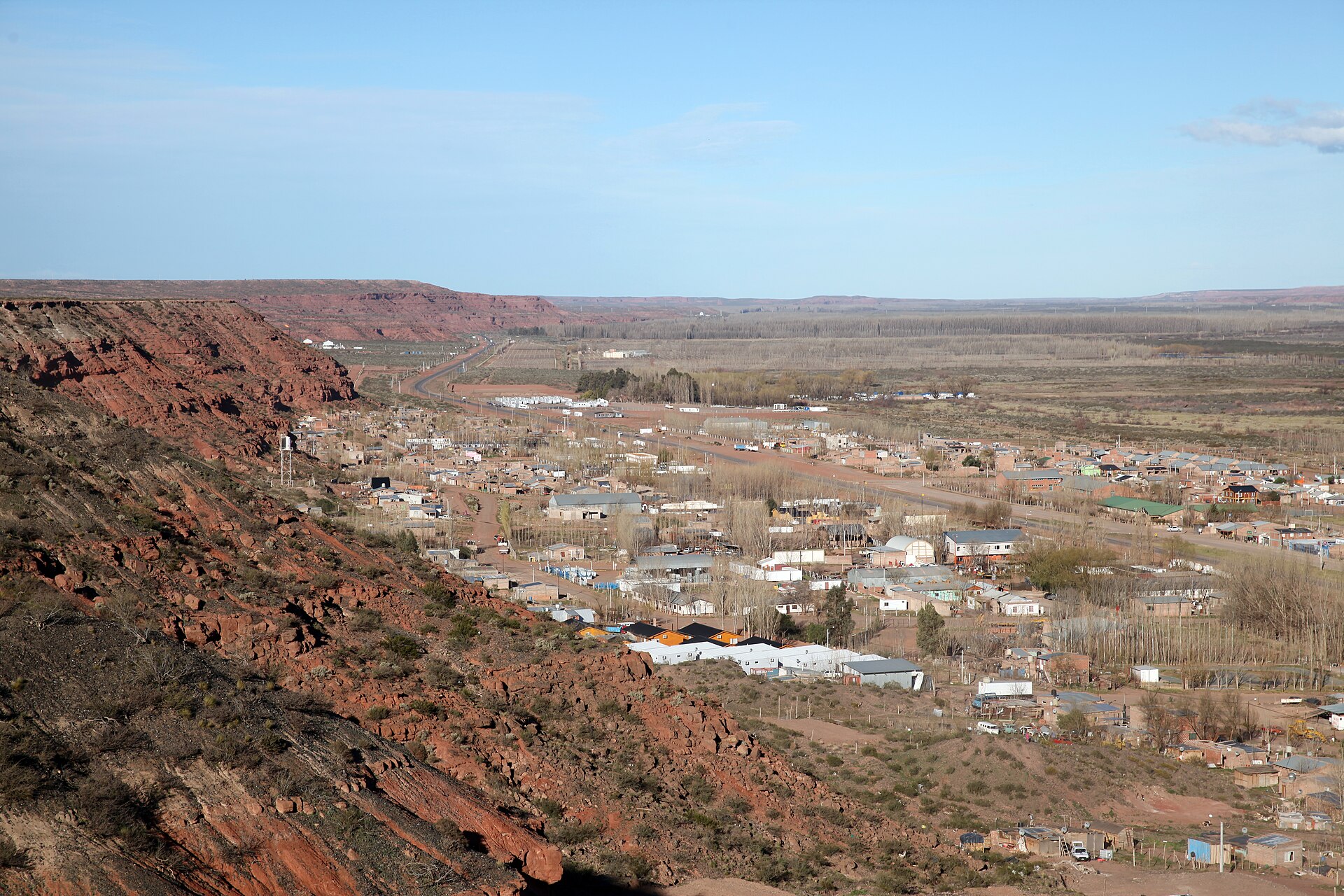
Argentina produced a record 926,925 barrels of oil a day in August 2026, the highest monthly figure on record, according to Secretariat of Energy data processed by the energy desk of the Río Negro newspaper and published on 22 September. The province of Neuquén, home of the Vaca Muerta shale, supplied 685,316 barrels a day of that, or almost 74% of the national total.
Neuquén’s energy ministry data show the province set a new record in September at 714,089 barrels a day, up 4.2% from August and 25.95% from September 2025, the Río Negro newspaper wrote on 22 October. Unconventional wells in Vaca Muerta supplied 697,595 barrels a day of that, or 97.69% of the province’s oil.
The same newspaper put Guyana’s output at 950,000 barrels a day in July, just above Argentina, and Venezuela’s at about 900,000, without naming its source for those two figures. It ranked Argentina fourth in Latin America, behind Brazil at nearly 4 million barrels a day, Mexico at 1.85 million and Guyana, and said Argentina is close to the 1 million barrel a day goal for the end of the year.
Chevron’s Bet on El Trapial
Chevron owns and operates 100% of the El Trapial field and holds 50% of the Loma Campana and Narambuena concessions with the Argentine state oil company YPF, its annual report for 2025 states. The same report lists Chevron’s net production in Argentina at 65,000 barrels of oil equivalent a day in 2025, up from 51,000 in 2024.
On Tuesday 2 June 2026 Chevron Argentina announced that it had filed an application under the RIGI for a US$13.8 billion oil development at El Trapial, the news site EconoJournal wrote. After a Chevron press tour, EconoJournal wrote on 27 September that El Trapial has 47 active wells on 12 well pads and that the plan is to triple production by 2035.
Reuters adds that Chevron could move from one to three drilling rigs at El Trapial by early 2029, with a second rig as soon as June next year, and that the block produces about 40,000 barrels of oil equivalent a day. Three times the 65,000 barrels a day in Chevron’s annual report is 195,000, the 2035 goal Chevron announced last year according to Reuters, and Schoonman hopes to “shave a year or two off” that timeline.
Chevron Sits on Both Sides of the Race
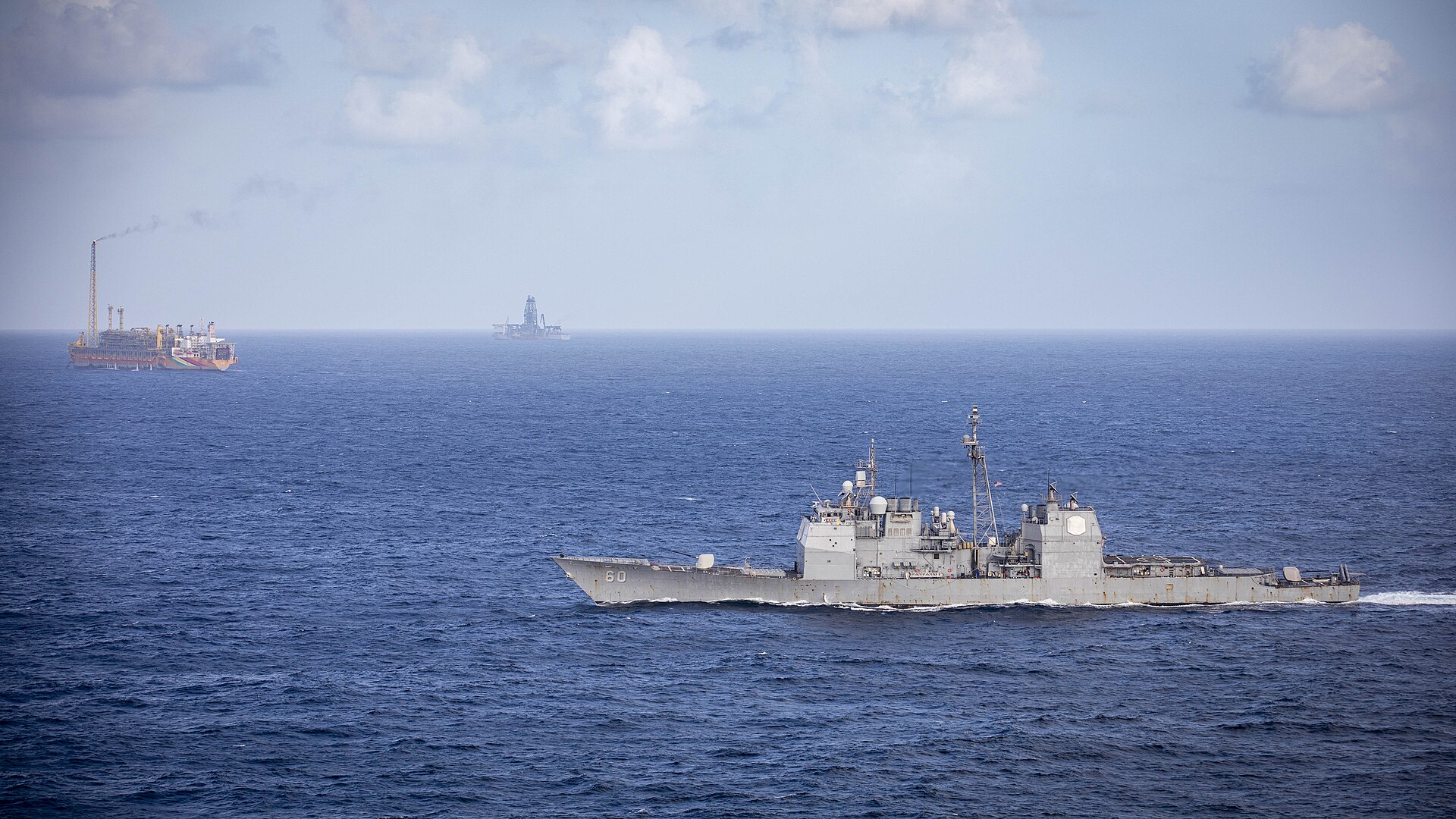
In Guyana, Chevron owns 30% of the Stabroek Block after buying Hess, and its annual report puts its 2025 net production there at 120,000 barrels of oil equivalent a day, in a year when it owned the stake only from July. The same report expects eight production vessels on the block by 2030, with about 1.7 million gross barrels a day of capacity, which is a measure of capacity and not of output.
The two stakes give US investors one company’s view of both countries, and the Rio Times has followed the wider story in its report on how Brazil, Guyana and Argentina drive global oil growth. Readers who follow Argentina closely can also use the Argentina country page for the political and economic backdrop.
What It Means for You
For US readers, the race shows where new oil supply is growing outside the Middle East, and it involves a US major that holds assets in both countries. Chevron’s annual report says the Vaca Muerta Sur export pipeline, which Chevron joined as a shareholder in 2025, is expected to be operational in 2027.
Chevron shareholders should note that the forecast concerns national totals and that the text reviewed gives no Chevron profit figure for either country. Fuel buyers should treat the 2028 call as one consultancy’s estimate, because Argentina’s record months and the start-up of new Guyana vessels will decide the order.
What Is Not Known
The Wood Mackenzie report was not opened, so its method, its Guyana forecast and its definition of liquids are known only through Reuters and Kaieteur News. It is also unclear whether the 910,000 barrels of oil equivalent a day for Argentina uses the same measure as the crude-only figures that the Argentine press cites.
The two outlets rank the countries differently, because the Río Negro newspaper puts Argentina’s August output above Venezuela’s July figure, while a forecast that makes Argentina third only after passing Guyana implies that Venezuela ranks above it on the forecaster’s measure. Reports on Chevron’s rigs also differ, since EconoJournal says a new rig arrived at El Trapial in August while Reuters speaks of a second rig due next June.
No official Guyana output figure for July or August was found in the sources reviewed, and the 950,000 barrels a day is the Río Negro newspaper’s number. It is also not known whether Argentina will reach 1 million barrels a day by the end of 2026, a target that the newspaper calls close but does not treat as certain.
Frequently Asked Questions
Who says Argentina could overtake Guyana?
Wood Mackenzie, an energy consultancy, estimates Argentina will pass Guyana to become South America’s third-largest liquids producer by 2028, Reuters reports. The forecast itself was not reviewed.
How much oil does Argentina produce?
Argentina produced a record 926,925 barrels a day in August 2026, according to Secretariat of Energy data processed by the Río Negro newspaper. Neuquén province alone reached 714,089 in September.
How much oil does Guyana produce?
The Río Negro newspaper puts Guyana’s July 2026 output at about 950,000 barrels a day without naming a source. Chevron’s annual report expects about 1.7 million gross barrels a day of capacity by 2030.
What is Chevron planning in Argentina?
Chevron has applied under the RIGI regime for a US$13.8 billion oil development at its El Trapial block. It aims to triple its Argentine production by 2035.
Is Chevron also in Guyana?
Yes, Chevron owns 30% of the Stabroek Block offshore Guyana, gained by completing its Hess purchase on 18 July 2025. Its annual report lists 120,000 barrels of oil equivalent a day of net 2025 production there.
Sources: Kaieteur News, 26 October 2026 (relaying the Reuters report of 23 October); Diario Río Negro, 22 October 2026; Diario Río Negro, 22 September 2026; EconoJournal, 2 June 2026; EconoJournal, 27 September 2026; Chevron annual report on Form 10-K for 2025, filed 24 February 2026; Chevron news release on completing the Hess acquisition, 18 July 2025.
This article was produced by The Rio Times’ automated newsroom system. How we use AI · Report an error · Editorial responsibility: Matthias Camenzind, Editor-in-Chief