What does it mean that a Peruvian congressional commission named the Mexican President “persona non grata”?
The designation of Mexican President Andrés Manuel López Obrador as “persona non grata” by a commission in the Peruvian Congress shows a rejection of the politician’s remarks, says David Garcia Contreras, technical secretary of the International Relations program at the Faculty of Higher Studies (FES) Aragon of UNAM.
On May 22, the Foreign Relations Commission of the Peruvian Congress approved the appointment of the Mexican president under that premise after the constant friction with the government of the Peruvian president, Dina Boluarte.
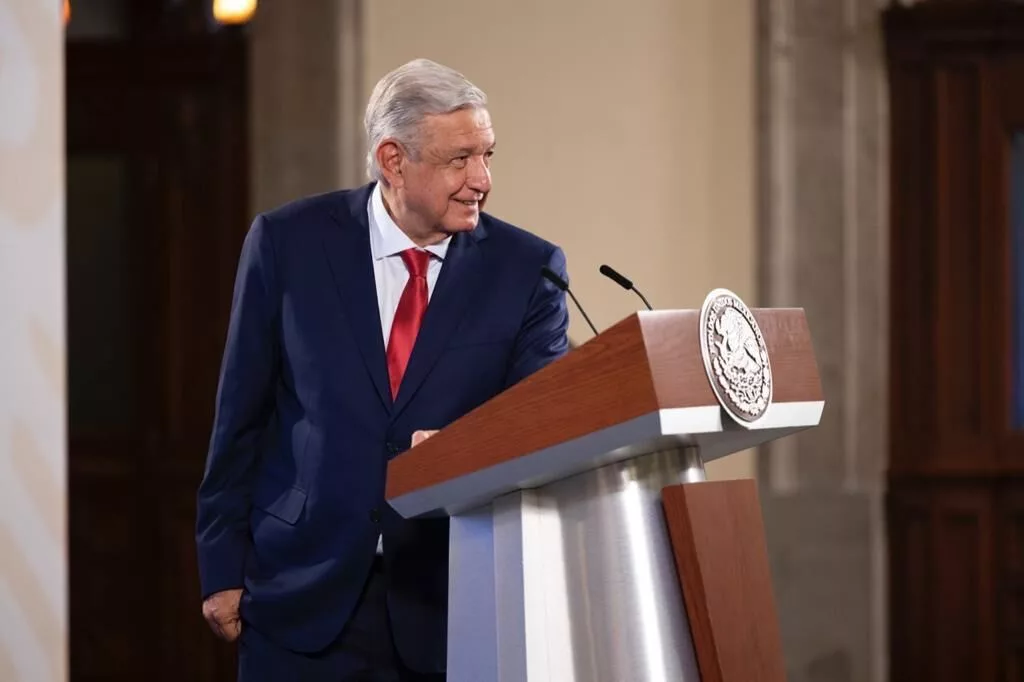
“[The motion] is more aimed at López Obrador’s image.”
“What has been generated here, with the conduct of foreign policy and the official positioning, has been the political actor leading [the one being singled out].”
“In this case, the personal style of the president of Mexico is what has led to these confrontations, which are verbal,” he emphasizes in an interview with Sputnik.
Although this is the first time a Mexican president would obtain this restriction – the Peruvian Congress has yet to approve the motion – he would be the second head of state to be singled out in the Latin American nation.
In February, the president of Colombia, Gustavo Petro, was designated in this way after comparing Peruvian police officers to Nazis.
The politician is another of those who have criticized the government of President Boluarte.
“We have no precedent in this regard and less so with Latin America since our country’s traditional relations [with nations in the region] have remained [on good footing].”
“This, in part, is what the Peruvian government has reproached Mexico with a lot in the sense of non-intervention.”
“This is a fragment of the tradition in the management of Mexican foreign policy that has been surpassed”, adds the expert in international affairs.
He also teaches at UNAM and explains that the current position of López Obrador’s Administration has been pragmatic regarding the case of Peru, where there has been a direct position on the political situation of the Latin American nation.
THE BACKGROUND
The tension between the Governments of Mexico and Peru began in December 2022, after the removal of the then Peruvian President Pedro Castillo (2021-2022), who had dissolved the Congress, decreed a state of emergency, and called for elections.
After being removed from office by the same legislative body, based on the Peruvian Constitution, Dina Boluarte – until then vice-president – assumed power on December 7 last year.
During this change in the Peruvian government, Mexican President Andrés Manuel López Obrador announced that Castillo had communicated with him to ask for political asylum but was detained before arriving at the Mexican Embassy in Peru.
In response, he requested that the human rights of both the deposed politician and his family be respected.
This brought about the first dispute between the two Latin American nations. On December 9, the Peruvian Ministry of Foreign Affairs described López Obrador’s statements as “interfering” and recalled Ambassador Pablo Monroy Conesa for consultation, who, on December 20, 2022, was declared “persona non grata” and expelled from the country.
In addition to this action, the Mexican government’s reception of Castillo’s family in Mexico City and the refusal to hand over the pro tempore presidency of the Pacific Alliance – including Chile and Colombia – increased tensions in the last months.
But on May 18, 2023, Peruvian congresswoman Patricia Chirinos of the Avanza País party presented an initiative before the legislative body of her country to declare the Mexican president “persona non grata”.
Four days later, the Foreign Relations Commission of the Congress of the Latin American nation approved the motion.
For García Contreras, this measure is just a continuation of the back-and-forth between the two countries.
“In this case, [this initiative against López Obrador] has to do with political positioning and sympathy [of the Mexican president] with former President Pedro Castillo (…). It is one more episode of this conflict related to the Peruvian political process”, he emphasizes.
THE FUTURE RELATIONSHIP
Despite the current tensions between Mexico and Peru, the UNAM specialist in international affairs does not foresee the relationship worsening with time.
“Right now, the relationship is maintained at the level of chargé d’affaires after the expulsion of both ambassadors, but that will be seen in the coming months, with the [resolution] of the equation of the Peruvian political system, and what happens in Mexico with the presidential elections and what may come with the person who will lead the Executive”, he specifies.
The professor estimates that, in the coming months, tensions will be decreasing since the Peruvian elections are a medullar point.
“López Obrador has already expressed it: if the elections were recognized [in Peru] by legitimacy and at an international level, relations could take their course.”
“This only happens because of disagreements born of sympathies [of the Mexican president] towards Castillo, who is imprisoned.”
“But the relationship between both countries and peoples has been very cordial. They have great commercial ties, for example, in tourism,” he concludes.
Wth information from Sputnik
News Peru, English news Peru, Peruvian politics
More: Peru news in English, every day from The Rio Times.
Read More from The Rio Times