US Top Court Vacates Venezuela TPS Ruling on 5 October

IMMIGRATION · VENEZUELA
Key Facts
- —The country Venezuela is an oil-rich South American nation. Since US forces seized Nicolás Maduro on 3 January 2026, Washington has recognised Delcy Rodríguez as interim president, US prosecutors say.
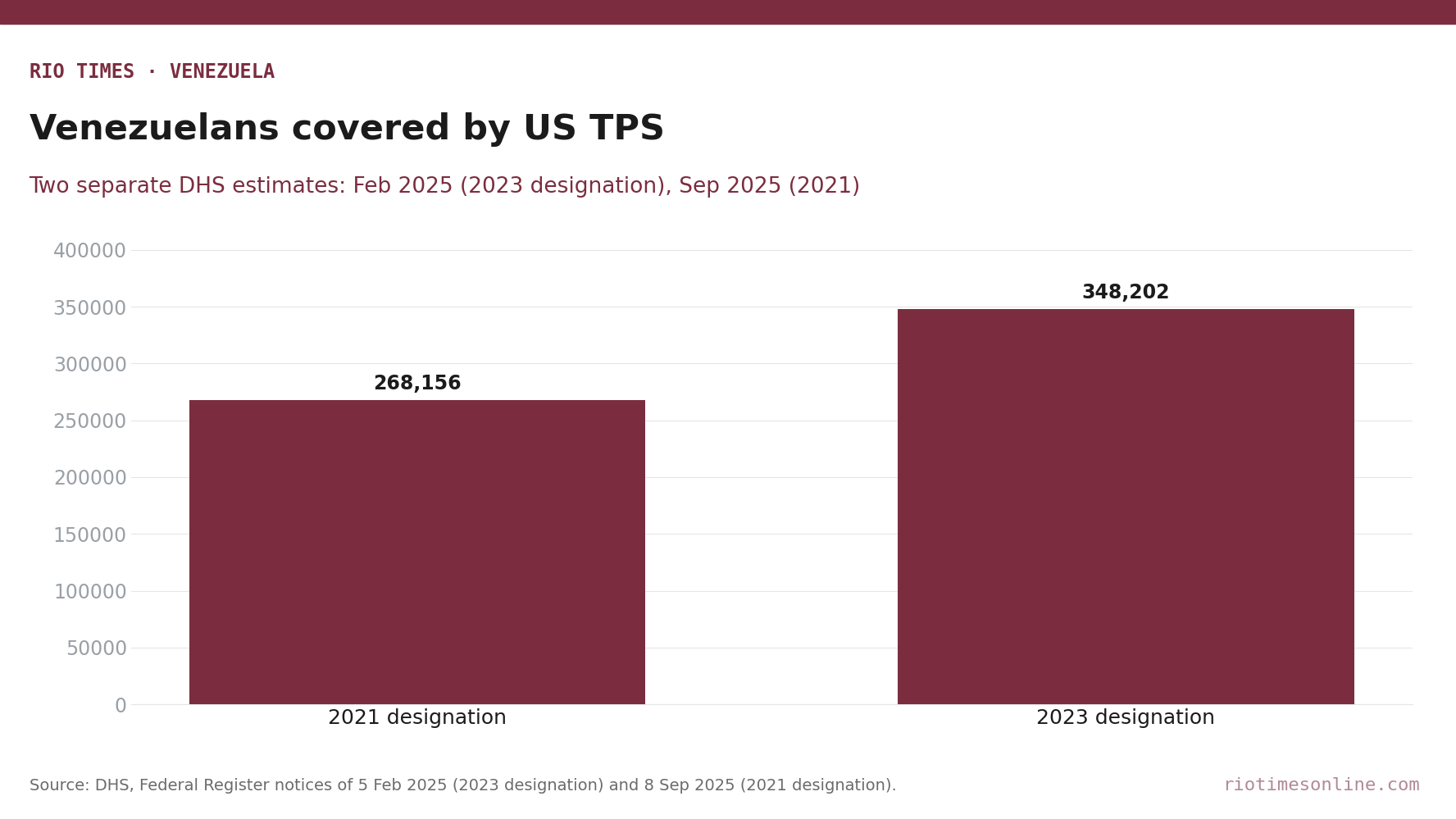
- —Why it matters Temporary Protected Status (TPS) is a US shield from deportation with a work permit. DHS estimated about 348,000 Venezuelans under the 2023 designation and 268,000 under the 2021 one.
- —Why now On Monday 5 October, the first day of its new term, the US Supreme Court ruled on a government petition filed on 9 July.
- —What happened The justices vacated a 28 January 2026 Ninth Circuit ruling that found the cancellation of Venezuela TPS unlawful. They sent the case back for review in light of June’s Mullin v. Doe decision.
- —The numbers DHS counted 348,202 people under the 2023 designation (February 2025) and 268,156 under the 2021 one (September 2025). Both terminations have already taken effect.
- —What it means for you US employers and families should not expect Venezuelan TPS work permits to return soon. Some former holders may still apply for asylum, because TPS stopped the one-year filing clock, USCIS says.
- —Still open How the Ninth Circuit rules on remand, whether any constitutional claim survives, and whether Congress moves on pending TPS bills.
The Venezuela TPS case is back before a federal appeals court after the US Supreme Court wiped out a ruling against the Trump administration on Monday. The order, issued on 5 October, affects one of the largest groups of Venezuelans living in the United States.
In January, the Ninth Circuit had found that Washington acted unlawfully when it ended deportation protections for Venezuelans. The justices vacated that ruling and told the appeals court to look again in light of a June decision.
What the Supreme Court Did on Monday
The case is Mullin v. National TPS Alliance, docket number 26-48. Markwayne Mullin is the current Secretary of Homeland Security, and the National TPS Alliance represents TPS holders.
The court’s docket for 5 October reads: “Petition GRANTED. Judgment VACATED and case REMANDED.” The remand is for further consideration in light of Mullin v. Doe, decided on 25 June.
Lawyers call this kind of order a GVR, short for grant, vacate and remand. It is not a ruling on the merits. It tells a lower court that a newer Supreme Court decision may change its answer.
The order did not come as a surprise. The Solicitor General, the government’s lawyer at the Supreme Court, asked for exactly this outcome in July, and the TPS holders’ lawyers told the court on 20 August that they did not oppose it. The order list shows no noted dissent.
How the Venezuela TPS Fight Got Here
TPS lets people from countries hit by war or disaster live and work in the United States for up to 18 months at a time. Venezuela was first designated in March 2021, and again in October 2023.
In January 2025, the outgoing Biden administration extended the protection to October 2026. Days later, then Secretary Kristi Noem vacated that extension and on 5 February 2025 terminated the 2023 designation.
A federal judge in San Francisco blocked the move, and on 5 September 2025 set aside the vacatur and termination. The Supreme Court paused those rulings twice, on 19 May and 3 October 2025.
The 2021 designation was terminated separately, effective 7 November 2025, according to the Federal Register. The Ninth Circuit then upheld the San Francisco ruling on 28 January 2026, finding Noem had no power to vacate an extension.
The administration has argued that Venezuela no longer meets the conditions for TPS. Its 2025 notice cited lower hyperinflation and higher oil output, alongside a finding that continued protection ran against the US national interest.
The turning point came in June. In Mullin v. Doe, a 6-3 majority held that the TPS law bars courts from reviewing non-constitutional challenges to TPS terminations.
That case concerned Haiti and Syria, not Venezuela. Justice Samuel Alito, a conservative appointed by George W. Bush, wrote that the text barring review “is clear, and its plain meaning is very broad.”
What It Means for You
For US employers and Venezuelan families, little changes overnight. The Supreme Court’s earlier stays had already let both terminations take effect, so most Venezuelans covered by TPS lost the status during 2025.
A smaller group kept work permits valid until 2 October 2026 under a May 2025 court order, according to US Citizenship and Immigration Services (USCIS). That date passed last Friday, three days before Monday’s order.
Other routes remain. USCIS says that holding TPS stops the one-year clock for asylum claims, so some former holders can still file.
The Maduro Case Moves on a Separate Track
The TPS order lands as another Venezuela case advances in New York. No new court step in the Maduro prosecution had been reported on Monday, but key dates are close.
Judge Alvin Hellerstein, the federal judge in Manhattan overseeing the case, has set a bail hearing for Cilia Flores, Maduro’s wife, on 8 October, court records show. Arguments on Maduro’s immunity motion are scheduled for 17 November, and the trial for 1 June 2027.
Prosecutors filed their answer to that motion late on 2 October, as covered in US Says Maduro and Cilia Flores Have No Immunity. For background, see Who Is Nicolás Maduro? Venezuela’s Deposed Leader and His 2027 US Trial Explained.
What Is Not Known
The Ninth Circuit has not said how or when it will take up the case again. It could ask both sides for new briefs or rule on the existing record.
The TPS holders also raised an equal-protection claim, which is constitutional and outside the review bar. Mullin v. Doe found a similar claim over Haiti unlikely to succeed, so its fate on remand is open.
It is unclear whether Congress will act. Several bills that would let some TPS holders apply for permanent residence have been introduced. None had become law when the Congressional Research Service reviewed them in July.
What did the Supreme Court decide on Venezuela TPS?
On 5 October 2026 it vacated a Ninth Circuit ruling that the end of Venezuela TPS was unlawful. It sent the case back for review in light of Mullin v. Doe, decided on 25 June 2026.
Does this order end TPS for Venezuelans?
The terminations had already taken effect in 2025 after earlier Supreme Court stays. The order removes the appeals court ruling that had found them unlawful, while the case continues.
How many Venezuelans had TPS?
DHS estimated 348,202 people under the 2023 designation in February 2025 and 268,156 approved under the 2021 designation in September 2025. The two estimates come from different dates and measures, so they are not one combined count.
Sources: US Supreme Court order list, 5 October 2026; US Supreme Court docket 26-48, Mullin v. National TPS Alliance, entry of 5 October 2026; Law360; Solicitor General’s petition, July 2026; Mullin v. Doe opinion, 25 June 2026; Federal Register, 5 February 2025; Federal Register, 8 September 2025; USCIS; Inner City Press.
Editorial responsibility: Matthias Camenzind, Editor-in-Chief · Editorial standards · Report an error