Experts Doubt Venezuela’s Power Promise
Venezuela promises thousands of new megawatts and has opened its grid to private firms, yet engineers and a former minister say the plan lacks fuel, bidding rules and dates.

VENEZUELA · ENERGY
Venezuela’s government has promised to add 7,400 megawatts of electricity, but three Venezuelan power experts interviewed on 28 November 2026 say the government’s plan and the legal reform behind it are unworkable and incomplete. By their estimate the country is short of 3,000 to 4,000 megawatts today.
The promise comes with a new law that opens the sector to private money and with agreements involving foreign firms. It matters in the United States because Washington backs Venezuela’s oil reinvestment, which needs steady power, and GE Vernova, a US turbine maker, has signed an agreement with Caracas.
Key Facts
- What: Experts doubt the government’s promise of 7,400 megawatts, a new power law and foreign contracts.
- Who: Acting President Delcy Rodríguez, National Assembly leader Jorge Rodríguez and three Venezuelan experts.
- Where and when: Venezuela; law passed 10 November 2026, experts spoke 28 November.
- Prediction markets: Polymarket (a real-money platform) puts Delcy Rodríguez’s exit this year at 5.5% (28 Nov, ET).
- As of: 28 November 2026, 18:30 GMT
Venezuela promises thousands of new megawatts and has opened its grid to private firms, yet engineers and a former minister say the plan lacks fuel, bidding rules and dates.
Venezuela’s trouble began in 2010, when Hugo Chávez, president from 1999 to 2013, decreed an electricity emergency. The worst blackout lasted five days in 2019, and in the past year even parts of Caracas, usually spared, have had long power cuts.
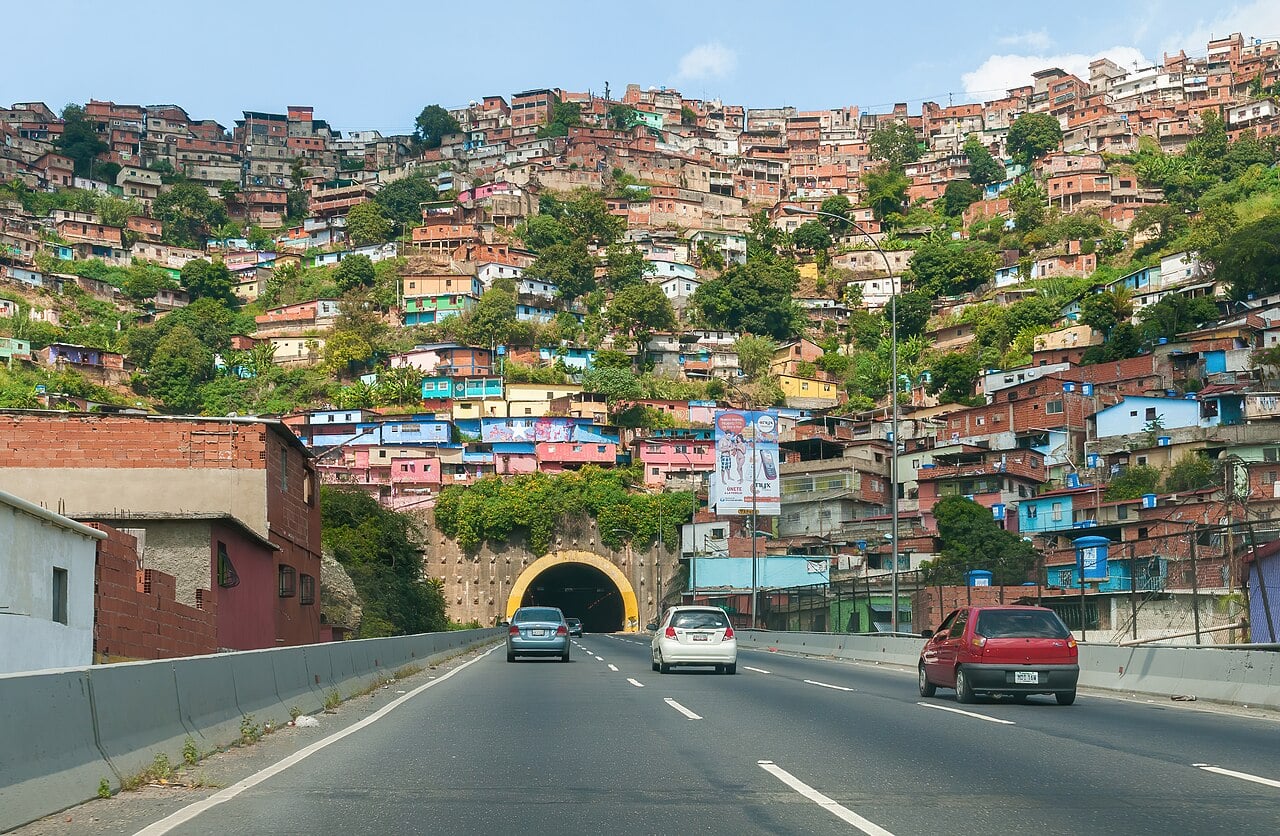
The government blames sabotage, foreign sanctions and, more recently, the El Niño weather phenomenon. The experts point to corruption, missing maintenance and fuel, higher demand, obsolete equipment and a shortage of trained staff.
Juvencio Molina, secretary of the national board of Aviem, the Venezuelan Association of Electrical and Mechanical Engineering, says the problem goes beyond electricity. He calls it “a crisis of energy”.
Molina adds that even if every thermal plant is repaired, “if PDVSA and the country’s fuel production system do not recover, there is no way the 7,400 megawatts will be met”. PDVSA is the state oil company.
On 8 October 2026 Acting President Delcy Rodríguez, who leads the interim government, repeated the aim of adding about 7,400 megawatts in the medium term. The experts say she gave no exact deadlines and no plan has been published.
Víctor Poleo, a former senior energy ministry official, called such an announcement another “media adventure” among government promises. In September 2026 Energy Minister Rolando Alcalá had offered 1,300 megawatts before the end of the year.
Work began in Zulia state, the worst hit, but Elías Matta, an engineer and former lawmaker, says it is unclear where the capacity was added. Zulia “continues to be affected”, he said on 28 November 2026.
On 10 November 2026 the National Assembly, controlled by the ruling movement, approved in second discussion a partial reform of the Organic Law of the Electric System and Service, opening the grid to private firms. The text lets private firms take part in generating, importing and selling power.
The Ministry of Electric Energy grants concessions for generation above 50 megawatts or involving public property, and for trunk transmission, distribution or exclusive service areas. At the end of a concession the operator hands its assets to the state utility Corpoelec.
Disputes may go to Venezuelan courts or to mediation and arbitration, and fines can reach 2% of gross revenue. Oil companies must guarantee their own power supply.
Jorge Rodríguez, president of the National Assembly, a government ally and the acting president’s brother, said on 10 November 2026 that the reform is not privatisation. Private firms would serve mainly big consumers such as industry and malls, with tariffs indexed to “the currency of highest value” and a subsidy for those who “cannot pay the full price”.
Matta calls the law a “step forward” because it recognises the “failure” of the state monopoly. Yet “centralist mentality still prevails”, he says, because a private company cannot be created autonomously and depends on the ministry.
Poleo says the law has no bidding processes and gives the state “majority ownership” in mixed companies, adding: “It is not viable; nobody will come here to have the State as a 50% or more partner.” He spoke on 28 November 2026.
Since June 2026 Venezuela has struck agreements with Impsa, an energy firm of Argentine origin, and with GE Vernova, a US turbine maker. GE Vernova signed a memorandum on 15 June 2026, and Delcy Rodríguez said it would recover 1,000 megawatts in the first 24 months and more than 5,000 within four years.
Further agreements with PDVSA and the state utility Corpoelec followed in early September 2026. In early September 2026 US officials said the aim is to stabilise the grid in six to 12 months.
The experts welcome the US firm because of its history in Venezuela and because part of the fleet uses its technology, but they demand open tenders. Aviem says Venezuelan engineers are being left out and wants local labour included.
The contract values are unknown, and there is no official date for a bidding process. It is also unconfirmed whether the law has been promulgated, the step that follows the president’s signature.
The 1,300 megawatts promised before the end of 2026 is the government’s nearest test. No date for a plan has been given.
Frequently Asked Questions
Why is the 7,400 megawatt plan doubted?
Experts say it has no published plan or deadlines and depends on fuel from a weakened state oil sector. They also want open tenders for the contracts.
Does the new law privatise electricity?
The Assembly president says no, only that private firms may serve mainly large consumers. Critics say the state keeps control through ministry approval and majority stakes.
Why should US readers care?
Washington backs Venezuela’s oil reinvestment, which needs steady power. A US company, GE Vernova, has signed an agreement to help repair the grid.
Sources
- Venezuela’s National Assembly, Ministry of Electric Energy and Corpoelec
- PDVSA
- Aviem
- statements by Delcy Rodríguez and Jorge Rodríguez
More: Venezuela news from The Rio Times.
This article was produced by The Rio Times’ automated AI newsroom. Editorial responsibility: Matthias Camenzind, Publisher and Editor-in-Chief. The Rio Times also runs Ask Rio Times, which answers from 100,000+ of our own articles, the daily Latin America Power Map, and prediction-market odds on elections and markets.. How we use AI · Report an error
Venezuela and the United States
- What Is Going On Between Venezuela and the United States?
- What Is Going On Between Venezuela and the United States?
- Venezuela Geopolitics Explained, US Now Runs Its Oil
- Venezuela Politics 2026, Who Holds Power After Maduro