Jailed Venezuelan Doctor’s Father Dies
His relatives say he wants to bury his father with dignity, and not in handcuffs and a prison uniform.

Politics: Venezuela
César Omaña, a Venezuelan physician jailed since 30 July 2024, lost his father this week, and his lawyer says a judge refused to let him leave prison for house arrest to say goodbye. The death of César Antonio Omaña Tirado, 85, became public on Friday 27 November 2026.
Omaña is among the political prisoners counted by Foro Penal, a Venezuelan rights group, which put the total at 321 in November. His case shows how the courts treat humanitarian requests from jailed prisoners and their families.
Key Facts
- Who. César Omaña, a jailed physician, and his late father, a man of 85 with terminal cancer.
- What. Omaña’s lawyer says a judge rejected his house-arrest request before his father died.
- Where and when. Venezuela; the death became public on Friday 27 November 2026.
- As of. 28 November 2026, 12:30 GMT.
- Power Index. Venezuela ranks 12th of 14 in The Rio Times Latin America Power Index, with 29.4 points (November 2026 edition).
His relatives say he wants to bury his father with dignity, and not in handcuffs and a prison uniform.
Omaña was detained on 30 July 2024, two days after Venezuela’s presidential election of 28 July 2024, relatives and defenders say. He is held at El Rodeo I, a prison in the town of Guatire near Caracas, and one account also reports a later move to La Planta, a Caracas jail.
His father had terminal cancer with metastasis, meaning it had spread, relatives say. The death became public on Friday, and reports differ on the day he died.
Omaña asked the authorities to let him be with his father in his final days and was not allowed, relatives and defenders say. The request was a humanitarian one, and no authority has been reported to have granted it.
His lawyer, Nakary Bazán, says she asked a court to apply the “principle of extension”, under which a benefit given to one co-accused also applies to the others. She says a co-accused in the same case was released under a precautionary measure, a conditional release before trial, and is now abroad.
Bazán says Judge Giovanni Gregorio Rodríguez Cantero declared the request “sin lugar”, meaning without merit. Her account of the ruling has not been independently confirmed.
“Él quiere darle una cristiana sepultura a su papá como él lo merece,” Bazán said of her client, in Spanish. In translation: “He wants to give his father a Christian burial as he deserves.”
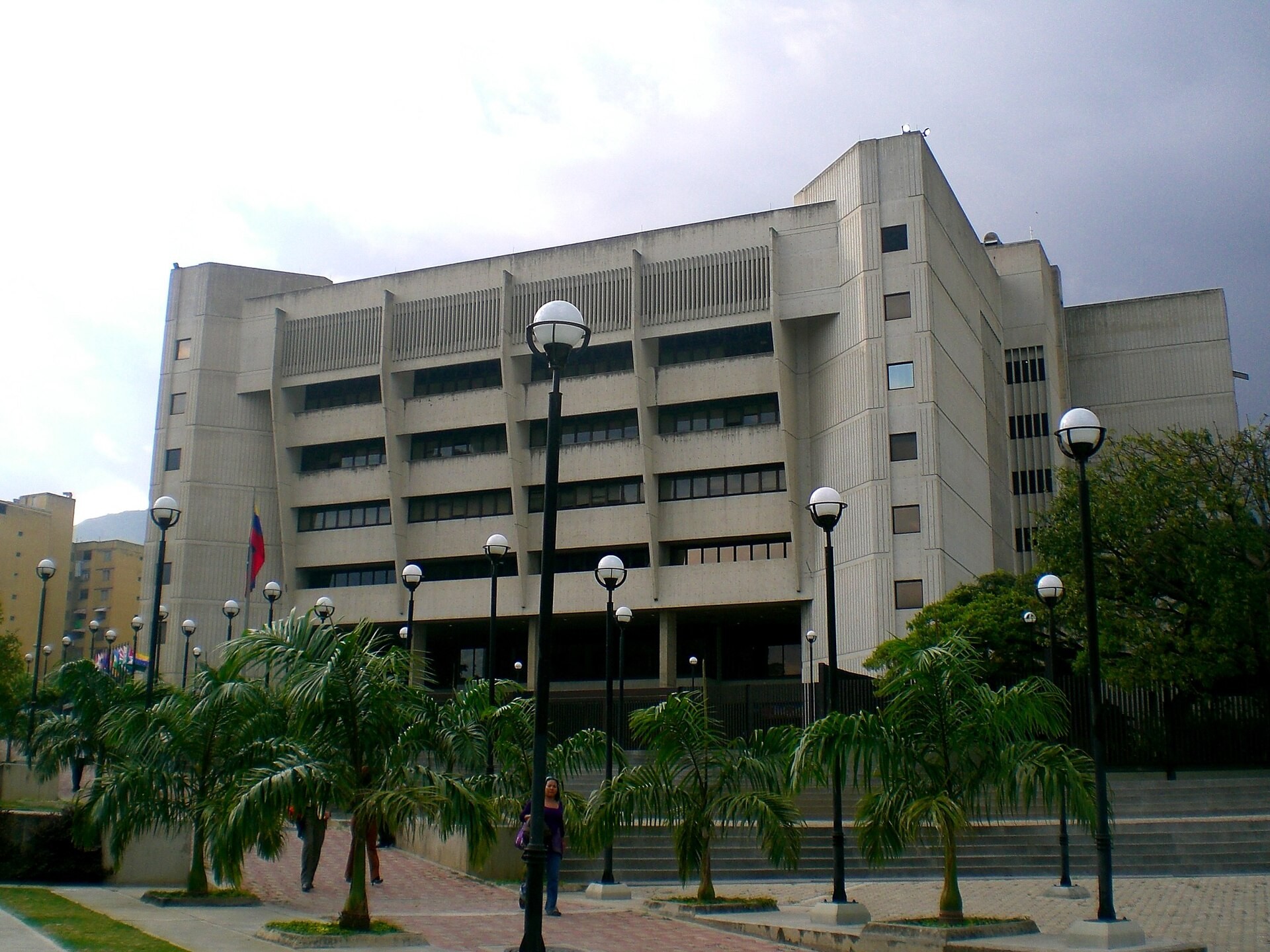
She said Omaña does not want to attend a wake “vestido de reo, con el uniforme azul, esposado” (dressed as an inmate, in the blue uniform, handcuffed). The family has decided not to bury the body until the authorities grant house arrest, according to the defence.
Relatives and defenders of political prisoners protested that day outside the Ministerio Público, the Attorney General’s office, at Parque Carabobo, a Caracas square. Andreína Baduel, an activist and a relative of political prisoners, spoke about the treatment of detainees on the same day.
“No hay palabras que describan el nivel de saña y crueldad con el que siguen siendo tratados los presos políticos y sus familias,” Baduel said. In translation: “There are no words to describe the level of ferocity and cruelty with which political prisoners and their families continue to be treated.”
She also pointed at the state as a whole: “Todas las instituciones del Estado son cómplices de lo que ocurra” (all state institutions are complicit in whatever happens). No statement from the Ministerio Público had been reported by Saturday 28 November.
Foro Penal said on Wednesday 11 November 2026 that it counted 321 political prisoners on data to 9 November. Of them, 306 are men and 15 are women, and the group counts 181 civilians and 140 military personnel.
The count includes 31 foreign or dual nationals, so the cases reach beyond Venezuelan citizens. That puts Omaña’s time in custody at about 28 months.
Three points remain open: whether the judge’s ruling can be appealed, when a funeral could take place, and whether Omaña is on any official release list. Until a court or the Ministerio Público speaks, the reasons for the refusal rest on the defence’s account.
Frequently Asked Questions
Who is César Omaña?
A physician held since 30 July 2024, whom relatives and defenders describe as a political prisoner. Official charges against him have not been confirmed here.
Has Venezuela’s government responded?
No statement from the Ministerio Público had been reported by Saturday 28 November. The defence’s account of the court ruling is unconfirmed.
Will Omaña attend his father’s funeral?
That is not known. The family says it will not bury the body until house arrest is granted.
Sources
Sources
- statements by lawyer Nakary Bazán and relatives of César Omaña, 27 November 2026
- statements by Andreína Baduel, 27 November 2026
- Foro Penal count of political prisoners, published 11 November 2026 (foropenal.com)
Connected Coverage
Venezuela news · Venezuela Political Prisoners Dip to 321 · Venezuela Frees 24 Political Prisoners as Jail Deaths Top 60 · Latin America Power Map
This article was produced by The Rio Times’ automated AI newsroom. Editorial responsibility: Matthias Camenzind, Publisher and Editor-in-Chief. The Rio Times also runs Ask Rio Times, which answers from 100,000+ of our own articles, the daily Latin America Power Map, and prediction-market odds on elections and markets.. How we use AI · Report an error
Venezuela and the United States
- What Is Going On Between Venezuela and the United States?
- What Is Going On Between Venezuela and the United States?
- Venezuela Geopolitics Explained, US Now Runs Its Oil
- Venezuela Politics 2026, Who Holds Power After Maduro