Sea Law Court Rules Today on Falklands Oil
A court in Hamburg decides today whether a British-backed oil project off the islands must wait while a longer case over the seabed is built.

Politics: Argentina
The International Tribunal for the Law of the Sea, a United Nations treaty court in Hamburg, will announce today whether Britain must hold back the Sea Lion oil project north of the Falkland Islands. It will deliver its order on Saturday 28 November 2026 at noon Hamburg time, which is 11:00 GMT and 6:00 a.m. US Eastern.
At 09:00 GMT the order had not been read, so the result is unknown. The tribunal’s President, Judge Maurice Kamga, leads the bench that will rule on an emergency request from Argentina, which calls the islands the Malvinas.
Key Facts
- Who. Argentina against the United Kingdom, before the sea-law tribunal in Hamburg.
- What. An emergency order that could stop Sea Lion oil drilling or production; no ruling on ownership.
- When. Saturday 28 November 2026, noon Hamburg time (6:00 a.m. US Eastern).
- Power Index. Argentina ranks 4th of 14 in The Rio Times Latin America Power Index, with 60.2 points (November 2026 edition).
- As of. 28 November 2026, 09:00 GMT.
A court in Hamburg decides today whether a British-backed oil project off the islands must wait while a longer case over the seabed is built.
Argentina opened a full arbitration against Britain on Monday 28 September 2026 under the UN Convention on the Law of the Sea. Because that arbitration panel does not yet exist, it asked the Hamburg tribunal on Tuesday 13 October for temporary measures in the meantime.
Argentina’s agent, Mario Oyarzábal, the legal adviser of its foreign ministry, told the judges on 10 November: “what is at stake cannot be restored. Hydrocarbons are non-renewable resources, and their extraction is final.”
He added that the case “is not about sovereignty over the Islands”, only about preserving the situation until the dispute is settled. Argentina’s counsel Nicolaas Schrijver said the operators’ own documents describe 307 million barrels to be produced over 30 years in this phase.
Sea Lion is run by Navitas Petroleum, an Israeli oil company with 65%, alongside Britain’s Rockhopper Exploration with 35%, according to the companies’ statements. Argentina’s written request says the Falkland Islands government approved the final investment decision for Sea Lion on 10 December 2025, with 23 wells over a 35-year production phase.
It adds that the islands’ government extended all offshore production licences by five further years on 21 September 2026.
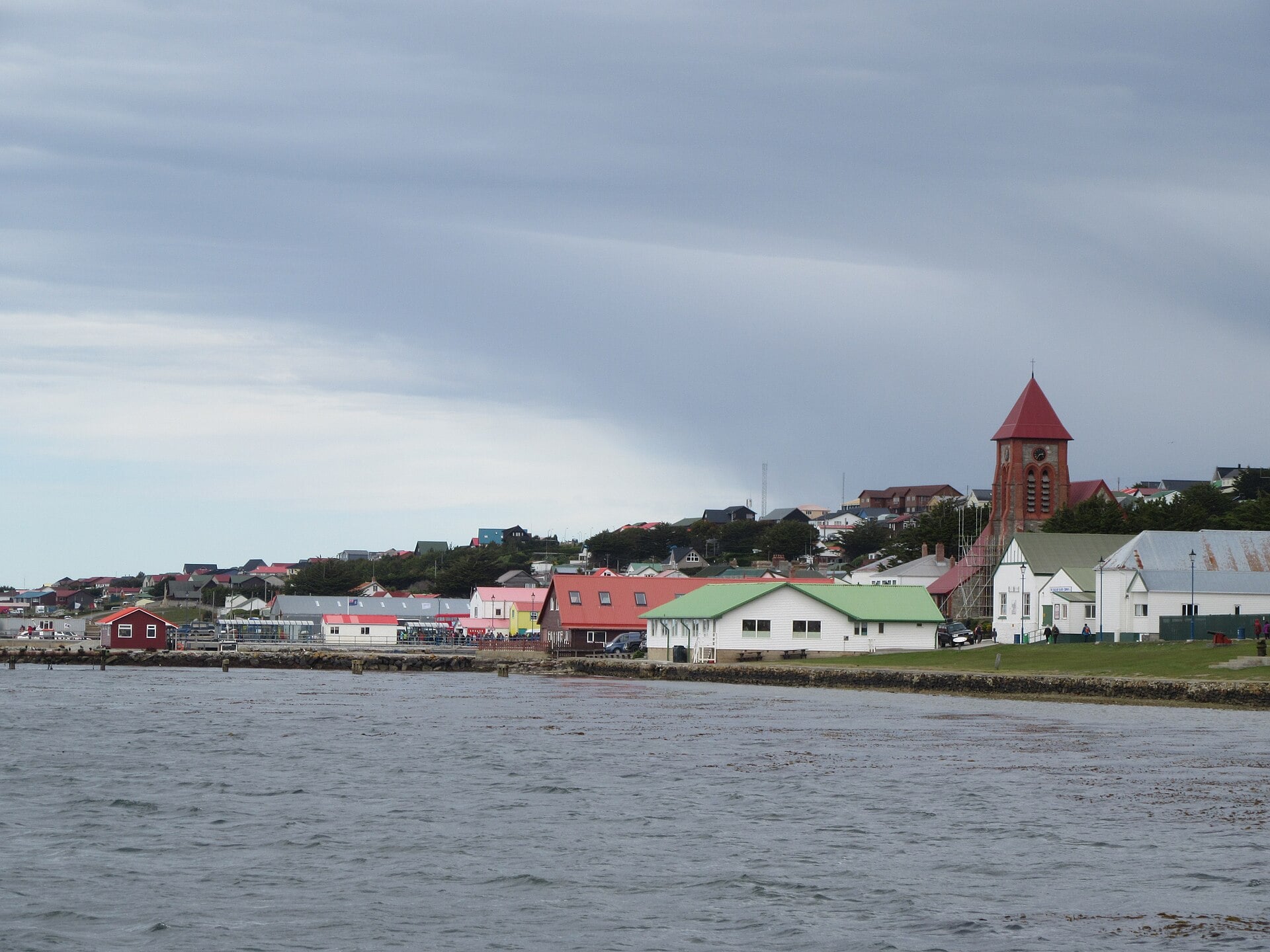
Britain answered that nothing is about to happen. Its agent, Sally Langrish, legal adviser at the Foreign, Commonwealth and Development Office in London, confirmed that drilling will not start before 21 March 2027 and extraction not before March 2028.
UK Attorney General Ellie Reeves told the tribunal that the measures would “have devastating consequences for the Falkland Islands and its people”. Sir Michael Wood, a senior British counsel, argued that Argentina’s claim “concerns territorial sovereignty, over which there is no jurisdiction”.
That is the strongest counter-view to Argentina, and it decides the first test the judges must apply. They may order interim measures only if the future arbitration panel would, on a first look, have jurisdiction, and only if harm could occur before it can act.
Three outcomes are possible today. The tribunal could refuse, which would let the partners keep to the 2027 and 2028 dates and would be a legal and political win for London.
It could order a pause on drilling or production, which would bind both states but could not be enforced by any police force. Or it could prescribe narrower steps than Argentina asked for, since the judges are free to choose their own wording.
For US readers, both governments are partners of Washington, and the order will show how far a sea-law court will go when a seabed is claimed by two states. Investors in the project already face the question, because Argentina’s agent, citing Navitas’s 2025 annual report, said the company disclosed a US$1 billion political risk insurance policy issued for its lenders.
A refusal would not end the case, since the arbitration panel still has to rule on the merits. An order for Argentina would not decide ownership of the islands either, and neither government has said what it would do after the ruling.
The tribunal has not said whether it will publish the full text of the order at once. The next fixed date is the reading itself at noon Hamburg time today, and this story will be updated once the order is public.
Frequently Asked Questions
Does the order decide who owns the Falkland Islands?
No. It covers only temporary measures on oil activity, and ownership stays outside this step.
Can the tribunal enforce its order?
It has no police force and relies on states to comply. Its orders are legally binding on both parties.
Does an order stop the project for good?
No. Interim measures last only until the arbitration panel is ready to act, which then decides the dispute.
Sources
International Tribunal for the Law of the Sea, Case No. 37: Press Release 405 and verbatim records of the public sittings of 10 and 11 November 2026 · Argentine and UK written submissions to the tribunal · Operator and partner statements on Sea Lion
Connected Coverage
Argentina news · Falklands Oil Case Ruling Set for 28 Nov · Argentina Asks Sea Tribunal to Halt Falklands Oil Work
This article was produced by The Rio Times’ automated AI newsroom. Editorial responsibility: Matthias Camenzind, Publisher and Editor-in-Chief. The Rio Times also runs Ask Rio Times, which answers from 100,000+ of our own articles, the daily Latin America Power Map, and prediction-market odds on elections and markets.. How we use AI · Report an error