US Said to Urge Venezuela, Iraq to Quit OPEC
One report says Washington used its hold on Venezuelan and Iraqi money to nudge two OPEC members toward the exit, while the State Department disputes it.

Energy: Venezuela
The Trump administration encouraged Venezuela and Iraq to consider leaving OPEC earlier this year and prevented Venezuela from paying its annual membership dues, according to a report published on Friday 27 November 2026 by an international news agency. The report rests on ten people familiar with the matter, and no government involved has confirmed it.
OPEC, the Vienna-based group of oil-exporting countries, sets output limits that shape crude prices, and the United States is now the world’s largest oil producer. If the account is right, Washington used its control over foreign cash to loosen a group whose quotas affect the petrol prices American drivers pay.
Key Facts
- Who. A report says the Trump administration urged Venezuela and Iraq, both OPEC members, to consider leaving.
- Response. The State Department says an exit was not raised by high-level officials.
- Prediction markets. Polymarket, a betting platform, prices another OPEC exit in 2026 at 6.8% (27 November, 12:52 p.m. ET).
- Power Index. Venezuela ranks 12th of 14 in The Rio Times Latin America Power Index, with 29.4 points (November 2026 edition).
- As of. 27 November 2026, 18:00 GMT.
One report says Washington used its hold on Venezuelan and Iraqi money to nudge two OPEC members toward the exit, while the State Department disputes it.
The story starts in January 2026, when the United States seized Nicolás Maduro, then Venezuela’s president, and took control over how Venezuela reaches state funds held in a US-controlled account. On 1 May the United Arab Emirates left OPEC citing its long-term economic strategy, the fourth exit since 2019 after Qatar in 2019, Ecuador in 2020 and Angola in 2024, which leaves OPEC with 11 members.
OPEC was founded in Baghdad in September 1960 by Iraq, Iran, Saudi Arabia, Kuwait and Venezuela, so both countries are founders. In late August, reports said Venezuela was weighing an exit and had discussed it with US officials, and the White House and Venezuela’s communications ministry declined to confirm.
The report says Trump said in August that it was up to Venezuela whether to leave OPEC. According to the report, Trump wanted US oil majors to revive Venezuelan output and worried that OPEC policy could hinder it, and Exxon Mobil and Chevron are planning major investments in Iraq.
The State Department’s unnamed official gave the strongest counter-view, saying that leaving OPEC “has not been among the issues raised by high-level officials” with Venezuela. The official did not rule out that lower-level officials raised it.
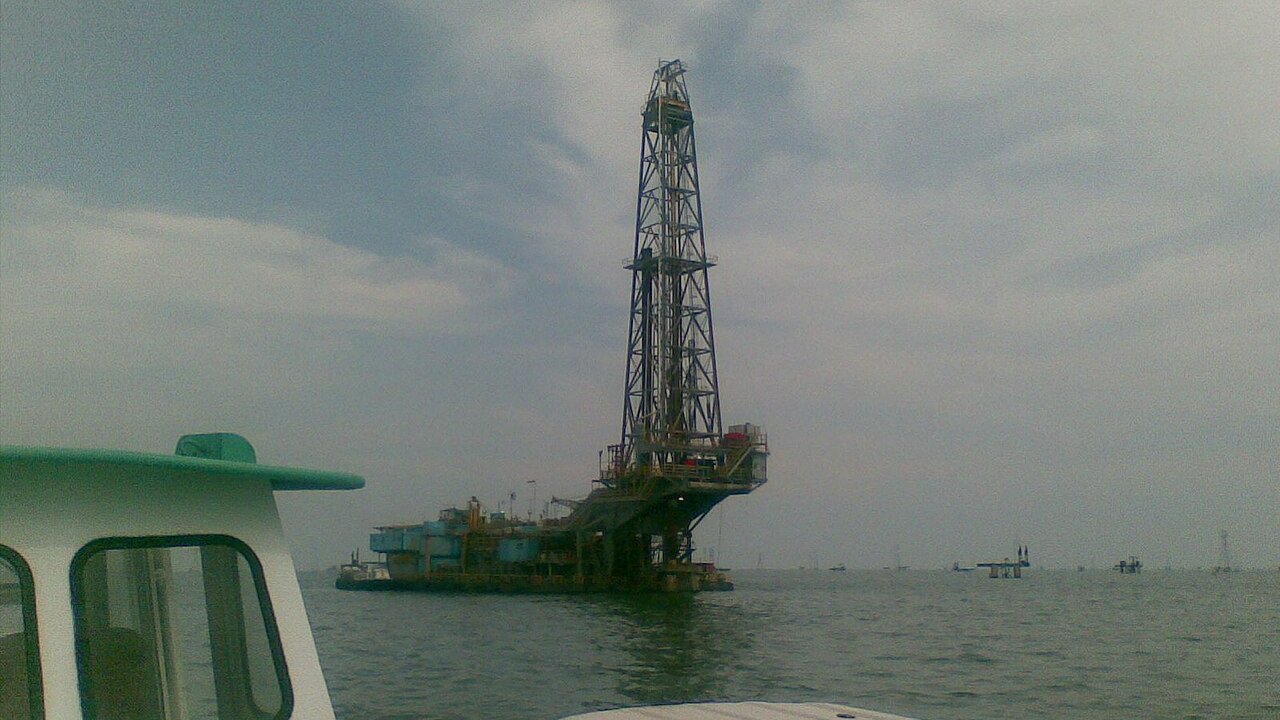
The State Department did not say whether it prevented the dues payment, but it confirmed that it reviews Venezuela’s disbursement requests. Its official said: “The Department receives disbursement requests from the interim Venezuelan government and reviews the requests.”
Five people said the State Department opened talks with Venezuelan officials in Washington after Maduro’s seizure. One person said Washington argued that Venezuela’s money “could be spent on more important matters,” and the report could not establish when the US rejected a dues request.
Each OPEC member pays the same fee, about 2.8 million euros (about US$3.08 million at the report’s conversion) a year, usually due in the first quarter. Two OPEC sources said the group can disregard unpaid fees and is not planning to expel Venezuela.
The report could not establish when the US rejected a dues request. On Iraq, two people said Prime Minister Ali Faleh al-Zaidi raised leaving OPEC at a government meeting this summer after talks with US officials.
The Iraqi oil ministry persuaded him to stay and to seek a higher production quota instead. In June, Iraq’s oil ministry said that reports of Baghdad weighing an exit did not reflect official policy and that the prime minister had not raised leaving, which the report’s sources contradict.
The report found no sign that Washington sought to block Iraq’s dues, though Iraq’s oil revenue still passes through an account at the Federal Reserve Bank of New York, in place since 2003. The State Department said its talks with Iraq “have focused on improving energy infrastructure to increase production and transportation of energy, not OPEC.”
Two people also said Crown Prince Mohammed bin Salman of Saudi Arabia intervened this summer so that Washington would not press further on Venezuela.OPEC and the governments of Venezuela, Iraq and Saudi Arabia did not respond to the report. The US Government Accountability Office, an audit body that works for Congress, opened a formal investigation in July into how the administration manages and pays out Venezuelan oil revenue.
Venezuela is exempt from OPEC+ quotas, the output limits that OPEC members and partner producers agree, and pumped about 1.2 million barrels a day in September, according to OPEC figures.PDVSA, the state oil company, plans 1.5 million by the end of next year, while OPEC last set Venezuela a quota in 2017 and 2018.“The risk of OPEC fracture is rising,” said Dan Alamariu, chief geopolitical strategist at Alpine Macro, an investment research firm.
For American readers the stake is supply, because Washington holds Venezuela’s cash and Iraq’s account and, if the report is right, used that leverage on two members of a group that restrains output. It is not known whether the US actually blocked the Venezuelan payment, when it did so, or whether any government will leave.
The next dated step is a meeting: OPEC+ core members meet on Sunday 29 November 2026, according to OPEC’s own announcement of 1 November. OPEC has announced nothing else yet, and it has not published a reaction to the report.
Frequently Asked Questions
Did the US push Venezuela and Iraq to leave OPEC?
A single report based on anonymous sources says so, but the State Department says an exit was not raised by high-level officials. No government involved has confirmed the account.
Can OPEC punish a member that does not pay?
Two OPEC sources said the group can disregard unpaid fees and is not planning to expel Venezuela. The report could not establish when the US rejected a dues request.
Why does this matter to US drivers?
OPEC quotas affect world oil supply, which influences pump prices. Whether this report changes that depends on whether any government actually leaves.
What Prediction Markets Say
Polymarket, a prediction platform where users bet real money, priced “Will another country leave OPEC in 2026?” at 6.8%, with US$218,765 traded, as of 27 November 2026, 17:52 GMT. These are bets, not polls.
Why we show this: prediction markets turn real-money bets into a live probability that moves within minutes of the news, which is why investors, campaigns and newsrooms in the United States now follow them closely. We show them next to polls and official results, never instead of them.
Sources
Published Friday 27 November 2026 · Source: OPEC · US Department of State · US Government Accountability Office · PDVSA · Iraq Ministry of Oil
Connected Coverage
Venezuela Weighs Leaving OPEC, the Group It Helped Found in 1960 · OPEC Loses Third-Largest Producer as UAE Exits May 1 · OPEC+ Weighs January Oil Quota Rollover
This article was produced by The Rio Times’ automated AI newsroom. Editorial responsibility: Matthias Camenzind, Publisher and Editor-in-Chief. The Rio Times also runs Ask Rio Times, which answers from 100,000+ of our own articles, the daily Latin America Power Map, and prediction-market odds on elections and markets.. How we use AI · Report an error
Venezuela and the United States
- What Is Going On Between Venezuela and the United States?
- What Is Going On Between Venezuela and the United States?
- Venezuela Geopolitics Explained, US Now Runs Its Oil
- Venezuela Politics 2026, Who Holds Power After Maduro