US Confirms It Has Space Control Weapons in Orbit
UNITED STATES · DEFENCE
Key Facts
- —Who said it Troy Meink, the United States Secretary of the Air Force, in a keynote on 14 September 2026.
- —Where The Air and Space Forces Association’s Air, Space and Cyber Conference at National Harbor, Maryland.
- —What he said That the United States now has on-orbit space control weapons capable of defending the joint force against hostile adversary actions.
- —What that phrase means Space control covers systems that protect American satellites and interfere with an adversary’s. It is broader than orbital strike and narrower than the words space weapons.
- —What he would not say Anything about type, number, cost, platform or dates. He said he would not go into specifics.
- —Why it matters Satellites carry navigation, banking timestamps, weather data and most long-distance communications. Everything below depends on them.
The United States said out loud this week that it has weapons in orbit. It would not say what they are.
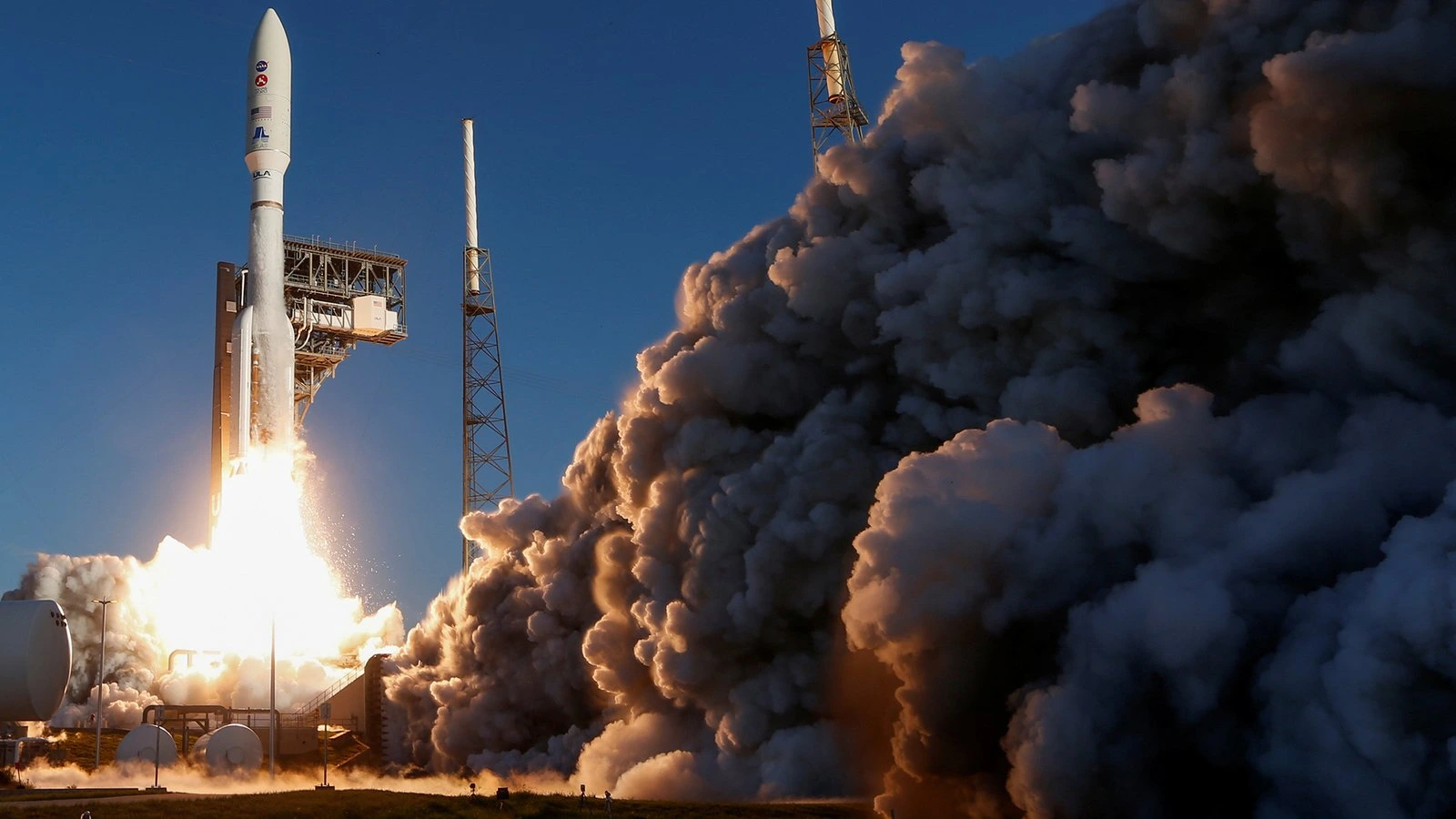
Troy Meink, the United States Secretary of the Air Force, spoke on 14 September. The United States, he said, now has on-orbit space control weapons. It is the most direct American acknowledgement to date of weapons already in orbit.
The Sentence
Meink was giving a keynote at the Air and Space Forces Association conference at National Harbor, Maryland.
He said the United States now has on-orbit space control weapons capable of defending the joint force against hostile adversary actions.
Asked afterwards, he said the phrase had been very well thought out. Whatever he had said before, he added, was what he would say again.
He declined to describe the type of weapon, saying that discussing details would not benefit deterrence.
What Space Control Weapons Are
Space control is the American military term for keeping the use of orbit while denying it to an opponent.
It covers jamming, dazzling, cyber interference and the ability to manoeuvre alongside another satellite, as well as anything kinetic.
The phrase is narrower than space weapons, which usually implies striking targets on Earth from orbit.
The gap between those two terms is where most of the uncertainty about this disclosure sits.
Not the First Signal, but the Clearest
American officials have been edging toward this for two years.
General Chance Saltzman, the chief of space operations, has described systems that deny, disrupt and degrade satellites. US Space Command named counterspace fires a top priority in August 2026.
A December 2025 executive order addressed the Space Force’s mission to attack in space. The Golden Dome missile defence debate has involved space-based interceptors.
What was ambiguous was whether anything had been deployed. That is what changed.
Why Washington Would Say It
Deterrence works only if the other side believes the capability exists.
A capability nobody knows about deters nobody, which is the argument for disclosure. A capability described in detail can be countered, which is the argument against.
Meink’s answer was to confirm existence and refuse detail, which is the standard resolution of that trade-off.
The framing throughout was defensive: protecting American forces against what China and Russia have been building.
What China and Russia Have
Both countries have tested anti-satellite weapons. Russia destroyed one of its own satellites with a missile in 2021, and China did the same in 2007.
Both incidents created debris fields that remain in orbit and threaten everything passing through them.
More recent concern has focused on satellites that manoeuvre close to others, and on ground-based jamming and lasers.
The United States has accused Russia of developing a nuclear anti-satellite capability, which Moscow denies.
What Depends on Satellites
Global navigation systems underpin shipping, aviation, agriculture and the timestamps that banking and power grids run on.
Weather forecasting for most of the world depends on satellite observation, and in regions without dense ground networks there is no substitute.
Satellite internet now provides connectivity across parts of Africa and Latin America where terrestrial infrastructure does not reach.
A conflict in orbit would not be confined to the countries fighting it. Debris does not distinguish between owners.
What to Watch
Any further detail from the Pentagon, which has so far given none.
Responses from Beijing and Moscow, which are likely to be rhetorical rather than technical.
The United Nations process on norms of behaviour in space, which has made little progress.
And the next American budget request, where a line item is harder to hide than a sentence in a speech.
More: World news, every day from The Rio Times.
Frequently Asked Questions
What did the United States confirm?
Secretary of the Air Force Troy Meink said on 14 September 2026 that the United States now has on-orbit space control weapons.
Where did he say it?
At the Air and Space Forces Association’s Air, Space and Cyber Conference in National Harbor, Maryland.
What are space control weapons?
Systems that protect the use of orbit and deny it to an opponent. The term is broader than orbital strike and narrower than space weapons.
Did he give any details?
No. He declined to describe the type of weapon, saying detail would not benefit deterrence.
Is this the first such statement?
It is the most direct American acknowledgement to date. Officials had previously described counterspace capability without confirming deployment.
Why does it matter?
Satellites carry navigation, timing, weather and communications for most of the world. Debris from any conflict in orbit affects every user.
Sources: DefenseScoop, The War Zone, Military Times, Air and Space Forces Magazine, US Space Command.
This article was produced by The Rio Times’ automated newsroom system. How we use AI · Report an error