US-Mexico Drone Agreement: What Sedena Actually Signed
Mexico · Security
Key Facts
- —What happened Mexico’s Defense Ministry and US Army signed a non-binding intent to buy drones (US$…) on 11 August 2026.
- —How big a jump Purchases through the Pentagon marketplace hit US$21 million by early August 2026, up from US$13 million in April.
- —The real story Mexico is pre-cleared to buy from an online catalogue run by a Pentagon unit, not directly from the US Army.
- —The catch No drones have been bought, no models, quantities, prices, or delivery dates are set, and the document binds nobody.
- —Who it touches US drone suppliers gain clearer access to a major buyer, while cartel drone activity rises in three states.
- —What comes next Mexico might buy from the marketplace, with 40 allied countries expected signed up by the end of summer 2026.
Mexico City, 11 August 2026 – the Mexican Defense Ministry (Sedena) signed a “Statement of Intent,” which is just a handshake-style promise, not a treaty or a sales contract. So far, no drones have been bought, and this paper doesn’t commit anyone to buying any.
Mexico’s Army and the US Army signed a non-binding “declaration of intent” on 11 August 2026 in Mexico City, a friendly handshake that could let Mexico buy military drones and counter-drone gear from a Pentagon-run online marketplace. It’s not a treaty, not a formal Foreign Military Sales (FMS) case—that’s the usual US government process for selling weapons—and not a signed purchase, so no specific models, quantities, or prices have been set yet, and nothing has been bought.
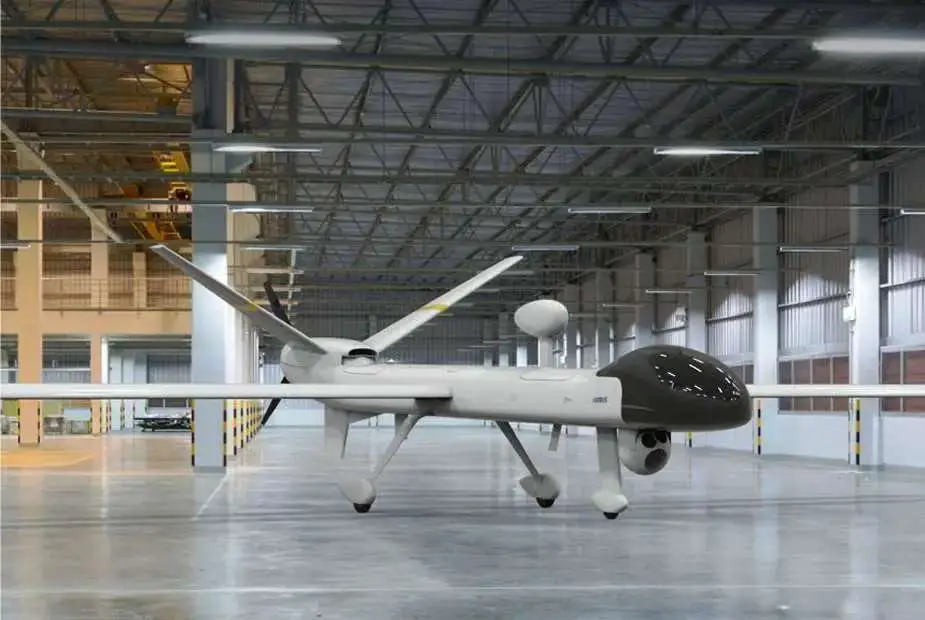
What was actually signed
The document — a “Declaración de Intención,” or Statement of Intent — was signed by Gen. de División Héctor Ávila Alcocer, commander of the Mexican Army, and US Secretary of the Army Daniel Patrick Driscoll, who was in Mexico City for the meeting. That is according to a Sedena communiqué reported by the EFE news agency on 11 August.
A declaration of intent is a signed statement of willingness that binds nobody. Neither side has published the text.
This is not a Foreign Military Sales case — the formal government-to-government channel that requires notice to the US Congress — and no commercial contract has been signed. No named US Army buying programme, such as the Blue UAS list or a General Services Administration schedule, is cited in any of the reporting.
The US Army and a Pentagon task force run online catalogues where vetted American firms offer drones and counter-drone (C-UAS) systems, which are equipment that spots a drone and brings it down. Describing this as buying “directly from the US Army” is inaccurate, because the Army runs the shopfront rather than selling from its own stocks.
US Ambassador to Mexico Ronald Johnson wrote on X that the declaration would strengthen “strategic and operational capabilities through defense innovation and new technologies,” as quoted by El Heraldo de México. In short, a door has been opened — a deal has not been signed.
The Pentagon marketplace and who else is on it
The marketplace is run by a Pentagon unit called JIATF-401, and it only opened to allied countries during 2026, according to DefenseScoop. In early August, the software firm Kaizen won a US$15 million contract to build out the counter-drone catalogue, the outlet reported.
Purchases through the platform hit US$13 million by April 2026 and US$21 million by early August, DefenseScoop said. Driscoll told MeriTalk on 10 August that 20 allied countries had signed up, 20 more were in the pipeline, and the goal was 40 by the end of the summer—with more than 1,000 American-made products being added.
Disclosed foreign participants include Australia, Poland, South Korea, the UK, and Romania. Now, Mexico is pre-cleared to join that group.
What Mexico might buy and the threat it faces
The declaration covers both drones, or unmanned aircraft systems (UAS), and counter-drone gear built to find, follow, identify and stop unauthorized drones, according to Mexico’s Defense Ministry, Sedena. The ministry said flat out that no models, no quantities, no cost and no delivery schedule have been set, and that there is no promise to buy anything.
The backdrop is a sharp rise in drone use by organized crime. El Economista reported on 13 August, citing army and National Guard records, that 234 drones were seized between 2019 and 6 June 2026 — 12 of them in 2024, 139 in 2025 and 46 in the first five months of 2026.
By state since 2018, Sinaloa accounted for 63 seizures, Michoacán 53 and Tamaulipas 36 — together roughly 65% of all cases — followed by Chihuahua and Veracruz with 12 each. The newspaper noted the figures are still subject to validation by Mexico’s Centro Federal de Inteligencia Criminal, the federal criminal intelligence center.
Those numbers count seizures, not attacks. There is no official Mexican tally of weaponized-drone attacks or casualties in the public record, and no official breakdown attributing them to the Jalisco New Generation Cartel (CJNG) or any other group, although Mexican and US officials have presented the technology as a tool against the cartels.
The declaration sits within the existing bilateral security relationship known as the Bicentennial Understanding, the framework that replaced the Mérida Initiative. What is new is the access route — an online catalogue that did not exist for partner countries before this year.
The sovereignty politics
The Mexican Defense Secretariat, known as Sedena, described the visit as happening with “unrestricted respect for sovereignty and territorial integrity,” alongside “shared responsibility, mutual trust and collaboration without subordination.” That wording matches President Claudia Sheinbaum’s usual stance, though she herself did not sign the document.
Speaking a week before the signing, Sheinbaum told reporters on 3 August that “sovereignty emanates from the people” and that “nobody comes from abroad to tell us how our country will work,” as reported by El País. She ruled out letting US troops enter Mexico, while making clear that cooperation would continue.
On 7 August, she said Mexico would work with US Southern Command—the US military body in charge of Latin America—only on the basis of “coordination without subordination” and the defense of Mexican territory, according to La Jornada. The next day, she dismissed the idea of a binational security treaty, calling the existing deal “sufficient” and saying it was “delivering results.”
Those comments were about US pressure, troops, and a possible treaty, not specifically about the drone agreement. As of 17 August, there was no public comment from Sheinbaum on this particular declaration, and no reaction from the Mexican Senate or opposition parties had been reported.
Why this matters for investors and expatriates
If you’re doing business in Mexico, the real signal here is about security along the border and in the manufacturing hubs tied to nearshoring—the practice of moving production closer to the U.S. market. Drone attacks on convoys and facilities are a genuine threat to logistics, insurance costs, and staff safety, so any new capability that could reduce them is worth watching.
The agreement also creates a commercial opening—American drone and counter-drone suppliers now have a clearer path to a major Mexican government buyer, and Mexican security-technology integrators may partner with them. The catch is that a non-binding document brings in no revenue on its own, and Sedena—Mexico’s defense department—hasn’t published any budget for it.
For expatriates, the practical takeaway is narrow—nothing here alters travel, residency, or policing rules. Both governments stress it involves no foreign troops on Mexican soil, so your daily life stays exactly as it was.
Background: our pix boletos and how payments actually work in brazil a guide for expats guide.
More: Mexico news in English, every day from The Rio Times.
Frequently Asked Questions
Is Mexico buying drones directly from the US Army?
No. The agreement is a non-binding declaration of intent that lets Mexico’s Army (Sedena) browse and shop on the US Army’s online marketplace, where pre-approved American companies sell their gear. Nothing has been bought yet, and no drone models, quantities, or prices have been decided.
What does a ’declaration of intent’ mean in plain terms?
It’s a signed statement of willingness that doesn’t legally bind anyone—not a treaty, not a contract, just a door opener. It allows for future drone deals between Mexico and the U.S., but there’s no promise to actually buy anything yet.
How many cartel drones has Mexico seized?
Between 2019 and 6 June 2026, Mexican army and National Guard records show 234 drones seized—139 of them in just 2025—according to El Economista, though these are confiscations, not actual attacks. No official Mexican count of weaponised drone strikes or injuries has been released, so the full picture of how these devices are being used remains unclear.
Has President Sheinbaum commented on this drone deal?
As of 17 August 2026 there was no public record of the president commenting on this specific declaration. Her sovereignty remarks in early August concerned US pressure, US troops and a possible security treaty, not this document.
Connected Coverage
Mexico Cuts Public-Security Troops 66% and Opens Uruapan Intelligence Center
Mexico Deploys 1,557 Personnel to Secure Michoacán Avocado Trade
Sources: Infobae/EFE, 11 Aug 2026; Infobae Mexico, 11 Aug 2026; El Universal, 16 Aug 2026; El Heraldo de Mexico, 16 Aug 2026; El Economista, 13 Aug 2026; MeriTalk, 10 Aug 2026; DefenseScoop, 4 Aug 2026; La Jornada, 7 Aug 2026; La Jornada, 8 Aug 2026; El Pais, 3 Aug 2026
This article was produced by The Rio Times’ automated newsroom system. How we use AI · Report an error
Read More from The Rio Times