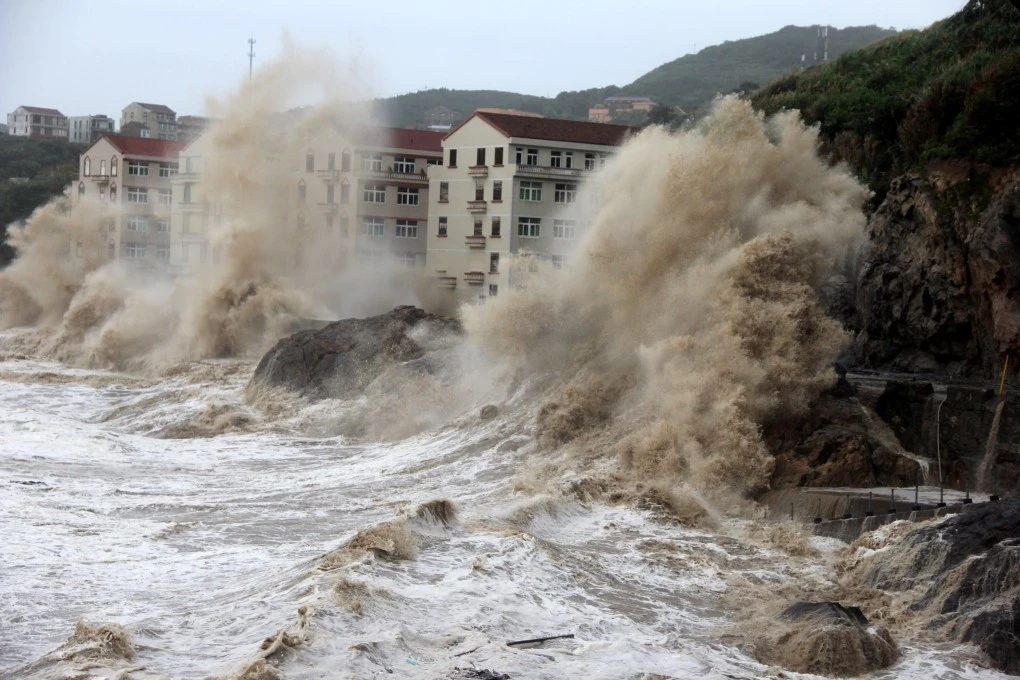
On Monday night, China’s east coast faced an unexpected natural event that left vast areas submerged. The Bohai Sea, bordering northeastern China, experienced a dramatic rise in water levels, impacting the provinces of Liaoning and Hebei, as well as the city of Tianjin.
This tidal surge was unique because it occurred without the usual storm conditions such as strong winds or waves. As darkness fell, the water levels continued to rise, catching many off guard.
The surge quickly moved inland, leading to emergency responses and setting new records for sea levels in the region. Water levels remained about 1 meter (39 inches) above normal for more than 20 hours.
Several tide gauge stations reported unprecedented figures during this period. Experts are actively investigating what caused this extraordinary tidal event. One theory suggests that atmospheric phenomena might have played a role.
Similar occurrences have been observed in other parts of the world, such as Japan, where atmospheric Lamb waves caused sea level changes following a volcanic eruption in Tonga.
Coastal Vulnerability and Climate Change
These waves can travel long distances and alter sea levels without local seismic activity or typical tsunami conditions.
This event highlights the vulnerability of coastal regions to unexpected natural phenomena. With global sea levels rising due to climate change, understanding and predicting such anomalies become crucial.
Research has shown that rising sea levels can influence tidal patterns, as seen along Shanghai’s coast. These findings emphasize the need for better forecasting models and emergency preparedness to reduce the impact of similar events in the future.
The recent tidal surge on China’s east coast underscores the complex relationship between natural phenomena and climate change.
While experts continue to explore the specific causes of this event, improving our understanding of atmospheric and oceanic interactions is vital for protecting coastal communities from future threats.
This article was produced by The Rio Times’ automated newsroom system. How we use AI · Report an error
Read More from The Rio Times