Uncertain Future: Confronting Europe’s Wave of Anti-Christian Hate
(Analysis) A recent report by the Observatory on Intolerance and Discrimination against Christians in Europe (OIDAC Europe) has revealed a sharp increase in anti-Christian hate crimes across the continent. The group’s 2024 findings detail 2,444 incidents in 35 countries during 2023, including 232 personal attacks on Christians.
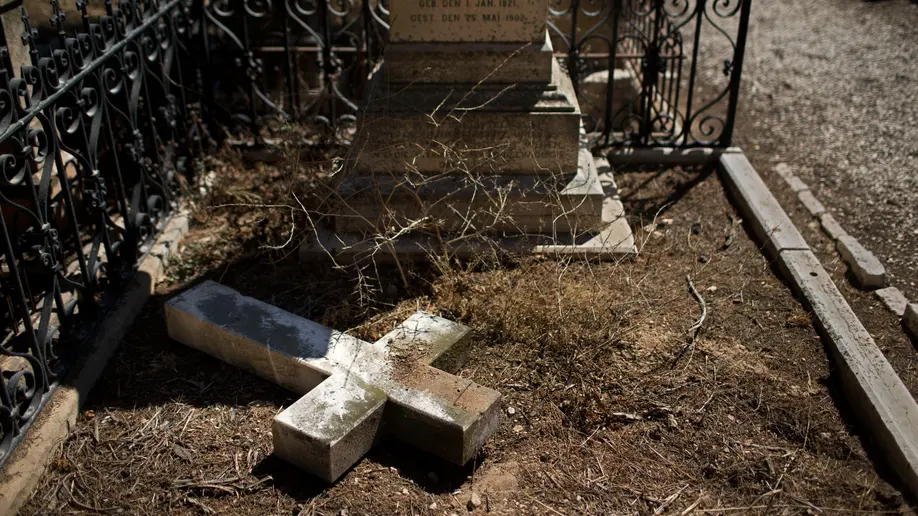
Many of these offenses are typically acts of vandalism, but cases of arson, threats, and even physical assaults underscore the severity of a problem that is drawing growing public concern. France registered around 1,000 such hate crimes last year, mostly involving attacks on churches and cemeteries—though some nuns have reported being subjected to physical abuse.
Meanwhile, England and Wales documented 702 anti-Christian hate crimes, a 15 percent jump from the previous cycle. Germany’s official data shows a 105 percent increase, from 135 cases in 2022 to 277 in 2023—excluding hundreds of vandalism incidents that authorities do not classify as politically motivated and therefore do not include in their hate crime count.
According to OIDAC’s own research, at least 2,000 incidents of property damage to churches or monasteries likely took place in Germany last year alone. It might be tempting to assume that these acts stem from a single ideological source. However, OIDAC’s analysis finds that perpetrators come from different backgrounds.
In Germany, 92 politically motivated attacks on churches were attributed to multiple groups: 31 from the “political right,” 16 from “religious ideologies” (often referencing Islamist radicalism), and 14 from “political left.”
Across Europe, radical Islamism has also been identified as a factor in some violent incidents, while anti-religious sentiment, far-left hostility, and even the far-right have all contributed to the rising numbers.
New Pressure in Public Spaces
Social discrimination and restrictions on religious freedom amplify the tension. Some Christians face backlash in their workplaces for expressing moral views tied to traditional teachings; others are ordered to hide or downplay their faith at school or university.
In various countries—among them Spain, England, and Scotland—local governments have introduced “buffer zone” laws that can penalize people for praying silently near abortion clinics. Critics worry about how easily such measures, if written or enforced broadly, can slip into effectively criminalizing peaceful religious expression.
Beyond a Single Narrative
The question of who is behind attacks on Christians is complex. Some are explicitly motivated by ideological or religious extremism—particularly by jihadist radicals. Others come from radical leftist movements viewing the Church as an oppressor.
Meanwhile, a portion of vandalism is carried out by the radical right; OIDAC’s data shows that perpetrators who identify with a politically right-wing cause do, at times, target churches. It is a mosaic of hostility, defying any simple “us vs. them” categorization.
Does the European Right Hold the Answer?
Against this backdrop, conservative or populist movements in Europe often campaign as defenders of Christian heritage and a nominally “Christian Europe.” Their rhetoric can promise more robust law enforcement, tighter immigration control (often with an eye toward curbing radical Islamism), and a public re-assertion of traditional values.
That has led some voters to assume that rising right-wing influence might offer a bulwark against anti-Christian sentiment. Yet the data and examples on the ground are more nuanced.
Germany’s latest hate crime statistics, for instance, include a striking proportion of incidents with confirmed right-wing motives, calling into question whether a blanket “right-wing” pivot would automatically reduce violence against Christians.
Where radical right activists see mainstream churches as too liberal on social issues—or even as complicit in immigration—they may also become agitators themselves. While right-wing leaders invoke cultural Christianity at campaign rallies, some show little hesitation in fueling a broader hostility toward church institutions or believers who do not align with their brand of politics.
Moreover, many of the legislative measures restricting public religious expressions—such as “buffer zone” laws—are not driven by an exclusively right-wing mindset. In fact, they are often embraced by secular or progressive politicians.
These developments illustrate that both the radical left and some secular-liberal factions can inadvertently foster a climate of suspicion against devout Christians. At the same time, episodes of Islamist extremism highlight a very different source of danger for Christian communities.
Threats to Pluralism and Free Discourse
Ultimately, anti-Christian hate in Europe operates on multiple fronts. Converts from Islam, Catholic clergy, street preachers, and young Christians in secular universities find themselves under varying types of pressure, whether from discriminatory laws, social ostracism, or physical violence.
OIDAC Europe warns that “intolerance and discrimination against Christians” can become normalized if robust reporting, data collection, and good-faith dialogue with religious communities are neglected.
Will Europe’s rising right-wing movements meaningfully address the problem? It remains an open question. While some right-wing parties position themselves as champions of Christian identity, others in their ranks contribute to vandalism or aggressive rhetoric against church bodies they view as political adversaries.
Meanwhile, governments of all stripes must grapple with the spread of hate crimes that know no single ideological boundary. For now, Christians in many corners of Europe find themselves walking a tightrope, wary of heightened surveillance in “buffer zones,” ideological showdowns on campus, and, in the most alarming cases, fear of physical attacks.
If the continent truly values pluralism and freedom of conscience, policymakers across the spectrum may need to set aside simplistic narratives of blame and instead pursue measures that protect churches, believers, and public debate—even when that debate contains viewpoints others find uncomfortable.
Editorial responsibility: Matthias Camenzind, Editor-in-Chief · Editorial standards · Report an error
Read More from The Rio Times