Uganda-Vietnam Trade Jumps to US$95.4 Million as Coffee and Tech Deals Deepen
Uganda · TRADE
Key Facts
—Total trade value: Uganda-Vietnam trade reached about US$95.47 million in 2025, up from US$22.1 million in 2024, according to official figures presented at the Hanoi forum.
—Ugandan exports: Uganda exported roughly US$49.85 million to Vietnam in 2025, led by coffee, cotton and meat.
—Vietnamese exports: Vietnam sent about US$45.62 million in goods to Uganda, including animal feeds, cement clinker, electronics, clothes and footwear.
—Investment stock: Vietnam has about US$35 million in registered capital across three investment projects in Uganda.
—Forum timing: The push was tied to the Pearl of Africa Business Forum – Vietnam Chapter in Hanoi on 12 August 2026.
—Delegation size: Ugandan Agriculture Minister Frank Tumwebaze led the Ugandan delegation to the Hanoi forum, which drew more than 300 participants from both countries.
Uganda-Vietnam trade has surged to about US$95.4 million in 2025, more than quadrupling from US$22.1 million a year earlier, as both governments push coffee value-chain cooperation and technology transfer to build a deeper commercial corridor.
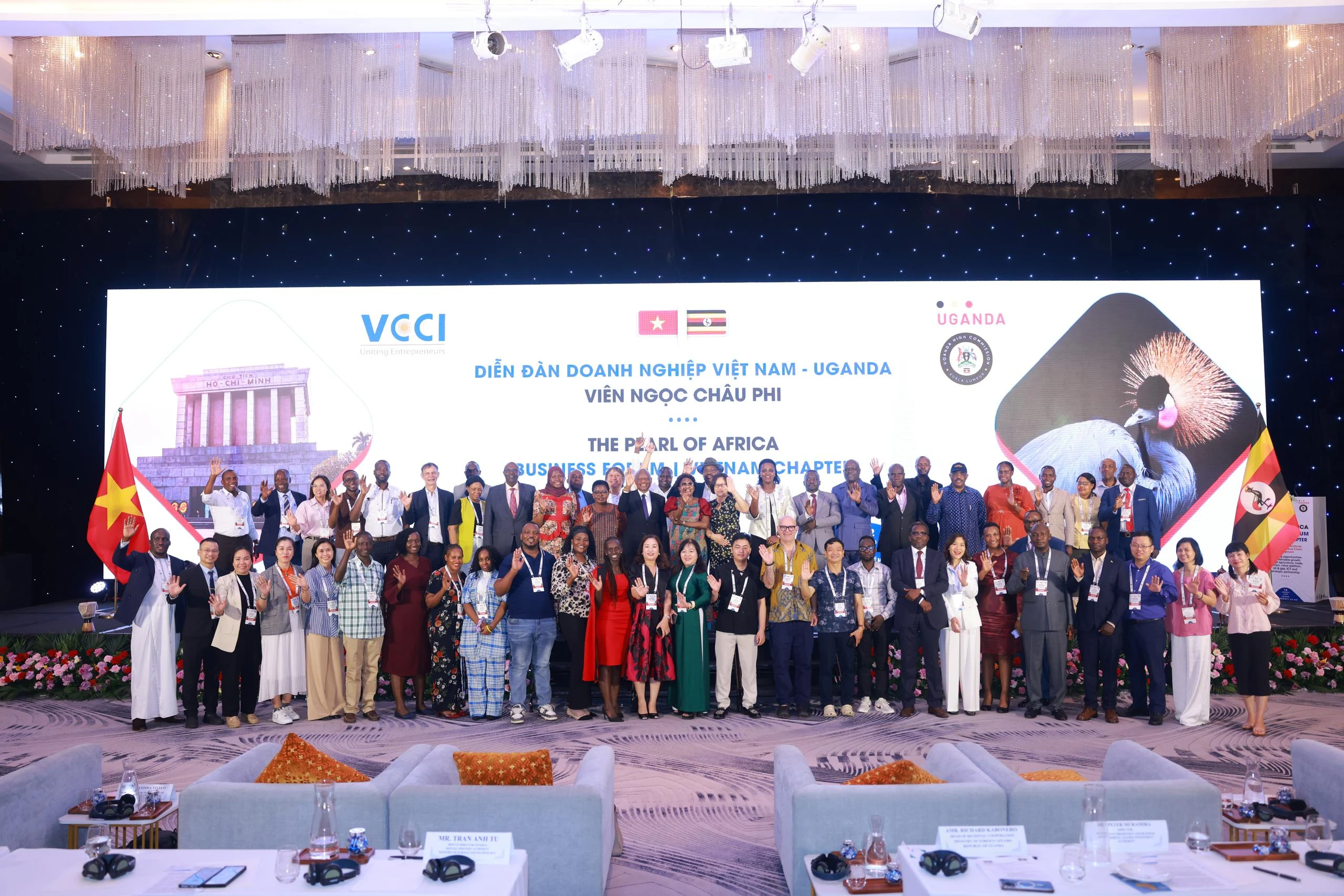
A fourfold jump in Uganda-Vietnam trade
The headline number is striking: official figures presented at the forum put bilateral trade at about US$95.47 million in 2025, compared with US$22.1 million in 2024. Uganda exported roughly US$49.85 million to Vietnam, while Vietnamese shipments to Uganda totalled about US$45.62 million. Vietnam’s Deputy Foreign Minister Le Anh Tuan cited a more conservative series, putting two-way trade at US$28.6 million in 2024 and US$53.4 million in 2025.
Coffee leads the Ugandan export basket, alongside cotton and meat. Vietnam sends animal feeds, cement clinker, electronics and batteries, garments, footwear and wood veneer into the East African market.
The figures remain modest by global standards, but the growth rate is politically useful for both capitals. Kampala can present itself as a rising trade hub, while Hanoi can point to a concrete African partnership built on industrial know-how rather than aid.
Coffee diplomacy takes centre stage
Uganda and Vietnam signed a cooperation agreement on coffee value-chain development, building on an earlier coffee-sector memorandum of understanding signed in November 2022 during President Yoweri Museveni’s visit to Hanoi. The goal is to move Uganda beyond raw bean exports into processing, traceability, machinery, packaging and specialty coffee.
Ugandan officials have explicitly framed Vietnam as a success story worth learning from. Vietnam is one of the world’s largest coffee producers and has built a strong processing and export infrastructure that Uganda wants to replicate.
The coffee push is not just about agronomy. Discussions also covered digital payments and coffee traceability, linking agricultural exports to broader technology cooperation.
Technology and services enter the agenda
Beyond coffee, the two sides discussed a business process outsourcing idea under which Ugandan graduates would support Vietnamese firms. This would give Vietnam access to a young, English-speaking workforce while creating skilled jobs in Uganda.
The technology angle also includes digital payment systems and traceability tools for agricultural supply chains. These are practical, lower-cost ways to deepen integration without requiring massive infrastructure spending.
Vietnam has about US$35 million in registered capital across three investment projects in Uganda. The new services and technology agenda could diversify that investment profile over time.
The Pearl of Africa Business Forum in Hanoi
The trade push was tied to the Pearl of Africa Business Forum – Vietnam Chapter, held in Hanoi on 12 August 2026. Ugandan Agriculture Minister Frank Tumwebaze led the Ugandan delegation to the event, which drew more than 300 participants from both countries.
The forum served as a matchmaking platform for companies from both countries. It also gave Ugandan officials a stage to pitch the country as a gateway to the African Continental Free Trade Area and a continental market often described in reporting as 1.4 billion consumers.
For Vietnam, the forum was a chance to showcase expertise in processing, logistics and digital trade infrastructure. Hanoi is seeking new export and sourcing corridors as global supply chains fragment.
South-South trade with a strategic overlay
The Uganda-Vietnam relationship fits a broader pattern of non-Western competition in East Africa. Uganda remains a space where outside powers compete for influence through infrastructure, trade, minerals, agriculture and market access.
Uganda’s strategy of courting Vietnam is about diversifying partners and reducing dependence on any single bloc. Medium-sized states are increasingly building pragmatic corridors outside traditional donor-centred models, as explored in Africa: The New Scramble.
Both governments are using trade to signal autonomy and capability in a fragmented global economy. The commercial numbers are still small, but the political signal is clear.
What to watch next
The coffee value-chain agreement will need concrete implementation steps, including investment in processing facilities and traceability systems. Ugandan businesses will be watching whether Vietnamese partners follow through on pledges made in Hanoi.
The business process outsourcing idea could move quickly if Vietnamese firms see cost advantages in hiring Ugandan graduates. That would mark a shift from goods trade to services trade, deepening the relationship beyond commodities.
The next test will be whether the US$95.47 million figure from 2025 can be sustained or expanded in 2026. Both governments have strong incentives to keep the momentum going.
Frequently Asked Questions
How much did Uganda-Vietnam trade reach in 2025?
Uganda-Vietnam trade reached about US$95.47 million in 2025, up from US$22.1 million in 2024, according to official figures presented at the Hanoi forum.
What are the main products traded between Uganda and Vietnam?
Uganda mainly exports coffee, cotton and meat to Vietnam, while Vietnam sends animal feeds, cement clinker, electronics, clothes, footwear and wood veneer to Uganda.
What new areas are Uganda and Vietnam cooperating on?
The two countries signed a coffee value-chain cooperation agreement and discussed digital payments, coffee traceability and a business process outsourcing initiative for Ugandan graduates.
Connected Coverage
For more on how medium-sized states are building new commercial corridors in East Africa, read Africa: The New Scramble.
Sources
This article was produced by The Rio Times’ automated newsroom system. How we use AI · Report an error · Editorial responsibility: Matthias Camenzind, Editor-in-Chief
LatAm Markets: Live Signals → — real-time movers, turnover leaders and FX across Latin America.
Read More from The Rio Times